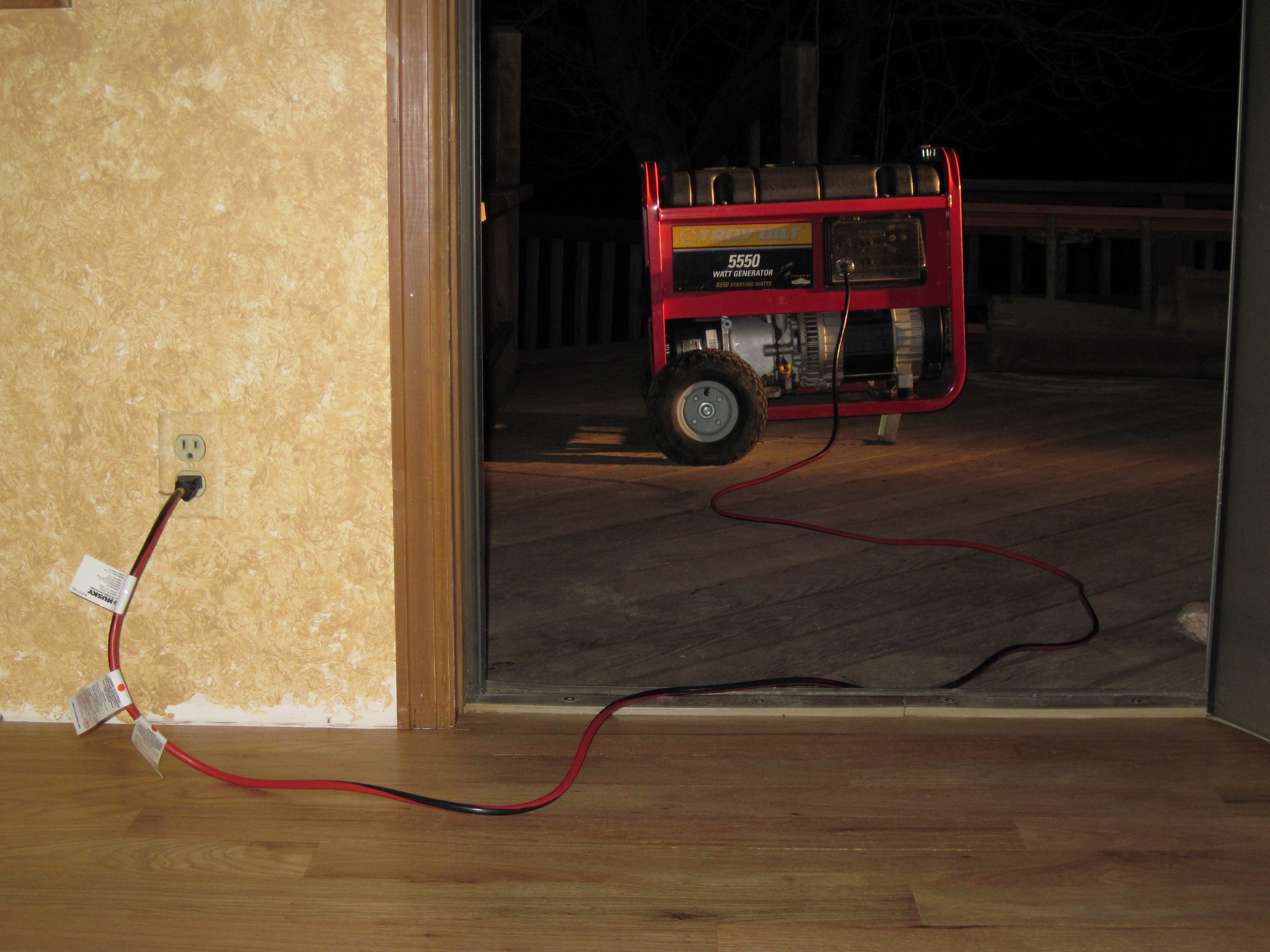
How-to: Make a Mains Crossover Cable

posted Apr 1st 2010 8:00am by
filed under: home hacks, how-to, repair hacks

Update: This How-To was written for April Fools’ Day. It is not advisedĀ  you attempt to make or even use this cable. The comments have made it very clear how dangerous to you and others using this cable can be. The image above is not of a full male-to-male cable, only the ground is connected, and the generator is not running.

We all know Ethernet has the crossover cable, cars have jumper cables, and RS232 has the null modem. Well, it is about time our wall sockets get their own crossover cable. This crossover cable is great for running power to a circuit disconnected from power. Maybe you are out of fuses, the breaker is broken or you just don’t want to go check the fuse box when there is a murderer about. This cable makes a great gift for even the most loathsome of acquaintances.

This an April Fools’ Day post. You should not do this!!!

Warning: These are Mains voltages and currents we are working with. If you do not know why you should not attempt this, you should not attempt this.
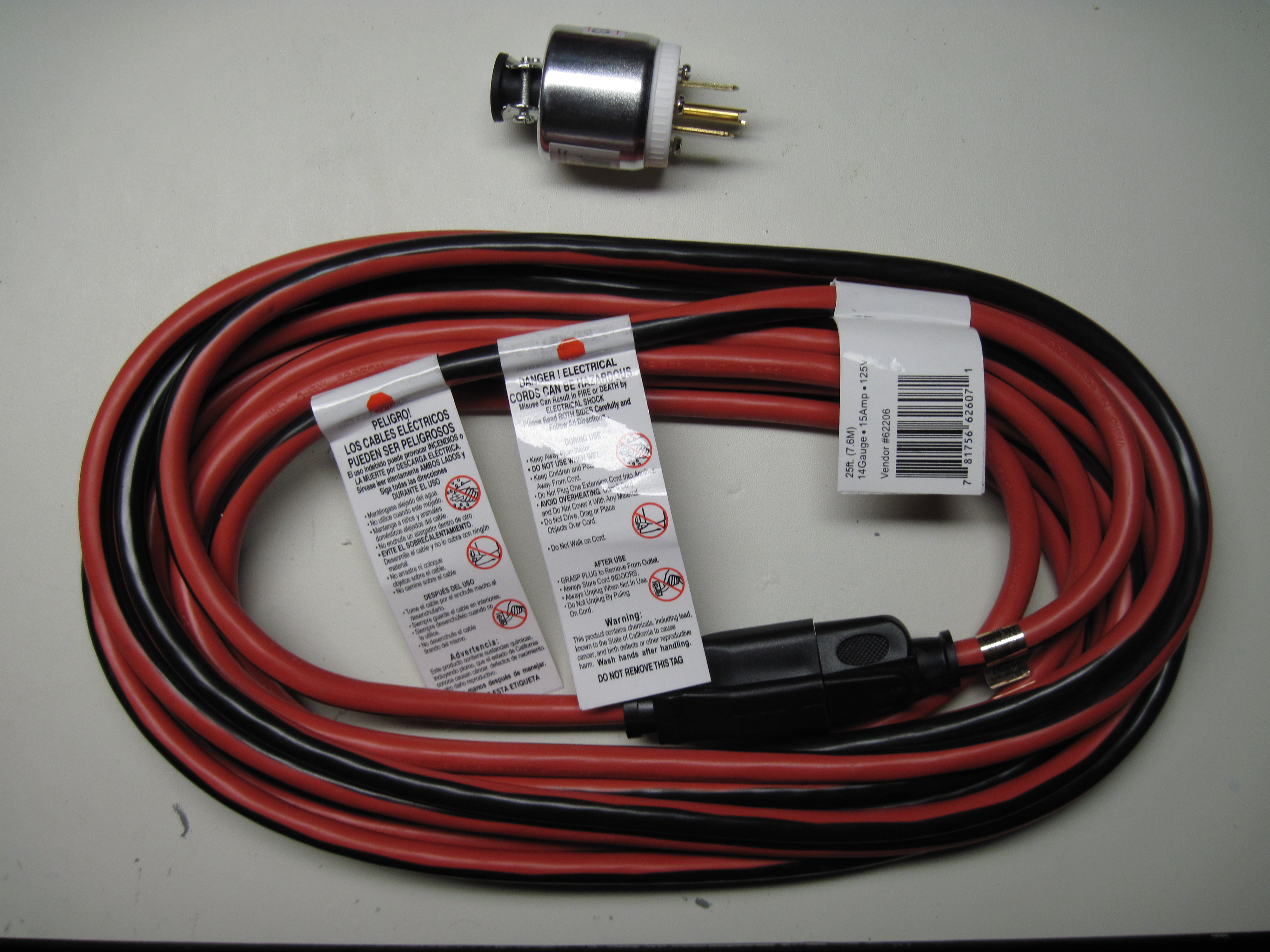
You will need:

  • 1 Extension cord.
  • 1 Male extension cord repair connector.
  • Tools to strip the extension cord, and attach the connector: Knife, wire strippers, and screwdriver.
  • Respect for mains voltages and currents.

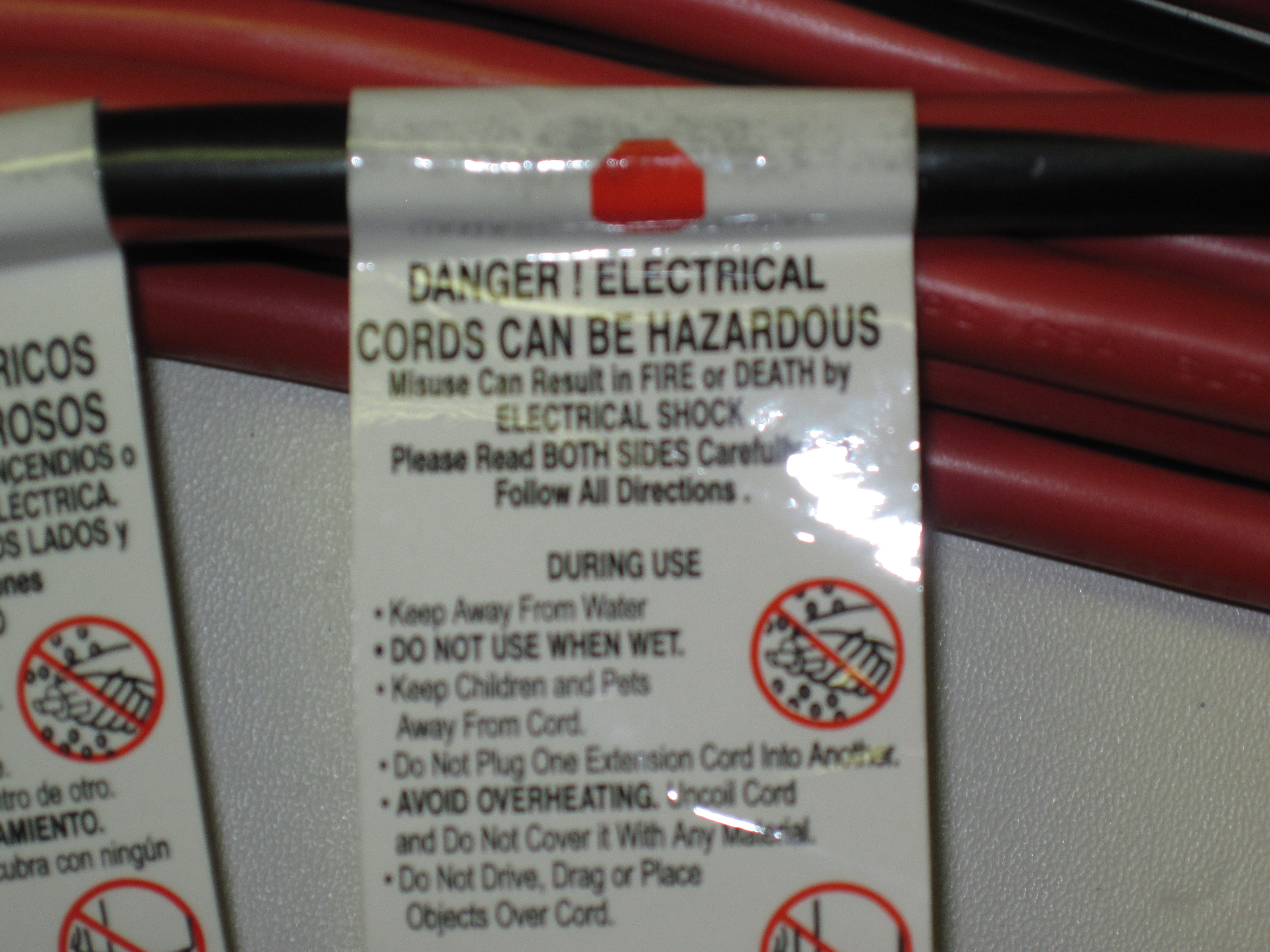
If your extension cord has warning labels, read them.
Cut the extension cord to the desired length.
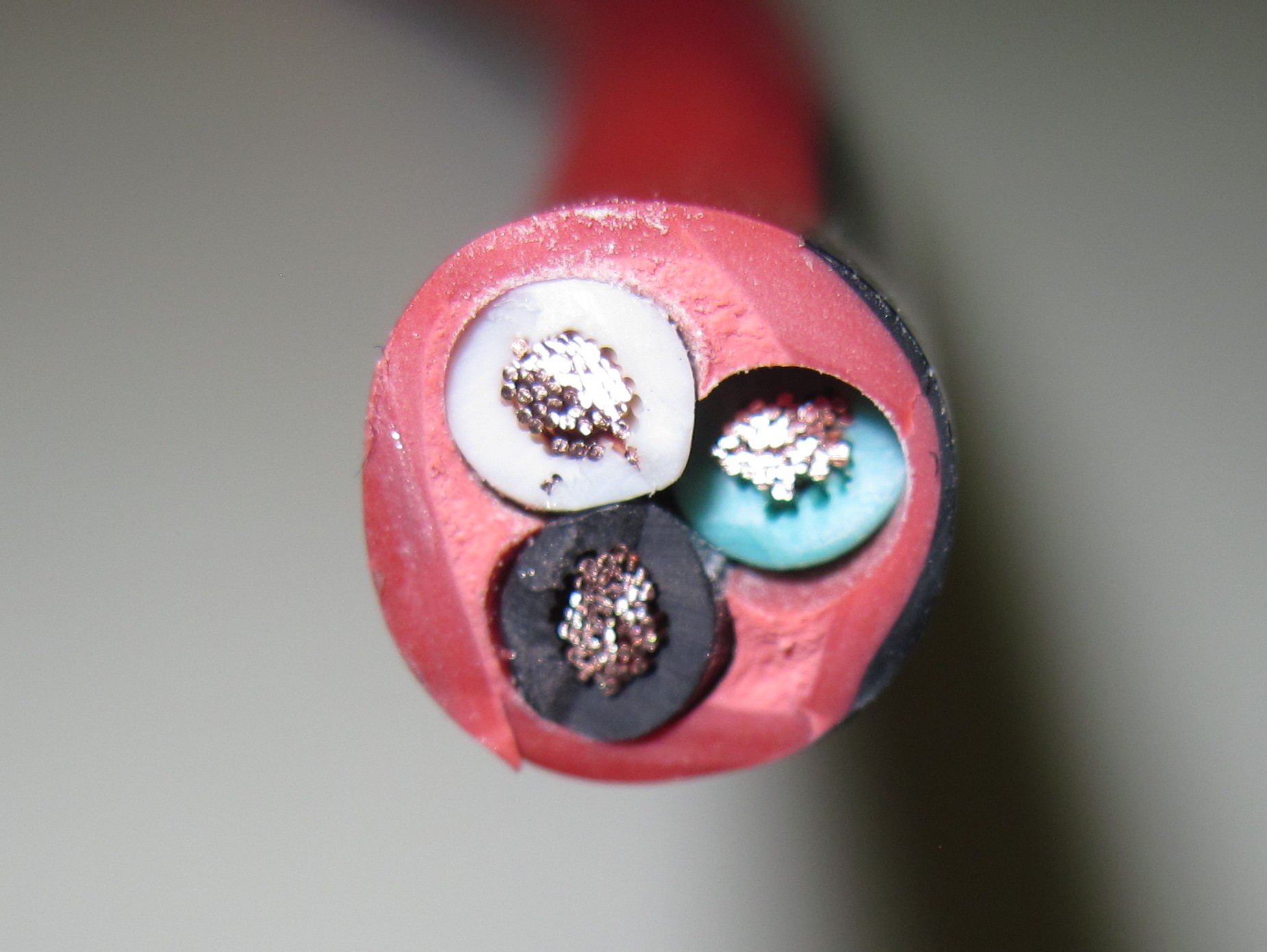
Strip about one inch (2.5cm) of the outer insulation from the part of the cord that has the male plug.
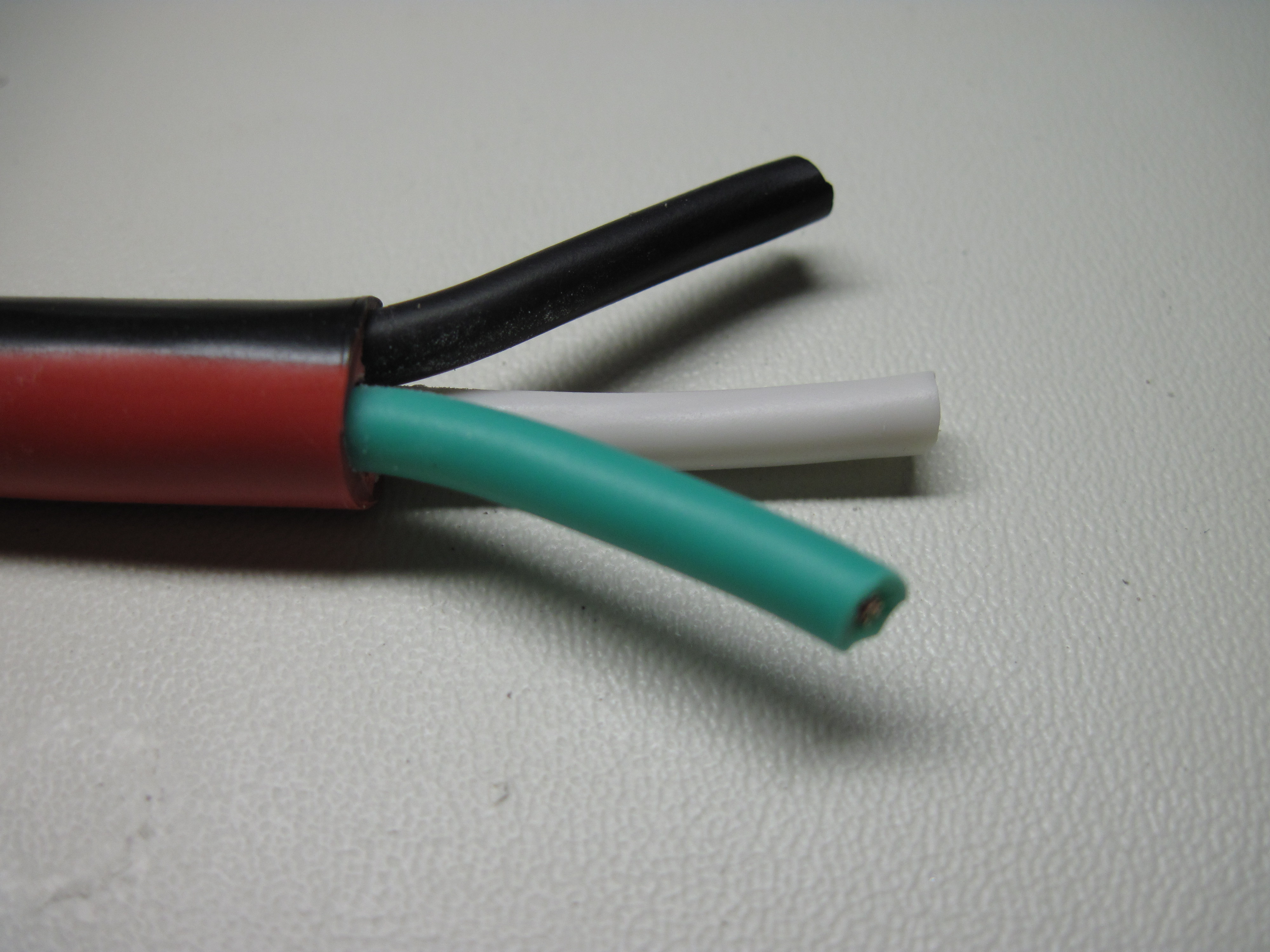
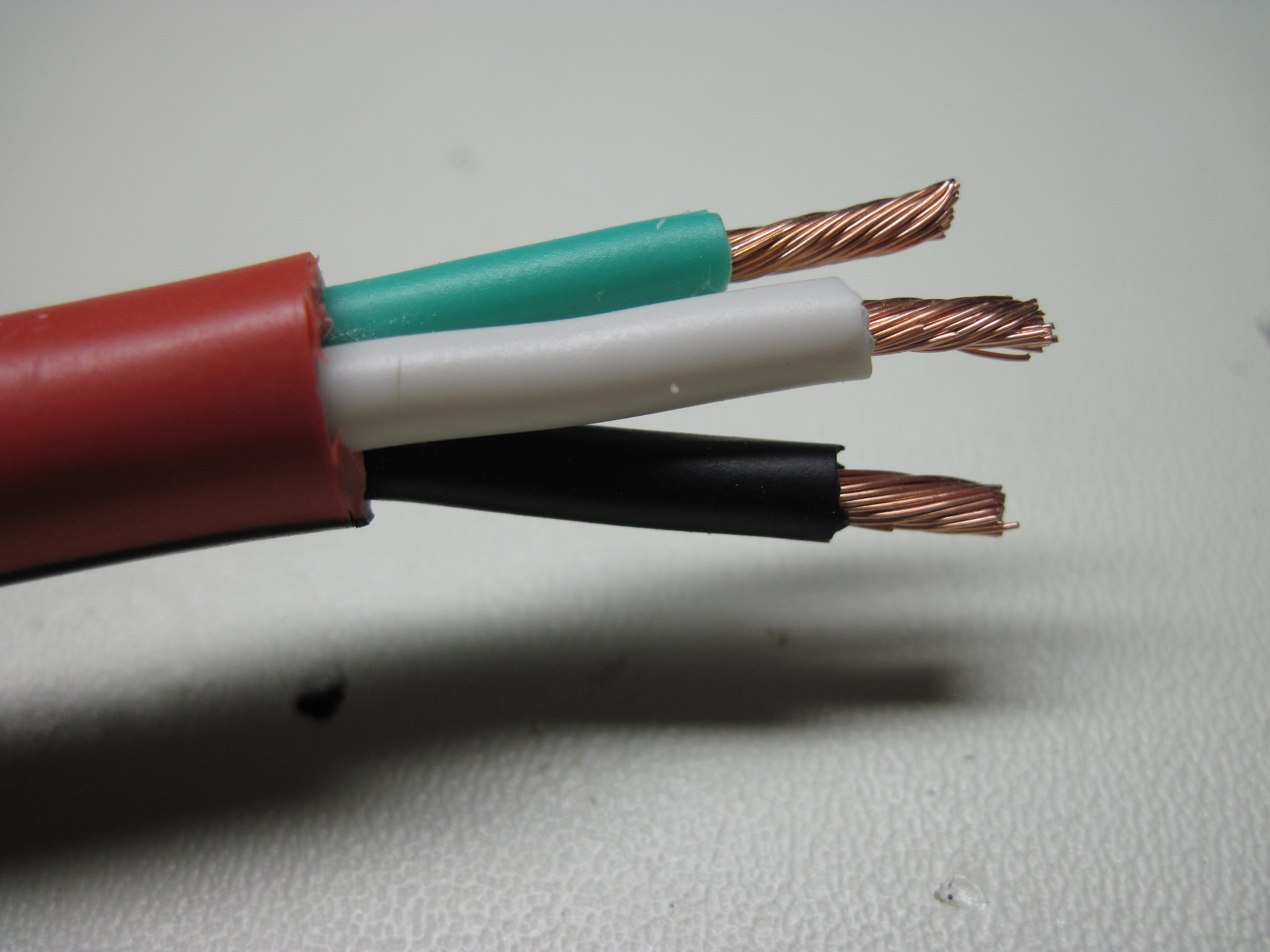
Strip about 3/8 inch (1cm) of each of the conductors. If there is a strip gauge, use it for a guide instead. Twist each of the stranded conductors to prevent fraying and possible shorts later.
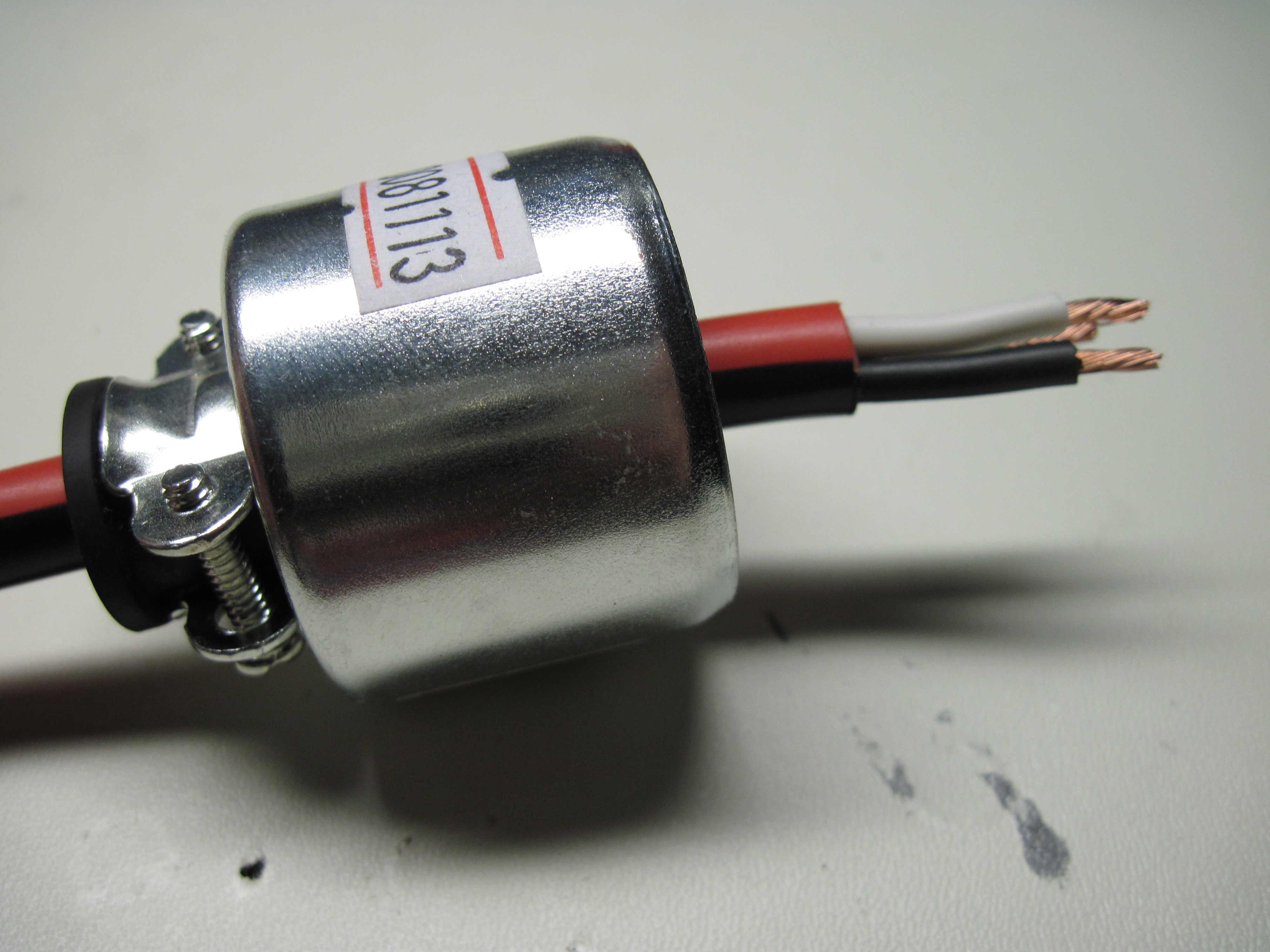
Slide the shroud over the cord.
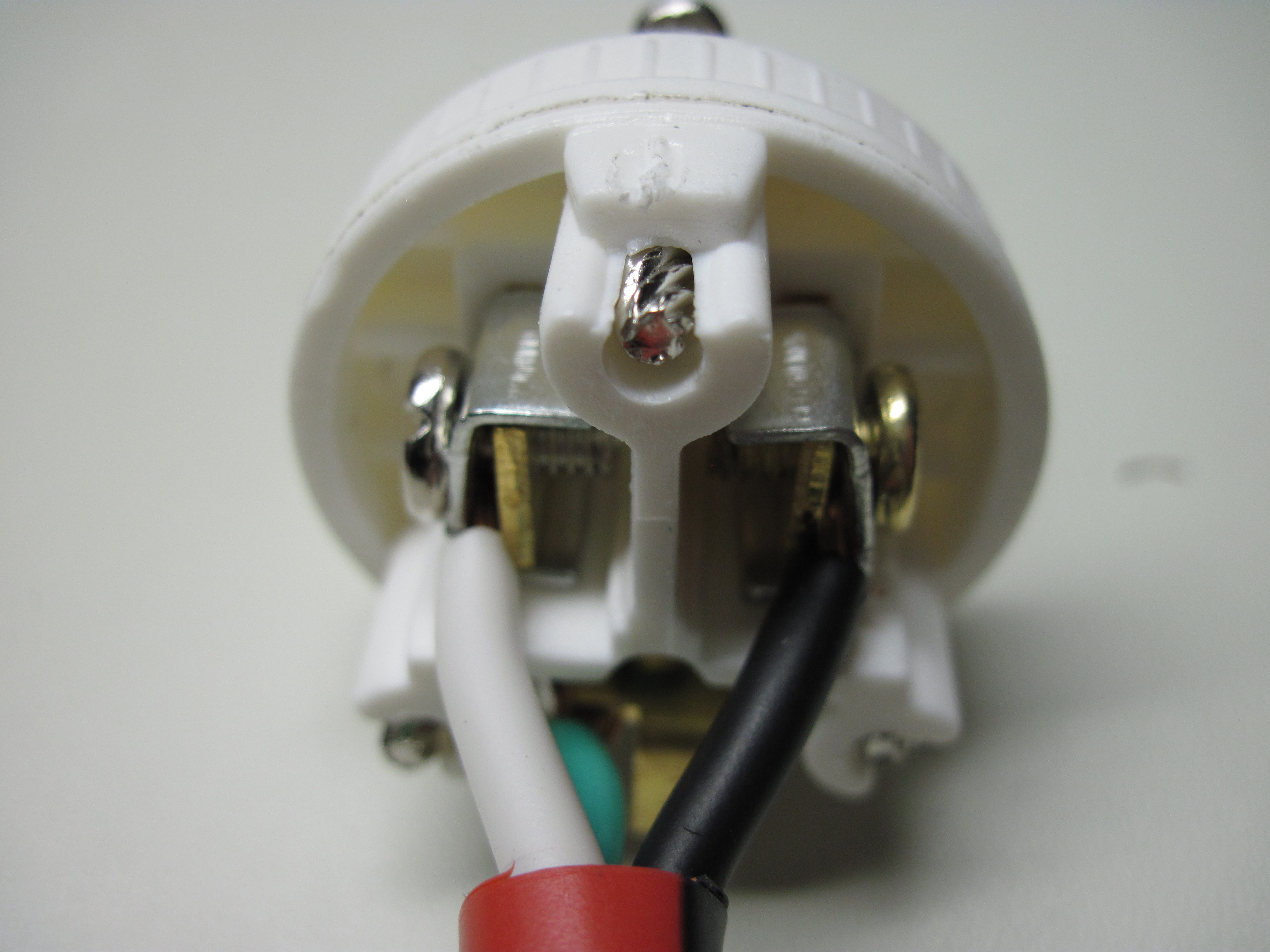
Screw the conductors into each of their respective terminals on the connector.

  • The Green or bare conductor goes to the ground conductor terminal. It often has a green screw.
  • The White conductor goes to the grounded conductor terminal. It often has a silver-colored screw.
  • The Black conductor goes to the ungrounded conductor terminal. It often has a gold-colored screw.
Use a multimeter to check continuity and make sure there are no shorts.

Slide the shroud up to the connector and fasten the two parts together.
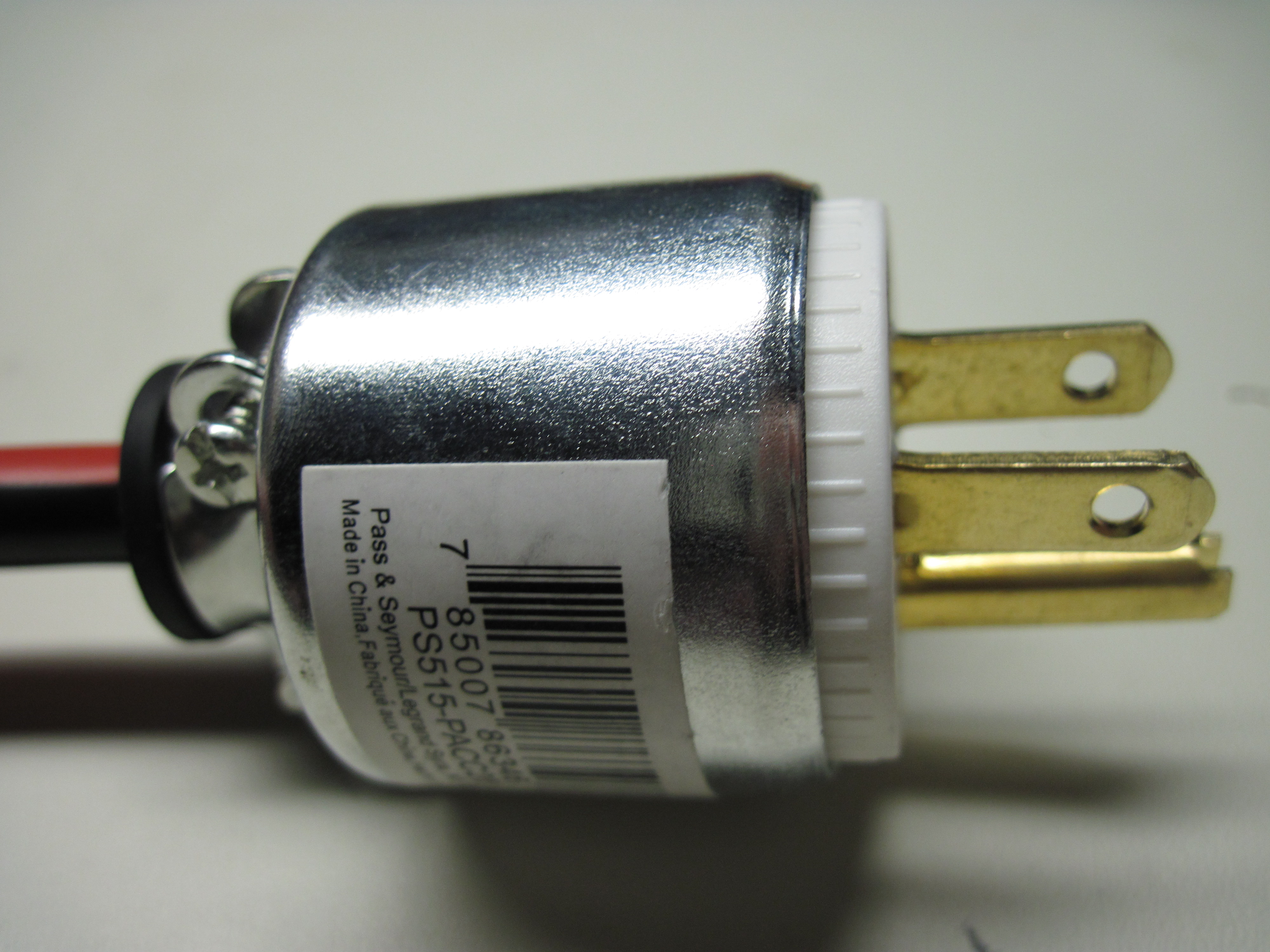
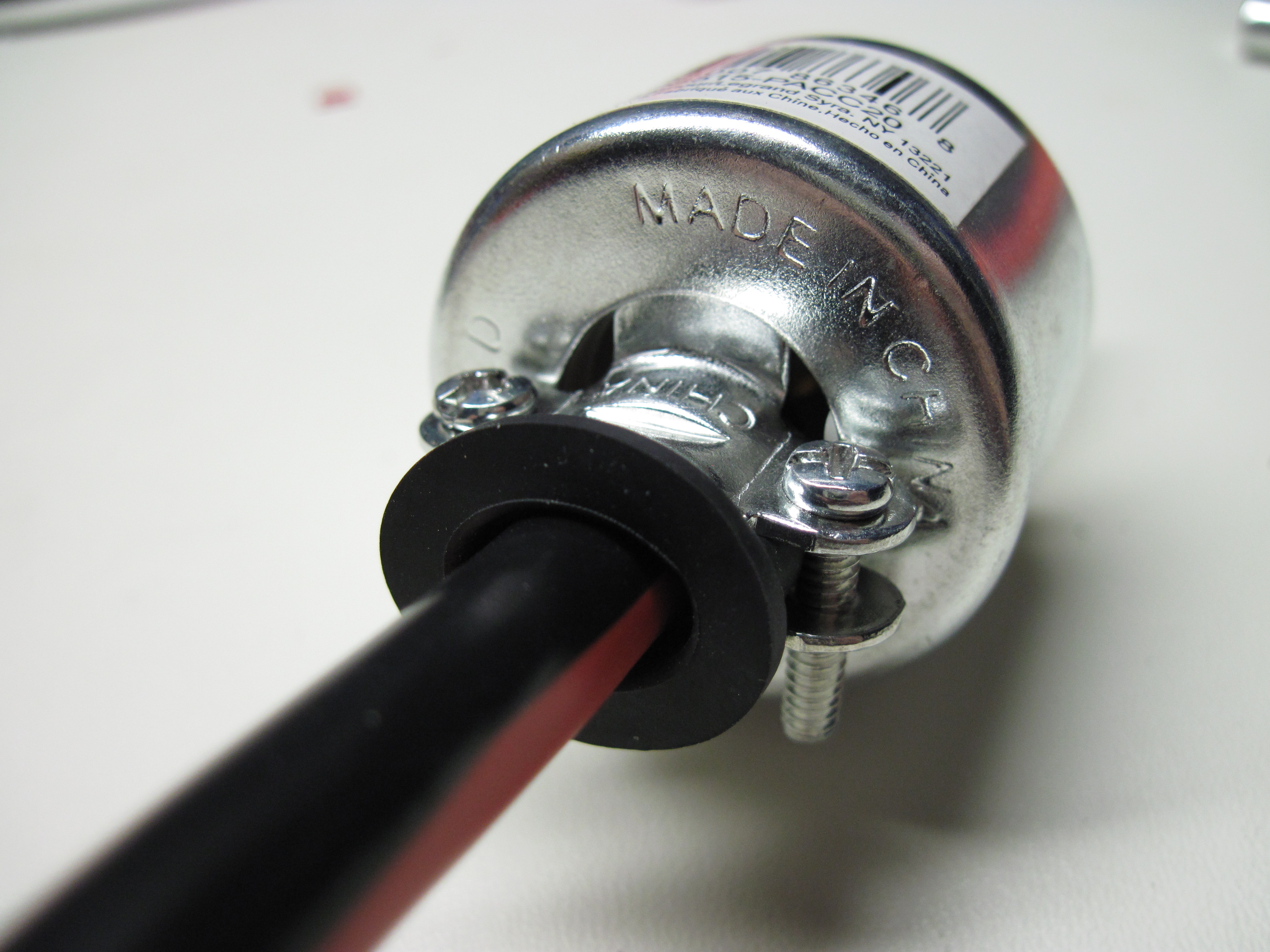
Secure the cable clamp.
There you have it, a finished Mains crossover cable.
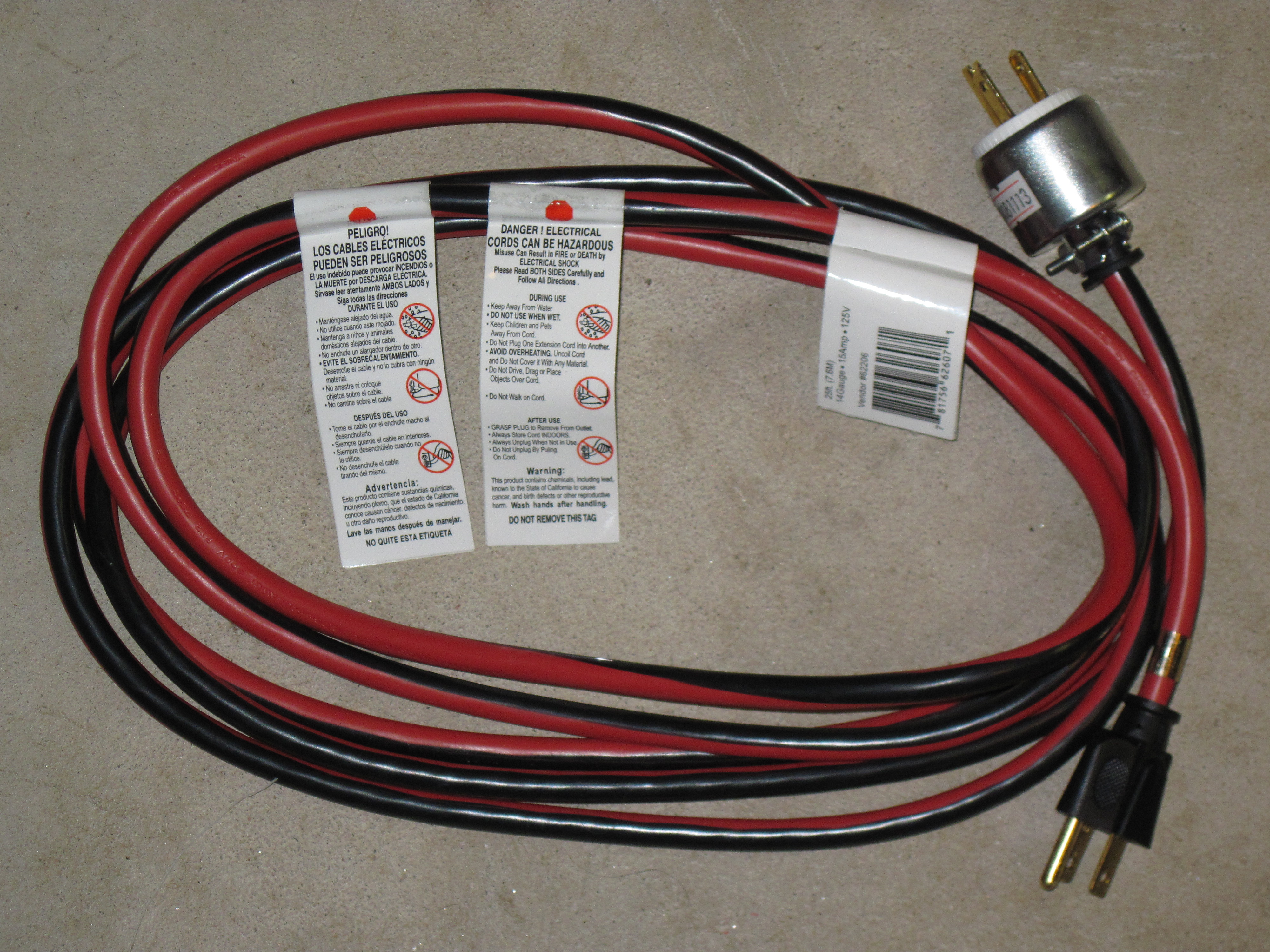
There you have it, a Mains crossover cable. How might you use this crossover cable?


390 Responses to How-to: Make a Mains Crossover Cable

  • Phelps says:

    You know, it seems like all the pansies in here who go into cardiac arrest when they lick a 9 volt battery are all also quoting British regs. How did your island go from running the world to needing a 40 hour class and 9000 pages of code on how to open a juice box?

  • nubie says:

    Has anyone considered the prank possibilities of this device yet?

    1. Simply cut off a circuit you wish to prank at the breaker, then plug this in with a switch to an active circuit.

    2. Cut the power intermittently to screw with people until they go crazy.

    5. Profit

    Although couldn’t you just install a remote cut-off on the line as you were doing this, or one on the soft-power of the device you wanted to mess with, etc.

    Also, if you wanted to do this shouldn’t you have covered the more important part of isolating the circuit with a picture at least?

    Not to mention that the only good reason for this would be to have normal house lighting, but lights and outlets shouldn’t be on a circuit together, so it is a huge fail. (If you can afford a generator with enough power to feed a circuit in a normal house you could afford a mains switch.)

  • Torque says:

    @ too many to list, esp. Electrical engineers!
    April fools, but that’s been said.
    Instead of maligning them about being out of sync, and the inherent dangers of this, how about directing on appropriate methods to sync signal. Why aren’t there more homebrew green power systems on here? We are hackers, we don’t want to spend $3k on a good invertor to connect our homemade solar and wind generators (geothermal, hydro, nuclear, waste oil, methane, trash burning…) I’d already have at least two systems in place if I could find how to tie it in without blowing up, burning out, burning up, or making my clocks run fast.
    If you have the know how, SHARE IT, or don’t come here. Your knowledge could save a life.

  • John says:

    Dangerous? yes. Stupid? no. My family has lived all over the place, and sometimes the power isn’t as steady as you’d like. These things can be useful, since they’re fast and easy. Of course, putting a proper interlock in is the best solution. Sometimes you don’t have the parts, or the time.

  • Mike says:

    For april fools this year I gave pocket knives to some kids at the middle school across the street, it was hilarious! This one kid cut his teacher’s face up so bad, hahaha!

  • leccyboy says:

    Unfortunately my electrical mind control device just doesn’t seem to be working

  • Phelps says:

    Wait, now pocket knifes are too dangerous to give to middle schoolers? When do they get a folding knife now? When they are juniors in college (if they have declared knifery as a major?)

    I got a swiss army knife when I was six. Never carved anyone up with it. Heaven forbid we give a tool to a child. They might make something.

  • hawkeye18 says:

    Uh, naval ships have had this for pretty much since they had electricity. Only all the power is three-phase 440 in a Wye configuration, so it’s a wee bit more complicated to hook up.

    The important thing to remember is that you can’t have supply power as well as crossover power… that’s when things go boom.

    Vonage has a similar thing with phone lines. You can simply plug the vonage box into the wall jack and give your whole house coverage, but you have to make sure to disconnect the NID from the outside lines otherwise you’ll blow up your Vonage box.

  • Ed says:

    Wow. I know it’s an April Fool’s joke and all, but this is absurdly dangerous. It’d be funny if the instructions were to tie all three pins to ground, but this writeup’s a tad too serious.

    If your generator gets wired into the mains by accident, and you’re (un)lucky enough that your generator is running at a full 180 degree phase shift from the main, you’ve just made your mains TWICE as deadly.

  • leccyboy says:

    Im quoting british regs because I just so happen to like and work in Britian!!

  • John says:

    Oh, and yes I am an EE, so don’t say that all EE’s are against this.

    @Torque, it’s really, really hard to synch properly. If you’re generating DC and want to use solid state conversion, you need some heavy duty semiconductors, which will set you back thousands. A three-phase generator needs synch electronics, a mechanical governor, and hardest of all, a balanced load on each phase.

    It’s a good idea, it’s just harder than your average hack. And since you’re talking wall juice, it’s also got to be safer. Fail safe and fail soft systems are also a lot harder to make.

  • RustyBadger says:

    It would have been more useful to show how to make a dryer-plug ‘crossover’; the problem with the standard three-prong cable like this one is that it will only supply power to half of your electrical circuits in the house (only the breakers on the same side of the electrical panel). In order to power up the whole house, you need to supply power to both sides of the panel, which can be done through your dryer or electric range plugs (in North America, those are 240V outlets).

    As others have said, MAKE SURE YOUR MAIN BREAKER IS OFF! Typically, if you leave it on, you won’t even be able to start your genset, as the load will kill it- but if you did manage to fire it up, you’ll be feeding power down the mains into the grid, potentially killing any linesmen working on the system.

    If you live in an area with frequent power disruption (like I have), you can have a generator plug installed by your electrician. It’s a recessed male plug that lets you use a regular extension cord to connect the generator- no crossover required!

  • Lobo says:

    Hi All,

    I agree that putting together a step-by-step howto, lowers the bar to include ppl that won’t think about/understand the consequences of actually doing this and so is inherently a ‘bad idea’.

    _But_ I have personally used this kind of cable to backfeed a rack from a different circuit, when the local circuit developed a fault in our data center. I plugged the disboards male connector into a free slot on the same disboard to make the flying male connector safe (& also isolating the rack), and used a male-to-male cable to power the rack from a circuit in a different room (could have been a gen!). This avoided an 18-hour outage on the services running on this rack.

    One last point, that I haven’t seen mentioned, is that using a male-2-male cable is ‘very’ dangerous as we are all conditioned to think that the pins on a male plug are safe – muscle memory is a powerful thing to overcome, and raaching out and grabbing a male plug is the most natural thing in the world!

    Preaching to the choir, but knowledge is power, with power comes risk!

    Just be careful out there you crazy kids :oP

  • barry99705 says:

    We’ve done this several times when the power’s out. Just make sure the main breaker is pulled, no problems.

  • Digimer says:

    This.

    What is this?

    This is madness. Are you trying to hurt someone?

  • Nate says:

    This method does work, but it’s definitely not the safest setup. You can also get a power transfer switch installed (Call an electrician for that one), and have your generator connected to the emergency side of the switch. Much safer.

  • Killbox says:

    Wow, This stired up a shitstorm,

    We used something like this a whiel back, we had a bunch of servers on a powerstrip that was on an outlet that needed to be replaced, so we checked another outlet to see if it was on the same phaze, plugged a widomaker cord like this into the powerstrip and the new outlet, (keeping all the equipment powered while we move its main plug over.

    No zaps no zarks, no death. the whole thing was treated with respect, Don’t do it if you don’t know how to be safe.

    years ago there were some punks squatting in an old house nearby, they used this technique to power the kitchen circuit every night when the nextdoor gas-station was closed, allowed them to keep foodl cold in the fridge and run some lights and a boombox.

  • Nonya says:

    you wouldn’t forget. if you try to power a block, or even your whole house. the generator would die, or the extention cord would melt/explode.

  • King Leonidas says:

    This isn’t madness. THIS. IS. SPARTA!

  • Felipe Koch says:

    [sarcasm]

    If you’re doing this, at least get a generator big enough to power your neighborhood. Don’t be selfish.

    [/sarcasm]

  • Preston says:

    Anyone that thinks this isn’t illegal, I’m talking to you @Phelps, think again, as people have already expressed you won’t just kill yourself screwing this up you could kill the electrical companies repair man that’s fixing problems outside, this is illegal in not just all states but MOST COUTNRIES, it is a double ended male cable…. illegal. Don’t try it, don’t think about trying it, don’t spread this stupidity by telling others what a great idea it is. DO NOT DO THIS ANYWHERE ESPECIALLY AT HOME!!!!!!!!!

  • tim says:

    wooo, so many comments for a post about how to screw a plug on a cable !!

    1 april ???

  • Nate says:

    Nonya: Actually, the on-board breaker would trip.

  • DarwinSurvivor says:

    April fools aside, if anyone actually decides to try this, TURN OFF YOUR MAIN BREAKER FIRST! If the power comes back on with the generator turned on, BAD THINGS can happen.

    That said, if you are not an electrician, don’t try it anyways. And if you are an electrician, you probably know better :P

  • Phelps says:

    Preston, try to follow me here.

    Killing people is illegal.

    Having a particular piece of electrical wire is not.

    Are you going to get it UL listed? Nope. Does that make it illegal? Nope.

    Being free means having the right do stupid things.

  • cd0 says:

    I have to agree that it is irresponsible to even post this. There is no skill required to make such a stupid apparatus with no safe application. If anyone wants to take it upon themselves to build something so simple and yet so dangerous, it should be obvious enough. What were you guys thinking?

  • civissmith says:

    This hack has saved me thousands of dollars! I ran one of these over to my neighbor’s house!
    Now I leave my electric furnace turned up to 85 degrees – even on the coldest winter days!

  • lowlysoundtech says:

    Wow, this is worse than the Sterns Orbo device.
    @Morgen – brilliant site! I know a lot of people who could use those.

    Listen folks, this is the site of homemade fusion reactors and tesla coils, and yes, those don’t have such an easy writeup, but those guys did it without a write up and prolly fried themselves once or twice in the process. I do live sound and lighting and have had to tie in generators (WAAAY bigger than that) to the main power line once or twice in my life and lived to tell about it.

    As far as linemen are concerned, don’t you think they’d notice the lights being on or the loud as geny in the background or maybe the DAMN EXTENSION CORD FROM THE GENY TO THE WALL!!! If you miss all those signs, then I’d guess you need to go back to the shop and let an aware and observant linemen take over for you.

    Regardless folks, if some moron wants to try this and blowns up himself or his house, then that’s Darwinism at work and I’m all for it. One less person wasting our air.

    Great post Hackaday, sorry more people don’t have sense of humor or willingness to weed out the idiots.

  • Phelps says:

    Oh yeah, irresponsible. While we are at it, let’s ban paper clips! And let’s ban breadboard jumpers, those will fit into an outlet and burn someone almost immediately! Let’s weld all the microwaves shut, seal all the electronics, put a sign in/out sheet beside all the outlets, and put Depends on all the crybabies here who poop themselves at the idea of anyone doing anything that could possibly in any way go not absolutely right.

  • 00Dog says:

    Anyone know where I can find instructions for a UK plug version? :D

  • Phelps says:

    It’s the same, just give it yellow stripe up the back and put a frilly pink bow on it.

  • Troel says:

    FUCK YOU PERRY VALE.

    … now how to work an arduino in to this cord….

  • Patrick says:

    There is an application for this cord. It is to back feed your circuits with power. this should only be done when absolutely needed(like in a power outage due to a storm when your house may flood with out power to your sump pump). before you connect the cord to the circuits of your house or garage you MUST turn off the power at your circuit box for the whole building and unplug all devices that dont need to be plugged in. One of these cords saved me plenty of times, You Just need to know how to use it safely.

  • Tonto says:

    These aren’t just useful for hooking up a generator.

    My garage doesn’t have power run to it. Running a power line there permanently isn’t really an option. So I just wired the garage with lights and outlets and use this cord(commonly called a widow maker) to provide power to the garage when I need it.

    Yes, these cords can be dangerous. So can 90% of the other tools we use however.

  • Devin says:

    I’m going to make one of these just so the whiners will have heart attacks and stop posting.

  • Darren Clark says:

    This is just bad. Not even funny for April 1st. If you even accidentally forget to flip off your main breaker and run this you can kill someone. That 13.2KV or 4800V to 240V step down transformer in your neighborhood all the sudden becomes a 120V to 4800V or 13.2KV step up transformer. Whoever is working on the lines outside (either in your neighborhood, or several miles away if you live in a rural area) can get killed.

    They don’t call this a suicide plug for no reason.

  • You guys said it was a crossover cable, but the is clearly a straight through!

    To make a cross-over cable, the ‘neutral’ and ‘hot’ should be swapped, while the ‘ground’ stays where it is.

    Otherwise you just have a normal double ended power cable!

  • Pete says:

    Clearly this is a joke.

    A) there is no arduino
    and
    B) there is no instructable.

    These are two key elements of a successful project.

  • EdgarJPublius says:

    @ everyone who thinks this isn’t a terrible idea:

    You obviously either have much more experience with Mains power/home wiring than the average person, in which case I would caution you that most people don’t have the knowledge and experience you clearly take for granted and would likely fuck this up in ways that are too retarded to even imagine.

    Or, you are a know-it-all idiot, in which case, I invite you to go ahead and try this one out yourself, after all, the gene pool needs a good scrubbing. D:

    In all seriousness, if you haven’t already done something like this, now isn’t the time to start. Main Power is not to be screwed with. Yea, if you /really/ absolutely know what you’re doing, you can probably get away with doing some retarded shit. I’ve seen guys work barehanded on hot lines before with no problem too, I’ve also seen guys grab a hot line and get fried through insulated gloves. it’s not than electricity is unpredictable exactly (though it certainly can be) but there are just so many little way you could fuck up that you wouldn’t notice until you woke up at the pearly gates.

    It’s one of those things, electricity won’t kill you ’til it kills you, but when it does, you don’t get a warning and you don’t get a second chance.

  • Phelps says:

    It’s one of those things, pretzels won’t kill you ’til it kills you, but when it does, you don’t get a warning and you don’t get a second chance.

    Ban pretzels.

  • Daniel says:

    Please, please, delete this after today…

    Someone searches on the internet in six months and finds this idiot’s step-by-step guide is probably not smart enough to heed your relatively subtle warning. They probably won’t even notice that it was posted on April 1st.

    A for effort guys, but you get an “Incomplete” for thinking it through.

    Maybe next time you can show how to make a plasma globe powered from an orange… something more harmless, please!

  • Bray says:

    I’ve had to use this exact thing a few times before. When I kicked out a renter who hadn’t paid the bills in a while, I had to get the lights on so we could clean up the disaster left behind. Defiantly not recommended, but in a bind, this will make your life a lot easier, provided you live of course. ;)

    1. TURN OFF YOUR MAIN BREAKER. If you don’t you’re a fool.
    2. Leave a note on your breaker panel, indicating that you have the house on generator power, and not to flip the main. Any utility worker would much rather see a note that you’ve done this, rather than find out later the had way.
    3. Turn off all non-essential breakers. Heat/AC, pool, whatever.
    4. Male to male connect the generator to the highest amp socket you can find. Use a surge protector if you can. And fire it up.

    If you need the other phase working in the house, get another male to male cable and link a working socket to a non-working socket.

    I’d advise unplugging anything electronic, computers and whatnot. This setup isn’t extremely safe, but if you need light, and you can’t have your food go bad in an emergency, this might be your only good option. Be safe.

  • cleanse the gene pool says:

    This is a good but old idea and it works well IF YOU USE COMMON SENSE, which we know that most of the readers here do not have.
    All the whiners that say take this article down are wrong, leave it up in hopes that those lacking in common sense will use it and cleanse the gene pool.

  • komradebob says:

    When we used these in college we called them ‘suicide cords’. Dangerous but if careful, not fatal. Just don’t turn the mains back on until you unplug the genset.

  • Chris B says:

    There is a reason these are illegal to sell in the United States.

    April Fools or not, you should take this down before someone gets hurt.

  • Dan says:

    Stop whining and have a sense of humor.

  • big-j says:

    we refer to these things as “cables of death” as all they provide you with any amount of ways of scoring yourself a darwin award,and possibly your family and friends too.

  • captain says:

    this is a april fools joke right?

    cause’ if its not, this is some sick, twisted shit.

    even in the Federation we don’t crossover plasma conduits while the warp core is still on!

  • metis says:

    the important thing to learn here is that not only do electrical engineers not read for comprehension, they also don’t get jokes.

  • yuki says:

    wow … this is the first time i have posted a comment after reading for so many years…. its funny how some fucking morons can not read tags :P

  • risu says:

    Don’t think I’ve ever seen this many concerned posts in a day on this site. Well done hackaday.

  • nate says:

    Now if you were really smart, buy two extension cords and a 240v plug for the generator. Wire it so the two cords are on opposite phases of the 240v plug. Plug the cords into two circuits on opposite phases of your house. Crack open a beer and enjoy sitting in your nice warm hot tub while the neighbors freeze in the ice storm.

  • nemesis says:

    Erase the post. It’s not a cute joke.. It’s a Killing Joke.

    This is nice

    http://www.androphones.com/animals-translator-for-android-phone-216.html

  • This ISN’T a joke, regardless of what their intentions might have been in posting it. It ISN’T funny. I know that some hacks are dangerous, and while I don’t have much problem with that, THIS IS DIFFERENT. This is a hack that, specifically, doesn’t put the hacker in the primary danger, it puts an unknowing electrical lineman in danger. Saying “HA HA, it’s April Fools. Everyone should know that it’s a joke and not take it seriously.” is reckless to the level of idiocy. There is a good chance that SOMEONE will try doing this because they saw the article and that someone will be killed or seriously injured as a direct result of this article.

  • Dave says:

    This same setup is used by hundreds of thousands during extended power outages to power one bus in the breaker box – usually the one that the fridge and freezer are on. As long as it is used with care and respect, it is reasonably safe. True, you can kill or severely injure utility workers if you fail to kill your main – that’s where the personal responsibility comes in. If you are even remotely worried about doing this – DON’T! Go find someone who already has done it.

  • Oh, and yes, there is a good chance that if someone finds you feeding power back into the system from your generator (and, especially, if someone is injured because of it) you could be charged with something like reckless endangerment depending on what jurisdiction you live in.

  • NS30767 says:

    There are such things as transfer switches that do this job quite well, oh and safely. I suppose this will stimulate jobs for the Fire / Rescue people if nothing else…

  • lowlysoundtech says:

    Please people, if you’re stupid enough to use this the wrong way (without switching off the mains or pulling fuses) then go right ahead, the frying of your moronic body will be entertainment for the masses.

    I think everyone is missing a great pun here:
    The results of this product could be… shocking!

  • TiPete says:

    I have done this during the 98 icestorm up here and used it power half my home.

    The trick was simply to cut off the main switch just in case and it worked beautifully.

  • @lowlysoundtech: You are far less likely to electrocute yourself by doing this than you are to cause the death of the electric company repair man working down the street to fix your power.

  • shocked says:

    Wow, I had no idea there were so many ignorant hackaday readers. If you don’t know enough to use this cable without killing yourself then you should kill yourself.

  • Nukky says:

    @Sir Blotto of the Bawx:
    “To make a cross-over cable, the ā€˜neutral’ and ā€˜hot’ should be swapped, while the ā€˜ground’ stays where it is.”

    Piffle and Balderdash! I say go one better and rotate each conductor one position counter-clockwise.

    And soak the cable in gasoline first. Everyone knows a wet cable conducts electricity better.

  • Anthony says:

    I really hope no one actually tries it. Killer Jokes are not always funny.

  • Alan says:

    While the voltage might be 110V at your cable, by the time it gets upconverted by the pole transformer the voltage will be much higher, easily enough to kill a linesman.

    Stupid post – delete it.

  • B1rdm4n says:

    Anyone that uses this site is smart enough to use this safely, (i hope?)

    When your power goes off, just flip off your main breaker, and plug in your generator!

    When you see neighbors lights on, unplug generator and flip breaker back on!

    I myself use this, during snowstorms and whatnot. It’s really nice being able to keep your stuff plugged in and have electricity!

  • Stebe says:

    I just filed this one away in my brain for the end of the world/apocalypse.

    So when the grid goes down for good and can power my shit.

  • Muzer says:

    I never thought I’d see the day when hackaday sinks so low as to tell you what everyone should learn when they are a child (and they do, in the UK at least): how to wire a plug.

  • Stu says:

    Wow! 166 comments and counting.
    The majority of which seem to be idiots thinking this is serious!
    Or otherwise they know its an april fools joke and are still serious about how its irresponsible to april fools people with mains voltage articles, clearly not realising you’d need to be a person whos looked after 24/7/365 by social workers to even think this was a serious article!
    Epic jesting HaD, well done! Well done too for not putting any subtle jokey stuffs in there, it confuses them ever more poignantly!

  • anthonydi says:

    You guys are a bunch of pansies just off the main breaker. Try losing power for six weeks after a hurricane and it will seem like a better idea.

    And a lineman would be an idiot not to check the lines.

  • oakyjoe says:

    After reading this website for a number of years this is the first time I have felt the need to leave a reply to a post.

    I’m fully aware that this is an April Fools prank but as a professional engineer I would hate to think of this guide falling into the hands of someone who does not fully understand what they are doing.

    It is extremely naive, if not reckless for hackaday.com to think that all readers will comprehend what they are doing and carry it out in a safe manner. Please remove this post before someone gets hurt!

  • NewGuy says:

    So guys, call me dumb, noob, etc. but wouldn’t this work on a more permanent level if there was some form of Diode (i doubt they can handle mains but who knows im dumb:P)on either end of the main breaker? This post is particularly simplified due to it being 4-1 and all, but im thinking of serious application. A backup generator hooked up inline with the mains, with of course a switch as some commented, but what if used to supplement the house, is there some form of one way switch or diode or whatnots that would prevent backfeed, and still let main power in at the same time?

  • DeFex says:

    Everyone saying it is dangerous and stuff, wont anyone think of the lawyers?

  • Blood Forum says:

    CE/EE here. im all for dangerous cool stuff, and the watch-your-own-ass mentality. but this seems like a terrible idea.

    for those who would be safe enough using this: they dont need instructions. its easy to imagine.

    for those who need instructions to think something like this up: dont give them a step by step. they dont really understand what theyre doing.

    if this is an april fools day joke, how does that make it better?! the danger is still presented even if it weren’t. take this down, id hate from someone to get hurt and put this site’s future in jeopardy

  • mike says:

    ffs, at least put a warning in the post that *if* you are using it to supply mains-level current to a circuit without mains voltage (i.e. in the case of power loss) that you //remove your circuit (your house) from mains// so that you don’t kill a line worker servicing the lines.

    not disputing the usefulness of this post, but *some* semblance of responsibility would be nice. dumbasses frying themselves is natural selection in action. dumbasses frying some guy getting called out to work late on some downed lines is irresponsible.

    lost a lot of respect for you guys with this one.

  • mike says:

    @NewGuy: yeah, that’s what grid-tie systems do, is synchronize the waveform of your other power supply (typically photovoltaic or wind power) to mains, so that it can switch from one to the other.

    but grid-tie systems also turn off power to mains when mains goes down for that exact reason (backfeed).

  • operat0r says:

    my father:

    “This will actually work but only for a 110 circuit. If you use the 220 outlet on the generator, and wire up an L6-30P plug and plug it into your dryer outlet, then you can run 220V stuff as well as 110V stuff in your house. But it is dangerous. To do it properly you need a knife-switch disconnect like I have at my house, and you need to have a #4 wire cable from the generator to the dryer outlet.”

    NO NO BAD MONKEY !

  • Eric says:

    1) It is April 1

    2) Yes, yes, I’ve read all the “flip main breaker comments … ” It’s still dangerous because the system doesn’t enforce safety by default.

    3) It will only work on half of your home. Most north american homes have two legs (feeds) of 120v entering 180˚ out of phase (hence 240v). The even numbered breakers are on one leg and the odd numbered breakers are on the other. On average, half the outlets and lights are on one leg and the half on the other. You plug a generator into one leg, the other leg is still dark.

  • Einomies says:

    Trying to run your house during a power outage is like this is just begging for it to burn down.

    The wires around your house are like branches of trees. They start out thick and end up narrow at the sockets. When you feed it power the wrong way, the thinner cable inside your wall heats up and can melt its insulation, leading to a short circuit and a fire inside the walls.

    That’s why “patch cables” like this are illegal in many countries where the officals have any sense.

  • seriously says:

    Anyone who DOES know enough to mess with suicide cables does NOT need to be told about it… NOR do we need a goddamned step by step photo DIY on how to strip the wires and twist them. You could have summed this up in ONE sentence with NO photos…

    but instead you wrote this for a complete novice… for a dumb ass teenager.. and there’s likely at least one on the internet dumb enough to die trying it.

    Why don’t you show how to make a zip gun with real bullets while you’re at it… or maybe a bomb? No problem there, right? We pussies should know people aren’t going to make bombs just because you show them how… right?

    I love HackADay but this is pathetically irresponsible.

  • stan says:

    @NewGuy
    Yes A diode might rectify the problem. :)

  • theodore says:

    This is Gods way of weeding out the stupid gene. Whoever thinks this is a good idea should not do this. I have worked with electrical inspectors for over 10 years. This IS not legal and is VERY DANGEROUS. Why would you post this? Idiots will do this!

  • Mikey says:

    We used one of these growing up to power an RV when it was “docked” with the house.

    Also, be careful using something like this as each circuit in your circuit breaker is probably only 20 amps or less (that’s standard rating).

  • Dude says:

    This is not an April Fools Joke.
    It’s just a Fools Joke!

  • me says:

    my thoughts on this:

    This Works in a pinch with all the provisos.

    Cry babies need a change.

    April fools is the fact that they made the step by step, not that they made the hack. ‘Cause it is a Hack, a dangerous-if-incorrectly-used hack (the best kind).

    And the fact that this generated 100+ posts of OMFG Danjar! makes this Less april fools, and more face palm..

  • Ken says:

    I WAS going to post what a bad and dangerous idea this is but well I think that was more than covered. So instead I will just ask that this post be removed before someone is killed or some one files a lawsuit.
    Ken
    Electrician USN

  • Devin says:

    Hackaday carebears are the worst thing.
    “Don’t mess with mains power! You’ll die!”
    “You might kill a linesman!”
    “Wear a helmet! I don’t care if you’re only going 15mph!”
    “Where are your safety goggles?! You’ll go blind forever if you take them off!”
    “Don’t play in the road, you’ll get run over!”
    “Don’t go outside, there are pedophiles!”
    “Why aren’t you in your sterile bubble-suit?!”
    “Fun is evil! You have to dilute it with copious amounts of safety!”

    Awful people. An internet that tries to censor “unsafe” or “irresponsible” websites is not one I’d like to use. Get hired as a nanny if you need to vent, but don’t put that shit here; nobody’s going to take this article down just because you’re butthurt.

  • tman01 says:

    These aren’t sold because they are considered soo dangerous they are illeagal in some places. Also it might be noted that people have actually injured and killed utility workers doing things like this and you will be charged criminaly if that happens. That is why they say you must have generator isolation switches profesionally installed, it is a liability issue. You could lose everything including your freedom if you make an honest mistake, hardly worth it if you ask me.

  • hawkeye says:

    This is coming from a electrical power engineer:

    You would be exceeding the current carrying capabilities of the cable and the wall socket to feed the house. Let alone backfeeding into the breaker box therefore defeating the circuit breakers. Subsequently if the main breaker wasn’t turned off, the power would backfeed to the outside transformer on the pole (acting as a step up transformer), thus inducing deadly line voltages. This is extremely dangerous to line workers while performing repairs (many have died from backfeeding generators). When I worked on the storm restoration crew, we always looked and listened for running generators. You never know when some idiot is doing exactly this!

    Yeah I know, “April Fools”, but honestly this shows you exactly how to KILL yourself or someone ELSE. Come on.

  • jim says:

    Jesus Fucking Christ

  • Devin says:

    If Tesla were raised in the world of today, he would have accomplished nothing.

  • Noop says:

    There is a 15 amp limit on most wall plugs and It’s not uncommon for generators to push 40 amps.

    Better not draw too much power or you’ll be enjoying a tasty helping of plug-melt with a side order of house-burn.

    I feel sorry for the poor line-men that are repairing the outage and get injured/killed because folks do stuff like this and don’t kill the main breaker.

  • JonDecker says:

    While this is slightly dangerous, I have to say it’s kind of tame compared to power line hacks of the 1980′s. Heck, I remember reading a 2600 article back-in-the-day about hooking up a generator to the primary phone hub for a specific area code, causing murder and mayhem for all lines in that area. No offense to the reader base, but creating a CNC milling machine out of junk parts and adapting video games to your treadmill isn’t what hacking used to be, that’s what engineering used to be. Hacking used to be dangerous.

  • nubie says:

    FFS at least show a picture of the breaker being turned off, one more photo would have killed you?

  • Pacific Power says:

    Dumbest most dangerous post on the planet. If you forget to flip your main breaker and backfeed into the grid you can kill linemen miles away. Do yourself a favor and go hack a fisher-price walkie talkie or something.

  • OrvilleAlwaysWright says:

    A fisher-price walkie talkie could kill a lineman miles away? Spectacular!

  • someguy says:

    @operat0r:
    Either your dad doesn’t know what he’s doing, or you misquoted him.
    http://en.wikipedia.org/wiki/NEMA_connector#NEMA_L6
    An L6-30P is a twistlock 240 volt 30 amp plug. It does not have a neutral, only two hots and ground. You would not be able to run 120 volt devices. On top of that, twistlock outlets are rarely ever found in a house.
    A standard dryer plug is a 14-30P. Two hots, one neutral, and ground.
    Using #4 wire would not allow you to supply your entire house, as a (normal) dryer circuit is only rated for 30 amps, and is wired with #10 wire.

    @hawkeye:
    I may be inexperienced, but (so far) I’ve never seen a portable generator without 15 or 20 amp breakers for the Edisons, so I don’t see how you could seriously overload a typical circuit…

    If anyone actually attempts this, I’d recommend you don’t just disconnect your main breaker, but the breaker of the circuit you’re powering too. Depending on the impedance/resistance of your 240 volt appliances, you could actually end up with a bit of power on the other hot wire, which in turn may find its way back to neutral through 120 volt appliances on the (supposedly) unpowered hot wire. This could potentially damage your appliances, so isolate the circuit you’re powering from them by flipping that breaker.

    On top of that, what about the neutral-ground bond in the main panel? Assuming the generator has a neutral-ground bond as well, you would end up with half the neutral current flowing through the ground conductor (not exactly safe). Or even better, what if Mr. Smartypants decides to be “safe” and drive a ground rod for his generator, and then connect it to his house with this cable? Can you say ground currents?

  • dave says:

    i’m gona go try this now!! i’ll post back in 5 minutes if im ok XD

  • de says:

    The metal connector housing is clearly an april fools joke. At the moment you try to pull this connector that probably overheated… (Btw. you should use wire end ferrules or solder with lace wire in this kind of clamp.)

    Come on… this kind of application almost demands an accident to happen.

    Anyway… you should know what you are doing.

  • cliff says:

    hahahahahahahahahaha reading all the crying about safety on this is hilarious. I used to live in a very rural part of Pennsylvania, everyone we knew had one of these. If you were “high class” you had the generator built into your house so that you didn’t have to lug it out every time. just throw the main circuit and turn it on big deal. Its that or freeze to death. Your choice when the power goes out for weeks at a time. Hehe, considering some of the comments they would have had a heart attack about the wood stove and letting a 12 year old hunt!
    lmao hippies

  • Leave a Reply

    XHTML: You can use these tags: <a href="" title="" rel=""> <abbr title=""> <acronym title=""> <b> <blockquote cite=""> <cite> <code> <pre> <del datetime=""> <em> <i> <q cite=""> <strike> <strong>

    Hack a Day serves up fresh hacks each day, every day from around the web as well as hacking related news.

    Send us your hacks


    Hacks

    Resources