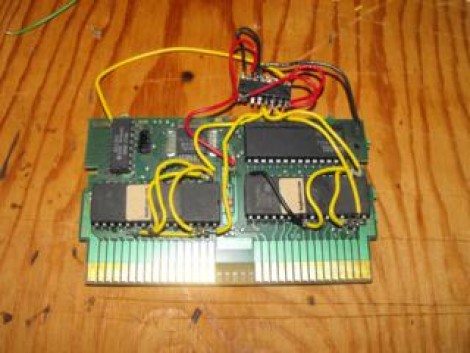
NES multi-cartridge

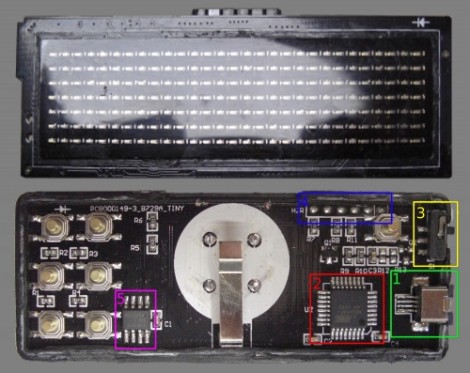
Here’s a mutlicartridge hack for the original NES that [Callan Brown] put together. He spent some time snooping around the signals on the circuit board seen above until he found the trace that maps the reset signal from the game console. This will be used to cycle through the various games stored on the cart’s memory chip. The ROM images … Read the rest

Reverse engineering a cheap LED message marquee

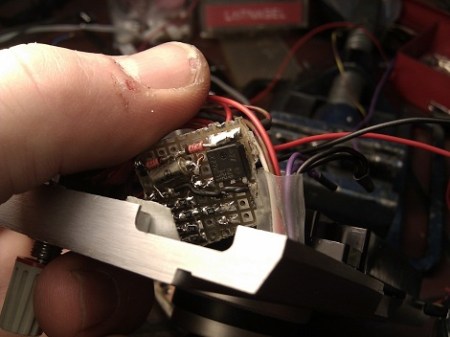
[Hugo] went all out when sharing his findings while reverse engineering this small LED marquee. He purchased the 29×7 LED matrix for under $12 but was surprised to find that the USB connector wasn’t a standard type and didn’t come with a cable. He first soldered a standard connector in place and then set out to make the device do Read the rest

A computer-controlled shutter for Polaroid packfilm cameras

[Georg] wanted to modify his old Polaroid land camera so he could have control over the exposure time. The resulting project is a neat hack, if we say so ourselves.

The stock electronics in Polaroid 100-series Packfilm cameras were a simple analog computer that integrates current through a light-sensitive resistor. This is a simple, low tech way to make sure … Read the rest

An alarm for every day of the week

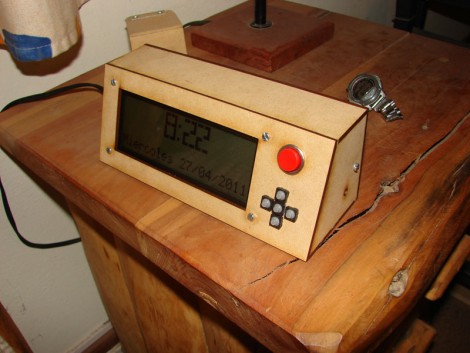
If you don’t have a 9-to-5 type of job you might find yourself constantly resetting your alarm clock as your calendar commitments change. [Lucas] finally got fed up with the nightly ritual and decided to build his own alarm clock which has unique settings for each day of the week (translated).

The display itself is an LM044L 20×4 … Read the rest

1Hz timebase

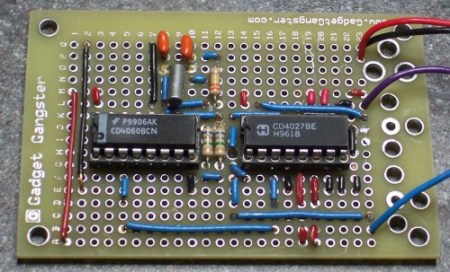
Check out this nice simple method of achieving a 1Hz timebase. This is basically a lesson in dividing crystal frequencies in circuits to get the desired result. In this case, they are starting with a 32.768KHz crystal and dividing it down. Instead of using an NE555 like many projects, he chose to go a direction that would yield results … Read the rest

Displaying video and gifs on RGB LED matrices

led_matrix

[Mathieu] was on holiday in China and picked up some fun toys while perusing the numerous electronics markets there. The most interesting things he discovered were a pair of RGB LED matrices. They came in two different flavors, one made for indoor and one for outdoor displays, sporting a 64×32 and 32×16 resolution, respectively.

If you’ve read his blog … Read the rest