Bay Area Maker Faire: Hackaday has arrived!

posted May 20th 2011 1:09pm by
filed under: cons, news

It’s a madhouse already at the 2011 Bay Area Maker Faire. Though the show doesn’t officially start until tomorrow, Friday is “Education Day”, a special preview for local schools. As makers scramble to set up their displays, a thousand impressionable young minds seek the most cacophonous mixture of taiko drumming, ArcAttack’s musical Tesla coils, and the beeping and booping of the R2-D2 Builder’s Club.

Maker Faire is returning for its sixth year at the San Mateo Event Center, and is shaping up to be bigger and zanier than ever. We’ll do our best to provide some live updates through the weekend. As always, check out the official site for pointers on hours, admission, parking and especially public transit options.

(Photo: Colossus, the death-defying centerpiece of the Midway area of the Faire.)

Oogoo, a home-made Sugru substitute

posted Oct 11th 2010 6:21am by
filed under: chemistry hacks, misc hacks

If you follow Instructables.com, it might seem like every third article lately is about Sugru, the nifty air-drying silicone putty that’s good for all manner of repairs and custom parts. It’s fantastic stuff (and we love their slogan, “Hack things better”), but one can’t (yet!) just drop in on any local hardware store to buy a quick fix…so [mikey77] has cooked up a recipe for a basic Sugru work-alike. His “Oogoo” (a name likely inspired by oobleck) is a simple mix of corn starch and silicone caulk.

A two-ingredient recipe would hardly seem adequate material for an article, but [mikey77]’s left no stone unturned, providing an extensive tutorial not only on mixing the compound, but how to add colors, cast and carve custom shapes, and how his home-made recipe compares to the name brand product. As a bonus, the article then drifts into a little Halloween project where he demonstrates etching conductive cloth, how to make conductive glue, and other hands-on shenanigans.


Spy Video TRAKR: software and first hack

posted Sep 2nd 2010 6:45am by
filed under: classic hacks, Featured, how-to, robots hacks, toy hacks

Our initial view of the Spy Video TRAKR “App BUILDR” site had us believing this would be an internet-based code editor and compiler, similar to the mbed microcontroller development tools. Delving deeper into the available resources, we’re not entirely sure that’s an accurate assessment — TRAKR may well permit or even require offline development after all. Regardless of the final plan, in the interim we have sniffed out the early documentation, libraries and standalone C compiler and have beaten it into submission for your entertainment, in order to produce our first TRAKR hack!

Read the rest of this entry »

Spy Video TRAKR: the teardown

posted Aug 30th 2010 2:45pm by
filed under: robots hacks, teardown, toy hacks

Last Friday we looked at Wild Planet’s Spy Video TRAKR programmable RC vehicle mostly from an end user perspective. Much of our weekend was spent dismantling and photographing the device’s internal works, and poring over code and documentation, in order to better gauge the TRAKR’s true hackability. Our prior review included some erroneous speculation…we can clarify a number of details now, and forge ahead with entirely new erroneous speculation!

Read the rest of this entry »

Spy Video TRAKR: first impressions

posted Aug 27th 2010 4:32am by
filed under: reviews, robots hacks, toy hacks

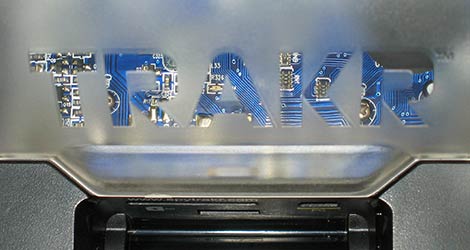
At the Bay Area Maker Faire this past May, we had our first glimpse of Wild Planet’s Spy Video TRAKR, a $130 radio-controlled toy with some surprises under the hood.

On the surface, the Spy Video TRAKR — the latest addition to the popular Spy Gear toy line — is an R/C tank with a video camera and night vision, with the added ability to download new “apps” from the internet for extra functions. With a little detective work, one uncovers the TRAKR’s secret double life: it’s also an eminently hackable robotics platform! Prior Spy Gear toys have been popular hack targets, providing inexpensive, mass-produced sources of unusual items such as head-mounted displays. Rather than throw up barriers, Wild Planet has chosen to embrace this secondary market, with plans to release development tools and documentation making it possible to extend the device’s capabilities.

Read on for our image-heavy unboxing and initial impressions.


Behind the scenes of a 1K graphics demo

posted Aug 8th 2010 12:00pm by
filed under: misc hacks, Software Development

Programmer/designer [Steven Wittens] has posted a fantastic write-up on the black art of producing compact demo code, dissecting his own entry in the 1K JavaScript Demo Contest. The goal is to produce the best JavaScript demo that can be expressed in 1024 characters or less and works reliably across all standards-compliant web browsers.

[Wittens] details several techniques for creating a lot of visual flash in very few bytes, including the use of procedural graphics rather than fixed datasets, exploiting prime numbers to avoid obvious repetitions in movement, and strategically fudging formulas to save space while adding visual interest. These methods are just as applicable to other memory-constrained situations, not just JavaScript — some of the contest entries bear a resemblance to the compact microcontroller demos we’ve previously showcased, except running in your browser window.

The contest runs through September 10th, allowing ample time to come up with something even more clever. Whether he wins or not, we think [Steven] deserves special merit on account of having one of the most stylish blogs in recent memory!

Cray-inspired PC case

posted Aug 5th 2010 9:00am by
filed under: pcs hacks

35 years following its introduction, and despite fewer than 100 systems deployed, the Cray-1 remains one of the most recognizable computers in history; it is a timeless icon of pure supercomputer badassery. Custom case builder [Daryl Brach] pays homage to this classic with his third-scale model housing two modern PC motherboards.

In an interesting reversal, the base of the model — the upholstered bench that housed cooling and power distribution for the original Cray — holds the PC motherboards and storage, while the upper section is currently just for show but may house a water cooling rig in the future. The paint scheme is inspired by the Cray-1 on display at the Smithsonian, though Daryl’s model does make a few modern concessions such as LED lighting. Hinged panels in the base flip open to access the systems’ optical drives (perhaps to watch Tron on DVD).

The Cray-1 ran at 80 MHz and could house up to eight megabytes of memory…just about unfathomable performance in its day. It’s not clear what processors [Daryl] chose to outfit his system with, but regardless, even an entry-level modern PC doesn’t just run circles around its progenitor, it runs ray-traced glass spheres around it. Technology marches on, but good design never goes out of style.

Recyclebot digests milk jugs to feed MakerBot

posted Aug 5th 2010 8:00am by
filed under: cnc hacks, green hacks

The old saying, “garbage in, garbage out” may need to be re-evaluated. Students at Victoria University of Wellington are developing a machine that recycles old milk jugs, extruding an HDPE plastic filament that can then be fed into a MakerBot for 3D printing.

The process involves grinding the plastic into small pieces, then pressing these through a heater and extruder plate to produce a continuous bead of the proper diameter for the MakerBot. Nichrome wire — the stuff of hair dryers and toasters — forms the heating element, and this must be regulated within a specific temperature range for different plastics. The initial grinder design is hand-cranked, but they are working toward a fully automated system. It appears that the machine could also recycle old MakerBot output, provided the grinder has sufficient torque.

So one man’s trash really is another man’s treasure. We envision a future of crazy-haired makers rooting through their neighbors’ garbage, feeding their Recyclebots’ hoppers “Mr. Fusion” style.


Hack a Day serves up fresh hacks each day, every day from around the web as well as hacking related news.

Send us your hacks


Hacks

Resources