posted Dec 8th 2010 1:00pm by
Mike Szczys
filed under:
misc hacks,
radio hacks

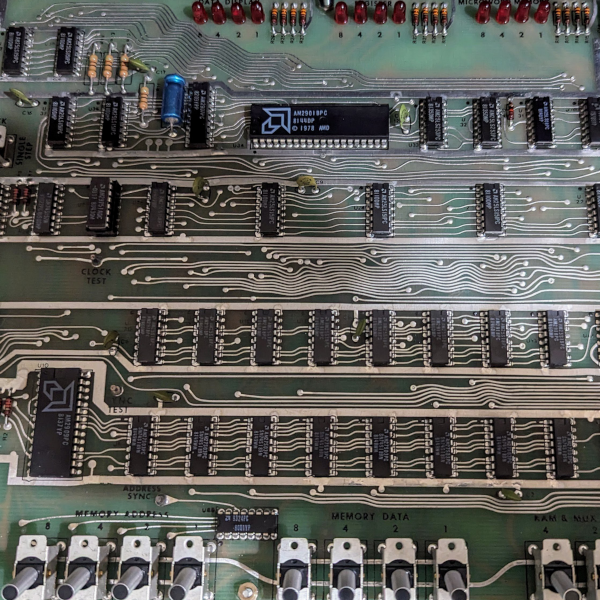
Building a great looking box for your projects can be a challenge. [Ken] boils down his process of building enclosures out of copper clad (PDF) circuit board material into an illustrated guide in case you want to try this for yourself. Why would you want to use PC board? The fiberglass substrate makes for a strong and lightweight material. Also, [Ken] is a ham radio operator and the copper coating acts as an electrical shield for delicate components inside.
As you can see above he uses solder to tack the pieces together. There’s some important considerations that go along with this method. First, he cuts the pieces just a bit oversized and then sands them flat and square before assembly. Next, he uses some 20 gauge wire as a shim between a ninety-degree joint and a right angle jig. This shim compensates for the shrinking that occurs as the solder cools, making sure the joint gets pulled to a right angle. He even solders nuts in place so that screws can be used to attach the case cover to the chassis.
Yesterday we saw toner transfer used to make labels on an ABS case. If you make your enclosure out of copper clad, using toner transfer for panel labels will be a snap!
posted Nov 7th 2010 2:00pm by
Mike Szczys
filed under:
cnc hacks

[Stephen Eaton] created an enclosure and shared his process in a pair of blog post. We thought is was amusing that he remarks on how rarely his projects get the to point that you’d want to make an enclosure for them. We’ve certainly got a lot of bare-PCB creations lying around. But when it does come time, we think his fabrication method is a good way to go.
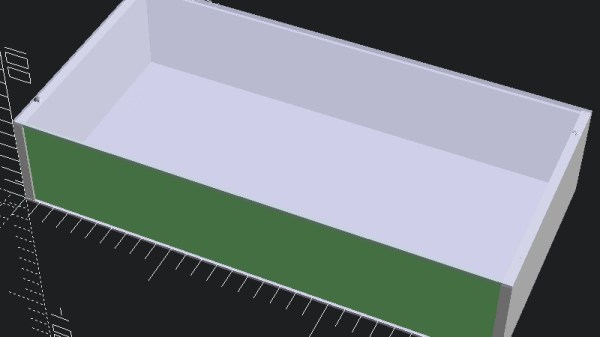
First of all, he didn’t start from scratch. He already had a SparkFun project case sitting around. The problem is figuring how to make it work for your situation. We’ve used a drill, a Dremel, and a file in the past and that yields passable results but nothing that would be mistaken for anything other than a carefully mangled project box. [Stephen] decided to mill the openings he needed from the box, which yielded professional looking results. He started by emailing SparkFun and asking if they could give him a 3D model of the project box and the obliged. He then modeled the LCD screen, LED light pipes, button, USB port, and SD socket. From there it was off to the mill with a custom jig and a few tricks we think you’ll appreciate. The end result is just another reason to build the CNC mill you’ve had on your mind for so long.
posted Jul 9th 2010 1:00pm by
Mike Szczys
filed under:
pcs hacks

Who needs metal, wood, or acrylic if you are talented with duct tape? This server is housed in a 20-sided enclosure made entirely of duct tape, 22 rolls of it. A team of seven completed the project after eight build session over the course of about ten days. It’s currently in use at this year’s MillionManLan 9 as confirmed by this incredibly boring live feed.
However whimsical, we do appreciate the build process. Tubes are rolled until they reach the specified thickness, then cut to length on a chop saw. More sticky stuff is applied to the joints and piece by piece the frame comes together. From the diagram laying off to the side in one of the pictures it looks like they did the smart thing by designing this in CAD before getting their hands dirty sticky.
posted Apr 6th 2010 12:33pm by
Mike Szczys
filed under:
tool hacks

[Riley Porter] has been working on several different custom enclosure designs. Above, you can see his Proto Desk which holds a breadboard, Arduino, and has two recessed boxes with sliding tops for components and patch wires. He’s got a miniature version that gets rid of the breadboard, as well as slick-looking cases for the Bus Pirate, tinyISP, and face plates for word clocks.
Well, if you’ve got a laser cutter you should be using it right? We’ve seen [Riley's] wares in the past; he wrote the guide for laser cutting solder stencils.
[Thanks Brian]
posted Feb 12th 2010 4:00pm by
Mike Szczys
filed under:
tool hacks

This clear rubber puck serves as the enclosure for a diy mp3 player. The wires encapsulated in the rubber are just there for looks but the utility of using this material as a case is fascinating. Alas, there’s no details on the material other than that it’s clear rubber. Update: [Reboots] picked up on some info that we originally missed. Looks like this is made from some Smooth-On PCM 780 urethane rubber.
We’ve looked into casting our own molds from silicone rubber in the past. That may be the process used here but we can’t tell what allows the two halves to be pried apart. We’ve embedded video after the break that details casting rubber around a part in one solid block, then cutting the rubber off of that to create a mold. We’re also familiar with the mold making kits from Tap plastics but as far as we know, they’re always colored and never clear.
We keep our eyes peeled for new prototyping products and we want to know more about the materials and the process used to make this cylindrical elastomer. If you’ve got the goods on how this is done, please share them in the comments.
Read the rest of this entry »
posted Feb 7th 2010 6:41am by
Phil Burgess
filed under:
misc hacks,
toy hacks

Nothing Earth-shattering here. Just, dare we say it, really cute!
The venerable Altoids mint tin has become an icon of the maker culture. Browsing through past articles on Hack a Day, Adafruit or Instructables, you’ll find project after project for which these pocket-sized enclosures provided just the right fit. Eminently practical, affordable, but the aesthetics have occasionally left something to be desired.
We recently stumbled upon these nifty gift card holders that resemble miniature versions of current-generation game consoles. They might be the perfect housing for your next microcontroller project…
Read the rest of this entry »
posted Feb 2nd 2010 1:00pm by
Mike Szczys
filed under:
tool hacks

This is a “why didn’t I think of that?” idea. [Alec] needed a way to connect an IDE DVD drive using USB. Rather than order a connector he pulled the circuit board out of an old USB hard drive enclosure and connected to his DVD drive. Bang, recognized and running.
This will prove extremely handy if you have a netbook without an optical drive. We’ve used Unetbootin to move Linux ISO images to a thumb drive in the past. In addition to getting around the lack of an optical drive, this saves burning the data to a piece of plastic. But, you should be able to use this with a Leopard retail DVD instead of a 16GB thumb drive for a Hackintosh conversion. That means you could install Leopard on a netbook without needing a Mac to transfer the disk image to your thumb drive first.
posted Dec 27th 2009 12:23pm by
Mike Szczys
filed under:
android hacks,
classic hacks

[Dennis] got snowed in after the biggest storm in the history of the state hit. Like any good hacker he didn’t let the time go to waste. He decided to dig out his Neo Freerunner to give it a decent battery and a new OS.
The original battery for the Freerunner has a controller board integrated into the package. [Dennis] pulled out the board and attached it to a portable DVD player battery. After running it through a discharge cycle with another hack of his, the board learned the new battery capacity. The larger battery plus a fast-charger from SparkFun required a larger case. He made it happen by combining a 2.5″ HDD case with the original body courtesy of some JB weld. The final portion of the hack was to load up Android which is as simple as untarring the package onto an SD card.
It’s a bit big, but the battery will last and he’s got an open platform. Nice work!