Paper ROM

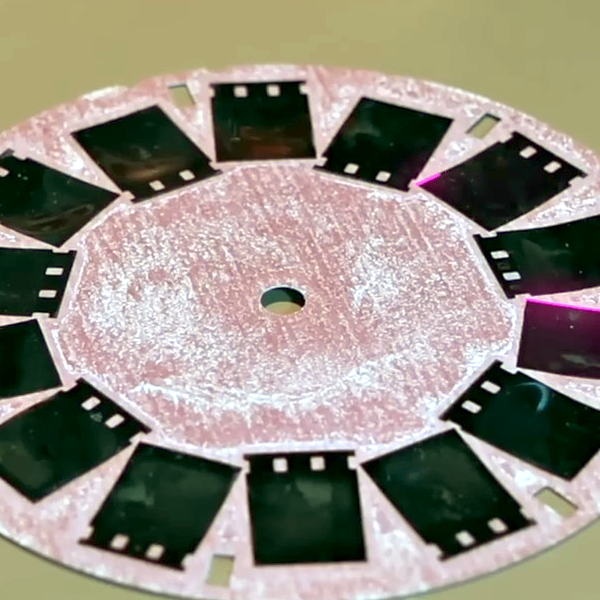
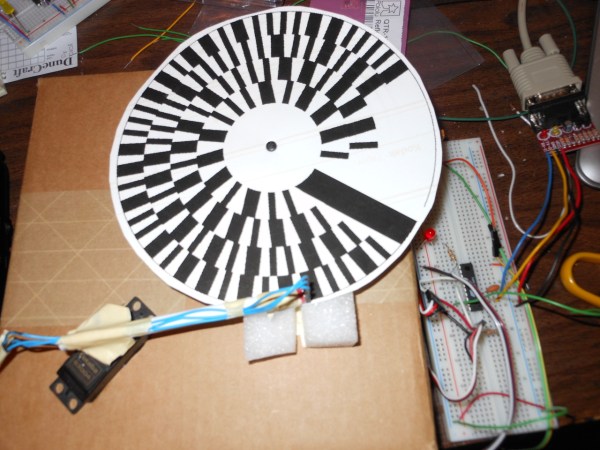
This low-resolution memory device packs in just a few bytes of data. But it’s enough to spell out [Michael Kohn’s] name. He’s been experimenting with using paper discs for data storage.

His technique becomes immediately clear when you view the demo video below. The disc spins multiple times with the sensor arm reading one track. This gives the system the chance to measure the black band in order to get the data timing figured out. Once the outer track has been read the servo controlling the read head swings it to the next until all of the data is captured.

An Arduino is monitoring the QTR-1RC reflectance sensor which makes up the reading head. It uses the black band width in order to establish the size of an individual byte. Interestingly enough, the white parts of the disc do not contain data. Digital 0 is a black area 1/4 the width of the large black strip, and digital 1 is half as wide.

[Michael’s] set up the generator which makes the discs so that he can easily increase the resolution. The limiting factor is what the reading hardware is able to detect.
Continue reading “Paper ROM”

How Do You Think This Quadcopter Feels?

how-does-this-quadcopter-feel

You don’t speak the language of dogs and yet you can tell when one is angry, excited, or down in the dumps. How does that work, and can it be replicated by a robot? That’s the question which [Megha Sharma] set out to study as part of her graduate research at the University of Manitoba in Winnipeg.

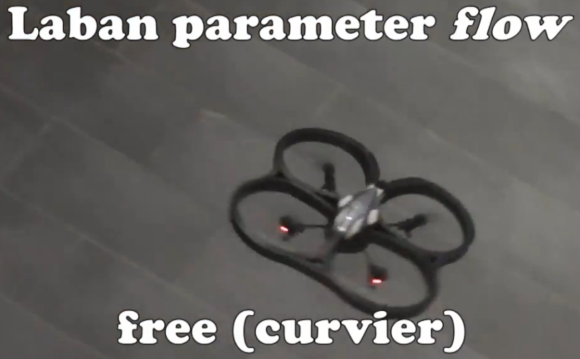
The experiment starts by training the robot in a series of patterns meant to mimic emotion. How, you might ask? Apparently you hire an actor trained in Laban Movement. This is a method of describing and dealing with how the human body moves. It’s no surprise that the technique is included in the arsenal of some actors. The training phase uses stationary cameras (kind of like those acrobatic quadcopter projects) to record the device as it is moved by the actor.

Phase two of the experiment involves playing back the recorded motion with the quadcopter under its own power. A human test subject watches each performance and is asked to describe how the quadcopter feels. The surprising thing is that when asked they end up anthropomorphising the inanimate device even further; making up small stories about what the thing actually wants.

It’s an interesting way to approach the problem of the uncanny valley in robotic projects.

Continue reading “How Do You Think This Quadcopter Feels?”

Kebab Skewer Quadcopter

kebab-skewer-quadcopter

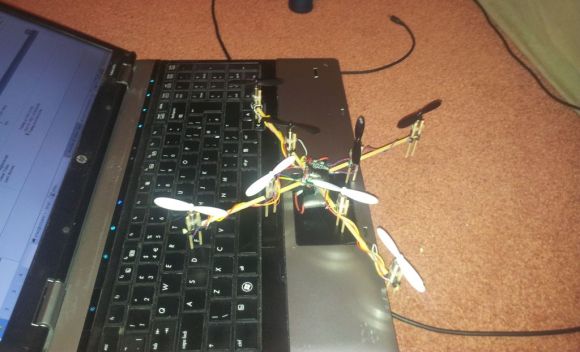
Quadcopters are the epitome of high-tech hobby electronics. We’re quite used to seeing the frames built out of modern materials (carbon fiber, 3d printed, etc). But it’s pretty hard to beat the strength-to-weight ratio of kebab skewers. You heard us correctly. [Shiny Shez] built his quadcopter frame from kebab skewers.

You might want to get that Boy Scout Handbook out and brush up on your lashing skills. Lashing is a method of using rope (string in this case) to fasten together wooden sticks (bamboo kebab skewers). Once the lashed joints are precisely oriented [Shiny] applies a liberal coat of super glue to cement them in place.

He went the easy route when it comes to control hardware. You can get spare parts for the Husban X4, a commercially available quadcopter. Its main controller is used here. The single board controls the motors, monitors an IMU to keep the aircraft stable while in flight, and includes a wireless transceiver. On the receiving side [Shiny] uses an Arduino with a wireless module. This way he can control the quadcopter from his laptop, or go one step further and use an Android phone.

Your Resume All Cinched Up In LaTeX

latex-resume

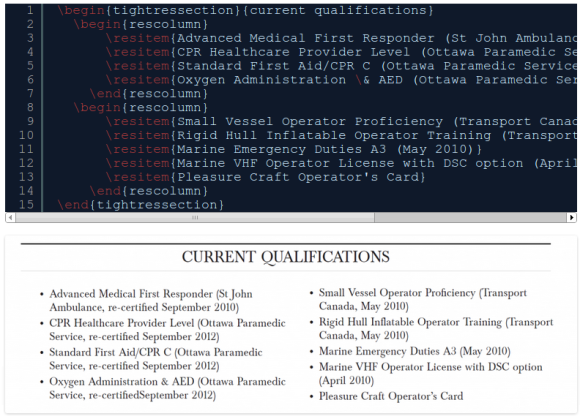
Engineers just do things differently, which is why this hack makes a lot of sense to us. Instead of choosing a platform like Open Office to maintain his resume [Campbell Hennessy] renders his employment and references using LaTeX.

We separate content from styling on the web all the time using CSS and content management systems (Hackaday uses WordPress). And with the online component of employment history and job applications becoming progressively more important it makes a lot of sense to prepare your CV accordingly.

LaTeX is a markup language that makes graphically pleasing typesetting effects a snap. We’ve seen it used to label resistor storage tubes and server side hacks to embed the markup in HTML. If you haven’t tried it out yourself just grab your resume (which probably needs updating anyway), a LaTeX rendering tool of your choice, crack those knuckles, and follow along with [Campbell’s] experience.

Text Editor Running On Your ARM Project

bare-metal-elua-text-editor

Tired of flashing your embedded project over and over just to tweak a few values? So was [Karl], so he wrote a text editor that runs on his ARM dev board.

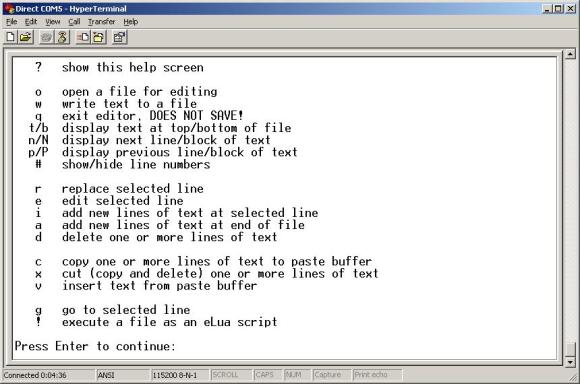
Having trouble wrapping your mind around the need for this kind of thing? He’s actually playing around with eLua, the embedded version of the Lua programming language. In this case the program files are being stored on an SD card. But still, moving that back and forth between computer and embedded project gets old quickly. So he invested the time to write a rudimentary text editor that he interfaces through this terminal window. Above you can see the help screen which lays out all of the applications features. Right now it sounds like the only gotcha for this is the amount of RAM it needs to run. As it stands, the editor will now work an mbed board, but it works just fine on an STM Discovery.

3D Printed Dispenser Flings Treats At Your Pets

internet-connected-dog-treat-dispenser

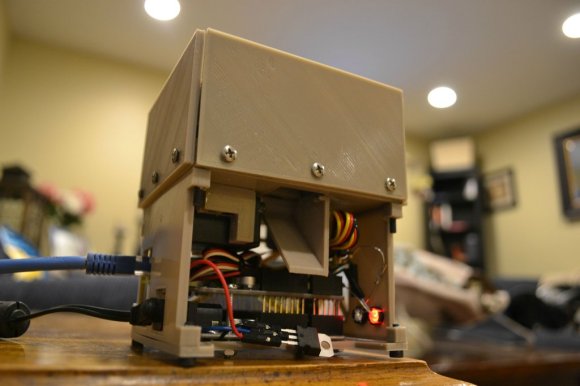
If you’re stuck in the virtual world like [Kevin Flynn] you can still make sure your pup is rewarded for good behavior. Just follow [Jwarp’s] design for this Internet connect dog treat dispenser.

We were actually a bit surprised by the demo video. It shows that the compact unit is more than capable of reliably dispensing one treat at a time. It started as a wood prototype which allowed him to tweak how the servo motors worked before laying out all of the 3D parts in Sketch Up. Two motors cooperate to get the job done. The first allows one treat to exit that shoot coming from the center of the hopper. The other stirs the remaining inventory to both position the next treat and loosen any jams.

Continue reading “3D Printed Dispenser Flings Treats At Your Pets”

Teardrop Camper Combines Simplicity, Style, And Function

teardrop-camper

They needed a place to stay on road trips and at music festivals. This teardrop camper certainly fits the bill. And it’s got a look that will make you proud to unfold yourself into the parking lot every morning.

Starting from a flat frame the camper skeleton was built up using plywood sides and cross pieces to help support the sweeping roof. It was then covered with 1/4″ Birch plywood which has enough flexibility to follow the contour. Inside you won’t find much in the way of frills, but the entire floor is a 4″ thick foam mattress which is a lot better that camping out. There’s a dome on top which can opens for ventilation and a hatch on the rear to carry some extras along on your adventure.

[via Reddit]