A Transparent BB-8 Build Using Christmas Ornaments

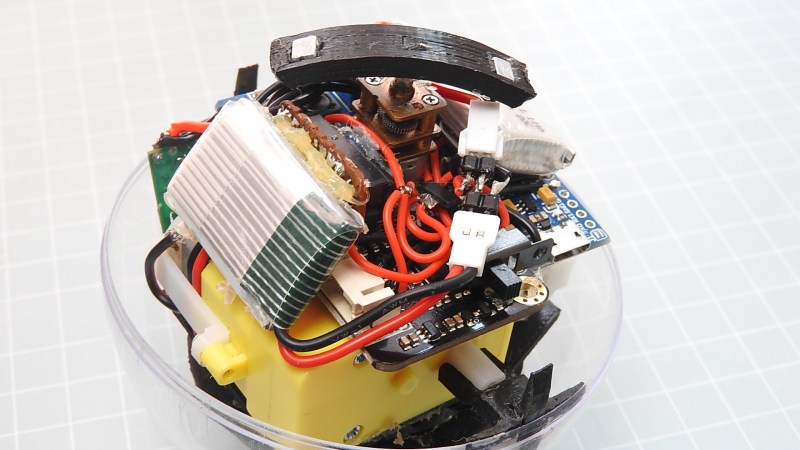
The cool thing about the droids of Star Wars is that they’re not that hard to recreate in real life. R2-D2 is a popular choice, but you can even build yourself a neat little BB-8 if you’re so inclined. [Piyush] has built a particularly compelling example that’s transparent, which lets you see the internals and how it all works.

The build makes creative use of a pair of Christmas ornaments. They are perhaps the cheapest and easiest way to source a clear plastic sphere. One serves as the “head”, while the other serves as the larger spherical body. Inside, an Arduino Pro Micro is running the show. It’s hooked up to a L293D motor driver which runs the drive motors and the reaction wheel motor which provides stability, while a separate MOSFET is on hand to run the gear motor which controls the head.

There’s also an HC-05 module for Bluetooth communication, and a BNO055 sensor for motion tracking and ensuring the robot stays the right way up. 3D printed components are used prodigiously to cram everything together tightly enough to fit. There’s even a printed charging base to juice up the little droid. Controlling the robot is as simple as using a smartphone with an app created in the MIT App Inventor.

If you’ve never built a spherical rolling robot before—and few of us have—this design is a great reference for your own work. We’ve seen a few BB-8s over the years, most of which dropped shortly after the movie was released. Continue reading “A Transparent BB-8 Build Using Christmas Ornaments” →
DIY 3D-Printed Arduino Self-Balancing Cube

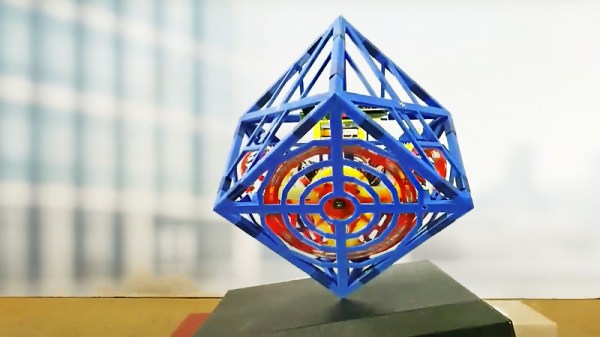
Self-balancing devices present a unique blend of challenge and innovation. That’s how [mircemk]’s project caught our eye. While balancing cubes isn’t a new concept — Hackaday has published several over the years — [mircemk] didn’t fail to impress. This design features a 3D-printed cube that balances using reaction wheels. Utilizing gyroscopic sensors and accelerometers, the device adapts to shifts in weight, enabling it to maintain stability.

At its core, the project employs an Arduino Nano microcontroller and an MPU6050 gyroscope/accelerometer to ensure precise control. Adding nuts and bolts to the reaction wheels increases their weight, enhancing their impact on the cube’s balance. They don’t hold anything. They simply add weight. The construction involves multiple 3D printed components, each requiring several hours to produce, including the reaction wheels and various mount plates. After assembly, users can fine-tune the device via Bluetooth, allowing for a straightforward calibration process to set the balancing points.

If you want to see some earlier incarnations of this sort of thing, we covered other designs in 2010, 2013, and 2016. These always remind us of Stewart platforms, which are almost the same thing turned inside out.

Continue reading “DIY 3D-Printed Arduino Self-Balancing Cube” →

Building A Small Gyro Stabilized Monorail

Monorails aren’t just the core reason why The Simpsons remains on air after thirty-six seasons, twenty-six of which are unredeemable garbage. They’re also an interesting example of oddball rail travel which has never really caught on beyond the odd gadgetbahn project here and there. [Hyperspace Pirate] recently decided to investigate the most interesting kind of monorail of all—the gyro stabilized type—on a small scale for our viewing pleasure.

The idea of a gyro-stabilized monorail is to use active stability systems to allow a train to balance on a single very thin rail. The benefits of this are questionable; one ends up with an incredibly expensive and complex rail vehicle that must always run perfectly or else it will tip over. However, it is charming to watch in action.

[Hyperspace Pirate] explains how the monorail vehicle uses control moment gyroscopes to keep itself upright. The video also explains the more common concept of reaction wheels so the two systems can be contrasted and compared. It all culminates in a wonderful practical demonstration with a small 3D printed version of a 20th-century gyro monorail running on a 24″ track.

If you’re studying mechanical engineering this is a great project to pore over to see theoretical principles put into obvious practice. Video after the break.

Continue reading “Building A Small Gyro Stabilized Monorail” →

The Past, Present, And Future Of Inflatable Space Habitats

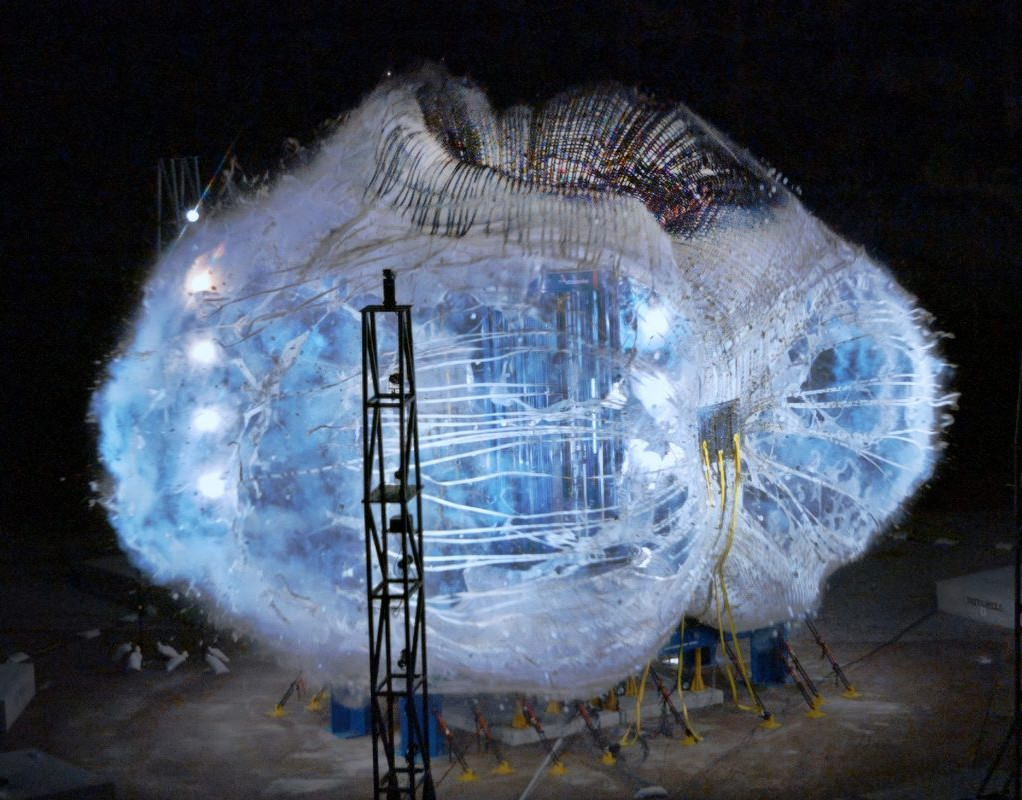
Recently, a prototype inflatable space station module built by Sierra Space exploded violently on a test stand at NASA’s Marshall Space Flight Center in Alabama. Under normal circumstances, this would be a bad thing. But in this case, Sierra was looking forward to blowing up their handiwork. In fact, there was some disappointment when it failed to explode during a previous test run.

LIFE Module Burst Test

That’s because the team at Sierra was looking to find the ultimate bust pressure of their 8.2 meter (26.9 foot) diameter Large Integrated Flexible Environment (LIFE) module — a real-world demonstration of just how much air could be pumped into the expanding structure before it buckled. NASA recommended they shoot for just under 61 PSI, which would be four times the expected operational pressure for a crewed habitat module.

By the time the full-scale LIFE prototype ripped itself apart, it had an internal pressure of 77 PSI. The results so far seem extremely promising, but Sierra will need to repeat the test at least two more times to be sure their materials and construction techniques can withstand the rigors of spaceflight.

Sierra is a targeting no earlier than 2026 for an in-space test, but even if they nail the date (always a dubious prospect for cutting edge aerospace projects), they’ll still be about 20 years late to the party. Despite how futuristic the idea of inflatable space stations may seem, NASA first started experimenting with the concept of expandable habitat modules back in the 1990s, and there were practical examples being launched into orbit by the early 2000s.

Continue reading “The Past, Present, And Future Of Inflatable Space Habitats” →

See Some Of The Stranger VR Ideas From SIGGRAPH

[Devin Coldewey] shared his experiences with some of the more unusual VR concepts on display at SIGGRAPH 2023. Some of these ideas are pretty interesting in their own right, and even if they aren’t going to actually become commercial products they give some insight into the kinds of problems that are being worked on. Read on to see if anything sparks ideas of your own.

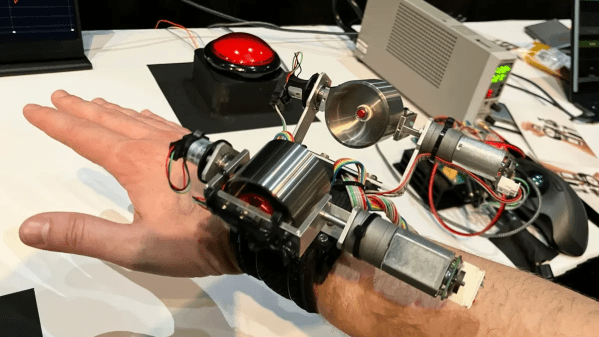
In the area of haptics and physical feedback, Sony shared research prototypes that look like short batons in which are hidden movable weights. These weights can shift up or down on demand, altering their center of gravity. [Devin] states that these units had a mild effect on their own, but when combined with VR visuals the result was impressive. There’s a video demonstration of how they work. Continue reading “See Some Of The Stranger VR Ideas From SIGGRAPH” →

Lego Plays Electronic Drums

The ability to quickly try out an idea, and then expand and develop it, is what rapid prototyping is all about. Although we tend to think of 3D printing when rapid prototyping is mentioned, [Brick Technology] reminds us of the power of Lego, as he rapidly builds and improves an electromechanical drum machine.

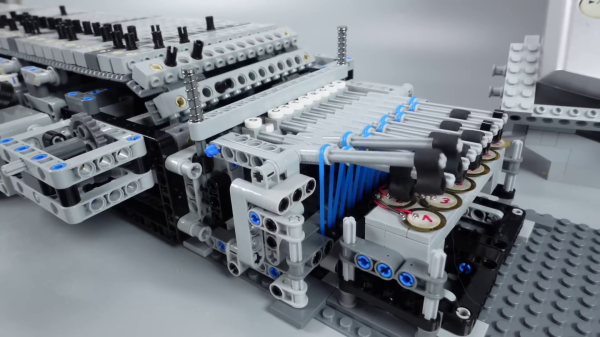
Using Lego Technic pieces, he starts with a simple music box-style drum with moveable pins that pluck on spring-loaded levers, which in turn hit piezoelectric discs. The electronics side is simple, with the discs wired to a Roland sound module from an existing electronic drum kit. With the ability to instantly adjust, add and remove pieces, he quickly finds and fixes the problem of getting eleven hammer mechanisms together and working smoothly.

To get around the limited pin space on the drum and increase the length and variation potential of the rhythms, [Brick Technology] moved to a belt design that can accommodate significantly more pins. He also added an electric motor and various gearbox ratios for consistent and adjustable tempo. Together with his water vortex ball machine, he makes us think our workshops probably need a few hundred Lego Technic pieces.

Continue reading “Lego Plays Electronic Drums” →

CAPSTONE: The Story So Far

After decades of delays and false starts, NASA is finally returning to the Moon. The world is eagerly awaiting the launch of Artemis I, the first demonstration flight of both the Space Launch System and Orion Multi-Purpose Crew Vehicle, which combined will send humans out of low Earth orbit for the first time since 1972. But it’s delayed.

While the first official Artemis mission is naturally getting all the attention, the space agency plans to do more than put a new set of boots on the surface — their long-term goals include the “Lunar Gateway” space station that will be the rallying point for the sustained exploration of our nearest celestial neighbor.

But before launching humanity’s first deep-space station, NASA wants to make sure that the unique near-rectilinear halo orbit (NRHO) it will operate in is as stable as computer modeling has predicted. Enter the Cislunar Autonomous Positioning System Technology Operations and Navigation Experiment, or CAPSTONE.

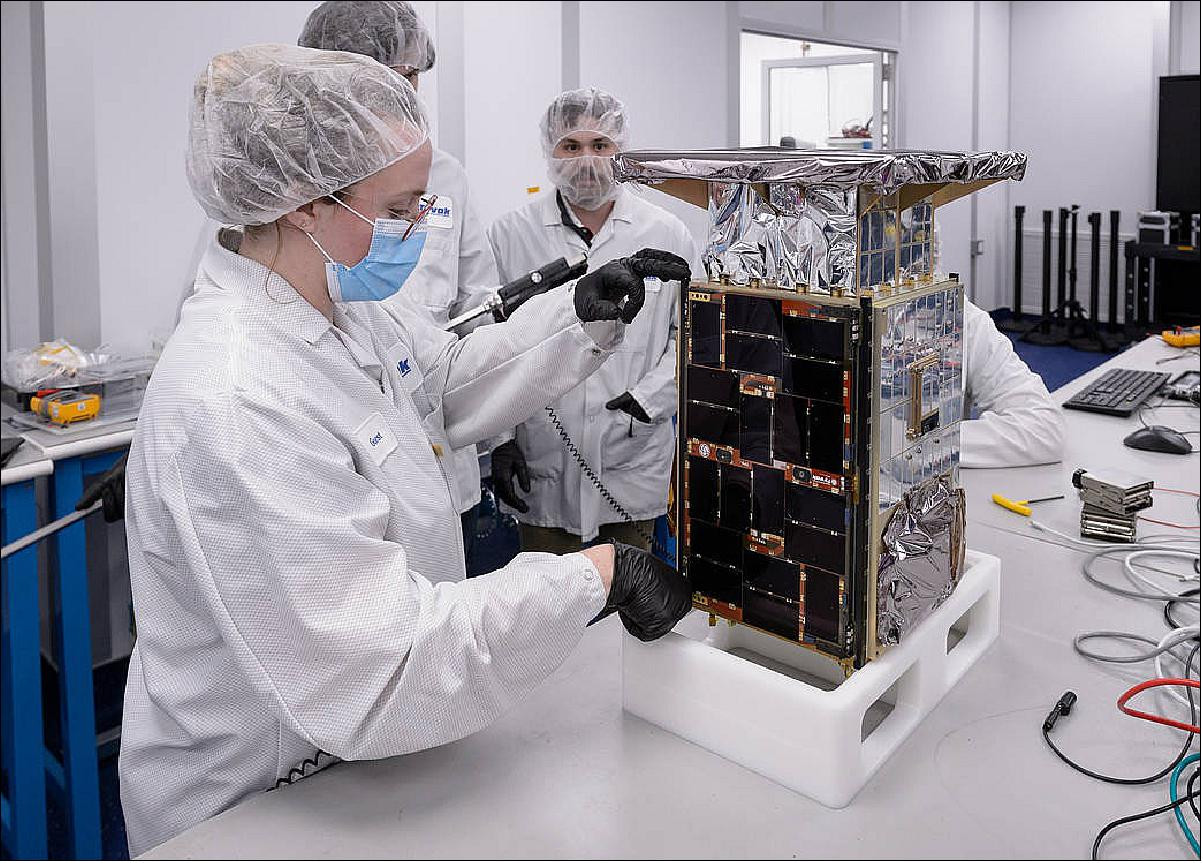
CAPSTONE in the clean room prior to launch.

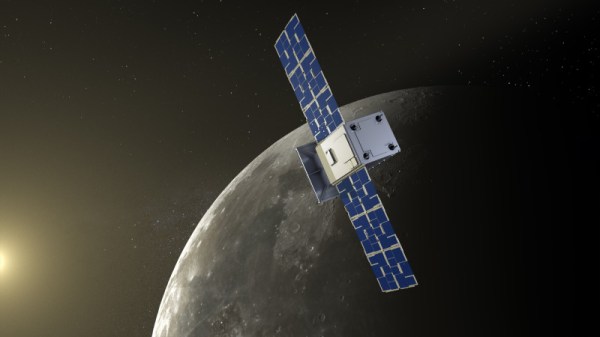
Launched aboard an Electron rocket in June, the large CubeSat will hopefully become the first spacecraft to ever enter into a NRHO. By positioning itself in such a way that the gravity from Earth and the Moon influence it equally, maintaining its orbit should require only periodic position corrections. This would not only lower the maintenance burden of adjusting the Lunar Gateway’s orbit, but reduce the station’s propellant requirement.

CAPSTONE is also set to test out an experimental navigation system that uses the Lunar Reconnaissance Orbiter (LRO) as a reference point instead of ground-based stations. In a future where spacecraft are regularly buzzing around the Moon, it will be important to establish a navigation system that doesn’t rely on Earthly input to operate.

So despite costing a relatively meager $30 million and only being about as large as a microwave oven, CAPSTONE is a very important mission for NASA’s grand lunar aspirations. Unfortunately, things haven’t gone quite to plan so far. Trouble started just days after liftoff, and as of this writing, the outcome of the mission is still very much in jeopardy.

Continue reading “CAPSTONE: The Story So Far” →