
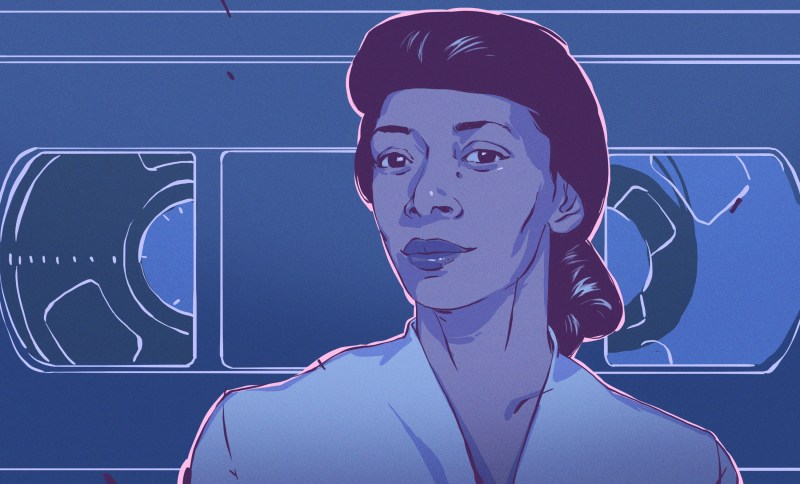
You’ve likely at least heard of Marion Stokes, the woman who constantly recorded television for over 30 years. She comes up on reddit and other places every so often as a hero archivist who fought against disinformation and disappearing history. But who was Marion Stokes, and why did she undertake this project? And more importantly, what happened to all of those tapes? Let’s take a look.
Marion the Librarian
Marion was born November 25, 1929 in Germantown, Philadelphia, Pennsylvania. Noted for her left-wing beliefs as a young woman, she became quite politically active, and was even courted by the Communist Party USA to potentially become a leader. Marion was also involved in the civil rights movement.

For nearly 20 years, Marion worked as a librarian at the Free Library of Philadelphia until she was fired in the 1960s, which was likely a direct result of her political life. She married Melvin Metelits, a teacher and member of the Communist Party, and had a son named Michael with him.
Throughout this time, Marion was spied on by the FBI to the point that she and her husband attempted to defect to Cuba. They were unsuccessful in securing Cuban visas, and separated in the mid-1960s when Michael was four.
Marion began co-producing a Sunday morning public-access talk show in Philadelphia called Input with her future husband John Stokes, Jr. The focus of the show was on social justice, and the point of the show was to get different types of people together to discuss things peaceably.
Outings Under Six Hours
Marion’s taping began in 1979 with the Iranian Hostage Crisis, which coincided with the dawn of the twenty-four-hour news cycle. Her final tape is from December 14, 2012 — she recorded coverage of the Sandy Hook massacre as she passed away.
In 35 years of taping, Marion amassed 70,000 VHS and Beta-max tapes. She mostly taped various news outlets, fearing that the information would disappear forever. Her time in the television industry taught her that networks typically considered preservation too expensive, and therefore often reused tapes.
But Marion didn’t just tape the news. She also taped various programs such as The Cosby Show, Divorce Court, Nightline, Star Trek, The Oprah Winfrey Show, and The Today Show. Some of her collection includes 24/7 coverage of news networks, all of which was recorded on up to eight VCRs: 3-5 were going all day every day, and up to 8 would be taping if something special was happening. All family outings were planned around the six-hour VHS tape, and Marion would sometimes cut dinner short to go home and change the tapes.
People can’t take knowledge from you. — Marion Stokes
You might be wondering where she kept all the tapes, or how she could afford to do this, both financially and time-wise. For one thing, her second husband, John Stokes, Jr., was already well off. For another, she was an early investor in Apple stock, using capital from her in-laws. To say she bought a lot of Macs is an understatement. According to the excellent documentary Recorder, Marion owned multiples of every Apple product ever produced. Marion was a huge fan of technology and viewed it as a way of unlocking people’s potential. By the end of her life, she had nine apartments filled with books, newspapers, furniture, and multiples of any item she ever became obsessed with.
In addition to creating this vast video archive, Marion took half a dozen daily newspapers and over 100 monthly periodicals, which she collected for 50 years. This does not include the 40-50,000 books in her possession. In one interview, Marion’s first husband, Melvin Metelits, said that in the mid-1970s, the family would go to a bookstore and drop $800 on new books. That’s nearly $5,000 in today’s money.
Why Tapes? Why Anything?
It’s easy to understand why she started with VHS tapes — it was the late 1970s, and they were still the best option. When TiVo came along, Marion was not impressed, preferring not to expose her recording habits to any possible governments. And she had every right to be afraid, with her past.
Those in power are able to write their own history. — Marion Stokes
As for the why, there were several reasons. It was a form of activism, which partially defined Marion’s life. The rest I would argue was defined by this archive she amassed.
Marion started taping when the Iranian Hostage Crisis began. Shortly thereafter, the 24/7 news cycle was born, and networks reached into small towns in order to fill space. And that’s what she was concerned with — the effect that filling space would have on the average viewer.
Marion was obsessed with the way that media reflects society back upon itself. With regard to the hostage crisis, her goal was trying to reveal a set of agendas on the part of governments. Her first husband, Melvin Metelits, said that Marion was extremely fearful that America would replicate Nazi Germany.
The show Nightline was born from nightly coverage of the crisis. It aired at 11:30PM, which meant it had to compete with the late-night talk show hosts. And it did just fine, rising on the wings of the evening soap opera it was creating.
To the Internet Archive
When Marion passed on December 14, 2012, news of the Sandy Hook massacre began to unfold. It was only after she took her last breath that her VCRs were switched off. Marion bequeathed the archive to her son Michael, who spent a year and a half dealing with her things. He gave her books to a charity that teaches at-risk youth using secondhand materials, and he says he got rid of all the remaining Apples.
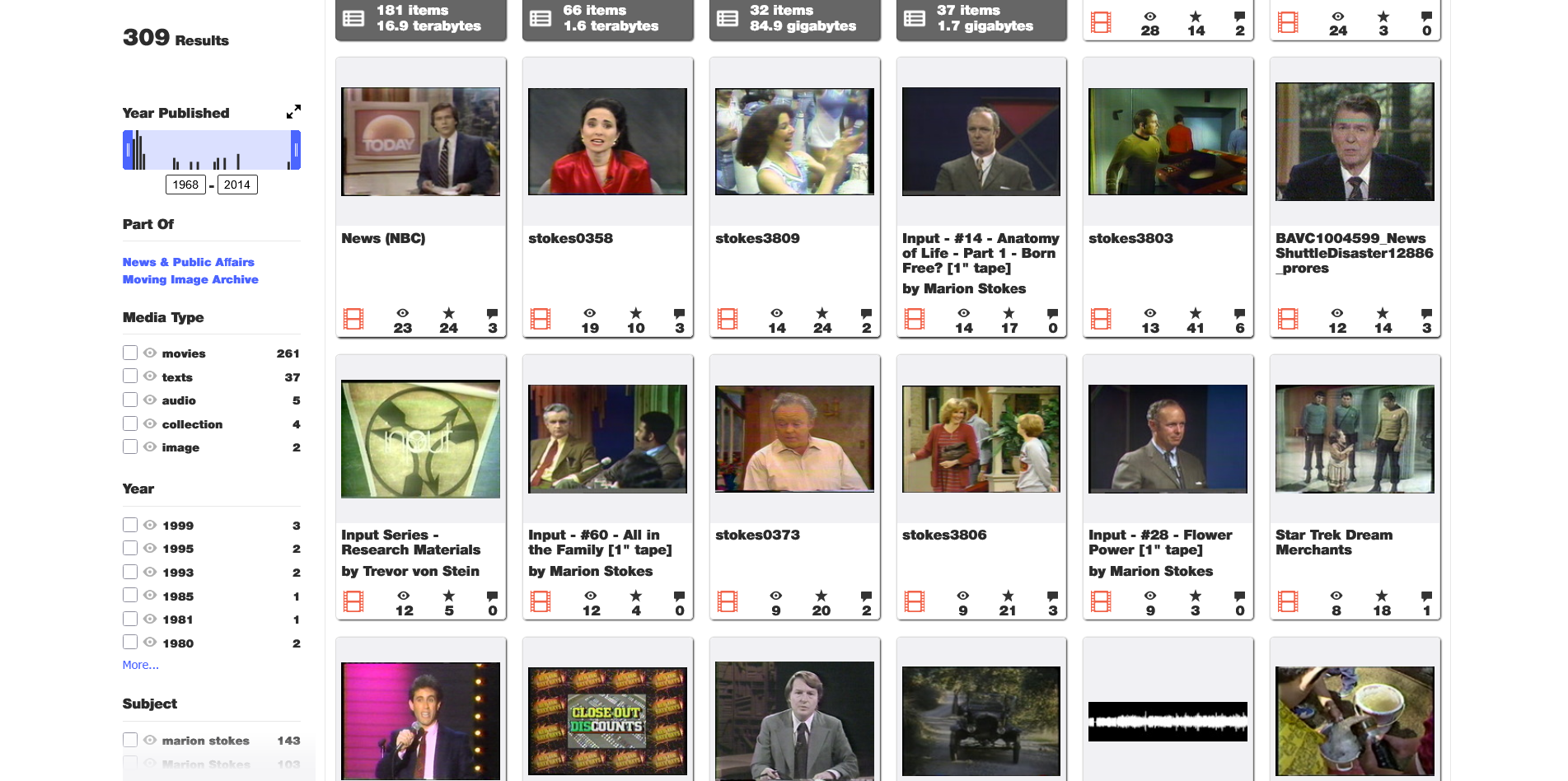
But no one would take the tapes. That is, until the Internet Archive heard about them. The tapes were hauled from Philadelphia to San Francisco, packed in banker’s boxes and stacked in four shipping containers.
So that’s 70,000 tapes; let’s assume six hours per tape, which totals 420,000 hours. No wonder the Internet Archive wasn’t finished digitizing the footage as of October 2025. That, and a lack of funding for the massive amount of manpower this must require.
If you want to see what they’ve uploaded so far, it’s definitely worth a look. And as long as you’re taking my advice, go watch the excellent documentary Recorder on YouTube. Check out the trailer embedded below.
Main and thumbnail images via All That’s Interesting











“…Marion was extremely fearful that America would replicate Nazi Germany…”
We already have proto-brownshirts in action.
Luckily, we were able to stop the ministry of Truth headed up by Jankowicz from becoming a reality before it was able to take root and spread.
What facts are you stating exactly? Any sources?
Maybe she did, maybe she didn’t. Do you think the same “reasoning” can be applied to EVERYTHING she recorded?
Do you HONESTLY think she “just” wanted to have everything else she recorded at hand whenever she needed it?
She probably recorded more than she could watch in her lifetime.
Maybe she was just a very specific hoarder. Thou considering the technical requirements I kinda doubt that.
“By the end of her life, she had nine apartments filled with books, newspapers, furniture, and multiples of any item she ever became obsessed with.”
Maybe not that specific.
I am not a mental health professional, but surely it’s possible that taping the airwaves may have been both an intentional effort to preserve history and a symptom of hoarding.
America replicate Nazi Germany? That would never happen!
Hey folks, we’ve had to delete some comments here because they got out of hand.
Sorry if you’d replied to one of them in order to set the record straight — your comments won’t display anymore either.
Please try to keep things civil / constructive!
No problem, it seems my reply got through anyway ; thanks for your time
You guys don’t really have a good track record for determining what’s “out of hand,” though. Maybe just stay out of it?
Or do the old thing: wait two weeks and then silently wipe the slate clean after the article has moved down the list to where people won’t see it, and the debate has died down. You can’t stop people from talking, but if you erase the memory, did it ever happen?
Sounds like we need our own Mrs. Stokes to record the comment section!
It’s probably for the best that you delete political posts and also a welcome change that someone actually posts to explain that it’s happened.
However, the comments system here is awful and clunky – whoever posts first, no matter how bad, gets the top spot and some truly brilliant and insightful comments end up lost below pages of bickering, conspiracy theories, and other nonsense.
You may find this worthwhile to read : https://en.wikipedia.org/wiki/Doctor_Who_missing_episodes
True, corporate data retention is one concern. My concern (and maybe Marion’s) is that the IP holder may withhold or alter the content, effectively erasing history. Cosby show was political (in that showing a happy black family on TV was considered political back then). You could imagine the network going back and edition or removing sections that became inconvenient in the years between a season airing on TV and the VHS box set coming out. This is a concern with racial portrayals in Disney content, for example.
Or imagine a the star of the show being implicated in a sex scandal that caused the show to become an unsellable asset. Ahem. Who knows what the IP holder will do with the content in this reality.
“Who knows what the IP holder will do with the content in this reality.”
As best I can tell from my cable TV listings, the show goes on. Surprising to me, but it does.
A happy black family is one thing, Sanford and Son were happy, Cosby was about a rich black family. No love for The Jeffersons? Happy, rich black family up from middle class with interracial neighbors!
Media gets altered all the time. ET had the guns rep;laced with walkie-talkies, cigarettes get erased, Friends had a cereal box changed to something more current, Roald Dahl got toned down somewhat (although even he changed the Oompa Loompas from the original black pygmies).
Now with AI (TM) we can do that in real time based on your ad data profile. What fun!
Ikea have been localizing their catalogs forever. They swap out the people for what the local ethnicity is, and of course Saudi Arabia has the women erased.
The BBC and the German TV cut out parts of movies too.
Sometimes for reasons that are hard to figure out.
And whole movies have disappeared over time, you will even have trouble finding they existed on the internet, if you can find anything at all. Including ones that were shown on TV in the past.
And of course NASA erased the original tapes of the moon landing… I’m still dumbfounded about that one, although that was not on purpose per se (allegedly).
The mundane reason that movies get cut for TV is to fit them into a nice even 2 hour (or whatever) slot. Rude, violent and boring bits go first.
It is a worry when they cut out something plot critical though.
I once saw “The Usual Suspects” on TV, and there was a scene where the gang is having a discussion, and suddenly they’re at each others throats. Anyone watching would be ‘Huh?”, not knowing that the bit where one character flicks a cigarette butt into another’s eye was cut. (If you’ve seen the movie, you know the scene.)
In addition to Bob’s comment about the mundane reasons for cuts, there are more nefarious (but not political) motives at play too – its pretty common for reruns of syndicated shows on cable, satellite, etc to be sped up slightly to allow for networks to cram in more ads per hour. By speeding up the playback networks probably fit in an extra 2-3 minutes of ads per hour and I guess the assumption is a casual viewer won’t notice!
Its generally by about 5-10% and has been going on for years – at least the last decade, but to my mind probably a good bit longer as I remember noticing the change in movement and sound pitch way back when I still watched reruns on TV probably 15 years ago. Unfortunately once you notice, it becomes irritating (at least in my experience) but given the move to streaming or having a personal media library its something we can readily avoid.
If anyone is curious this is not a bad place to start looking into things as it discusses Seinfeld reruns being truncated about 7.5% per episode through this method –
https://www.snopes.com/fact-check/speed-of-sound/
In my view, while Nightline was the first stirring Iran-Contra was closer to 24 hours news cycle, then the 1st Gulf War showed how it’s done. I taped quite a bit of that because the coverage was an obviously new thing.
“You’ve likely at least heard of Marion Stokes…”. Not me. I admit it. This is the first time. It is interesting what some people will do with their personal time. :) . Her obsession/purpose was recording TV. Mine is working with SBCs and electronics. Both endeavors end at the grave, and in my case, most of the hardware will end up in land fill (my guess) and software in the bit bucket…. So the wheel of time turns.
I never heard of her either.
I’m having trouble seeing the lines connecting her activism (portrayed here generally as Communist) and the TV shows recorded. Maybe my world view is too much rose and not enough jade.
Other than a thin connection in the form of a rather extreme application of technology, I’m having trouble seeing how this fits as a hackaday article.
To me, without elucidation, how she qualifies as a pioneer or groundbreaker in the tech world, it just feels like obsession and hoarding, albeit among the apparently higher minded and higher cost hoarding I’m aware of.
From a purely cultural/preservation perspective, I see why the archive is valued. On technical merit, or even politically, sorry but this one apparently has gone over my head.
I thought it was funny that she had communist views but still “was an early investor in Apple stock.”
I had heard about her, but only from the VCR archive twist.
Bequeath your SBC and electronics to a local hackerspace ; they do not belong to any landfill
agreed – it’s a curious case for sure, but ultimately rooted in obsession.
I don’t see the connection either. Maybe she was thinking that by saving broadcasts, those in the future couldn’t change the past. We do know how people want to skew/rewrite history today. Problem is it is the ‘media’ that is doing a lot of the skewing….
“Her first husband Melvin Metelits said that Marion was extremely fearful that America would replicate Nazi Germany.”
Or 1984.
Also as part of archiving are they preserving all the other stuff in the signal aside from closed captioning?
I fear that if Nazi Germany were truly replicated, that archive wouldn’t be of much value in stopping it. If it contained “inconvenient truths”, it would be summarily disappeared under an actual totalitarian ruler.
But, if that was her thought process, I certainly can’t blame her for putting in the effort.
My comment about that sentence was removed.
Highly ironic that on a topic regarding censorship, the “powers that be” here take an active role in censoring the thoughts and views of those with whom they do not agree. I’m sure, Marion would be so proud. 🙄
They’re not.
They’re censoring political rhetoric, both sides and not just sides with whom they disagree, and this is their prerogative as editors of the site.
And I have to say, they do an excellent job of it. HAD is a much nicer read than other tech websites; for example, slashdot has become a cesspool of political rhetoric and their comments section is unreadable. All of them.
And FWIW, hopping on and saying “we deleted some comments” is a strong improvement from previous policy. People were always wondering where their comments went, whether they did something wrong, and so on. If a bad comment is deleted, your (presumably not-bad) response will be deleted with it.
The HAD system should have an automated post that recaps Elliot’s message above, and that gets automatically inserted (once, at the top) when one of the message threads gets out of hand and deleted.
The HAD ecosystem makes for a nice, informative read… unlike certain other tech sites.
There’s no such thing as a neutral moderator though. When people are pretending to be neutral, they have to define a window of acceptable discourse, which would happen from their own standpoint.
Even if you could somehow find the true center of the Overton Window as it applies to all the people, or even just to your audience, it would still not be a neutral position because it would still represent some choice of ideas that are accepted and others that must be rejected and silenced. The center is not empty.
In fact, one way to do politics is to invent two polar opposites in such a way that a line drawn between the two just so happens to cross your own position.
Then you present yourself as the sane referee between two crazy extremists who are both equally dangerous, so as other people reject both extreme positions they come to agree with your “neutral” position by default.
One tries one’s best.
I think on most commercial sites it’s the viewpoint the money shooters have that are the ones they are trying to cater to when censoring. Obviously using their own guess as to what that is, unless in rare cases told directly.
And incidentally in regards to HaD, I get that one wants to avoid political stuff in comment sections if you manage a tech site, but that can get a bit odd when you post a political subject. At that point you are sort of creating propaganda are you not?
That’s what HaD does. They occasionally post politically or socially controversial articles, and then get “surprised” when people respond in kind.
It’s a feature of people who don’t really leave their own ideological bubbles. They develop the feeling that their position is the “neutral good” position, and then get surprised when they find out that they are in fact somewhat marginal or radical in the eyes of the actual public.
Every successful political movement has maintained power by sustaining the conflict they set out to solve.
That’s not ironic. Suppression of competing ideas is kinda the name of the game – all people in power burn books.
What is ironic is that Marion would have done the same given the power to do it.
I’d like to know about the Apple collection.
I suggest you watch the wonderful documentary Recorder, which I linked in the post. The trailer is embedded above.
Too bad she wasn’t around to record this comment section!
Now we’ll never know what made the admins so upset.
Seriously? You’re going to remove (i.e. censor) a comment pointing out the hypocrisy in censoring an article about censorship!? I swear.
For you, anything!
But seriously, we experienced a comment-reporting attack, where some (ahem) individual is getting multiple IP addresses and automatically pressing the “report comment” button. It’s really dumb.
What happens is that comments get sent back to moderation until we can re-read them and reapprove. Sorry for the inconvenience, and for the confusion. I don’t know why people have to be jerks.
They don’t have to be – some just are.
Out of a hundred people, on average you’re going to find 50 people who are pretty dumb, 10 people who are delusional or otherwise just weird, 5 people who are criminal, and 2 with no morals or conscience whatsoever. If you are unlucky, there’s one person who is everything at once.
Ah. I gotcha. I appreciate the reply and explanation.
How about just disabling that feature, like I suggested in the comment you deleted?
Funny how these “reporting attacks” only happen when the comment section disagrees with the author.
Thanks for deleting my comment, mr censor!
This is cool on two levels:
1) She preserved history as it was seen at the time without applying any “interpretation” or other editorial bias after the fact. This is especially important for today’s world where everything is just “bits in the ether” that can be changed or forgotten at a moments’ notice (either intentionally or unintentionally).
2) It’s a great nostalgia trip to watch these – especially the commercials!