Skip to content
Logo

Hackaday

  • Home
  • Blog
  • Hackaday.io
  • Store
  • Hackaday Prize
  • Submit
  • About

Lowering JavaScript Timer Resolution Thwarts Meltdown and Spectre

The computer security vulnerabilities Meltdown and Spectre can infer protected information based on subtle differences in hardware behavior. It takes less time to access data that has been cached versus data that needs to be retrieved from memory, and precisely measuring time difference is a critical part of these attacks.

Our web browsers present a huge potential surface for attack as JavaScript is ubiquitous on the modern web. Executing JavaScript code will definitely involve the processor cache and a high-resolution timer is accessible via browser performance API.

Web browsers can’t change processor cache behavior, but they could take away malicious …read more

Let’s Talk Intel, Meltdown, and Spectre

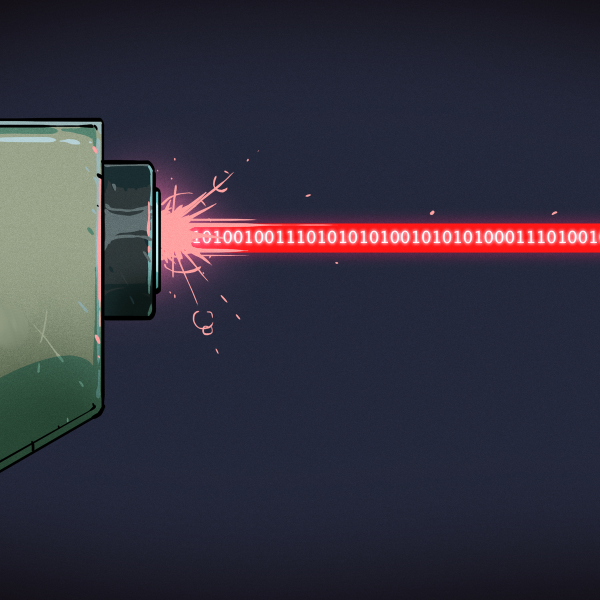
This week we’ve seen a tsunami of news stories about a vulnerability in Intel processors. We’re certain that by now you’ve heard of (and are maybe tired of hearing about) Meltdown and Spectre. However, as a Hackaday reader, you are likely the person who others turn to when they need to get the gist of news like this. Since this has bubbled up in watered-down versions to the highest levels of mass media, let’s take a look at what Meltdown and Spectre are, and also see what’s happening in the other two rings of this three-ring circus.

Meltdown and Spectre

…read more

Guide: Why Etch a PCB When You Can Mill?

I recall the point I started taking electronics seriously, although excited, a sense of dread followed upon the thought of facing the two main obstacles faced by hobbyists and even professionals: Fabricating you own PCB’s and fiddling with the ever decreasing surface mount footprints. Any resistance to the latter proves futile, expensive, and frankly a bit silly in retrospect. Cheap SMD tools have made it extremely easy to store, place, and solder all things SMD.

Once you’ve restricted all your hobbyist designs/experiments to SMD, how do you go about producing the PCBs needed for prototyping? Personally, I dread the thought …read more

Upgrading a 3D Printer with OctoPrint

If you’ve been hanging around 3D printing communities, or reading the various 3D printing posts that have popped up here on Hackaday, you’ve almost certainly heard of OctoPrint. Created and maintained by Gina Häußge, OctoPrint allows you to turn an old computer (or more commonly a small ARM board like the Raspberry Pi or BeagleBone) into a network-accessible control panel for your 3D printer. Thanks to a thriving collection of community developed plugins, it can even control other hardware such as lights, enclosure heaters, smart plugs, or anything else you can think to hook onto the GPIO pins of your …read more

When a Skimmer Isn’t a Skimmer

I have a confession to make: ever since the first time I read about them online, I’ve been desperate to find an ATM skimmer in the wild. It’s the same kind of morbid curiosity that keeps us from turning away from a car accident, you don’t want to be witness to anyone getting hurt, but there’s still that desire to see the potential for danger up close. While admittedly my interest is largely selfish (I already know on which shelf I would display it), there would still be tangible benefits to the community should an ATM skimmer cross my path. …read more

From The Blog

See all blog entries
  • Robotic Drive Train is Nearly All 3D Printed

    No comments

    By Al Williams | January 7, 2018

    There are lots of ways to move a robot ranging from wheels, treads, legs, and even propellers through air or water. Once you decide on locomotion, you also have to decide on the configuration. One possible way to use wheels is with a swerve drive — a drive with independent motors and steering on each wheel. Prolific designer [LoboCNC] has a new version of his swerve drive on Thingiverse. The interesting thing is that it’s nearly all 3D printed.

    You do need a few metal parts, a belt, two motors, and — no kidding — airsoft BBs, used as bearings. …read more

  • Afroman Teaches Intro to Servos, Builds Laser Turret

    2 Comments

    By Kristina Panos | January 7, 2018

    After a longish hiatus, we were pleased to see a new video from [Afroman], one of the most accessible and well-spoken teachers the internet has to offer. If you’re new to electronics, see the previous sentence and resolve to check out his excellent videos. The new one is all about servos, and it culminates in a simple build that provides a foundation for exploring robotics.

    [Afroman] leaves no gear unturned in his tour de servo, which is embedded after the break. He explains the differences between open vs. closed loop motor systems, discusses the different sizes and types of servos …read more

  • Scrap a Hard Drive, Build a Rotary Encoder

    13 Comments

    By Dan Maloney | January 7, 2018

    There’s something to be said for the feel of controls. Whether it’s the satisfying snap of a high-quality switch or the buttery touch of the pots on an expensive amplifier, the tactile experience of the controls you interact with says a lot about a device.

    [GreatScott!] knows this, and rather than put up with the bump and grind of a cheap rotary encoder, he decided to find an alternative. He ended up exploring hard drive motors as encoders, and while the results aren’t exactly high resolution, he may be onto something. Starting with a teardown of some old HDDs — …read more

  • A Mini Stacker Arcade Cabinet

    5 Comments

    By Kristina Panos | January 7, 2018

    For [LumoW], what started as a school project turned into a passion project. He and his team made a hardware implementation of an arcade game called Stacker. Never heard of it? It’s pretty fun, kind of like an inverse Tetris. You can play the flash version here and see their mini arcade version after the break.

    The game is based around the Mojo FPGA which the class required, and it’s programmed entirely in bitwise operators. It uses WS2812 RGB LEDs to represent the individual tower building blocks, and these are mounted on plywood in a matrix and separated into cells …read more

  • The Secret of Twinkling Christmas Lights

    4 Comments

    By Adam Fabio | January 7, 2018

    With the holidays over, many of us are braving the elements to take down all those holiday lights. LED lights have largely taken over the market, but in some places, you can still get classic incandescent bulbs. There are some effects that LEDs can’t quite mimic yet. One of those is the magic of “twinkling” light sets, which [Alec Watson] explains in a Technology Connections video. Everyone has seen bulbs that flash, and strings that dim. But the twinkle effect until recently has been hard to describe.

    Typical flashing bulbs use a bimetallic strip. As the filament of the bulb …read more

  • 3D Printed Propellers Take to the Skies

    8 Comments

    By Lewin Day | January 6, 2018

    In the world of drones, propeller choice is key to performance. Selecting the right props can have a major effect on things like flight time, vibration, and a whole host of other factors. Thinking it might be fun to experiment, [RCLifeOn] decided to 3D print some props and head out for a flight.

    The props are a fairly simple 3-bladed design, which were printed in both PETG and PLA. No major difference is noted between the two materials, and the quadcopter under test is able to fly with either. It was noted that the props perform particularly poorly in a …read more

  • PCB Production on the Sienci Mill One

    6 Comments

    By Tom Nardi | January 6, 2018

    A complete start to finish electronics prototyping workshop is nirvana for many of us: being able to go from design on the computer to real hardware without having to get up from your rolling chair. The falling prices of 3D printers have helped make at least part of this a reality: $200 USD is enough to get you a printer that can churn out decent looking enclosures. But there’s more to producing your own hardware than creating slick looking project boxes; at some point you’ll need to put some electronics in there.

    For [Chuck Hellebuyck] at least, the last piece …read more

← Older posts

Featured Projects

See all projects
LED ring

LED ring

by Jens Hauke
badgy

badgy

by w4ilun

From the Store

See all products
Hackaday Classic Tee

Hackaday Classic Tee

$10.00
3
Hackaday Omnibus 2015

Hackaday Omnibus 2015

$17.00
5
Hackaday.io Gold Logo Tee

Hackaday.io Gold Logo Tee

$20.00
5
USB Tester 2.0 Bundle

USB Tester 2.0 Bundle

From $61.00
0
Robot Head Tee

Robot Head Tee

$20.00
0
CRT Android Tee

CRT Android Tee

$20.00
0

Trending Projects

See all projects
Cloony wireless module

Cloony wireless module

by Martin Hub
Baseband video on old TV

Baseband video on old TV

by Keith
STEbus I/O prototyping board

STEbus I/O prototyping board

by Keith
LED Supernova

LED Supernova

by kristjan-komlosi
6DOF Robotic arm

6DOF Robotic arm

by dannyvandenheuvel
3D Scanning Dome

3D Scanning Dome

by Benjamin Blundell

Search

Never miss a hack

Follow on facebook Follow on google+ Follow on twitter Follow on youtube Follow on rss Contact us

Subscribe

If you missed it

  • Let’s Talk Intel, Meltdown, and Spectre

    133 Comments
  • Finding Your Motorbike Using Wi-Fi

    13 Comments
  • Guide: Why Etch a PCB When You Can Mill?

    67 Comments
  • Upgrading a 3D Printer with OctoPrint

    48 Comments
  • When a Skimmer Isn’t a Skimmer

    186 Comments
More from this category

Categories

Our Columns

  • Repairing a Macbook Charger… With a Pistachio Nut

    53 Comments
  • Lunar New Year is Coming, Shipping Times May Vary

    27 Comments
  • Friday Hack Chat: The State of KiCad

    44 Comments
  • 44 Layers of Katharine Burr Blodgett

    19 Comments
  • Great People and Culture at 34th Chaos Communication Congress

    18 Comments
More from this category
Recent comments

  • Andy on Lowering JavaScript Timer Resolution Thwarts Meltdown and Spectre
  • Soc Rat on This Is The Last Weekend For The Coin Cell Challenge
  • Redhatter (VK4MSL) on When a Skimmer Isn’t a Skimmer
  • Matt on Gesture Control for Lunch Money
  • Doug on Guide: Why Etch a PCB When You Can Mill?
  • Saabman on Afroman Teaches Intro to Servos, Builds Laser Turret
  • Keith Leisure on What You Need To Know About The Intel Management Engine
  • Adam Fabio on Scrap a Hard Drive, Build a Rotary Encoder
  • Bill Sussman on Afroman Teaches Intro to Servos, Builds Laser Turret
  • rewolff on Fast 3D Printing with Raspberry Pi — But Not How You Think

Now on Hackaday.io

  • Martin Hub has updated instructions for the project titled BigClown Home Automation.
  • Martin Hub has updated instructions for the project titled BigClown Home Automation.
  • Martin Hub has updated instructions for the project titled BigClown Home Automation.
  • Martin Hub has updated instructions for the project titled BigClown Home Automation.
  • Keith has added a new project titled Baseband video on old TV.
  • Martin Hub has updated components for the project titled BigClown Home Automation.
  • Martin Hub has added details to BigClown Home Automation.
  • Martin Hub has updated the project titled BigClown Home Automation.
  • Keith has added details to STEbus I/O prototyping board.
  • kristjan-komlosi has updated the project titled LED Supernova.
Logo
  • Home
  • Blog
  • Hackaday.io
  • Store
  • Hackaday Prize
  • Video
  • Submit a tip
  • About
  • Contact us

Never miss a hack

Follow on facebook Follow on google+ Follow on twitter Follow on youtube Follow on rss Contact us

Subscribe to Newsletter

Copyright © 2018 | Hackaday, Hack A Day, and the Skull and Wrenches Logo are Trademarks of Hackaday.com
Powered by WordPress.com VIP
Cancel