
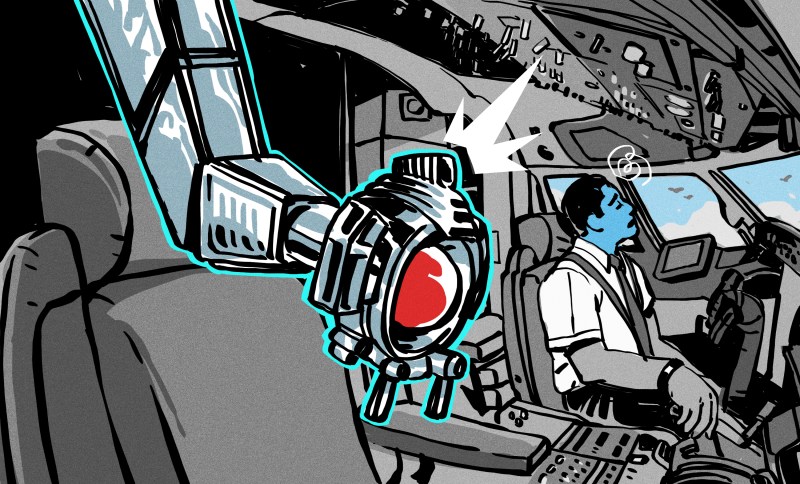
It’s a cliché in movies that whenever an airplane’s pilots are incapacitated, some distraught crew member queries the self-loading freight if any of them know how to fly a plane. For small airplanes we picture a hapless passenger taking over the controls so that a heroic traffic controller can talk them through the landing procedure and save the day.
Back in reality, there have been zero cases of large airliners being controlled by passengers in this fashion, while it has happened a few times in small craft, but with variable results. And in each of these cases, another person in the two- to six-seater aircraft was present to take over from the pilot, which may not always be the case.
To provide a more reliable backup, a range of automated systems have been proposed and implemented. Recently, the Garmin Emergency Autoland system got its first real use: the Beechcraft B200 Super King Air landed safely with two conscious pilots on board, but they let the Autoland do it’s thing due to the “complexity” of the situation.
Human In The Loop
Throughout the history of aviation, a human pilot has been a crucial component for the longest time for fairly obvious reasons, such as not flying past the destination airport or casually into terrain or rough weather. This changed a few decades ago with the advent of more advanced sensors, fast computing systems and landing assistance systems such as the ILS radio navigation system. It’s now become easier than ever to automate things like take-off and landing, which are generally considered to be the hardest part of any flight.
Meanwhile, the use of an autopilot of some description has become indispensable since the first long-distance flights became a thing by around the 1930s. This was followed by a surge in long-distance aviation and precise bombing runs during World War II, which in turn resulted in a massive boost in R&D on airplane automation.

While the the early gyroscopic autopilots provided basic controls that kept the airplane level and roughly on course, the push remained to increase the level of automation. This resulted in the first fully automatic take-off, flight and landing being performed on September 22, 1947 involving a USAF C-54 Skymaster. As the military version of the venerable DC-4 commercial airplane its main adaptations included extended fuel capacity, which allowed it to safely perform this autonomous flight from Newfoundland to the UK.
In the absence of GNSS satellites, two ships were located along the flight path to relay bearings to the airplane’s board computer via radio communication. As the C-54 approached the airfield at Brise Norton, a radio beacon provided the glide slope and other information necessary for a safe landing. The fact that this feat was performed just over twenty-eight years after the non-stop Atlantic crossing of Alcock and Brown in their Vickers Vimy airplane shows just how fast technology progressed at the time.
Nearly eighty years later, it bears asking the question why we still need human pilots, especially in this age of GNSS navigation, machine vision, and ILS beacons at any decently sized airfield. The other question that comes to mind is why we accept that airplanes effectively fall out of the sky the moment that they run out of functioning human pilots to push buttons, twist dials, and fiddle with sticks.
State of the Art
In the world of aviation, increased automation has become the norm, with Airbus in particular taking the lead. This means that Airbus has also taken the lead in spectacular automation-related mishaps: Flight 296Q in 1988 and Air France Flight 447 in 2009. While some have blamed the 296Q accident on the automation interfering with the pilot’s attempt to increase thrust for a go-around, the official explanation is that the pilots simply failed to notice that they were flying too low and thus tried to blame the automation.
For the AF447 crash the cause was less ambiguous, even if took a few years to recover the flight recorders from the seafloor. Based on the available evidence it was clear by then that the automation had functioned as designed, with the autopilot disengaging at some point due to the unheated pitot tubes freezing up, resulting in inconsistent airspeed readings. Suddenly handed the reins, the pilots took over and reacted incorrectly to the airspeed information, stalled the plane, and crashed into the ocean.
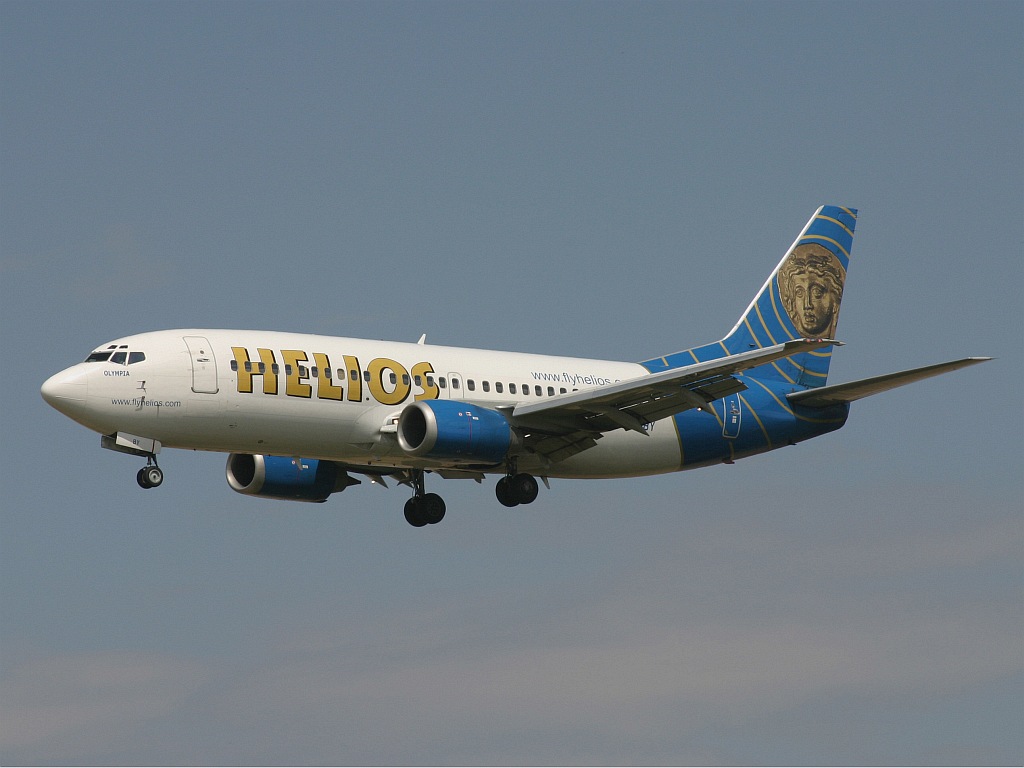
One could perhaps say that AF447 shows that there ought to be either more automation, or better pilot training so that the human element can fly an airplane unassisted by an autopilot. When we then consider the tragic case of Helios Airways Flight 522, the ‘ghost flight’ that flew on autopilot with no conscious souls on board due to hypoxia, we can imagine a dead-man switch that auto-lands the airplane instead of leaving onlookers powerless to do anything but watch the airplane run out of fuel and crash.
Be Reasonable
Although there are still a significant number of people who would not dare to step a foot on an airliner that doesn’t have at least two full-blooded, breathing human pilots on board, there is definitely a solid case to be made for emergency landing systems to become a feature on airplanes, starting small. Much like the Cirrus Airframe Parachute System (CAPS) – a whole-airplane parachute system that has saved many lives as well as airframes – the Garmin Autoland feature targets smaller airplanes.

After a recent successful test with a HondaJet, this recent unscheduled event with the Beechcraft B200 Super King Air twin-prop airplane turned out to be effectively another test. As the two pilots in this airplane were flying between airports for a repositioning flight, the cabin suddenly lost pressurization. Although both pilots were able to don their oxygen masks, the Autoland system engaged due to the dangerous cabin conditions. They then did not disengage the system as they didn’t know the full extent of the situation.
This effectively kept both pilots ready to take full control of the airplane should the need have arisen to interfere, but with the automated system making a textbook descent, approach and landing, it’s clear that even if their airplane had turned into another ghost flight, they would have woken up groggy but whole on the airstrip, surrounded by emergency personnel.
Considering how many small airplanes fly each year in the US alone, systems like CAPS and Autoland stand to save many lives both in the air and on the ground the coming years. Combine this with increased ATC automation at towers and elsewhere such as the FAA’s STARS and Saab’s I-ATS, and a picture begins to form of increased automation that takes the human element out of the loop as much as possible.
Although we’re still a long way off from the world imagined in 1947 where ‘electronic brains’ would unerringly fly all airplanes and more for us, it’s clear that we are moving in that direction, with such technology even within the reach of the average owner of an airplane of some description.










the computer is better at flying in pretty much all the cases the programmers considered, eventually you only really need the humans in case something unforseen happens. But then you get the dilemma, how good are the humans at flying when they rarely get to fly because the computer does it for them most of the time
This is a talk that I keep replaying in my mind: https://app.media.ccc.de/v/33c3-8033-what_s_it_doing_now
Gets into that and other issues about humans and automation, and how we can work together.
Great choice of movie reference for Joe’s artwork as always, but would anyone need to remind Max this craft can’t fly under the ocean?
“It’s a cliché in movies that whenever an airplane’s pilots are incapacitated, some distraught crew member queries the self-loading freight if any of them know how to fly a plane”
Surely you can’t be serious?
I am serious. And don’t call me Shirley.
Roger, Roger. give me a vector Victor.
By the way, have you ever been in a Turkish prison?
I enjoy x-plane (simulator). Once i got the hang of “flying the needles” for an ILS approach, i eventually figured out how to tie the autopilot altitude fix to ILS (don’t ask me to do it again) and let it fly me all the way into the runway. Which is obviously a dumb way to aviate but really made me upset when i compared it to the experience of a local aviator who intentionally descended below the ILS slope because she thought it would get her a view below the clouds but instead experienced a fatal mishap in trees.
I really don’t know the right answer but there is no limit to human stupidity. If you go looking for it, a stunning number of commercial crashes with hundreds of fatalities are caused by the most absurd misunderstandings and mistakes. Even in Boeings, where pilots actually fly the airplane for a portion of every flight, a significant fraction of pilots simply don’t know how the flight controls work..or they forget under pressure.
Common fallacy ONE.I have a CPL with an instrument rating, but only for SEL airplanes, and just went over 2k hours. I consider myself a safe and competent GA pilot, but seriously doubt that I could land a commercial jet airplane such as a B737. How do I know? I flew the sim used to train ATPs, where a semi-succesfull land was accomplished on my 4th attempt.
Common fallacy TWO. A former neighbor was a 12k hour ATP, flew P3s in the navy, and was a 757 captain. Took the guy up in my small SEL gen-av bird. He almost killed us because he had forgotten basic stick-and-rudder flying, resulting from his dependence on automation and flying the ‘easy’ routes that only senior pilots can bid on.
Common fallacy Three. Few GA accidents that resulted in death would have been avoide from an auto-land system. Low-time GA pilots will continue to discover new and interesting ways to kill themselves, ragardless of any expensive auto-land feature.
Fact Number One. There are many GA accidents that would have not resulted in deaths if the aircraft had CAPS.
Fact Number Two. People are stupid. Half of the population is very stupid, and some of these very stupid people posses a pilot’s license, and some of them write code for avionics systems. I had had my ‘glass’ panel freeze up shooting a RNAV in the soup. Which is why I keep a panel full of ‘steam-punk’ instruments. I had a youthful (very stupid) pilot taxi out onto the active, while the tower was still active and without clearance, while I was on short final. No amount of automation will fix stupid.
When i played 737 mode in x-plane, i had the impression that if i had a planned stabilized approach (altitude / velocity / distance waypoints plotted out starting 50 miles from the airport), i might have been able to land it. Without that, it seems like no one could do it?
And a bit about CAPS that continues to astonish me…now that Cirruses are the new “doctor killers”, at least one prominent local businessman has died in an airplane with CAPS because he decided to respond to engine failure with a failed off-field landing instead of CAPS. Apparently a nation-wide epidemic of such incidents. Which just goes back to your point about GA pilots having limitless enthusiasm for mishaps.
Regarding fallacy three, I would tend to agree, but it’s not the only new tech that can help. Garmin also developed electronic stability and protection that adds a form of training wheels to basic ga aircraft the helps limit unusual attitudes and airspeeds and provides a single button to level mode…of course, those don’t make the news
Thank you for your knowledgable comments. Suff like this keeps me coming back to Had.
I know a few pilots (including yours truly, though I’m long since current) and your attitude comes off as professional, conservative, and safe. Thank you.
Second, replace “pilot” with “doctor” in your Fact Number 2 and that’s my life. It is true that given any population half are smarter than “average” and half stupider than average, a significant portion of them wayyyyy stupider than average. Most can still function in a narrow set of circumstances, thankfully, but any deviation and … wow.
Passengers (without any training) landing an aircraft is not a daily event, but it is a real thing and not particularly rare either. There are plenty of medical conditions which can go from “no symptoms” to “unable to land a plane” within the time it’s needed to find an airfield and land a plane.
https://html.duckduckgo.com/html?q=passenger+lands+aircraft
It does not happen with the big airlines, but that is only because they always have two pilots. And to prevent the possibility of food poisoning incapacitating both pilots at the same time, their meals are prepared separately too.
I heard the story about the food. That was kind of a freak accident in retrospect.
Going all the way back to the space programs, the only real reason for pilots landing on the moon without autopilots (which BTW even “manual” flying was highly controlled by the AGC) was the astronauts themselves who essentially said “over my dead body will I get to the moon and let a machine land it.” Nevermind lunar landers had already successfully autonomously landed on the moon for nearly a decade prior nor that the USSR had done it too although with a different time line.
.
there is an intuitive ick factor to climbing on an airplane and trusting the machine, but frankly that’s most of how modern airliners are anyway.
.
Similar to the above, I knew a WWII bomber pilot quite well- he had the opportunity to “fly” a 747 ages ago (he’s dead now) with all the autopilots off, and said he could just barely keep it at altitude, let alone approach well controlled flight. In addition to being a bomber pilot he was a glider tow pilot which, I’m told is about the most demanding and hazardous thing you can do, maybe aside from flying uninvited over Germany in the mid-40’s. There is a reason much past SEL there are type ratings- flying large vs small vs jet vs piston is all significantly different. While I know plenty of glider and SEL pilots, I only know a couple of commercial pilots and a fair amount of them have never flown, e.g. a Cessna 152.
The irony is the only aircraft that I’ve flown as a Cessna 152 (Keesler AFB Aero Club)
Look up what happened on Gemini VIII to understand why NASA learned to appreciate having a human pilot over a passenger who was simply told to not press the buttons.
I mean maybe. But I’m confident that for every “the autopilot needed a meat bag pilot to bail it out” there are a dozen “pilot error no survivor” stories. There is a whole series called Air Disasters they are in like season 35 and keep making new ones. It does happen that there are autopilot issues but mostly meatbag pilot misused or didn’t understand autopilot and … no survivors.
Why do we still need pilots?
Why aren’t the planes guided by base stations at airports for take-off and landing and then autopilot?
If we are afraid of someone getting unauthorized control of those base stations maybe add an onboard AI interface that validate the output of stations and return the control to pilots if anything suspicious occured.
“We had a choice between fish and chicken.”
“Ah yes, I remember now. I had the lasagna.”
So you’re just going to ignore the famous example of Ted Stryker heroically landing a Trans American Boeing 707-300 on a stormy night in Chicago?
Surely you can’t be serious?
Indeed. It was quite an accomplishment, with everything being fogged-in east of the Rockies.
After 43 years as commercial pilot – mostly Boeings – I just want to say 3 things:
– “what is it doing now???”
– you will NEVER see me boarding a plane without human pilots, and
– the way AI works [ ie how many r’s in strawberry? ] is not the way safe flying or car driving works.