RFID Controlled Phone Dialing

phone1

In an attempt to create an easier to use interface for the elderly, [Stephen] has put together this phone prototype which uses RFID tags to dial. It is common for our motor skills and eyesight to deteriorate as we get older. There are special phones out there, but generally the only changes they make are enlarged buttons and louder speakers. [Stephen] had the idea to make a system where an elderly person would hold up a picture of the person to the phone and it would dial. He picked up an RFID card reader and an Arduino. The code for the RFID reader was already available, and with minor modifications to prevent multiple swipes from hand tremors or slow movements, he was able to get it working pretty fast. The Arduino then sends the data to an ioBridge to make the call.He’s using Google voice to physically place the call, so you could probably adapt this to other services as well. You can see a video of it in action after the break.

Continue reading “RFID Controlled Phone Dialing”

Replacing The Ipod Shuffle’s Headphones

[blip.tv ?posts_id=1878228&dest=-1]

With the recent announcement that the only controls for the Ipod shuffle will be on the headphones, many were let down. [James] has come to the rescue, showing that you can just solder new ear buds on the end of the wires. Though this may not be the perfect solution, especially if your cable gets damaged, at least you can get a little better sound. This is a great example of something to show kids. It’s not too difficult and teaches them that if we’re not happy with something, we can hack it.

Cell Phone Triggered Fireworks

remote_trigger

[Mr. Hasselhoff] is using a disposable cell phone to trigger his fireworks. He has wired into the speaker leads for the speaker phone. When the phone rings, the current sets off a thyristor allowing for a battery pack to be discharged into a rocket fuse. These fuses heat up and ignite, so you can use them to light fireworks fuses pretty easily. This is pretty simple and cheap, considering the price of the cell phone was only $10. His next idea was to have it recognize dial tones and set individual fuses off, but that would require a microcontroller and a much more complex hack. At that point, you might as well just build a fully fledged wireless fireworks launching system and possibly add rocket launching abilities too.

[thanks Adam]

Missile Launcher, IPhone Interface

[youtube=http://www.youtube.com/watch?v=htd3s50Zhk8]

[Pedram] Sent us his USB missile launcher interface project. He happened to have some of the USB missile launchers lying around. having lost their initial draw, he wanted to do something to spice it up. He wrote an interface in python so he could control the launcher via his iPhone. We don’t see how this is any different than controlling them by the computer, but he seems to have put a decent amount of work into it.

Cell Phone Shoe

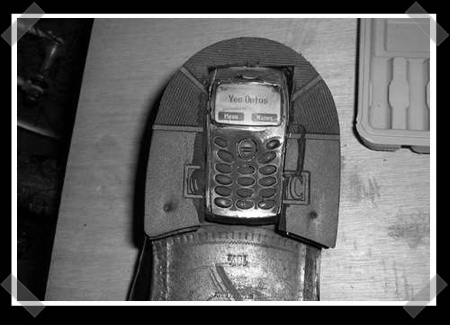
Sometimes you absolutely need to keep your phone a secret. You know, like when you’re on spy missions. The goons at the door will always frisk you, but they never check under your shoe, right? [mikeyberman] shows us how to make our own Maxwell Smart style shoe phone. All you need is to dig a giant hole in your shoe sole and cram a cell phone in there. Will it get ruined by water? Probably. Will you look like a goon trying to talk on it? Definitely. Can you make it through airport security? Try it and let us know.

UIRemote: Universal Remote Application For IPhone

[youtube=http://www.youtube.com/watch?v=E-SlcjmqeYw]

When several students from the University of Toronto became tired of having multiple remotes lying around, they decided to do something about it. Their solution to this problem came in the form of UIRemote, a universal remote application for the iPhone. The application allows the iPhone to control anything that is normally controlled by an infrared remote, thanks to the use of a custom infrared adapter that plugs into the phone’s headphone port. It’s a technique similar to our iPod remote control from 2004. While the UIRemote application and adapter are still in beta, the students expect to release both things simultaneously sometime within the next two months.

[via Engadget]