
A Nebula Straight From The Stars To Your Table

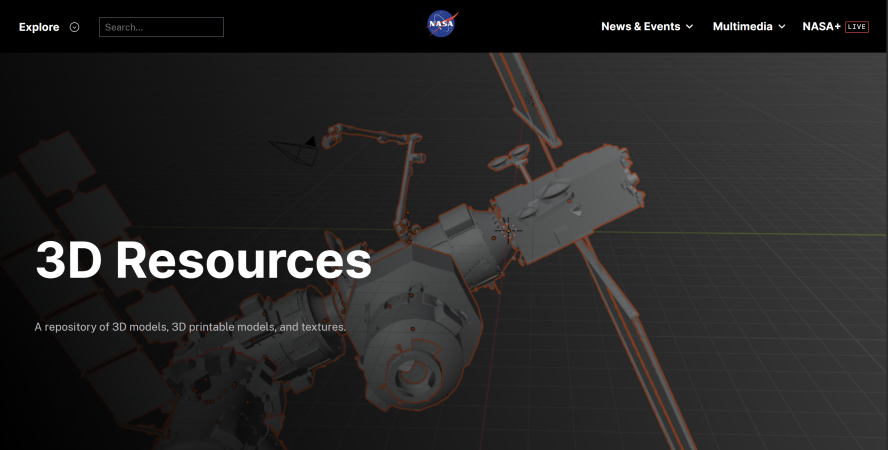
Space may truly be the final frontier, but maybe that frontier can be closer than you thought. Pictures of nebulae and planets bring the colorful sights of deep space right to your screen. You may even have models of some of the rockets used for those missions on a shelf. However, did you know that you could even have a model of those nebulae or planetary surfaces from [NASA]?

While we have covered some distributed models from [NASA] here before, the catalog has expanded far past what 2016 had in store. Additionally, the catalog has been sorted into a more user-friendly, filterable interface than a simple GitHub repository. Most models even have a description attached, giving some basic background information on what the Crab Nebula is, for example.

There could always be more; there don’t appear to be many models of the space shuttle or some other expected files, but what is there is incredible. Some non-3D model files can also be found from star maps to full planetary maps.

While this file repository is cool and all, it’s not all [NASA] does. When not sending rockets deep into space for cool pictures, [NASA] has to make sure the Moon doesn’t explode. Was that a possibility at some point? Of course it has been!

Ask Hackaday: How About Some Model Rocket Hacks?

There’s nothing like the smell of black powder in the morning, along with the excitement and burnt propellant in the air that comes after launching a model rocket. All those 60s, 70s, 80s and 90s kids out there may remember the classes of model rocket engines – generally A, B, C, and D sized engines used to push your cardboard tube with balsa fins skyward.

A lot has changed in the world of model and amateur rocketry in the last few years. In 2009, the Tripoli Rocketry Association won a lawsuit against the Bureau of Alcohol, Tobacco, Firearms and Explosives to allow the sale of Ammonium perchlorate rocket engines to anyone. This lawsuit took almost 10 years to come to a head, but finally anyone can walk into Hobby Lobby and come out with D, E, F, and G engines in hand. Even our old favorite, Estes rockets, has gotten into the game by putting out a few awesome G-powered kits. With these off-the-shelf motors, anyone (in the US, at least) can launch a G-powered model rocket weighing under 1500 grams (3.3 lbs) without the need for a certification.

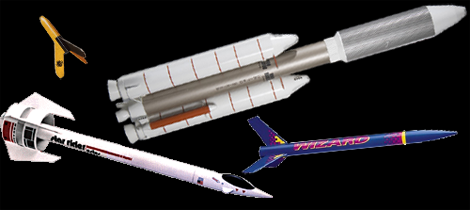
With that in mind, we’re putting out a call for model rocket hacks. If you put together an microcontroller-powered altimeter project, awesomeSend it in. On board video camera? Great! Even if you built a huge replica of the Titan IIIe (or the Estes Star Rider, a personal favorite), send that thing in. If you’re going for a huge Saturn V, the record to beat is a 1/10 scale model, so get on it.








