39C3: Recreating Sandstorm

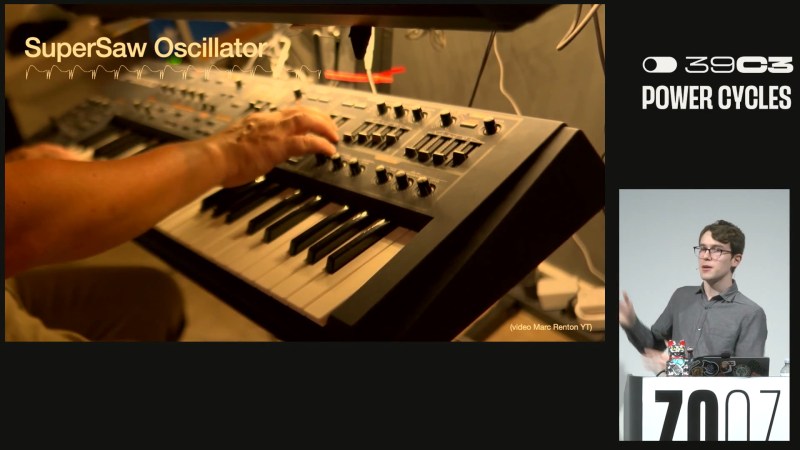
Some synthesizer sounds are just catchy, but some of them are genre-defining. We think you could make that case for the Roland JP-8000 patch “Sandstorm”, which you’ve heard if you listened to any trance from the 90’s, but especially the song that was named after it.

“Sandstorm” is powered by the Roland Supersaw, and synth nerds have argued for a decade about how it’s made. The JP-8000 is a digital synthesizer, though, so it’s just code, run through custom DSP chips. If you could reverse engineer these chips, make a virtual machine, and send them the right program, you could get the sound 100% right. Think MAME but for synthesizers.

That brings us to [giulioz]’s talk at the 39th Chaos Communication Congress, where he dives deep into the custom DSP chip at the heart of the JP-8000. He and his crew had approached older digital synths by decapping and mapping out the logic, as you often do in video game emulation. Here, getting the connections right turned out to be simply too daunting, so he found a simpler device that had a test mode that, combined with knowledge of the chip architecture, helped him to figure out the undocumented DSP chip’s instruction set.

After essentially recreating the datasheet from first principles for a custom chip, [guiloz] and team could finally answer the burning question: “how does the Supersaw work”?  The horrifying answer, after all this effort, is that it’s exactly what you’d expect — seven sawtooth waves, slightly detuned, and layered over each other. Just what it sounds like.

The real end result is an emulation that’s every bit (tee-hee!) as good as the original, because it’s been checked out on a logic analyzer. But the real fun is the voyage. Go give the talk a watch.

[Look Mum No Computer] sits inside his new museum of obsolete technology and synth oddities.

This (Obsolete Technology) Museum Is (Not) Obsolete

You know, we’re not sure how this escaped our attention for so long. Blame it on the summer heat. Did you know that [Look Mum No Computer] opened a museum of obsolete technology a few weeks ago?

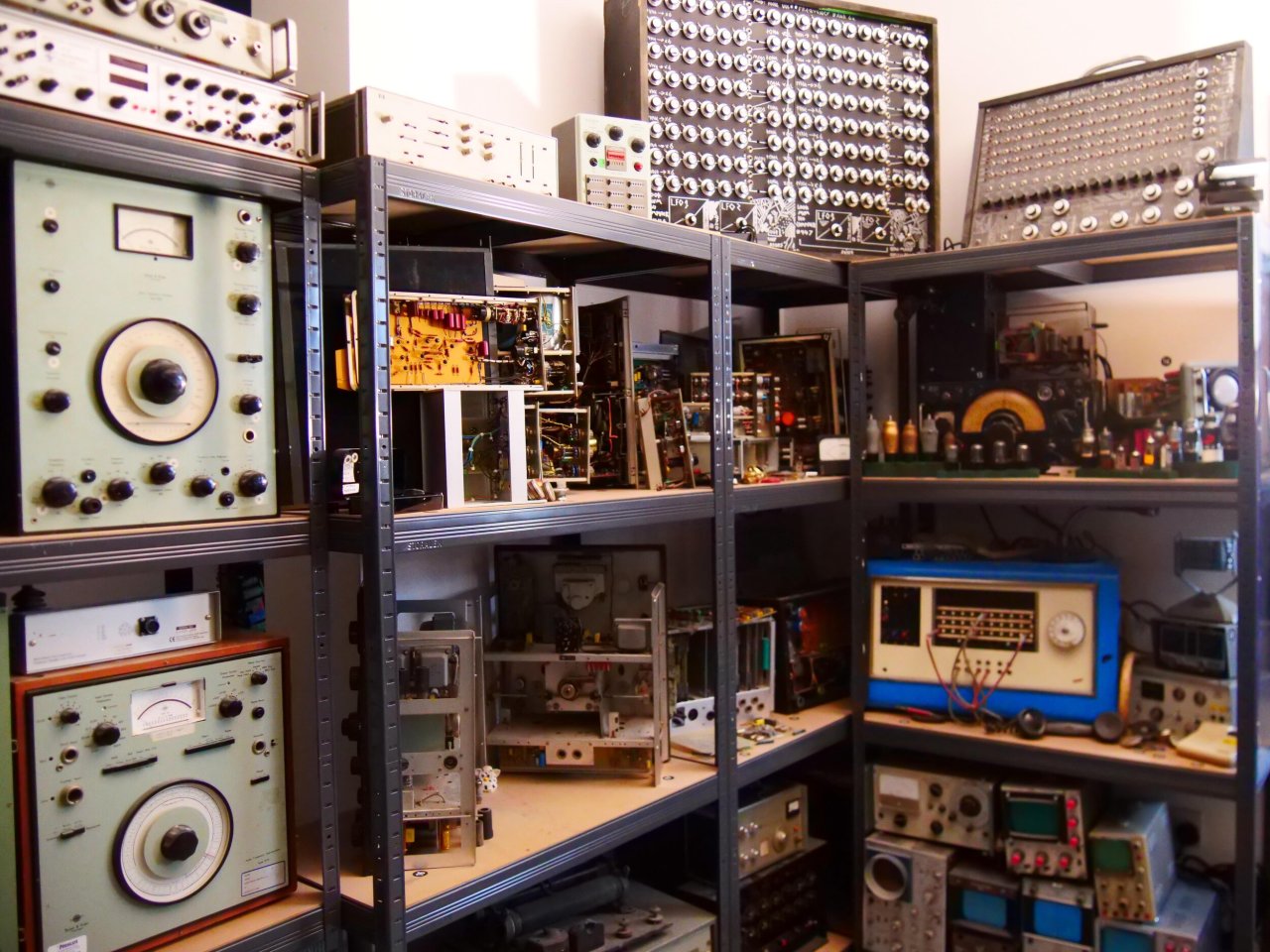
Inside a new museum of obsolete technology and synth oddities.This Museum is (Not) Obsolete is located by the seaside in the Ramsgate section of Kent, England, where you’ll also find the Micro Museum, a collection of computing and video game history. [LMNK] says it took 10 months to build the museum, which is a maze of vintage delights including decades of computers and computer accessories, signal generators, VFDs, vacuum tubes, old phone equipment, and 50 years’ worth of 150-in-one electronics kits. This list doesn’t even sort of start to scratch the surface.

Around every turn there are forgotten technological gems and never-heard-ofs, plus the space is peppered with [LMNK]’s own superb synth creations. (Who could forget the Furby Organ?) The goal is to make it as interactive as possible, and to keep growing the collection. So far, [LMNK] has welcomed visitors of all backgrounds and ages, which is exactly what he was after. Can’t quite make it to Ramsgate? Us either. Do what we did and take the video tour below.

If you can get there, you might want to check out the National Museum of Computing, too.

Continue reading “This (Obsolete Technology) Museum Is (Not) Obsolete”

Music Synthesized From The Game Of Life

gameoflife_synth

[vtol] has built a very elaborate system of electronic sound machines, which can be patched together in various ways in order to create all sorts of sounds and sound effects. The modules range from simple noise synthesizers to pitch shifters, sequencers, and effects processors. The most recent addition to his synthesizer system is a matrix sequencer named 2112, which focuses on generating random sounds from a very familiar mechanism.

The sequencer simulates Conway’s Game of Life, representing the colony movements in beeps and buzzes, creating a nearly infinite array of random sound effects. Using firmware from the Game of Life board by Ladyada, the sequencer generates different sound patterns based upon the number of colonies on the board. The output varies according to the shapes and proximity of the organisms to one another. Since it is part of his already modular system, the 2112 board can be combined with any number of his other sound generators and effects machines to make all sorts of circuit bent music.

Keep reading to check out the trio of videos below demonstrating the Game of Life board in action.

Continue reading “Music Synthesized From The Game Of Life”