
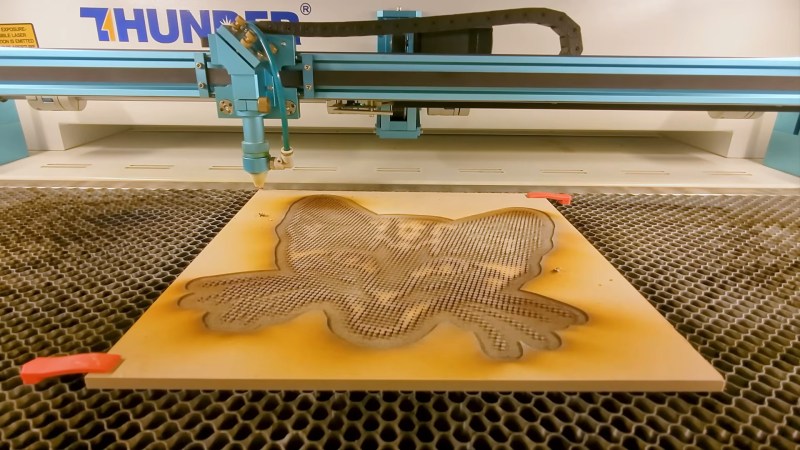
This is one of those fun hacks that come about from finding a product and going “I wonder if I could…” — in this case, artist/YouTuber [Wesley Treat] found out his favourite vendor makes spray cans in CYMK colours– that is the Cyan, Yellow, Magenta and blacK required for subtractive printing. Which got him wondering: can I make full-colour prints with this paint?
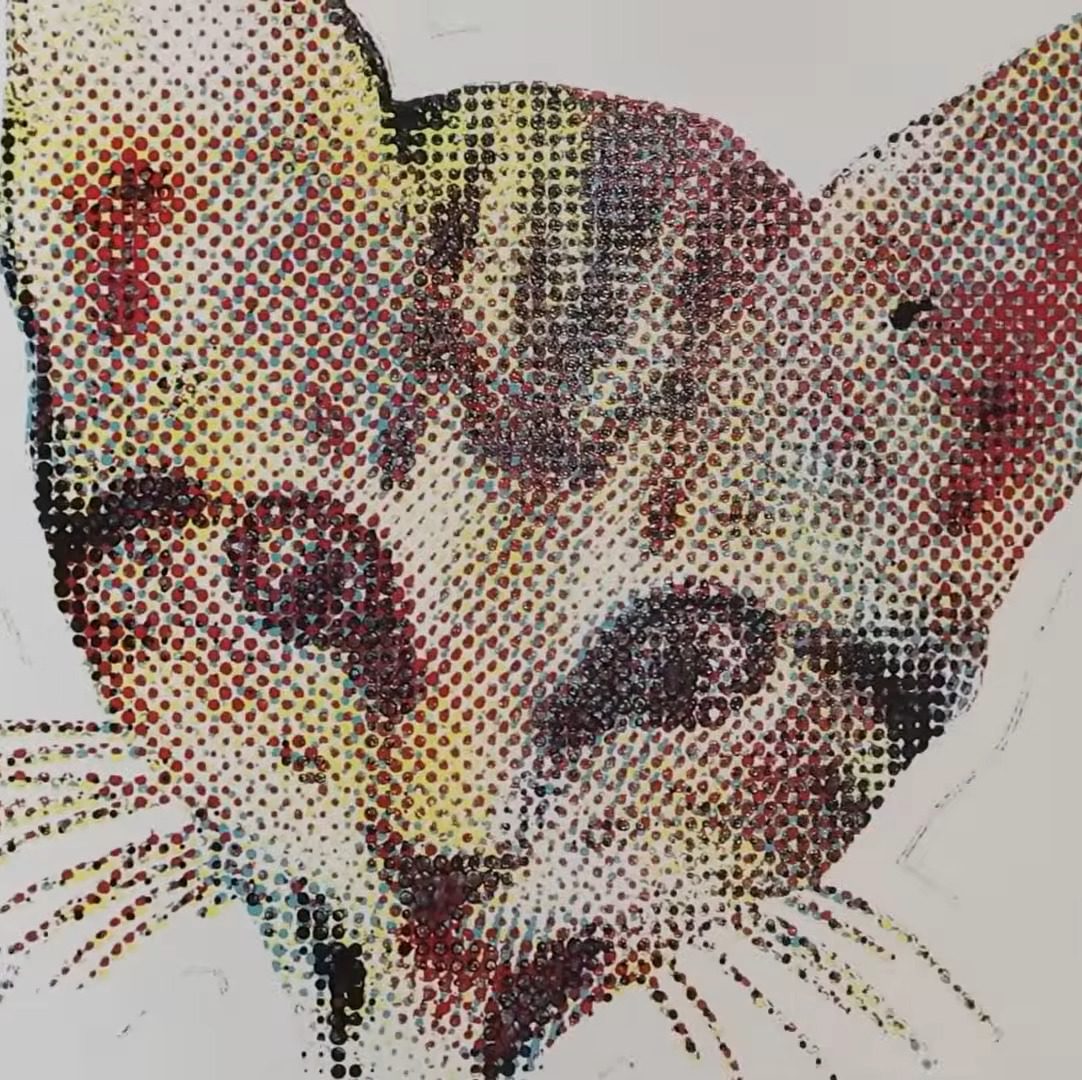
His answer was “yes”, and the process to do so is fairly simple. First, split the image into colour channels, generate a half-tone pattern for each one, and carve it out of MDF on the laser. Then spray the MDF with the appropriate colour spray paint. Press the page against each block in turn, and voila! A full colour print block print, albeit at very low DPI compared to your average inkjet.
Now, you might be wondering, why half-tone instead of mixing? Well, it turns out that these CYMK paints are too opaque for that to work in a block-printing process. At least with a naive spray technique; [Weseley] does admit a very fine mist might be able to make that work. The second question is why not just hook the rattle cans into a CNC machine for a paint-based mega inkjet? That’s a great question and we hope someone tries it, but [Weseley] evidently likes block-printing so he tried that first.
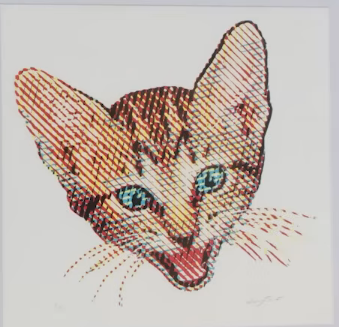
Laser-ablating enough MDF away to make decent print blocks took too long for [Weseley]’s tastes, however, so he switched to using mylar stencils. Instead of spraying a block and pressing onto it, the paint is sprayed through the stencil. The 10 mil Mylar not only cuts faster, but can support finer detail. Though the resulting prints lose some of the artistic flair the inconsistencies block printing brings, it probably looks better.
If you prefer to skip the manual paint-can-handling, perhaps we can interest you in a spray-can plotter. If you do like manually flinging paint, perhaps you could try this dot-painting spray can attachment, for a more self-directed half-tone.
Thanks to [Keith Olson] for the tip.










Beat me to it.
The whole sentence is hard to parse, although perhaps I’m missing something.
“Though the resulting prints loose some of the artistic flair the inconsistencies block printing brings,”
“…WITH the inconsistencies…”?
Should be “Though the resulting prints lose some of the artistic flair the inconsistencies of block printing brings,”
ie each print being unique based on minor variations on how the paint is applied, etc.
CMYK, not CYMK
If I remember correctly from watching the video when it first came out, CYMK came from the YouTuber (did I just call that guy a potato?).
stenciling and cmyk isnt the best. CMYK requires color mixing either through actual fluid mixing or very close dots, If youre going to use color stencils youre better off posterizing your image, reducing the colors to 4-12 colors and making a stencil for each lcolor channel.
Almost all CMYK printing is done without mixing mostly with halftone dots, usually hundreds per inch.
CMYK inkjet is a whole other thing, but comprises a tiny fraction compared to offset and silkscreen printing.
I like this. Working within constraints makes for better art anyway.
I thought the story was going to be about how he painted the board with one color, put some kind of tape shield on it, laser away the unwanted bits, spray the next color, mask, laser, and repeat.
Fixed, thank you.
I love Wesley’s work, such an under-rated artist and creator!
There are tons of craft vinyl cutters out there. If you’re using a Mylar stencil, a laser cutter feels like overkill
I can’t imagine the amount of time it would take to cut thousands of “halftone” dots with a physical blade cutter
On the topic of mega inkjets: before inkjet printers became a common item, I believe the Visual Language Workshop at MIT (VLW, pronounced “vulduboo”) had a vertical x/y plotter hooked up with an airbrush head so it could output mural sized prints. I don’t remember whether if it tried to mix colors on demand or relied on posterizing/half toning across multiple passes. They were probably multiple papers published on their experience with this thing, if anyone wants to look it up.
(I spent some undergrad time at ArchMach, VLW’s supposedly more serious and near-commercial sibling. Don’t get me started on the Wikipedia myth associated with the back cover of Remain In Light.)
Trivia: The “K” in CMYK refers to “Key” (rather than “blacK”) – usually printed first in opaque ink on the web/surface for locating the image and providing outline & highlights, followed by overlays of MYK that may be either opaque or translucent depending on the inks/scheme/artwork.