

It seems that for as long as there have been readily available 3D printers, there have been moral panics about their being used to print firearms. The latest surrounds a Washington State Legislature bill, HB2320, which criminalises the printing of unregistered guns. Perhaps most controversially, it seeks so impose a requirement on printers sold in the state to phone home and check a database of known firearms and refuse to print them when asked.
This has drawn a wave of protest from the 3D printing community, and seems from where we are sitting to be a spectacularly ill-conceived piece of legislation. It’s simply not clear how it could be implemented, given the way 3D printers and slicing software actually work.
Oddly This Isn’t About Firearms
The root of the problem with this bill and others like it lies in ignorance, and a misplaced belief in the power of legislation. Firearms are just the example here, but we can think of others and we’re sure you can too. Legislators aren’t stupid, but by and large they don’t come from technology or engineering backgrounds.
Meanwhile they have voters to keep happy, and therefore when a moral panic like this one arises their priority is to be seen to be doing something about it. They dream up a technically infeasible solution, push to get it written into law, and their job is done. Let the engineers figure out how to make it work.
How To Hack Public Scrutiny When It Matters
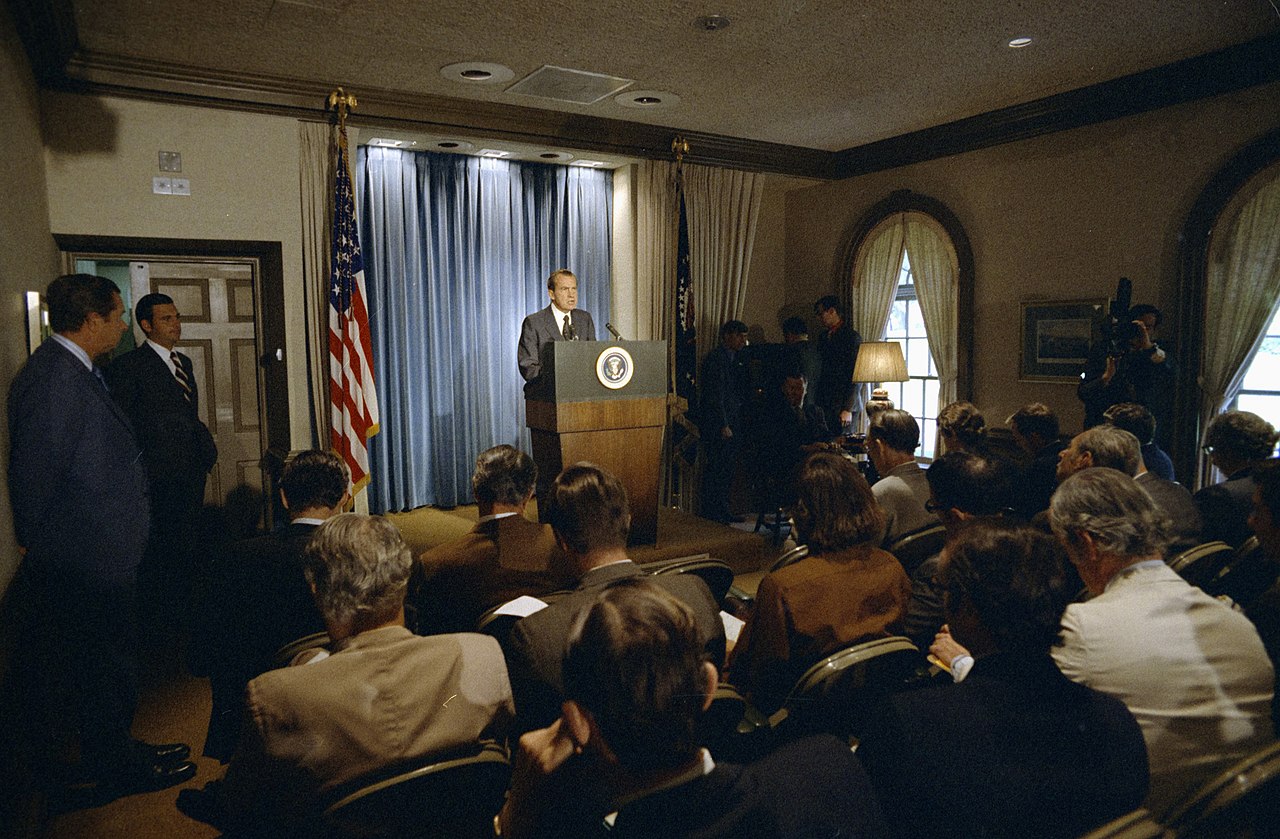
Our governments have a mechanism in place to curtail this, public scrutiny. In short, when they embark on something stupid the public is supposed to push back. It comes as in this case from the people themselves, but perhaps most effectively it comes from the press corps which surround the legislatures.
A politician doesn’t really care much if a bunch of 3D printer enthusiasts are angry about something, but I promise you he’s all over it if it’s lead story on the local news. This should protect us, but the flaw when it come to tech stories is that the ignorance is not confined to the legislature. You don’t get to be a political press corps journalist without being pretty good at your job, but unfortunately for us, being pretty good at that job doesn’t include knowing anything about tech. Instead they have finely tuned noses for politics, public policy, and other things that are central to that beat, so when they encounter a tech story they are more likely to follow received opinion than what’s really going on.
Over the years here at Hackaday we’ve seen it time and time again, with respect to drones, right to repair, the DMCA, and even from time to time, 3D printed fiearms. We’ve even wished for technology-aware political journalists in the past too, but inevitably they don’t read Hackaday. Perhaps we should therefore examine how our community approaches stories like this in the first place, and change what we do. We’re good at complaining using our channels, perhaps it’s time to try theirs instead.
The Press Release As A Magic Bullet
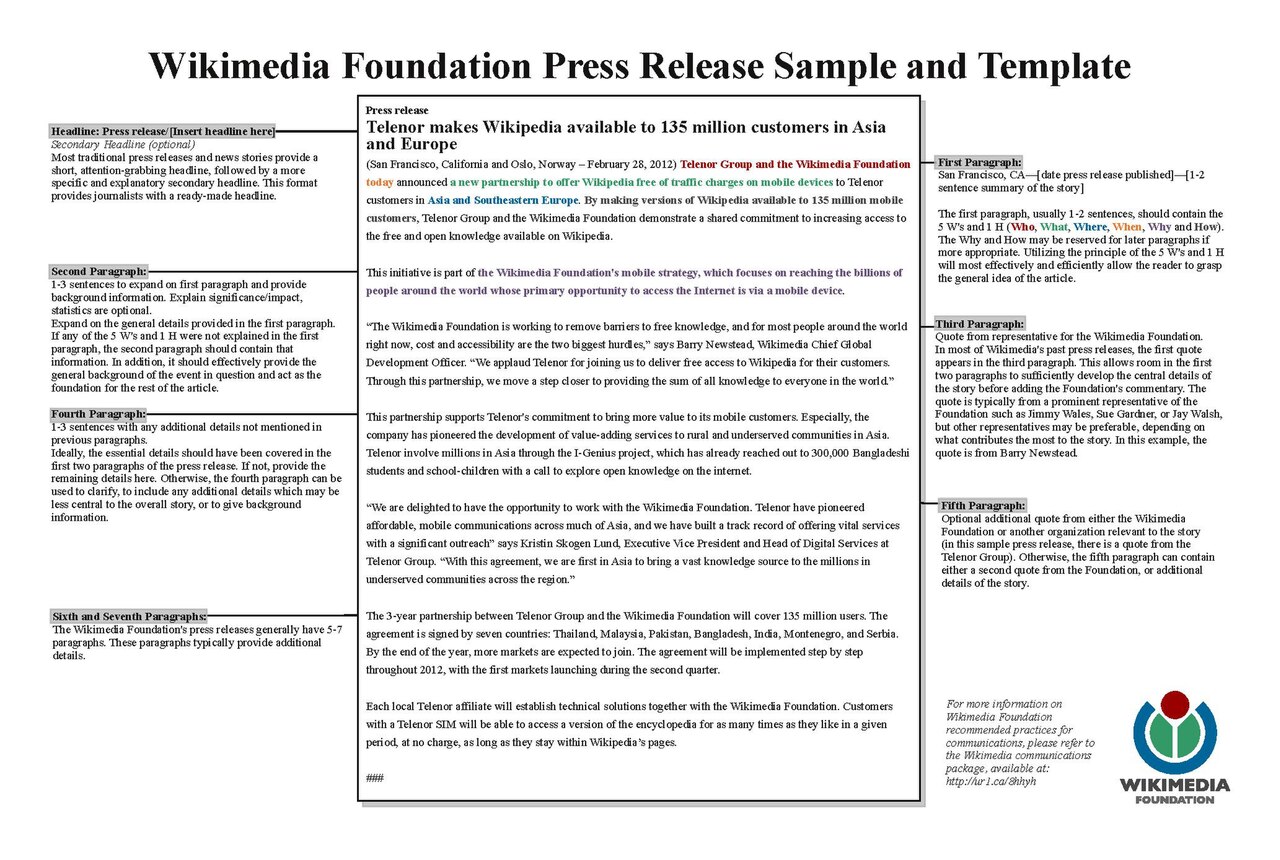
There exists a tried and tested method for getting things in front of journalists, it’s called a press release. It’s a standardised form for making a point to a journalist, and when done correctly it can be very effective. How to write one is beyond the remit of Hackaday, but there are many resources online to help you. An appropriate one here is the UK Crafts Council’s one for makers. Take your concerns, distil them into a well-written and reasoned paragraph, and package it up as a press release.
Don’t send them personally, instead send them as an organisation, for example I wouldn’t write one as Jenny List. Instead I’d represent my hackerspace or my 3D printing society. As someone who’s written a few in my time as well as editing other people’s ones, I’d advise you to avoid writing either a rant or a manifesto, be factual and concise. If you appear to be a random crazy, your release will go in the round file.
When you have your press release, identify the channels where it will have the most impact. I might start with the local and regional papers and broadcasters, and find the journalists whose beat intersects with my target. The trick is writing up the technical aspects of the issue clearly enough that everyone can understand it, which is no mean feat, but it is infinitely easier when you already understand the tech than when you don’t.
This may seem like an odd departure from a 3D printing story, but perhaps like many of you I am tired of seeing badly thought out tech legislation passing without question. Perhaps it’s time our community learned some of the techniques used by the people who do mange to have influence, after all it can be easier than you think. We have the knowledge. It’s our responsibility to bring it to the people when necessary.












Sure, legislators and members of the press may be smart folks, and are not subject matter experts in this field or necessarily any other than their own.
But then shouldn’t they have a duty to acquire an understanding of that which they seek to regulate? At the very least, they should consult someone who can understand the subject for them. I guess we didn’t write that into law, so nobody cares. Even if it is law, some people won’t care either.
Why are people so stupid and uncaring?
I think the problem might be when legislators think they understand something well enough to legislate about it. Perhaps a sort of Dunning-Kruger issue. They’d much rather say “Yes, I understand this” than say “I’m not sure I understand this; let’s bring in an expert.” That’s my uninformed opinion.
Legislators are the poster children for the Dunning-Kruger effect. They may be lawyers, business professionals, and economists with doctorates, but that doesn’t mean they understand the first thing about technology and its implications.
You can see the indignation on their faces when they get called to task over it too. It is the look of “I am a HARVARD GRADUATE with multiple degrees in…”.
Yeah, that’s great and all, but do you understand the technical burden/overhead of trying to enforce the your new law? Have you run a cost benefit analysis to see how much your program “to make us all safer from hacker terrorists” will cost tax payers? Do you even understand the concept of second and third order consequences? What are you going to do when this turns into government back regulatory capture by big businesses and innovation stagnates like a corps in the sun? Do you even have an 3D printing subject matter expert on your staff?
Legislators are some of the most short sited people I have ever encountered. Worse than career academics. They look at the sky from the bottom of a well and think they can predict global weather.
Yes, however, the information they get is biased.
The experts they have come from the industry and represent their own interests. For example, a company like Stratasys may well be able to comply with the requirement to tether all their 3D printers to government servers and pretend to detect firearms, so they’re just happy to support the regulation – it hurts their smaller competitors who can’t.
The information asymmetry is the problem: the more centralized the government, the less they know about what’s happening around the country and the less they are able to find out by themselves, so the more they become dependent on biased reporting or start to ignore the reports altogether because it’s too much work.
John Gall called this the “coefficient of fiction”, which represents the fraction of real information that fails to reach the administration. Most large scale administrative systems and governments operate with a coefficient of fiction very close to 1. Some may even exceed it.
“…legislators and members of the press may be smart folks…”
LOL. Career politicians and “journalists” are wespons-grade examples of Dunning Kruger. Especially where firearms are concerned.
Yep.
They’re not particularly smart, just smart enough to take only the easiest courses and act smart.
While pretending that anything they don’t understand (e.g. math) is easy and/or useless (depending on how the wind is blowing that day).
Politicians are mostly typical innumerate ambulance chasers.
Journalists are virtually all innumerate J-school twits.
Statistically the worst major in the USA, as express by regret of recent graduates.
J-schools graduate the same number every year as their are journalist jobs in the nation, only fools even start.
Ironically, they already have many experts who can advise them who are already on the state payroll–at the state colleges and universities.
LOL. Funny to see people chanting the “Dunning-Kruger” mantra like they know what they’re talking about. :-)
Perhaps if they could make a cogent argument, or even spell words correctly, they might be credible.
DKE is brought to you by the same Usenet idiots who decreed that ALL CAPS IS SHOUTING.
The only surprise here is how long it’s taken for this to happen, given that SOME PEOPLE have been trying to manufacture a moral panic over this for over a decade now.
Remember the golden rule folks: don’t make the people in charge have to make a new rule.
I am now aware of this golden rule. The good old “a few a-holes ruining things for the rest of us” song and dance. The same thing is happening with e-bikes now too.
The fun part of legislating 3d printing: Teaching the slicer to correctly identify intended function for a part. No more narrow cylindrical shapes for anyone, too dangerous. And 3d printed Star Wars cosplay blasters? Forget it!
Just to clarify, in the opening line where you say HB2320 “criminalises (sic) the printing of unregistered guns”, you’re assuming a false premise. In the United States, outside of a few exceptions (NFA items and perhaps an unconstitutionally restrictive state law I’m unaware of) there is no such thing as a firearms registry and firearms are not registered. Please don’t spread that misconception further because it damages the perception of the status quo regarding firearms rights in the USA.
“Just to clarify” in the U.S. when a FFL serializes a ghost gun he/she/it must keep a record, which I agree is not the same as registration. Looks like you can’t just serialize it yourself and be done with it. Quick and dirty google summary:
*Lifetime Requirement: Under current ATF Rule 2021R-05F, many FFLs are effectively required to keep records for the life of their business, though paper records older than 20 years can be stored at an off-site, inspection-ready warehouse.
Out of Business: If an FFL goes out of business, all records must be sent to the ATF’s Out of Business Records Center.*
I’m well acquainted with the rules governing recordkeeping for an FFL, and it seems as though you agree with me that there is no such registry in place (in fact, the institution of one would be illegal). So why counter-signal me, if not to muddy the waters and make people believe there is a registry? My point is to clarify that there is not a registry so that people won’t be fooled into thinking that it’s normal or acceptable to have to register your guns. We don’t need misinformation in the discussion of gun rights.
Aw jeez, Edith. Go #1 up a rope. I gave NO MISINFORMATION. If it’s in someone’s records, it’s findable.
You make a lot of assumptions in this one post, and I prescribe a solid dose of SHUTTY.
If people are coming here to learn or be informed about U.S. gun rights, it’s already game over for them.
The feds have been caught keeping a database of all background checks, multiple times.
Explicitly illegal.
Ordered to delete the whole thing, all copies, buy a federal judge, multiple times.
Two years later, what do you know, there’s the database again, including the records the judge ordered deleted, more than once.
Somehow nobody is in prison for this.
SOP
American federal police are criminals, every single one.
Same as most of the judges and congresscritters.
If you’re an FFL (depending on license) it’s not a ghost gun, it’s just a gun you’ve manufactured.
Making a firearm at home does not require an FFL nor serialization. Of course, you can’t sell or otherwise transfer it to anyone else. But you can definitely make one by federal law. At least that is my understanding, not a lawyer.
You can make one, but it needs a tax stamp and serial number. And, of course, to meet the requisite criteria for a legal firearm in order to qualify for those (Thou shalt make no short-barrelled rifles!).
Also not a lawyer, but spent way too much time researching the legal situation around making your own guns a couple years back, because I’ve always wanted my very own one-of-a-kind, 100% unique gun, designed and made entirely for me, by me. Ideally, it should also not explode on use.
No tax stamp unless the design falls within NFA regulation, Short Barrel Shotgun, Short barrel RIfle, Destructive Device, AOW, or suppressor/suppressed weapons.
Serial numbers are only required if/when a PMF is transferred by an FFL, except in the several states which have laws requiring ALL firearms to be serialized.
You CAN gift or sale a PMF without FFL or serial number. If you make yourself A gun and sell it a year or two down the road, no problem as long as you have no reason to believe the person receiving the weapon is ineligible for possession under the law (ie felon, mentally ill, etc). A private citizen can only sell a personal firearm that was not produced for the purpose of making a profit.
“You CAN gift or sale a PMF without FFL or serial number. If you make yourself A gun and sell it a year or two down the road, no problem as long as you have no reason to believe the person receiving the weapon is ineligible for possession under the law (ie felon, mentally ill, etc). A private citizen can only sell a personal firearm that was not produced for the purpose of making a profit.”
That’s completely wrong and no one should listen to you.
You DO realize that Jenny is British, right? And that there are sometimes differences in spelling between American and British English? If you’re in doubt, type the spelling you disagree with into your search engine of choice and look at the results.
British English is kinda the OG, and American English is the new kid in town. As a Canadian, I can generally spell and speak in both variants of my mother tongue. ;-)
I think the (sic) is there to point out the British viewpoint of the author of the quote.
Also, in many ways American English has changed less than British English, and the spelling standardized in different ways at around the same time. Neither is newer.
and both have changed back and forth to and from each others spellings a number of times over the years for a whole list of words.
Ex dictionary nerd here as well as your Hackaday scribe.
Much of what you know of American English and spelling was standardised by Noah Webster when he wrote his dictionary. His pet peeve was removing what he saw as French influence in American English, hence your weird spellings. :)
I have a simple mnemonic but it only works in one case: grAy, American, grEy, English.
Lighten up, it’s a joke. UnderSampled is correct, it was to call attention to the fact that Jenny is probably not very familiar with US gun rights and thus her mistake was understandable.
Thanks for the explanation. What you were doing there went over my head, and I just now heard the ‘whoosh’. I apologize, and here’s my obligatory “Doh!”
“Lighten up, it’s a joke.” No, it’s really not, due to a lack of being funny. And it’s “[sic]”.
Imagine, being British and telling Americans and about freedom from government, tyranny, and giving up your right to own firearms.
Ie: get the hint.
Imagine being ignorant enough to believe British folks can’t have firearms or are less free than you.
We can have guns if we want, but unlike some folks we don’t make it a cornerstone of our personality / national identity and hence gun ownership is on a par with chainsaw ownership – those who need one tend to have one, mostly in the countryside. A few folks have them for a hobby, the rest of us have no interest in them.
You can have rifles or shotguns. Handguns are limited to long-barrelled pistols or muzzle-loading guns. Any of these can only be owned with a valid reason, such as pest control on farmland, membership in a shooting club, and for hunting purposes if you own huntable lands or have documented permission from someone who does.
You cant have guns to defend yourself.
You cant have guns to protect your business.
In most (28/50) US states you can buy a rifle, shotgun, or handgun from another person without any license, permit, or background check.
At least in the case of gun ownership you most certainly are not as free as Americans.
You can also go to jail for shouting ‘I love bacon’.
Move, your nation is beyond saving (democracy failure mode, more than 50% of voters on government tit).
You are definitely less free (as in speech, got us beat on beer) than Americans.
Suck it up and stop the denial.
You know you could have the king back, right? No, seriously, please take him! :)
In the words of the Nac Mac Feegle “Nae King! Nae Quin! Nae Laird! Nae Master!”*.
With apologies to the late Queen, who seemed from over here to stay out of things for the most part.
*Hat tip to Terry Pratchett
I live in the U.S. and my state outlawed the manufacture of ghost guns, which would certainly include printing. Also illegal is possession of such. It’s just another stupid law like the ones on magazine size but it’s in my best interest to obey it. Oregon is similar, it is illegal to manufacture or possess. From a facts on the ground point of view, such laws don’t reduce crime, they make people criminals who were not criminals the day before. As a wise man once said “When I was a kid this was a free country.” As another man once said “They’re not sending us their best” which applies to my state’s and Oregon’s legislatures.
Outlawing the manufacture and ownership of such things is a far better strategy than regulating a single peice of the manufacturing puzzle. Having an unregulated firearm, realistically is only going to perpetuate other illegal activity. If you wish to own a firearm, do it through the regulated means. That way if it is involved in illegal activity it can be tracked back to the owner. Where I live all firearms are either heavily regulated, or completely illegal. Almost every single firearms related offence involves one purchased in the USA and trafficked out of the country. Ghost guns are not a problem for us.
” If you wish to own a firearm, do it through the regulated means. ”
In the US it is perfectly legal to build a firearm from scratch. In the vast majority of states, there are no requirements to have a Privately Manufactured Firearm serialized.
The focus on 3d printed firearms is a publicity stunt by politicians. Ghost guns are not a real problem of any significance in the US. School shooters, Mall shooters, and the other mentally ill mass shooting incidents NEVER involve a 3d printed gun. They NEVER involve guns built from 80% receivers (which now have to be serialized too). This is just one of those fear mongering games played by politicians to get a shiny star on their record. “we took action against those scary ghost guns! Vote for us!”
The vast majority of US gun crimes are committed with stolen firearms. NOT “ghost guns”. If guns are so heavily regulated/illegal in your country, and smuggled US guns are the most common source of guns used in crimes in YOUR country. You are far more likely to develop an issue with “ghost guns” than we are. I can legally buy a well made gun anytime I would like. My brother, the felon, can purchase a gun almost as easily from any number of shady people who sell stolen guns, second hand guns, or those purchased by strawmen buyers. 3d printing a gun in the USA is really just a geeky edgelord exercise.
PS “That way if it is involved in illegal activity it can be tracked back to the owner.” Even if a gun is serialized, unless the criminal left it at the scene of the crime, its not going to lead back to the owner. Serialization does not take a ballistic sample and enter it into some searchable registry. The specific rifling pattern of a barrel manufacturer can be determined by a forensic lab. SO if your “ghost gun” is built around a glock barrel, the CSIs will believe the gun used was a glock. It will not tell them whose glock. If the “ghost gun” was made with a hand rifled barrel, then they wont be able to narrow it down to more than the fact that the rifling fits no known manufacturer. When they figure out you are a suspect in a crime, get a search warrant, and find a gun in your home, car, etc, “ghost gun” or professionally manufactured THEN and only then can they determine it was YOUR gun that was fired. Unless of course you changed the barrel out AFTER you committed the crime.
No but if the manufacture and ownership of such undocumented and home made firearms is illegal. Then you can intervene before they are ever fired. Saving lives.
Why should they be illegal? I think youre missing the point. Privately Manufactured Firearms are not a significant source of weapons for criminals. 3d printed firearms are not a significant source of weapons for criminals.
Stolen guns are the primary supply of firearms for most criminals. Legally purchased firearms are the primary source of most “mass shooters”.
Even if Privately Manufactured Firearms became a common source of weapons for criminals, Then criminals wouldnt be stopped from producing them by laws as criminals are generally known for their lack of concern for the law.
Its just BS political showmanship.
“Serialization does not take a ballistic sample and enter it into some searchable registry.” Maybe not in your state. Please stop posting out of ignorance, it’s not helpful.
I recall how we were tried to claw back the secret DoE decision to close the charter school that one of my kids was going to. Whilst rambling through my 5-minutes of short-lived fame, I’ve taken a good look at the four faces looking pass me into the void. The decision was done and over with, and our talking was just the safety valve opened to vent some hot air and nothing more.
I also recall that quite late into the meeting (~20 minutes no less) there was a locomotion at the entrance door, first plain cloths whoever they are walked in, scanned the perimeter, then some kind of dignitary wafted in, standing in the door frame, backed by more plain cloths strongmen and bunch of interns. Entire procession stood quietly for maybe 15 minutes, not entering the mess hall, nor making any moves or sounds, just observing the troublemakers (us, taxpayers, parents, the ones who are paying their salaries). It has been some long, LONG while since I’ve seen THAT many grownup men standing in quiet formation for THAT long (think military parade shortly before). They observed, quietly exchanged muted utterances and left just as unexpectedly. Mafias do that, btw, in pretty much all soap operas where they need to add hidden drama. I wasn’t thrilled, because discussion was in terms of “you morons f***ing up our kids FUTURES!”. Nothing came of it, of course, charter school was closed, and year alter – another charter school, and then another one.
Point being the fig they care about what they are “regulating” – all they do is tweak all the buttons they could and see what they can get away with.
so you’re saying the discussion was in terms of “”Won’t somebody please think of the children?”?!?!?!? Ooooo-kay!
Local DoE and children they supposedly care about are two different entites. Local bureaucrats shiny careers into the stars and beyond easily trample any sane thoughts brought forth by parents paying the taxes.
Average US kid costs ~$20K annually. Multiply that by the number of kids and get that average US public school receives $20K x 300 = $6M = 6 million tax-free greenbucks. That’s actually a small-sized school, only 300 students, and mega-schools (K12) number around 1000 students, so that’s $20K x 1000 = $20M = 2- millions tax-free moneys. Into which blackhole those disappear after paying mandatory things (property rent, electricity, upkeep, etc etc) is my question.
We also have this nebulous “board” of full-time-paid “elected members” who work maybe three-five days a month while receiving handsome salaries. I’ve met them in person (unrelated, we were planning volunteering activities – the school was moving from one building to another, and parents were helping) and found them to be mostly aloof and basically part-time free riders of no particular/noticeable merit.
It goes like this, if a DoE bureaucrat cannot explain to the kids WHAT IS IT that he/she is exactly doing, then unlikely he/she is needed. Not to me, parent, to the kids he/she supposedly “cares about”. Simple.
This comes to mind:
https://www.youtube.com/watch?v=RkmuI5W694o
“Legislators aren’t stupid…”
I believe strongly in the Forrest Gump realization, “Stupid is as stupid does.”
Indeed.
With a few exceptions, legislators are usually ignorant about the subjects they wish to regulate beyond a narrow briefing report generated by their staff geared more towards “how will this effect the numbers for my re-election?” than actual understanding; or a party position-paper.
“Legislators aren’t stupid…”
“Reader, consider yourself to be a US Congressman. Now, consider yourself to be a blithering idiot. But I repeat myself.”—Mark Twain
“…ill-conceived piece of legislation”
WA state and scabattle are absolute masters of that.
Typical paranoid power hungry tyrants / commies…
Probably more there than elsewhere there is a blatant disregard for the Second and “Shall Not Be Infringed” is a totally incomprehensible concept…
As a WA resident, I recognize the thin end of the wedge.
I expect this is much more about controlling what ordinary people can create, make , and share than any real impact of ghost guns. The only reason they focused on guns, is because they’d be laughed out of office if they tried any of the other stock reasons…CSAM and “think of the children”…or the evils of encryption with the “We need to stop terrorists.”
All these efforts are aiming at the same thing, they want a permanent foothold on your computing devices, and the ability to control who you share/disseminate content with. Once they get a ban on printing ghost guns, they’ll add additional items too. Next will be magazines, then lock picking tools, then any other item deemed to be dangerous, then finally making your own John Deer tractor parts. One guy with a Bridgeport is controllable, 200K with Fusion360, the internet, and 3D metal printers are not.
” and 3D metal printers”
so many people spending five to six figures to make ghostguns, such a problem these days /s
I don’t get it neither. Why spend $6000000 on a metal printing laser when you can buy a $1000 chinese lathe and make STEN machine gun. Sure it won’t be as good as Tommy Gun, AK-47, MG42 or even humble MP5 but it still can send lots of lead downrange quickly as long as you can swap magazines (or make it belt fed) because that’s what it was designed for.
Then theres the guys in the Philippines with drill presses, bench grinders and handfiles making 1911 knockoffs. https://youtu.be/IvCa2L0yGQ4?si=0BhXfXRZv3t3nCIF&t=343
Barrel aside, an AK isnt much harder to build than a sten. A “stamped” receiver doesnt require much more than a drill press, saw, and welder to make.
I just find it funny that this guy thinks “One guy with a Bridgeport is controllable, 200K with Fusion360, the internet, and 3D metal printers are not.”
If metal 3d printed firearms start showing up on the streets the list of owners of capable machines is astronomically lower than the list of guys with access to basic machine tools.
You can also easily trace where they get their metal powders from, since there aren’t a whole lot of suppliers for that stuff.
Back in my youth (when dinosaurs roamed the Earth), and the Soviets were getting shot at in Afghanistan, people in the hills were replicating AKs with foot powered lathes. Making weapons takes will, technology just speeds things up (ask any of the guys killed or wounded in prison). Which just makes bans naive at best, and sinister at worst.
Also, you can print metal parts with a standard FDM printer, starting with metal filled filament that is sintered after printing in a temperature controlled kiln.
@jodell
Youve obviously never used FDM based metal material. Sintering parts is not as straightforward as just slap it in a kiln and out comes a near net shape part. There is a built in flaw to the process. The process of sintering and consolidating causes shrink. This shrink is not entirely uniform. The parts are not dimensionaly stable. There is distortions, and warping. Its almost always necessary to design with loose tolerances unfit for the use in precise applications like firearm manufacture. It would take an unreasonable amount of trial and error, redesign, intentional over build, and post machining to use the tech to build parts to the required tolerances.
Or you could just mail order an 80% lower receiver and factory manufactured parts. Not in all states.
Ewwww! I hope I haven’t given away too much misinformation!
As of early 2026, 80% lowers are regulated under 2022 federal rules (2021R-05F), which reclassified most “80% kits” as firearms requiring serialization and FFL transfers.
“As of early 2026, 80% lowers are regulated under 2022 federal rules (2021R-05F)”
So it goes. Thank you for the correction.
Brought to you by the folks who classified shoestrings as machine guns.
Aside from the barrel what parts would you need a lathe for? Certainly not the sear. Or the receiver. Or the slide. Or…
You don’t even need it for the barrel. I’m not sure how much I can say here (not naming model numbers etc) and not have my comment deleted but a piece of tube, a 3D printed jig, and a homemade EDM setup will get you rifling. The fighters in Myanmar made use of this in the thousands.
A lathe is useful for cutting the bore, though a short barrel like one used in a pistol can probably get away with underdrilling and reaming to size before rifling
Button draw systems are industrial level overkill required for high volume production. EDM is high tech geek play.
The technique used since the 1800s still works fine today.
Youtube has several videos of people using homemade rifling systems. These simple systems range from wood, to welded scrap steel. Systems for small barrels like those used in pistols can even be 3d printed. Its not rocket surgery. Cutting one groove at a time with a spiral guide is simple as.
Gas cylinder and piston.
For the barrel, it all depends on barrel pressure.
For a 25, black pipe is fine, refiling mostly a waste of time, you could just throw the rounds by hand…
For a 50BMG you better have good metal and heat treatment for your barrel.
i bet the tooling to do actual gunsmithing comes in significantly less than five figures.
Stop eating Preparation H, people. I can’t believe we need a label for that.
Politicians don’t do what you want unless you’re a billion dollar lobbying group. It’s better to just design tech that is resistant to their meddling (i.e. build your own printer).
Typical gun legisilation that will only apply to law abiding citizens. I’m sure criminals are quaking in their boots (again).
the database approach probibly wont do a damn thing because of novel design. model repos are wishful thinking. there is maybe a 5% chance that the thing i need to print has been done before, and if it has, it wont be to my specs. so i got to make it myself. even if a design comes through the police evidence room, they wont have the source file. they wont stop criminals from using old printers to make gun parts and selling them. and if you have to go to the black market anyway, might as well buy a real gun. frankly i dont need to break the law to obtain guns.
you might be able to fight this on intellectual property grounds. any design you make is yours and you are not required to submit your privately owned ip to said database. if your printer software sends everything you print for evaluation, then you need a huge agency to ferret through millions of model submissions for guns, so you can probibly also fight it by making the job impossible by submitting a very large number of models. the bureaucrats would just demand an inspection fee for everything you print. then you got the printer manufacturers on your side.
never mind the fact that 3d printed guns are not all that practical. never mind that you are going to inconvenience a lot of innocent people and cost them a boatload of money in compliance fees. the only crime here is the one committed by the bureaucrats, theft, once again walking off with the general public’s hard earned money to “solve” a made up problem.
actually super practical these days. SWIM traded a couple printed 80% lowers for a truck tool box. Fully printed, sure, impractical. But to come full circle, the regulation of guns has always been dumb, and enacted by dummies. Why? Because apparently a lower receiver IS a gun – and printing one is pretty easy. Fascinating. Who would have thought that regulations for simple machines, written by people who couldn’t understand simple machines and thus live in mortal terror of them, would turn out to be so…peculiar.
I would argue that if someone fairly good at printing 3D guns challenged me to a race to get an illegal gun, that I would win. Not because I have dark underworld contacts, but that I would just go to the scuzziest bars in town, look for sketchy people, and ask around.
I’m willing to bet, that in less than 5 hours, I would have a perfectly serviceable weapon. The only countries where this might not be so easy, would be those where crime of all sorts is really low; and 3D printed guns are just not going to be a big problem anyway.
Also, being someone who has extensively used various guns over the years, they really are tricky to fix. If you don’t have the weights, etc, exactly correct, and the proper metals rubbing against the proper metals, they will just gum up. For example, if you take a well made basic hunting rifle and saw off a few inches of its barrel, the accuracy will plummet. This is because the rifle’s entire action is based on certain weights, movements, bending, etc is all well tuned.
Even something as basic as a 1911A does a little dance with its barrel as it cycles. Everything has to be just right.
Even 3D printing such a gun in metal is going to take a huge amount of redesign and tuning to make it fire shot after shot and not be endlessly jamming. While some new designs may be able to take much of this into account, it still is unlikely to result in weapons which can alter present day crime statistics.
Maybe a revolver wouldn’t be too hard to 3D print, but at that point, you are dealing with weapons technology which is 150 years out of date. While arguably still dangerous, I would suggest that this is not going to be be much of an impediment to evil-doers. And for people really bent on things like mass shootings, they will figure out a way to do their thing; and in many countries this will be as easy as going to the gun store. In countries where they are worried about terrorism, then smuggling guns will still be available as an option. I can’t imagine the flood of guns which are going to hit Europe after the Ukrainians win; a zillion russians with no money and lots of weapons.
I genuinely believe that any lobbying efforts to restrict 3D printers in some way has some other group behind it. My guess is that it will be someone trying to protect some form of IP. You can’t print your replacement car parts, or things which allow you to put a non standard filter into your fridge, or something. This is just the usual case of “Think of the children.”
You’d get robbed at best.
What are you going to do, walk into a biker clubhouse and ask for the illegal gun dealer?
Hope you have good health insurance.
Shortening barrels hurts accuracy, but not like you claim.
The end of the barrel just has to be cleanly cut and the ID deburred/chamfered for exactly even release of the bullet.
The current 3d printer stupidity is just a symptom of the gun grabbers insanity.
These are people who don’t understand ‘semi-automatic’ and vote D…Morons, every one.
The WA Governor and former Attorney General has waged a war on the Bill of Rights for decades. This particular bill is part of the system he uses to exhaust the funds of legal foundations that protect liberties. There 6 to 8 of these kinds of bills a year from a $3 tax per round of ammunition to requiring a liability insurance policy for each firearm you own. None of them pass (or courts trow them out). But it takes money to stop them because WA is a one-party state like California an the legislature would pass them if no one was looking. These should be classed as frivolous and not allowed. But one-party rule…..
The government should be afraid of people, not the other way around!
They are, hence the legislation. Luigi’s alleged weapon was printed. Watch the testimony around the drone restrictions too.
Reading all the comments makes me think it is just a matter of time when quantum computing is outlawed in the US. Not for the Big Bad Corporations, for the Average Sam.
Quantum computing would have to be useful first.
Just like thermonuclear energy it’s always 10 years from now cum
You probably meant Fusion. Fusion power is always 10 years from now. Thermonuclear energy was 72-75 years ago.
Using this to detect firearms is just the “think of the children” emotional plea that they are using to tug on heartstrings and garner support. Just like what they’re doing with the age-verification at the OS level.
In reality, this technology would really be used for copyright enforcement, blocking the printing of any items they deem unworthy, etc. Printing a Mickey Mouse thingamajig for your daughter? Think again.
“Legislators aren’t stupid”
There are so many example that counter that statement, so many that if you stack them on one side of an island it would tip over, if you know what I mean.
lol
The problem is legislators rarely think things through. They only engage in first stage thinking.
Their thoughts are like: 3dprinting guns bad, so ban 3dprinters from being able to print guns.
They don’t know how 3dprinters work, so they don’t know how such a requirement can be implemented.
But they’ll just think the smart people can just find ways to implement it.
Laws that cannot be enforced are bad laws.
3dprinters are pretty dumb. They are mostly open loop control systems that just blindly follow coordinates.
There is no algorithm to detect if those coordinates will produce a part that can be used in a gun.
You could use a hash to compare the file to database of known gun parts.
Even if such a database is complete(it never is) it can be bypassed by changing a single coordinate.
Many 3dprinters don’t even have internet connection so they would have to store the database locally.
Implementing the detection in slicing software has similar challenges.
Finally they would have to ban all existing slicing software and 3d printer firmware. Lock all bootloaders and operating systems from installing the banned software and firmware.
Even China would not be able to pull it off.
The same applies to age verification of operating systems.
Totally moot. This is an american issue, the rest of the world prints on. Not the end of the world if american printers get crippled, theres always chinese, indian etc.
Yes because laws implemented in one place rarely have impact elsewhere in the world.
Its easy to make a gun, you don’t need much more than a bit of pipe. What’s difficult to make is ammunition. Ammunition needs to be precisely sized and needs access to chemicals that you won’t find at a hardware store. (You could obviously make a crude muzzle loaded with weedkiller etc. but its not going to be effective enough to pose much of a danger to anyone except the user.)
Despite this being obvious we can’t get legislators in the US to focus on the ready availability of ammunition. Restrict the supply of ammunition and it makes guns useless (and, Originalists please note, there’s absolutely nothing in the Second Amendment that says we have a right to possess ammunition for those arms we so readily bear).
Already attempted by the scumbags.
The second amendment says we have the right to possess ammo.
It you don’t like that interpretation, take it up with the supreme court.
IMHO I should be allowed to buy a Cobalt tamper Czar bomba, without background check, waiting period or sales tax.
Weed killer! The FOWK bomb? Pull the other one. No, the one in the middle. Turns out that’s a possibility but in terms of safety might as well use picric acid which I had access to as a teenager. A nitrate, sulphur and carbon. All available at big hardware stores like Home Depot, and when I was a lad, a toy store in my town. They sold fuse too. For the rocket engines. I bought yards of fuse, that blue string and it wasn’t all for rockets. Chemistry sets?
Used shells can be scavenged in advance and reloading is a completely non-electrical process which uses cheap machinery, again get it in advance. The tricky bit is the primer.
“Legislators aren’t stupid…”
“The government consists of a gang of men exactly like you and me. They have, taking one with another, no special talent for the business of government; they have only a talent for getting and holding office. Their principal device to that end is to search out groups who pant and pine for something they can’t get and to promise to give it to them. Nine times out of ten that promise is worth nothing. The tenth time is made good by looting A to satisfy B. In other words, government is a broker in pillage, and every election is sort of an advance auction sale of stolen goods.” – H. L. Mencken (1880-1956)
There’s a great Christopher Hitchens, I think, quote about how he made it a point to get near and socialize with people in political power and how he found them to be amazingly uninformed, one dimensional power seekers. Can’t find it right now.
What undesirable psychological traits do politicians typically have?
Grok 3 AI:
The most consistently documented undesirable psychological traits among politicians (especially those who rise to prominence or power) revolve around the so-called “Dark Triad” of personality traits, with a growing body of research in political psychology pointing to elevated levels compared to the general population.
Here are the main ones, roughly in order of how frequently they appear in studies:
Narcissism (especially grandiose narcissism)
Exaggerated sense of self-importance, constant need for admiration, entitlement, fantasies of unlimited success/power, belief they are special/unique, exploitative interpersonal style, arrogance/haughtiness, envy of others (or belief others envy them).
Politicians high in this trait often show exceptional self-promotion, thin-skinned reactions to criticism, and a drive to be center-stage—qualities that help win elections but create governance problems later.
Machiavellianism
High strategic manipulation, cynicism about human nature, long-term calculated planning to achieve personal goals, willingness to deceive/cheat/exploit others when useful, emotional detachment when it serves an objective.
This trait is particularly linked to negative campaigning, willingness to polarize electorates for advantage, and treating politics as a pure power game rather than a service role.
Psychopathy (subclinical / “successful” psychopathy)
Superficial charm, lack of empathy/remorse, impulsivity (though many “successful” ones learn to mask this), shallow affect, irresponsibility, parasitic lifestyle tendencies, thrill-seeking, and willingness to break norms/rules.
Estimates vary, but some researchers suggest rates of elevated psychopathic traits are several times higher among politicians and high-level business leaders than the general population.
Other frequently mentioned undesirable traits
Everyday sadism (or elements of the “Dark Tetrad”) — taking pleasure in humiliating or harming others (verbally or politically), though this is less studied than the core triad.
Authoritarian tendencies — rigid dominance-seeking, hostility toward out-groups, preference for strongman-style decision-making (often overlaps with dark traits).
Pathological lying / reality distortion — not a formal trait but frequently observed alongside high Dark Triad scores.
Hubris syndrome — an acquired personality change after gaining power (arrogance, excessive confidence, contempt for advice, messianic zeal), described by some psychiatrists studying long-serving leaders.
Modern research (especially 2019–2025) shows politicians scoring higher on these dark traits tend to:
Increase affective polarization (voters hating the other side more intensely)
Engage in more aggressive/uncivil campaigning
Be more common among populist and authoritarian-leaning figures
To be clear: not every politician is high in these traits, and some very effective leaders score low on them. But the selection filters of modern politics (constant self-promotion, zero-sum competition, media attention, willingness to attack opponents) tend to over-select people with elevated levels of these characteristics.
The pattern is strong enough that several psychologists now openly describe politics as one of the professions that attracts and rewards “dark personality” features more than average.
A felon in possesion of a firearm is already a felony in the US, no matter where it came from. It’s a mandatory charge with a mandatory sentance. It often “disappears” during plea bargaining.
If you live in a high crime area, start making the DA accountable. Gather statistics and publish the results! Like on the DA’s or the community’s Facebook site!
Why would I do that? Felons should have gun rights just like anyone else. If they’re dangerous to the public, then keep them in prison. If they’re not, let them be free men, rights and all.
You know who are buying 3d peers like crazy right now? Dentists.
Dentists are really excited about printing crowns using stereo lithography and ceramic composite resins. It’s a huge deal both in time and money. The equipment would pay for itself in a day.
Talk your dentist, if the dental world freaks out, well politicians literally have teeth even if they are metaphorically toothless, so they’re going to the dentist just like everyone else.
Leaders of democracies are required to have educated backgrounds in science to make appropriate decisions about technology. Even the ancient greeks knew this: only a philosopher king equally wise in nature and policy could keep the course clear.
Yet US congress doesn’t reflect this. 75% of members do not hold a bachelor’s degree, and only a handful that do are in a field of science. The vast majority seem happier being informed by conspiracy, religion and pseudoscience.
The recipe is a world becoming smarter and more complex with the population growing dumber and more scared. What good can come from that?
Legislator: “I can’t understand it, so it needs to be made illegal. (Problem solved!)”
Our elected representatives do not represent We The People that elected them.