
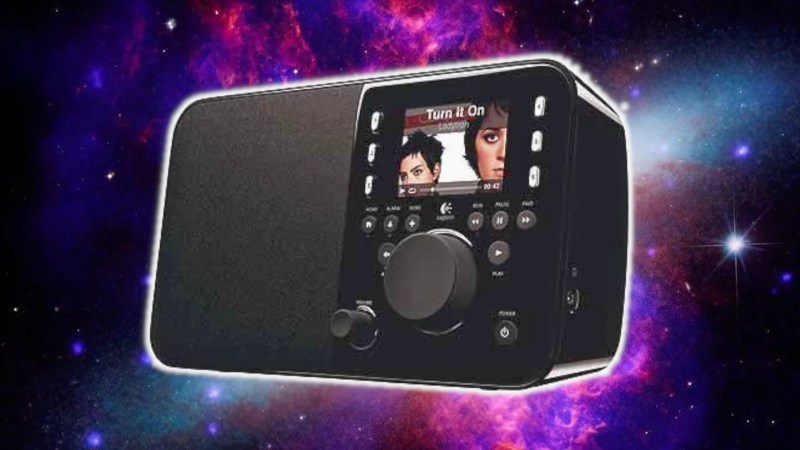
There are plenty of Wi-Fi radios out there that were built over the last two decades or so. However, many older models are now becoming less useful because many internet radio stations are switching to newer streaming formats that they don’t support. [Clifford Farrugia] has been working on a little project to save these appliances from the e-waste bin.
The HLS Radio Converter is the result of that work. It’s a small open-source tool that converts modern HTTP Live Streaming (HLS) protocol streams into regular old HTTP MP3 streams that older internet radio appliances are built to decode. You can run the tool on something as simple as an old Raspberry Pi. To make it work, you just give the tool the URL of the stream you’re looking to convert, and it then spits out a new URL to point your radio to which has the stream in the old-school format instead.
It’s a simple tool, but one that should prove very useful if you have a beloved old internet radio that can’t handle modern streams. We’ve featured lots of fun projects in this vein before, too, like this ultra-tiny internet radio build. If you’re working on your own projects in this space, be sure to let us know via the tipsline.











Jamming Ladytron, nice!
Just wanted to comment that too. Amazing.
Oh geez, purpose built radio streamer appliances can be retro now?
When I think of that concept I picture my old 486 Frankenmachine that was built into an old AT-era case (dremeling was required) with the 800×600 VGA display, full length 3com 10-base-t card and whatever soundcard I was able to find just barely managing to run xmms.
And now the kids are nostalgic for those appliances that came years later.
I need a time machine.
Pictured is a Logitech radio. A lot of SqueezeBoxes out there, including the SB3 with it’s nice fluorescent bluish green display by Noritake. Since Logitech web support for SB was shut down, the Lyrion Music Server (often mounted on a Pi) is the way to keep these legacy players working within the home. How does this stream converter integrate with LMS? Or does it replace it, after all only a simple internet radio station list is required for selection by the legacy SB device. Thanks!
The image used may be a bit misleading here. Those using LMS don’t need this as there is a plugin for LMS that does something similar to support HLS streams.
These are for those radios that still work fine for MP3 streams but have no support for HLS. Radios based on Frontier Silicon such as those from Roberts which these days use airable.fm to manage their stream lists are such an example.
The LMS already converts streams on it’s own, using ffmpeg, and acts as a proxy.
The players announce their class when they connect to the server, so the server knows what formats they can decode, and when to transcode.
LMS rocks! Sync Music in 4 Rooms for 100€ total + Docker on my NAS! And mine have batteries aswell!
Agreed, not really needed for squeezebox radios. For anyone that uses music assistant/home assistant – an improved version of the squeezelite provider is in progress now to allow full client side browse/media selection – another option if you already have these and don’t want to keep a seperate LMS server running.
What feels like modern technology is now out of date enough to need an adaptor. Somehow this makes me feel old.
As one who has grown up to see many forms of magnetic (and optical) media come into existence and fade into obsolescence, “Yeah, welcome to the club, pal.” :-)
Even better would be rewriting the firmware of these devices to gain the capability to do this without an adapter.
Assuming the firmware can be rewritten, and assuming you want to take the time to rewrite firmware for umpteen devices… The beauty of this approach is it’s a single device that will work with any of the older internet radios out there.
The Squeezebox electronics might be a bit old but its functionality is 100% up to date. The radio’s electronics is just a board mounted behind the controls so making it with modern parts wouldn’t shrink it because it would make the unit difficult to handle. The bulk of the radio is a ported two element speaker enclosure made from dense/dead plastic – the unit sounds very good for a table radio. If you don’t have a Squeezebox radio then a player program can be used on just about anything from a PiZero on up (you’d probably want something that can run the LMS interface, though.)
The LMS (server) program can run on practically anything and is both extensible and customizable. It integrates with streaming services such as Spotify and Quobuz/Tidal and knows how to work a CD reader. Storage can be anywhere — local, network or a mixture, it depends on how you’ve got the filesystem set up. Its normal interface is a web page; its multi-instance so it can accommodate multiple players/users at the same time. I’ve yet to come across anything more flexible and versatile than a LMS/Squeezebox combination, in fact I’m a bit of a collector of Squeezeboxes so don’t junk yours….to some its old and tired, to others like me its treasure.