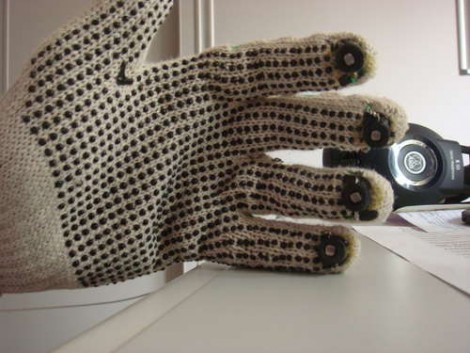
You’re out at night and playing a boisterous game of flashlight tag. But how can you tell if you’ve been mortally wounded by your opponents light beam? [Kenyer] solved this problem by building a flashlight tag damage sensor which is worn by each participant. It adds a bit of the high-tech equipment used with laser tag while keeping a low-tech price tag.
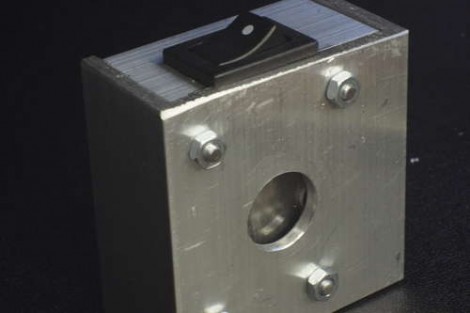
The sensor relies on a light dependent resistor to register hits when a flashlight beam passes through the round window. It will only register one hit in a three-second time period. At the end of the game, the total number of hits recorded can be flashed back using an on-board LED to see who is the victor. You can see a demo of this functionality in the clip after the break.
[Kenyer] started with a breadboard prototype using an Arduino as the driver. Obviously the cost of an Arduino for every player is a bit ridiculous. He scaled down the project, running the Arduino code on an ATtiny microcontroller. Continue reading “Automatic Flashlight Tag Damage Sensor”