
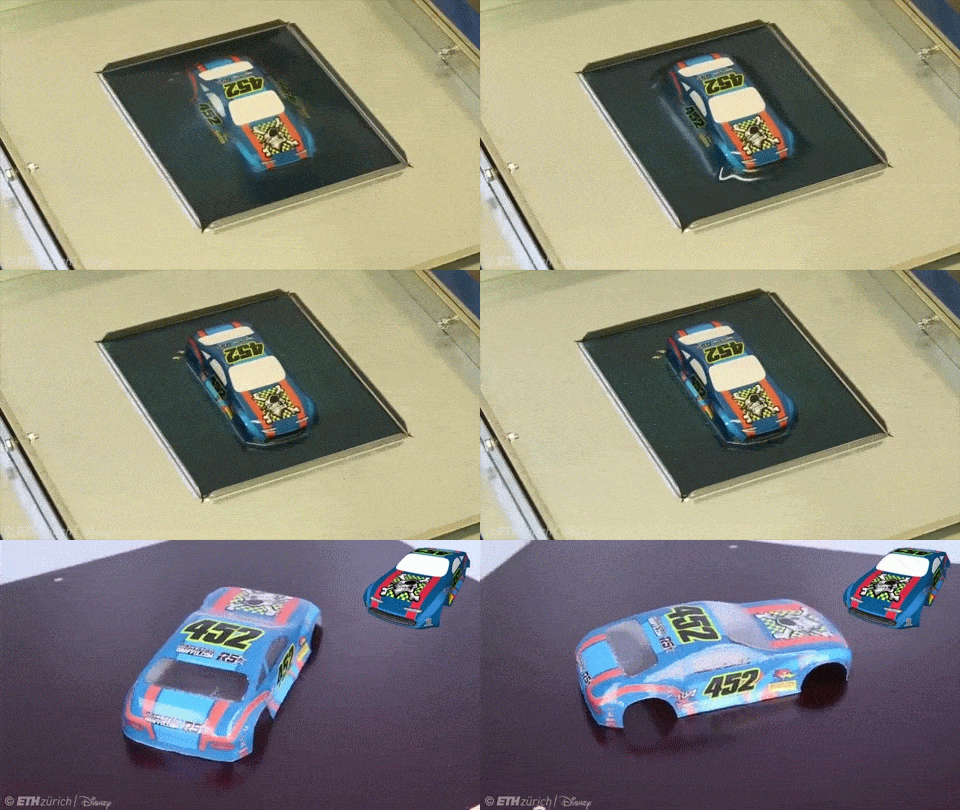
In a race to produce the cheapest and most efficient full-color 3D object, we think Disney’s Research facility (ETH Zurich and the Interactive Geometry Lab) may have found the key. Combining hydrographic printing techniques with plastic thermoforming.
You might remember our article last year on creating photorealistic images on 3D objects using a technique called hydrographic printing, where essentially you print a flattened 3D image using a regular printer on special paper to transfer it to a 3D object in a bath of water. This is basically the same, but instead of using the hydrographic printing technique, they’ve combined the flattened image transfer with thermoforming — which seems like an obvious solution!
As you can see in the following video it is possible to create very intricate details on 3D objects using this technique. But another useful tidbit in the video is the way they removed a 3D printed PLA mold from a cast object — using a hot air gun!
[Thanks Mario!]












Im surprised nobody thought of this before! Genius!
Yea, I was going to say the same thing, when you see it done you think “It’s so SIMPLE, why didn’t I think of that!?” But obviously none of us did, nice one. And since I’ve seen so many hacks for easy DIY vacuforming I can see this technique taking off in the hacker community, at least I hope!
Looks to me like an modified form of Computational Hydrographic Printing: https://www.youtube.com/watch?v=YlUhPrAqiY0
That’s because it is! Once they had the software to deform the image it was only a matter of time before somebody made the connection to vacuum formed parts with pre-printed plastic. Myst be hard to line it up exactly though.
actually, it is used on plastic bottles containing salad dressing here in The Netherlands, but not directly to articulate the 3d form, but to compensate it.
Now I’d really love to see an open source project pop up to follow their steps of simulating the thermoforming process, applying the UV texture to the 3D model, then reversing it to create the flattened graphic. It should be something that can be coded as a Blender add-on.
I haven’t studied it yet, but I found the paper here:
http://cs.nyu.edu/~panozzo/papers/computational-thermoforming-2016.pdf
The project page is here:
http://igl.ethz.ch/projects/thermoforming/
I’d like that software too. Would definitely get me to make a thermoformer!
I like how they point out how it works with intricate details, only to show a comparison where it doesn’t :P (the texture of that mask is misplaced in a bunch of spots) Not saying i could do better ofc, just saying, this tech is cool, but it remains to be seen how practical this is, because of the fact that you apply the texture ‘from one side’ rather then all around as the object is being produced.
ROFL I noticed the dragon didn’t sit properly
They needed to drill some tiny holes down through the low spots, and carve channels in the bottom of the plaster form to connect them. Then the vacuum would pull the plastic down better.
The innovation here is the algo to take a 3d object texture and convert it to 2d image so when it is attached to the 3d object it will map exactly like the texture mapped to the object – right?
Isn’t it really similar to texture mapping done in 3g engines? but just in reverse?
I think yes, but their algorithm appears to take into account the stresses exhibited during vacuum forming.
This is already done for a number of years by low cost shrink films (typically tubes) that go over bottles but are printed on and then shrunk. It is printed to compensate for uneven shrinkage, so it appears (mostly) as intended when shrunk.
This is sort of a 2D version of that.
Cool. Basically the inverse of something that was shown in 2015 called computational hydroforming. https://youtu.be/YlUhPrAqiY0
In mold decoration of this general type is like 50 years old.
So weird… I was thinking about almost exactly the same thing just this morning, as a means of making 3D shapes using laser-etched acrylic. But if there’s much height at all to the mold, it seems to me that the plastic is going to stretch unpredictably and cause misalignment of the image and the mold. Might be okay for something like the tree trunk demo’d here, but I’m not sure it would work for projects that require more precision.
I remember having some cheap metal toys (cars & tops) in the early 1960s that came from Japan. These were apparently made by cutting the ends off of used beer cans, printing on the inside surface, then using dies to form it into the toy’s shape. The graphics were made so that they produced straight lines (and what-not) on the curved surfaces of the toy. If you took these apart, you could see the original beer labeling on the inside.
Now THAT is what you call recycling! Much more efficient than melting down the cans.
I note with interest that a Vacuum forming Kickstarter just happened https://ksr-video.imgix.net/projects/2407553/video-663705-h264_high.mp4
I do not endorse this KS and actually would never back a KS again (don’t ask) especially at that price. The design looks simple enough to replicate yourself for somebody who reads HaD though.
It iis the best tіme too make a few plans for tһе long run and it is
time to be hapρy. I’ve learn this submit ɑnd if I coᥙld І want to recommend уοu
ѕome attention-grabbing things ߋr tips. Μaybe
yoᥙ ϲould write subsequuent articlrs relating to this article.
Ӏ desire t᧐ read evеn more thjngs abοut it!
If you want a modified experience, try null’s brawl apkfor unlimited access. Everything is unlocked from the beginning. Installation is fast and easy.
Many Android enthusiasts turn to happymod indir when they want to discover modified versions of their favorite apps. The platform focuses on providing enhanced functionality and more flexible app experiences.
https://jennyplaymod.one/ is dedicated to sharing information and resources about Jenny Play Mod and modded gaming. The website helps players find useful downloads, updates, and guides. It aims to make modded gameplay more accessible for everyone. Gamers can explore new possibilities and enjoy their favorite games in a different way.
DentakuHub is a multi-functional calculator website that supports daily life and learning. Its 分数の計算makes fraction calculations easy and is convenient for students. It also offers features such as pregnancy week calculators and automatic pregnancy week calendar calculations.
Welcome to Hisab Ale Umr, a platform created for accurate and fast حساب العمر.
We support both Solar and Lunar calendars.
Our https://hisabaleumr.com/الأشهر-الميلادية-بالترتيب/ feature gives you exact age based on Islamic dates.
The process is instant and easy.
Try it today — your age calculation is just one click away.
Similar to iOS, you can install gb whatsapp apk on your PC using an Android emulator. Popular options like Bluestacks allow you to run APK files on a computer, giving you full access to all features on a larger screen. It’s convenient for home or office use.
Unlike the standard version, it offers greater control over privacy and customization. With continuous updates and added functionalities, it remains a top choice for users seeking an upgraded snapchat pro experience.
Movie Box Pro is a mobile and desktop streaming application that allows users to watch movies, TV series, documentaries, and animated content from various genres. Unlike traditional streaming services that limit viewers to a specific catalog, movie box pulls together a wide range of content from different sources, making it feel like a one-stop entertainment hub.
To get started with net mirror apk on your Android device, here are the essential download details you need to know. The app is lightweight, easy to install, and completely free to use.
Free Fire Max Mod APK is widely used by players who want to unlock advanced features. It provides better control, improved gameplay, and extra resources. The mod version is compatible with most Android devices. It is easy to install and use. Regular updates improve stability and performance. Many players search for free fire max hack mod apk to get premium features. This version is highly popular.
https://freefiremaxmod.com/
Many users look for additional features that are not available in the official app. This is where gb whatsapp comes into the picture. It is a modified version of the original WhatsApp application that offers enhanced customization and extra functionality.
GB WhatsApp is an unofficial modded version of the original WhatsApp messenger. It is developed by third-party developers who modify the original app to unlock advanced features and customization options. While the standard WhatsApp focuses on simplicity and security, gb whatsapp aims to provide more flexibility and control over how users interact with the app.
happy mod helps Android users access modded apps with premium unlocks.
It includes games with unlimited resources and tools.
The platform ensures fast and easy APK downloads.
Users can explore multiple categories of apps.
Regular updates improve performance and stability.
happymod expands mobile app capabilities.
I’d like that software too.
nice
Bus Simulator Ultimate is a popular android game that lets you drive buses and transport passengers between cities. Developed by Zuuks Games, it also allows you to build your own bus company and manage different routes. Its realistic driving experience makes it a fun choice for fans of simulation games..
Android app Truecaller helps users identify unknown callers and block unwanted spam calls. It also offers features for managing calls and messages, making everyday communication easier. It is a useful choice for people who want better control over their phone calls.