
Often, mere curiosity is sufficient to do something. This is also the case with people trying to analyze the communication setup and protocol which SpaceX is using with their Ku-band based Starlink satellites. One of these fine folk is [Christian Hahn], who has recently posted some early findings to r/StarlinkEngineering over at Reddit. Some of the captured data seems to include the satellite ID system that ground-based user stations would presumably use to keep track of overhead Starlink satellites.
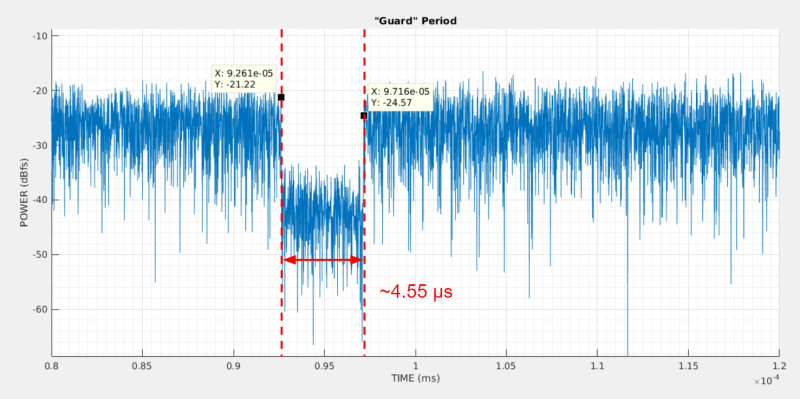
For the capturing itself, [Christian] is using a second-hand dish for capture and a DIY SDR using KC705 FPGA-based hardware – which may have begun its life as crypto mining hardware – along with the usual assortment of filters and other common components with this kind of capture. Even at this early time, some features of the Starlink protocol seem quite obvious, such as the division into channels and the use of guard periods. Nothing too earth-shattering, but as a fun SDR hobby it definitely checks all the boxes.
[Christian] has also announced that at some point he’ll set up a website and publish the findings and code that should make Starlink signal analysis easy for anyone with a readily available SDR receiver.










Any security or can anyone listen in on the subscribers?
It would be illogical to assume a company would go through all the trouble of designing something as sophisticated as a distributed satellite communications system and simply omit any form of security. So yeah, there is security.
I don’t agree with your assertion unless you’re counting security through obscurity as security. You could eavesdrop on old-school analog cell phones with a radio that could tune into the frequency.
Kind of moot though, you should be using encryption for anything that needs to be secure anyway. For example, most websites you’re going to are HTTPS these days and will be encrypted. If you use a VPN, everything will be encrypted. Not to say that encryption is the end of the story on security.
Practically though, it’d be very difficult to snoop I imagine, I believe the communications are extremely directional. Think of the Starlink radio as a laser and not a flashlight. It also hops around to different satellites constantly, but I’m not sure exactly how often that happens.
Yes, but ask Inmarsat lol
It was just over 10 years ago a bunch of Brazilians used unsecured channels on US Navy satellites for their own purposes so it’s not like this sort of oversight is unheard of.
https://www.wired.com/2009/04/fleetcom/
“First lofted into orbit in the 1970s, the FLTSATCOM bird was at the time a major advance in military communications”
Security has improved a little since the 70s.
That’s 45 microseconds, not 4.5. Decimal points matter.
(9.716e-5-9.261e-5)*1e6 = 4.55 microseconds
One foot per nanosecond, roughly anyway,
It would be interesting to plug in some altitude figures and be able to gauge their response time, and visa versa.
Yeah, or plug in some useful units. Like, you know, meters or so.
@Bob says: “That’s 45 microseconds, not 4.5. Decimal points matter.”
That’s 45.5 microseconds, not 45 microseconds. Significant digits matter.
There’s a ~ at the front, so it’s an approximate value. Could be anything.
Significant digits are misleading in an approximation.
@Alan said: “There’s a ~ at the front, so it’s an approximate value. Could be anything. Significant digits are misleading in an approximation.”
Not quite Alan, please allow my Pedanticism: By convention the “~” predecessor grapheme alone refers to an unspecified/unknown variability in the single least significant digit. To specify a variability range, one must include the ± or +/- ancestor grapheme followed by one or two numbers. The +/- ancestor can have an asymmetric range with two numbers such as 4.7 +0.2/-0.3. In all cases the Rule of Significant Digits must be adhered to. And let’s not forget these lovely approximation predecessors: ≈ almost equal to, and ≅ approximately equal to.
(9.716e-5 – 9.261e-5) * 1e6 = 4.55 microseconds
Hmmm. I’m pretty sure that… (9.716e-5 – 9.261e-5) * 1e6 = 4.55 microseconds
Hi! Thank you for you enthusiasm
It is actually 4.55 microseconds. :)
Look at the two markers and diff them.
Hi, thank you for you enthusiasm!
It really is 4.55 microseconds. The x-axis is a bit unfriendly, but just diff the 2 markers.
Hi, thank you for your enthusiasm!
It actually really is 4.55 microseconds. :) Take the difference between the two markers.
(9.716e-5 – 9.261e-5) * 1e6 = 4.55 microseconds
I’ll go with the visuals here, horizontal scale has 50uS ticks and the width is more or less 1 tick.
(9.716e-5 – 9.261e-5) * 1e6 = 4.55 microseconds
Hi, thank you for your enthusiasm!
It is actually 4.55 microseconds. Look at the 2 markers and diff them. Note the e^-5.
Wow. This comment section is super broken in Chrome. Excuse my spam. (Please delete this and all duplicates moderators.
does anyone know the foot print of the signal: ie other than on the satellite dish, how far on the ground (roof) around does the signal land please?