
Asbestos is a nasty old mineral. It’s known for releasing fine, microscopic fibers that can lodge in the body’s tissues and cause deadly disease over a period of decades. Originally prized for its fire resistance and insulating properties, it was widely used in all sorts of building materials. Years after the dangers became clear, many countries eventually banned its use, with strict rules around disposal to protect the public from the risk it poses to health.
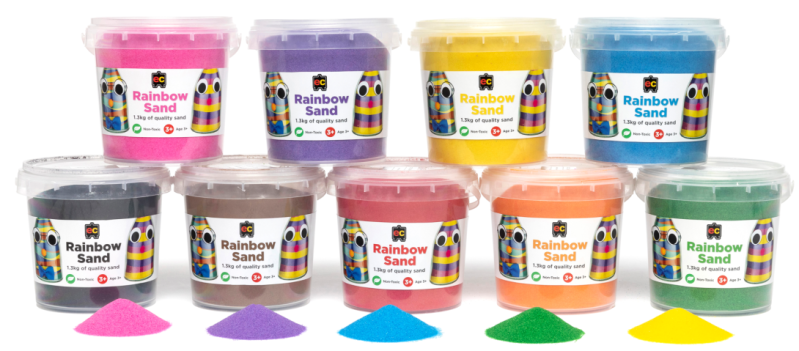
Australia is one of the stricter countries when it comes to asbestos, taking great pains to limit its use and its entry into the country. This made it all the more surprising when it became apparent that schools across the nation had been contaminated with loose asbestos material. The culprit was something altogether unexpected, too—in the form of tiny little tubes of colored sand. Authorities have rushed to shut down schools as the media asked the obvious question—how could this be allowed to happen?
Hiding In Plain Sight
Australia takes asbestos very seriously. Typically, asbestos disposal is supposed to occur according to very specific rules. Most state laws generally require that the material must be collected by qualified individuals except in minor cases, and that it must be bagged in multiple layers of plastic prior to disposal to avoid release of dangerous fibers into the environment. The use, sale, and import of asbestos has been outright banned since 2003, and border officials enforce strict checks on any imports deemed a high risk to potentially contain the material.
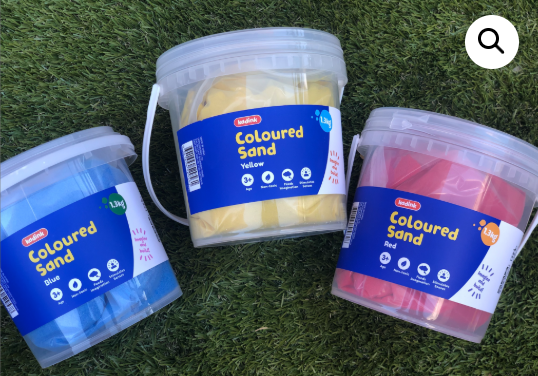
Thus, by and large, you would expect that any item you bought in an Australian retailer would be free of asbestos. That seemed to be true, until a recent chance discovery. A laboratory running tests on some new equipment happened to accidentally find asbestos contamination in a sample of colored sand—a product typically marketed for artistic use by children. The manager of the lab happened to mention the finding in a podcast, with the matter eventually reaching New Zealand authorities who then raised the alarm with their Australian counterparts. This led to a investigation by the Australian Competition and Consumer Commission (ACCC), which instituted a national safety recall in short order.
The response from there was swift. At least 450 schools instituted temporary shutdowns due to the presence or suspected presence of the offending material. Some began cleanup efforts in earnest, hiring professional asbestos removalists to deal with the colored sand. In many cases, the sand wasn’t just in sealed packaging—it had been used in countless student artworks or spilled in carpeted classrooms. Meanwhile, parents feared the worst after finding the offending products in their own homes. Cleanup efforts in many schools are ongoing, due in part to the massive spike in demand for the limited asbestos removal services available across the country. Authorities in various states have issued guidelines on how to handle cleanup and proper disposal of any such material found in the workplace.
At this stage, it’s unclear how asbestos came to contaminate colored sand products sold across the country, though links have been found to a quarry in China. It’s believed that the products in question have been imported into Australia since 2020, but have never faced any testing regarding asbestos content. Different batches have tested positive for both tremolite and chrysotile asbestos, both of which present health risks to the public. However, authorities have thus far stated the health risks of the colored sand are low. “The danger from asbestos comes when there are very, very fine fibres that are released and inhaled by humans,” stated ACCC deputy chair, Catriona Lowe. “We understand from expert advice that the risk of that in relation to these products is low because the asbestos is in effect naturally occurring and hasn’t been ground down as such to release those fibres.”
Investigations are ongoing as to how asbestos-containing material was distributed across the country for years, and often used by children who might inhale or ingest the material during use. The health concerns are obvious, even if the stated risks are low. The obvious reaction is to state that the material should have been tested when first imported, but such a policy would have a lot of caveats. It’s simply not possible to test every item that enters the country for every possible contaminant. At the same time, one could argue that a mined sand product is more likely to contain asbestos than a box of Hot Wheels cars or a crate of Belgian chocolates. A measured guess would say this event will be ruled out as a freak occurrence, with authorities perhaps stepping up random spot checks on these products to try and limit the damage if similar contamination occurs again in future.
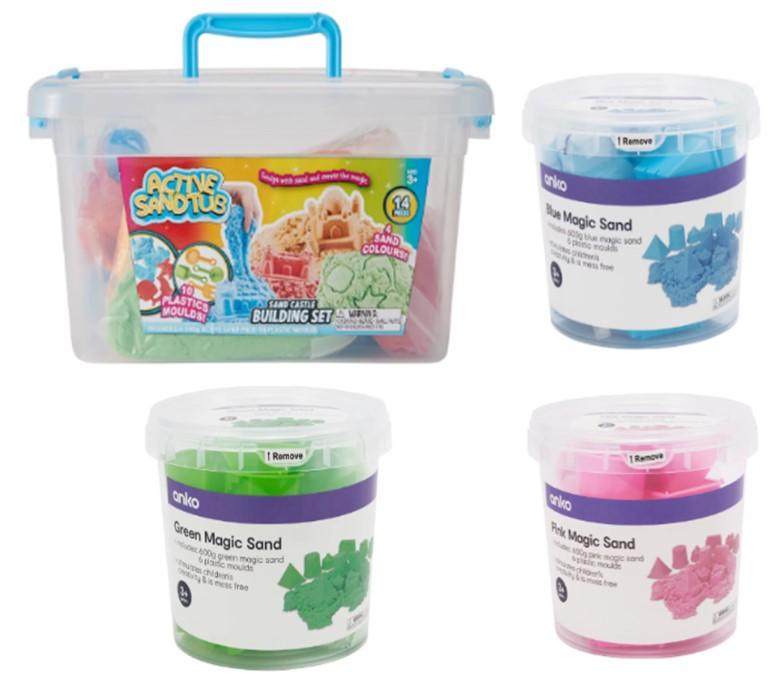
Featured image and other sand product images from the Australian government’s recall page.








Here we can observe the broken telephone effect. The original source said traces were found, which usually implies there’s not a whole lot.
So while asbestos is generally a bad thing, here we have a clear moral panic with schools closing down and hiring expensive experts, throwing away stuff over traces of asbestos found in some decorative sand. One could ask the question, how much asbestos on average is brought into schools by the sand the children carry in with their shoes, and how does it compare to the amount of asbestos found in this sand, and whether this whole thing is just a huge over-reaction?
Cha-ching.
I have the same suspicions. Someone is making bank on the cleanup.
It reminds me of the ridiculous overreaction when someone peed in a reservoir. Meanwhile bird droppings were a daily occurrence.
https://time.com/66459/portland-reservoir-pee/
You raise a good point. Almost every body of water is a huge toilet full of rotting corpses. Drink up!
If you swim in the ocean, there is some water to excrement percentage that you are comfortable touching and potentially ingesting. The question is, what is your percentage? Enjoy =D
I think half the parents who freaked out forgot they were liberally doused in Talc Powder when they were tykes.
However very recently there was a bit of a scandal around mulch being contaminated with old asbestos building waste and this contaminated mulch being used in parks and playgrounds. So, for many schools there was likely a strong pain-point, a keen recent memory in place of a real danger they dealt with barely months ago.
The federal government recommendation for the sand was simply stop using it just in case, put on N95 respirators and gloves when you double bag it just in case, then chuck it in the standard trash because it’s trace and low risk. No special handling after double bagging, standard landfill bins ok.
The mulch problem, very recent really, was a lot more of a kerfuffle.
My understanding is it doesn’t take more than a single small fibre of the stuff in the wrong place to get you, eventually anyway, it being a slow developing problem – so trace or bucket load doesn’t really matter so much it is worth taking seriously. And that trace around dumb children who will do silly stuff with it is potentially very very dangerous to them, even if you won’t find out for 30 odd years…
Yes this situation isn’t as bad as some asbestos incidents, but still kids playing with the stuff makes the odds of generating the nasty little fibres higher and all while not wearing the PPE to be around them relatively safely. Far better to be cautious than risk a big wave of health problems that will be making folks ill while still in their prime working years too.
That’s true – but it’s a vanishingly small probability for a single fibre. Probabilities however are cumulative: you may eventually get trillions of asbestos fibres in your body, and that makes it a problem. Buy enough tickets and you will win any lottery.
The point is that this isn’t avoidable. You can’t get to absolute zero exposure because trace amounts are found everywhere. Someone making a big deal about trace amounts in plastic coated play sand, while the sand pit outside also contains trace amounts of asbestos, and the ground next to it, and the water coming out of the tap… it’s just panicking about a paper cut while you’ve got a machete sticking out of your chest.
Also note that this “magic sand” is sand grains coated in a hydrophobic material and wetted with oil, so it would stick to itself like wet sand on the beach. It’s not going to give off dry particles. The kids may eat it, but the Chrysotile fibers are soluble in stomach acid and other strong acids, so they are mostly eliminated.
I mean, if you’re still alive with a big honking bush knife sticking out of you, and you don’t even realize it’s there… when talking about asbestosis, we’re talking about thousands of asbestos fibres per gram of lung tissue.
https://pmc.ncbi.nlm.nih.gov/articles/PMC5898940/
And when you have thousands upon thousands of kids, parents and teachers actively sharing space with, handling and disturbing this stuff plenty of them are ‘winning’ that lottery even when there are very few of the dangerous fibres around (and till its tested I’m far from convinced the coatings are actually going to contain that many of the fibres being generated by that handling or prevent that handling for generating them in the first place). The individual might have a reasonable chance to be fine, but the collective.
Again, all the other exposure to asbestos from other sources is much greater. Kids go out in the school yard, pick up a handful of dirt and put it in their mouth – there’s asbestos in it, in trace amounts.
Whether they have this sand in the classroom is likely to make no discernible difference whatsoever, individually or collectively.
That I’d rather doubt, as trace amounts high enough folks noticed ‘by accident’ is suggestive of pretty large traces, not infinitesimal ones. And in something that is handled frequently, and for good measure by hands infront of faces not the foot brushing the floor… It is just the worst case for getting exposed you can have short of asbestos building demolition or actively working to produce asbestos stuff..
It might be true, this is nothing much but far as I can tell there is no real detail on this case yet – it could be way way worse exposure or it could be nothing and when nobody knows and the lab work to find out will probably take far far longer and cost more than just cleaning the classrooms…
The accident wasn’t in the part where they found it, but in the fact that they looked. Nobody bothered to test this sand for asbestos before.
Take any dirt and start sifting through it with a powerful microscope. I guarantee you will find asbestos fibers sooner or later. Not many, but you will find them.
Which also raises the question, how much asbestos was actually found? That was never quantified. All we know is that some of the samples contained trace amounts. If the concentration was above some regulatory limit, they would have stated so, because that would have made even bigger news.
So far no airborne asbestos in the schools has been detected, and every official assessment calls the risk “low”:
Children patting sand cakes isn’t enough to crush and pulverize the asbestos.
The risk from incidental exposure is very low – while a single fibre lodged in the lungs can eventually cause cancer, it’s actually difficult for a fibre to get permanently stuck there, so you have to be exposed to a lot of it for the risk to become significant. That’s why we can get by with leaving undisturbed asbestos-containing materials in place in buildings.
Industrial-level exposure “only” caused about a 5% to 10% incidence rate amongst workers. Unacceptably high for sure, but not a “one sniff and you’re doomed” ultra-poison either.
So yeah, the chances of this particular product causing any cases of cancer even decades from now is vanishingly small, but it’s still a good idea to take any discovery of asbestos contamination seriously.
Key word there is undisturbed – this stuff is actively disturbed by design! And actively disturbed by design by kids who are blissfully unaware of such stuff and actively going to be doing stupid things.
Go outside and kick the ground – you have disturbed some asbestos.
The strictest occupational safety limit in Australia that I’ve found specified 0.01 fibers per milliliter of air, which is ten times less than US or EU regulations. That is still 10 million fibers per cubic meter of air.
That’s quite a bit, if you’re of the mind that a single fiber is dangerous enough to note. One deep breath of air would contain 30-50,000 fibers. Fortunately, the lungs can and do remove foreign particles, including asbestos – otherwise you’d die just from breathing in regular household dust. As much as you do breathe in, almost everything comes back out.
The danger of asbestos is that it’s fine enough to pierce cell membranes, so when a significant number of fibers (measured in thousands per gram of tissue) remain in your lungs for years and decades, it causes constant inflammation that causes scarring, mutations and eventually cancer. The immune system isn’t powerless against cancer – in fact it removes cancerous cells all the time where they pop up – but too much is too much.
Which is btw. why “one asbestos fiber is enough to cause cancer” is both true and a lie.
Yes, it could, but then your immune cells would probably kill it, or the cell itself commits automatic suicide (apoptosis), and you wouldn’t actually get cancer. You need millions of “attempts” for the cancer to break through and start growing, which is why it takes such a long time from asbestos exposure to the disease. Or, if you’re cosmically unlucky, you get it on the first “try”.
Never the less, there is that one fiber that starts the cancer that kills you, which makes the statement technically true.
I liken it to cigarettes – smoking one cigarette and then never touching them again technically WILL increase your risk of cancer but realistically is totally insignificant.
The reaction most people have to asbestos is as if smoking that one cigarette means you’ve only got days to live. It’s practically a meme on the DIY forums these days.
One thing to remember is that, being rich in the mineral, Australia has had more than it’s share of hi-profile asbestos pollution incidents, so there may be some heightened sensitivity at play.
Another thing to remember, asbestos being a naturally occurring silicate mineral that is liberated by the erosion and weathering of certain common types of rock, trace amounts are present in just about every shovelful of dirt you pick up. The better question is, if you really went looking for it, where wouldn’t you find it?
So there is heightened sensitivity, and public ignorance about the relative risks, and people willing to exploit it all to sell news articles, grandstand as politicians, or just sell unnecessary asbestos clean-up services to panicking parents and school administrators.
“public ignorance about the relative risks”
And, as you said, people who know better profiting from that. Meanwhile, microplastics are everywhere inside the human body with unknown effects:
February 4, 2025 – The human brain may contain up to a spoon’s worth of tiny plastic shards—not a spoonful, but the same weight (about seven grams) as a plastic spoon, according to new findings published Monday in the journal Nature Medicine. Researchers detected these “almost unbelievable” levels of microplastics and nanoplastics in the brains of human cadavers, says study co-author Andrew West, a neuroscientist at Duke University, to Science News’ Laura Sanders. “In fact, I didn’t believe it until I saw all the data.”
Also found in human and pet dog testicles.
California state rock! https://en.wikipedia.org/wiki/Serpentinite
There are entire regions in the world made of rock containing asbestos, some possibly a bit unhealthy to live in especially when the wind blows.
As far as kids sand is the subject, silica sand is also not great for young (or old) lungs https://en.wikipedia.org/wiki/Silicosis
Feldspar sand is better.
/r/lostedditors
“the asbestos is in effect naturally occurring and hasn’t been ground down as such to release those fibres.”
I wonder if vibration during shipping might not grind the sand against the asbestos, resulting in particles of the dangerous sizes — not to mention that using the product as designed could cause friction and grinding action.
Of course, there are almost no numbers available (here). The whole thing might be an over-reaction. Or not.
I’m trained in asbestos work as part of my job. The part you quoted is BS. Vermiculite that had asbestos in it was used for insulation in Libby Montana and was fresh from ground and exposed lots of people to asbestos.
You are correct about the mechanical abrasion of sand generating friable fibers that can go airborne. Asbestos is safest when it is not disturbed. Kids play sand is something that is intended to get airated and disturbed. Worst case scenario.
How is the sand colored? I would think the coloring would contain the asbestos, mostly.
This appears to be “magic sand” or “kinetic sand”, which is ultra-fine sand grains coated in some organic compound that repels water. The coated grains are then wetted with oil, which makes them stick together like wet beach sand that never dries up, and that’s what the kids play with.
Come to think of it, it doesn’t sound like a very healthy product to begin with.
Could be unhealthy in other ways too, but does sound like a quite a low risk for airborne asbestos.
It’s not hydrophobic sand. Just regular sand and a dye.
The images in the article show both coloured and kinetic/magic sand. The article only mentions the coloured/dyed sand. As I bought two bags of kinetic sand for my grandchildren yesterday, I would like to be sure it is only the dyed sand that is a problem.
If it’s ground up rock from a quarry, there’s likely to be asbestos in it, whether it’s dyed or coated.
Naturally occurring “beach sand” tends to be weathered granite in many places, so it’s the wrong type of mineral to contain asbestos, but there’s still probably going to be trace amounts of it, and as a bonus it will also contain trace amounts of radioactive materials. No sand is truly and absolutely safe as it comes to these materials.
I can’t say anything about the safety of it but I know as a parent I hate the stuff. It does not stick together all that well, so you still end up with sand everywhere. My kid got some as a present once, I certainly am never going to buy him any.
Australia has a large panic over minute amounts of asbestos, meanwhile in Ukraine entire villages roofed with the stuff have been turned to rubble. Soldiers who manage to evade killer drones, bullets, land mines, bombs and non-kinetic weapons face a grim prospect of getting cancer later in life.
War sucks. Both sides should surrender and fight their leaders (who start the wars, always).
Ukraine should fight their leader for… getting invaded?
Not for the invasion, for the war. Again, the only answer to war is mutual surrender followed by mutiny.
So they should fight Ukraine’s leadership for not immediately surrendering? Are you high?
@Gravis
Yes. Look up the prisoner’s dilemma. Politicians around the world are all on the same team, and are all part of the same social class. They start wars (both offensive and defensive) to cull the male population. Don’t fall for it. Surrender immediately whenever you can. Don’t play their game.
I’d suggest the Ukrainian’s would consider it a victory, and worth the cost even, should their exposure to crap in a warzone to be their biggest problem in a few decades time… That means they lived through the war, and their home is still free and feeling secure enough to not be living with permanently under siege type mentality.
I live in NZ/Aotearoa, and its pretty intense, as a parent it is concerning as you don’t want to be ruminating about negative long-term possibilities for your kids health. We see a lot of building and demolition sites with people wearing full PPE and big warning signs for asbestos removal so the fear is there in society of the risk – what the perceived vs real effect of asbestos is out of my knowledge though.
Also one chain store estimates they sold over 67k units of the product, so its not like its only a few buckets of the stuff. (Remember NZ total population is ~5.3 million people).
The bigger problem tends to be the water distribution system, which was built with asbestos cement. 50 year old pipes are degrading and releasing asbestos fibers into the drinking water.
https://iwaponline.com/ws/article/22/4/4445/87250/The-concentration-and-prevalence-of-asbestos
Fortunately, drinking asbestos fibers doesn’t seem to have such a clear link to cancer since the fibers do dissolve in the strong acid in the stomach, but with asbestos in the water you get asbestos everywhere, in the air as well, and then in the lungs.
My Dad was an Auto Mechanic in the 1940’s and 1950’s in the US. Did LOTS of Asbestos Brakes and Clutches.. Then went into the Tire Industry dealing with Carbon Black Powder while mixing Tire Rubber.. Heavy Smoker till a Heart Attack in 1995.. Quit Smoking and Drinking about then.. Finally passed at age 92 of Prostate Cancer.
Some people are sensitive to Carcinogens, and some are not..
I’d just rather not have the Stuff around If I can help it.. But I’m not pancaking over the Second Hand Exposure I got from him and going to work with him when I was younger..
But someone clearly dropped the ball on this one..
Cap
“Australia takes asbestos very seriously. Typically, asbestos disposal is supposed to occur according to very specific rules.”
ahum. Wittenoom anyone? huge waste hills of a blue asbestos mine are completely uncovered, washing away with the rain and blowing away in the dry season.
just look at the blue parts and guess the scale of the area. -22,3091039, 118,3193673.
the mining town of wittenoom has been razed to the ground.
I was going to make this exact point. they literally bulldozed the town into the ground. You can still see raw asbestos if you drive through there. Yes you can still drive through there. Also if google maps doesn’t bring it up with the lat and long, type in wittenoom, westeran australia and look just to the south of 136 you will see where the town was and even open pits of rubbish. They used it in their gardens there and even sandboxes like the sand in the article.
So yeah not sure I would put australia and takes asbestos seriously in the same sentence…..
Nope, still true, with the caveat “unless it might affect a mining company.”
Wittenoom was developed by Lang Hancock, Gina Rinehart’s dad. Revolting people who have rabid objections to paying reparations for their crimes, let alone actual taxes on the money they receive for selling the dirt under our feet. But the politicians let it slide because sometimes Gina lets them fly on her jet.
Now go and read about Lang’s attitudes to the traditional owners of the land he profited from.
You still can not say they take it seriously when there is literally an entire town that they just bulldozed under and left. Sorry not buying it.
I’m a parent who was directly affected by the school closures around this issue. I am more than happy with the response to the issue because it was my child directly affected. My child missed one day of school, that’s all.
The general discussion about the contaminated sand misses some important points I think:
1. Inhalation has been widely discussed, but ingestion isn’t. Young children could easily be ingesting sand residue during and after play. Educators will help kids wash their hands, but some will be missed. The asbestos can also potentially cause oesophageal and stomach cancers.
2. Schools were following the policies controlled by the relevant state governments. No matter the specific circumstances in each school – they have rules to follow without discretion. In some cases that required certified cleanup staff or documented completion of remediation.
3. Past experiences in certain regions dictated those government policies. In the ACT, there was the Mr Fluffy 1 & 2 incidents (https://en.wikipedia.org/wiki/Mr_Fluffy, not the best rundown of the incidents but a start). This history directly affected the ACT’s remediation policy and actions for the colored sand discovered in ACT schools.
I whole heartily agree with @DerAxeman’s comments:
Asbestos is so prevalent that we probably can’t avoid it. For example, if you’ve ever been exposed to mica – sometimes used for insulation as well as a dielectric in some capacitors – then you may have been exposed to asbestos. And apparently, after-market brake pads from other countries can contain significant quantities, so if you live in a major city…
If you’ve used baby powder or other talcum powders, or carved soapstone, then there’s another possible source of exposure for you. I’m fairly certain I’ve been exposed; I destructively removed some 9-inch floor tiles long before I knew that the tiles and/or the glue on them probably contained asbestos.
Come to think of it, I’m certain I was exposed in High School chemistry class. We used asbestos as a chemically inert filtering agent in Gooch crucibles which were fired on very hot ovens.
I think it’s safe to say that almost all of us have had some asbestos exposure.
You can’t avoid it 100% but you can try to minimise exposure. If you walk past someone smoking a cigarette in the street, you’ll probably be fine, but that doesn’t mean you should take up smoking as a habit. You’ll probably get a trace of asbestos from old cars/pipe insulation/roofing shingles but that doesn’t mean you should build your house out of the stuff, or grind it, cut it, blow it with an air compressor etc. Even more so for kids because they would literally roll around in it without understanding the risks.
Hacker angle: DIY PLM microscopy. Not expensive or difficult.
The sudden urgency of response to incidents that have been going on for years causes unnecessary disturbance.
Airbus A320 having software bug for months and being already investigated for over a month? Suddenly it is critical to install the patch in 24 hours.
Playsand having traces of asbestos for 5 years? Suddenly it is critical to vacuum up every remnant of it in before school can continue.
Why is such rubbish allowed in the country in the first place? As long as some stupid bureaucrat has a counterfeit stamped documents that the materiel is ROHS compliant and passed a substandard MSHS document without understanding it ( duh Im a middle admin…duh) . I bet there’s more dangerous goods being let into Australia…. Foreign cars failing safety standards?????
I don’t get this “asbestos panic”, the lab boys say the symptoms of asbestos poisoning show a median latency of forty-four point six years, so if you’re thirty or older, you’re laughing.
Worst case scenario, you miss out on a few rounds of canasta….
I punch those numbers into my calculator, it makes a happy face!
Yeah I’ve always thought the benefits of asbestos as a wonder-material significantly outweigh the health risks, unless you were one of those goobers standing over an open-air rock crusher in the ’20s to process the stuff. If anything, the correction to our top-heavy population pyramid would be a net benefit.