
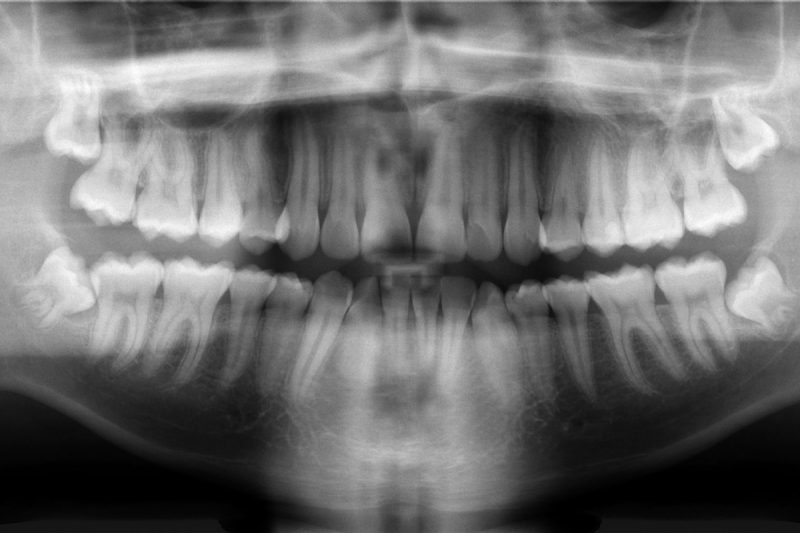
The human body is remarkably good at handling repairs. Cut the skin, and the blood will clot over the wound and the healing process begins. Break a bone, and the body will knit it back together as long as you keep it still enough. But teeth? Our adult teeth get damaged all the time, and yet the body has almost no way to repair them at all. Get a bad enough cavity or knock one out, and it’s game over. There’s nothing to be done but replace it.
Finding a way to repair teeth without invasive procedures has long been a holy grail for dental science. A new treatment being developed in Japan could help replace missing teeth in the near future.
The Tooth
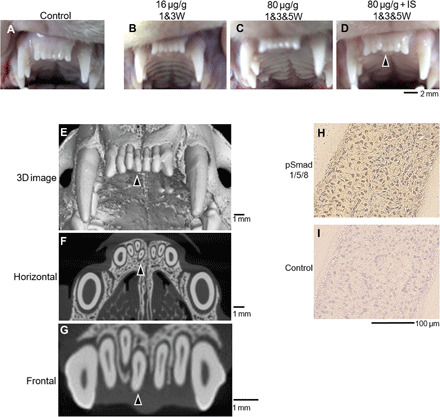
In the course of normal development, humans grow a set of baby teeth, followed by a set of adult or “permanent” teeth. Conventional wisdom tells us that this second set is all we get, and that we should properly care for them if we hope to hang on to them for life. Physical injury can knock them out, and a lack of dental hygiene can see them badly damaged to the point where they have to be removed. Thus, there are plenty of incentives to take care of one’s teeth, given that there is little to be done beyond replacing them with clumsy dentures if they fail us.
Researchers in Japan may have figured out a workaround, however. A gene called uterine sensitization–associated gene-1 (USAG-1) was identified to play a role in stopping the growth of teeth in small mammals like mice and ferrets. In turn, it was determined that by inhibiting the interaction between proteins generated by USAG-1 and bone morphgenetic protein (BMP) molecules, it was possible to make dental growth resume. The perceived link is relatively simple—suppress USAG-1, and kickstart the tooth generation process. The hope is that using an antibody to do this would then lead to the spontaneous development of healthy adult teeth.
Research suggests that humans may have an extra set of teeth “buds” lurking in the jaw that normally lay dormant; it could be as simple as activating them to produce new teeth as needed. Thus, the concept is sometimes referred to as growing “the third tooth”—in that a regenerated tooth would be the third tooth after the original baby and adult teeth. Particularly as human lifespans grow longer, the ability to produce a third set of teeth becomes more valuable. However, the technique won’t just be useful for people that break a tooth or lose one to excessive acid wear or associated damage. Indeed, an early focus of the work is to help individuals with conditions like congenital anodontia, wherein a patient never grew a full set of mature permanent teeth. The aim is that the treatment could stimulate the growth of strong, adult-grade teeth to improve the quality of life for those with the condition.
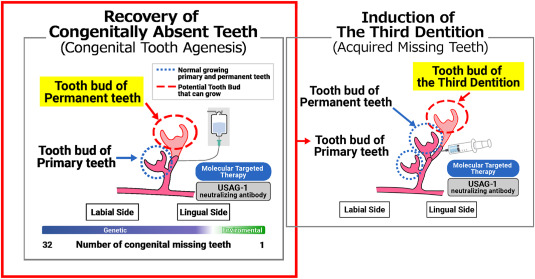
With early stage trials in mice completed some time ago, the treatment remains in early stage clinical trials for humans. An initial trial tested the treatment on adult males from 30 to 64 years old who were missing at least one tooth. This was with the hope that if growth did occur, it would ideally be limited to the missing slot, rather than causing new growth in areas that would push out existing healthy teeth. The next stage of trials will involve young children from ages 2 to 7 who are missing at least four teeth, to test the treatment on those with a congenital tooth deficiency. It’s likely that testing will also aim to determine just how USAG-1 suppression influences tooth regrowth. Ideally, it would only occur in specific areas where teeth were missing. It would be a great disaster if the treatment led to widespread tooth regrowth, which could cause crowding issues or loss of healthy teeth.
Right now, taking a pill or injection to regrow entire teeth seems like science fiction. However, if it does turn out that merely supressing some proteins is enough to get the body’s own tooth factory rolling again, it could be a game changer. There’s hope yet for all, except perhaps those that make their business in selling dentures.












Dental Lobby isn’t the problem. The pipeline towards getting it all working and approved.
dentistry is still the only medical field that can get stuff done in lieu of the affordable care act. its the only place where you can get diagnosed and have work done on the same day. how it survived the bureaucratic hellscape should be emulated by all the other medical professions.
Really? Cardiac arrest? We’ll get to it next Wednesday after the paperwork is complete?
yea, and the bill will give you a relapse.
Only if you intend to pay it!
That’s the secret, we actually have socialized medicine but only for the low-trust members of society.
Most dental insurance only pays for routine cleaning, exams, and the first $1500 of dental care. Since youre pretty much coming out of pocket for everything with no annual maximum imposed, theres nothing buy poverty standing in the way of unlimited care.
i once had a libertarian dentist who would pull a tooth for $200 cash under the table.
$200 isnt bad but most same day denture clinics charge $100-150 for a simple extraction. Complex extractions (anything requiring more than elevator and forceps) run $250+
You should have asked for a discount of roughly half of his marginal tax rate.
Dentist is still getting more then half the advantage.
Not like he’s not going to deduct the costs associated while just pocketing the cash.
Or that there was no cost or discount involved w insurance payments.
Half the marginal tax rate cash discount is roughly where I start the negotiation and I’m not going far from that.
If I want to get greedy, cash payments for things like dental, start at the Medicare reimbursement rate.
The trick is that employees won’t haggle like this, you’ve got to get to the actual owner or a close relative.
That’s especially true at retail, there he not only gets to keep the money, he writes the items wholesale cost off as ‘shrinkage’.
Everybody (that matters) wins!
F the IRS, right in the ear.
I’m not sure what country you’re in. There was one dentist office within thirty miles that worked this way. Unfortunately they were just put out of network by my insurance. Any dentistry that has to be done that is more than just a cleaning at all other places I called must be referred to an oral surgeon. No idea what any of this has to do with the affordable care act, please enlighten me about the correlation between the ACA and specialization increase in health care.
FWIIW AI says:
The Affordable Care Act (ACA) has had a mixed effect on physician career paths but has not led to a clear overall increase in specialization across the healthcare industry. Instead, research indicates the ACA includes provisions designed to strengthen primary care and has led to a relative increase in primary care physician (PCP) positions and income growth compared to specialties.
Key Insights
Primary Care Emphasis: The ACA introduced incentives such as a 10% Medicare bonus for eligible PCPs and increased Medicaid payment rates for primary care services to match Medicare levels (though this was a temporary measure). These provisions were intended to address a projected shortage of PCPs and encourage more physicians to enter general practice.
Shifting Trends: Post-ACA, resident positions and income growth for primary care (especially family medicine) grew faster than pre-ACA trends and began to close the gap with specialty care, which saw slower income growth after the ACA’s implementation.
Geographical Influence: The Medicaid expansion has influenced the practice location choices of general internists, making them more likely to locate in expansion states.
Specialty Restrictions: The ACA included provisions that effectively banned the expansion of existing physician-owned specialty hospitals and prevented new ones from opening, a measure aimed at reducing competition with general hospitals.
Workforce Shortage: While the ACA has increased the demand for healthcare services by expanding insurance coverage, the industry continues to face a significant overall physician shortage (across all specialties), which predates the law.
In summary, the ACA’s design actively encourages primary care over specialization through various incentives and restrictions, and data suggests a measurable shift in physician location and training trends toward primary care since its implementation.
I love the advancements in dentistry that I’ve noticed over the years. However, taking a pill to magically grow a new tooth in my head sounds dangerous. Unintended side effects could be horrific. So I doubt that tech like this will become realistic for at least another 50 years. I don’t want a third eyeball to pop out of my forehead! ::pop::
Then don’t take one.
They’ve been trying to grow teeth since 1990s at least. That’s when I first heard about R&D into it, and it wasn’t in Japan – in the US. The catch? They couldn’t get teeth to grow in one needed direction, straight up. The trials were growing sideway teeth.
Japan took that and run with it for decades and then somehow got it right. I’ve heard about that fairly recently, like shortly before covid. I also predicted where that will go first – South Korea, one of the beautification capitals of the world (second one is Israel, from what I’ve heard).
Regardless, local (US) maffiaaz won’t let this one slide easily. Likely, they’ll force it to be priced so high as to remove any thoughts about lowly Medicare covering it.
South of the Border may think otherwise, and I can predict lovely market growing there out of the blue, cash-only, where average Sam can get it done in private. Competition, we need REAL competition.
One of my teeth came out sideways, and I still have it in there.
It’s probably not as uncommon as you think.
About 10 years ago I asked my dentist about techniques for growing replacement teeth. He said that the technology existed but was abandoned because it was too painful. That seemed unlikely to me, but I didn’t pursue the query further.
Sounds likely to me. Growing teeth is painful for children, I wouldn’t be surprised if it’s painful for adults, too.
This doesnt cause teeth to grow from nothing. It activates a dormant set of tooth buds that most people have. Its unlikely the final form would be a pill, its more likely to be a targeted injection administered only at a single bud site causing one tooth to regrow. The worst case scenario is your pill based solution in which you would go through a year or two of teeth loosening, falling out, and having new teeth grow in their place.
You dont have a dormant third eye bud in your forehead, and if you did it would rely on an entirely different set of genes to activate its development. Science yo.
Alternatively: We haven’t done it yet, so we don’t know exactly what it will do.
Empiricism, yo.
the mechanism of its action is known and understood. Its not generating teeth randomly. Its activating dormant tooth buds not creating new ones.
This technique, if successful in humans, avoids the MANY issues that stem cell based attempts have had. Attempts to generate new tooth buds with stem cells resulted in everything from malformed teeth, teeth growing in wrong directions, and even teeth randomly forming where they did not belong at all including in a subjects heart.
Whether or not it will be effective in humans remains to be seen. There is also a chance that suppressing the USAG-1 gene will have consequences and effects other than the development of the third buds. But of all possibilities, a third eye is probably the least likely result.
You don’t know me, man!
Have a read about the pineal gland. Some creatures can use it for limited vision. And it’s in the middle of the brain but toward the back not the forehead.
Who knows what triggers what until we do some research.
Yep it’s literally the first eye bud, your actual eyeballs are the second and third
Most Dentist work for themselves and not a corporate overlord & insurance is cheap because an Orthodontist / oral surgeon does all of the “risky” work that makes insurance so expensive.
I vaguely recall promising results using ultrasound on the jaw, I think the idea was stem cells are everywhere but dont develop new teeth because contextual clues lock their development? Not sure what happened there.
There was also a recent article about trialing keratin to regrow enamel
All wild stuff, hope something gets to market
I’ll avoid going to the dentist until the pain makes me. That was my motto as a child, that’s still my motto as an adult
The pretty dentist lady may dull the pain but it’s pain nonetheless
Growing new teeth is only part of the problem. Plaque on teeth not only cause tooth decay but cause gums to recede. This is due to the acid caused by the plaque bacteria eroding the bone that supports the teeth. So, we need a way to regrow the bone and gums as well as missing teeth in most cases.
There is no reason the dental field would not embrace this. First, They would be providing the treatment at a premium price. Second, as this relies on the dormant third buds it doesnt provide unlimited tooth replacement, just a second chance when an adult tooth fails. Third, people with ANOTHER set of natural teeth need cleanings and fillings for another cycle. If anything this extends the “monthly subscription” not ends it.
Sounds better than that earlier article about stem cell implants for teeth that quietly had a setback of forming teeth in the heart valves of the test animals.
Quick reminder that trials in mice on tooth growth may be misleading. Rodents have incisors that grow continuously through their life, to compensate for being worn down by gnawing on hard materials. That suggests that the genetics controlling their teeth may already be significantly different from those of other mammals.
Having talked to my dentist about many different options, he told me about something like this. Scientists have implanted tooth “buds” in humans and had the teeth grow in successfully and become fully functional. So why not do this? It’s extremely painful for several weeks.
Bud transplants do not always grow into teeth after being transplanted. They often grow in the wrong direction when they are successful. And finally like any transplant they are prone to rejection, often requiring lifelong antirejection meds which weaken the immune system. If this technique can be perfected it has a much greater potential than bud transplantation.
Always love a good Hackaday story with some real bite to it!
Ain’t that the tooth.
An incisive article, by gum!
USAG-1, teeth could regrow as fast as rabbits. Usagi, means rabbit in Japanese.
Hooray! That would make us less dependent on 𝘰𝘯𝘦 of the break-it-so-that-they-can-fix-it cartels. Next, we need self-repairing cars to eliminate another biggie.