
The site is called Hackaday, and has been for 21 years. But it was only for maybe the first half-year that it was literally a hack a day. By the 2010s, we were putting out four or more per day, and in the later 20-teens, we settled into our current cadence of eight hacks per day, plus some original pieces over the top. That’s a lot of hacks per day! (But “Eight-to-Ten-Hacks-a-Day” just isn’t as catchy.)
With that many posts daily, we also tend to reach out to a broader array of interests. Quite simply, not every hack is necessarily going to be just exactly what you are looking for, but we wouldn’t be writing it up if we didn’t think that someone was looking for it. Maybe you don’t like CAN bus hacks, but you’re into biohacking, or retrocomputing. Our broad group of writers helps to make sure that we’ll get you covered sooner or later.
 What’s still surprising to me, though, is that a couple of times per week, there is a hack that is actually relevant to a particular project that I’m currently working on. It’s one thing to learn something new every day, and I’d bet that I do, but it’s entirely another to learn something new and relevant.
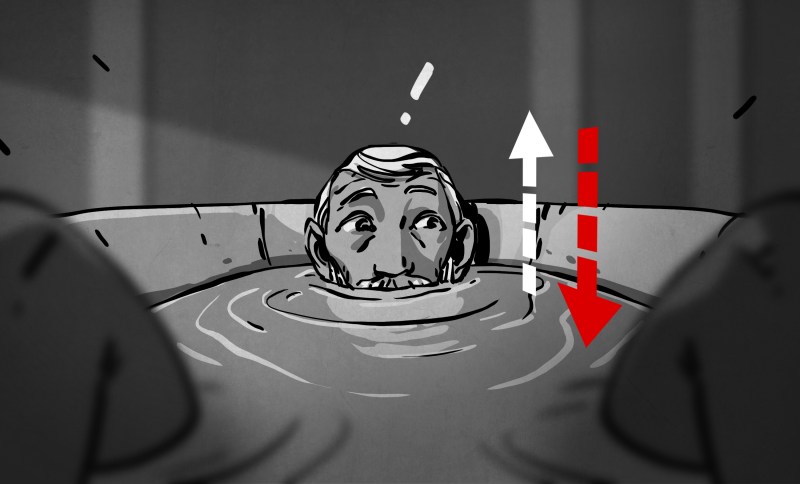
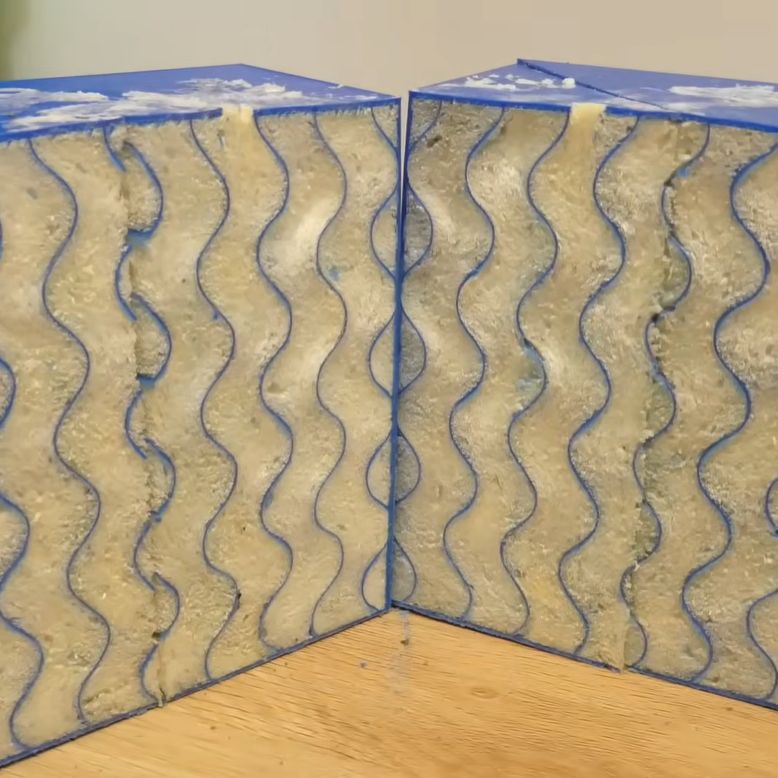
So I shouldn’t have been shocked when Tom and I were going over the week’s hacks on the podcast, and he picked an investigation of injecting spray foam into 3D prints. I liked that one too, but for me it was just “learn something new”. Tom has been working on an underwater ROV, and it perfectly scratched an itch that he has – how to keep the top of the vehicle more buoyant, while keeping the whole thing waterproof.
That kind of experience is why I’ve been reading Hackaday for 21 years now, and it’s all of our hope that you get some of that too from time to time. There is a lot of “new” on the Internet, and that’s a wonderful thing. But the combination of new and relevant just can’t be beat! So if you’ve got anything you want to hear more about, let us know.












Squirting spray foam into 3D prints for structural rigidity and buoyancy really is a forehead slap “why didn’t I think of that?” moment.
With some of the smaller/tighter spaces you could probably get away with using fine needles to inject binary foam. Shouldn’t be that hard to do volume calculations so you don’t split your print from over expansion.
This has happened to me so many times I can’t even remember. Greetings fellow hivemind-ers
I imagine people (who are not makers themselves) stumble upon this website and leave hate in the comments because they don’t get their fill from the usual social media websites. If you try to please everyone you end up pleasing no one. Please keep posting hacks and don’t feed the trolls in the comments.
Unfortunately some of them are makers or other ‘technically inclined’ individuals which makes it even worse. They at least should know better.
One example which springs to mind is an article about resin casting which drew some nasty comments about ‘Cultural Appropriation’ because the castings were Maori Tiki.
Technically-inclined people leave negative comments because positive comments are usually unproductive. Think “wow cool” versus “this sucks and here’s why”. Which one leads to improvement? Wanting everything to be cheerful is just toxic positivity.
Toxic positivity! 🤣 aka … happy.
Toxic positivity is like a heroin addiction: you get hooked by the bright optimism and positive awe of a better future just around the corner. What really keeps you coming back is avoiding the crushing hopelessness of realizing that the exaggerated fantasies you were sold won’t come true and things are actually going down the toilet, and there’s nothing you can do about it.
A person suffering from toxic positivity can’t criticize things, or tolerate hearing any criticism, because that would trigger depression. They just go “Yeah, wow! You go! Awesome!” and cheer with the crowd for the high that it brings. Then they turn away and look for something else to cheer about, never looking back.
@Anonymous
I said ‘nasty comments’, not negative.
There is a vast difference between pointing out possible design and/or construction flaws, or suggesting possible improvements, and the sort of nasty comments I gave a rather mild example of.
While “this sucks and here’s why” is definitely crossing the line, most such comments are much, much worse.
There’s a difference between “this sucks”, and “you suck”.
Just like there’s a difference between civil conversation and tone policing.
Yes, but it’s only one of degree, not intent. Fortunately most of the ‘perpetrators’ seem to get bored and go away after a while.
Unfortunately, they always seem to come back.
There’s polite thoughtful constructive feedback and there’s being a d*ck though, the two are very different.
Engineers tend to be cranky people. The saving grace is that there are almost no personal attacks here on people but only on ideas, project directions and technical topics.
I like reading hackaday a LOT, like most readers here. But unlike many other readers, I consider the comment section to be perfectly fine and not in need for a change in any way.
“Engineers tend to be cranky people. ”
Cost of everything we enjoy going up.
“Engineers tend to be cranky people”
… only the automotive ones :P
Clearly you haven’t worked at a “startup”
“Boss took money from 10K people for a product that only exists as a 3D render image. We got 2 months”
I’m NOT CRANKY!!!! I just hate people!!!!
– Engineer AND Dane
;-)
I’m a long time reader of Hackaday, and the content has shifted away from the engineering to the more popular YouTube videos. While there is still good content from time to time, it’s often lacking in some regard. Where the focus is entertainment and not so much usefulness or reproducibility. Even in this community, there is a lot of distrust if you point out an issue with a build, even more so for community favorites like Samy Kamkar. (His creations are more reproducible than average, though.)
Most of my complaints are, of course, as I also learn and grow. From focussing on obscure technology to teaching others these skills as a job. I got where I am due to my curiosity, and sites like this one for having interesting content. I want the starters of today to have a chance to grow, and have better role models than the average YT ‘engineer’. It’s just much more difficult to find quality content than it used to be.
“the content has shifted away from the engineering to the more popular YouTube videos.”
I don’t disagree, but I think rather than blaming HAD, part of the blame falls on folks publishing video content, vs an actual write-up with static pictures and actual text words. This seems to be a foreign concept any more, and I don’t know if folks are too lazy to find an appropriate hosting (e.g. instructables), are too lazy to write in general, or are just trying to collect Youtube sponsorship.
Sure, videos can be handy in specific instances, but I flat refuse to watch a 30 min video, even if I can block the ads and sponsor crud, for 30 seconds of content.
To the general point, just last week there was an article about doing 3D printing a particular way that was absolutely dead on for something I needed in a project I was working on right then. Incredibly helpful and timely. (And the article in question had no videos. Win for the win!)
I beg to differ. It´s not because video content is everywhere that one cannot be more selective and give priority to well documented write-ups.
It all boils to the editor choice. The policy here is to favor what will drive click-revenue, and by consequence mediocre and click-baity content and the staff is not transparent about it. I would have no problem if they fully assumed their position instead of hiding behind excuses.
So how many well-written text-based projects have you put onto the tips line lately? A lot of our hacks come off the tips line, and the tips line is like, 90% video. If our readers are saying “here, feature this, it’s cool” who are we to say no? Writing for Hackaday, I just toss out what I feel is interesting, based both on what I’ve found and what the community shares. There’s no nefarious push from on high for “click-baity content,” or anything else for that matter.
I’m not sure why you think video content would drive more clicks, anyway– until you’ve read the article, you can’t tell if it’s going to be about an amazingly written, book-length, step-by-step PDF hosted on a boutique solar-powered server, or zero-effort AI slop on YouTube. They’re equally likely to get clicked from the front page, near as I can tell.
If we wanted to click bait you we’d be giving you buzzfeed style headlines and listicles. If Hackaday publishes titles like “He Hacked an AMIGA and You Won’t Believe What Happened Next!” or “10 Reasons We Love Leaded Solder (It Tastes SO GOOD)” … then, yeah, you’ll know we’ve devolved to click-bait.
REKT
Branch Education Channel illustrates what quality video can be. Takes months of effort but results come through and it’s all free.
I don’t think it’s laziness. Many, if not most YouTubers are scripting their content. That means they’ve done the writing even if you only hear it read aloud. Then on top of that writing, they have to do the videography and the video editing. If you’ve never edited video you cannot help but underestimate how much work that takes. I write because it’s easier.
Instead of thinking of people as lazy, try to think of it from an economics perspective. You do an amazing project and write it up. Then what? You post it on your own site, and you’re out coin for hosting and a few hundred, maybe thousand people see it. Stick it on popular platform like instructables, and you’ve got thousands of views and still zero coin. Stick it on YouTube and you might get millions of views and enough money to quit your day job. Most people won’t win that lottery and will only get a couple bucks of ad revenue, sure, but it’s like you get a couple bucks of for-sure add revenue and a lottery ticket instead of… oh, nothing.
That’s kind of a no-brainer, if you believe that people respond to incentives. The incentives all point towards video content, and YouTube specifically. If we wanted lots of old-style web writeups, we would need to provide incentives to match YouTube. You’d need a platform with enough ads to pay for itself AND provide for revenue sharing… but even more intrusively than YouTube because the niche content means way less traffic than the world’s #2 most visited website.
No we don’t. Ad-funded platforms end up abusing the consumers because they encourage the over-production and over-consumption of “free” content by sneaking the bill in by the back door.
It’s like going to a hotel where the mini-bar is “free” because the drinks are added to the room bill of every other guest. You’re not paying anything for what you use, you’re paying based on what everyone uses. Of course you’re going to be eating all the chips and drinking all the drinks, otherwise you end up paying other people’s minibar tabs for nothing. In fact, if you eat up more than the average, you end up “winning”. You see why that would become a problem?
The problem with ad-funded media in general is that there’s no negotiation about the price of the content, or who gets the money, or the cost of anything. The costs simply rise to the maximum that the market can bear, no matter whether it actually benefits anyone except the ad-brokers like Google.
To add insult to injury, businesses spend money on ads without checking whether they actually drive any more business. They pay because they simply believe they must pay for marketing.
https://www.marketingweek.com/no-measure-marketing-roi/
Yeah, exactly because Youtube is paying content producers pennies to make dollars out of businesses that need to advertise, who in turn shift that cost onto you, the consumer, who has to pay for it all in the prices of everyday products.
The tragedy is that you can’t avoid paying, because other people are viewing the content and generating the clicks, thus justifying Google to demand more money. The more people consume this “free” content, the more you and I have to pay even if we had nothing to do with it, so advocating for it is a big FU at everyone.
So please don’t.
Yeah, well paywalls aren’t popular either so not sure what to tell the audience because not in this universe is everything going to be free and worth something to have.
The major problem here is, again, Google. It’s the middle man who eats off the cart and inflates the cost of advertising by farming the content producers. They don’t actually care what sort of slop goes out there, as long as it’s plenty and gets lots of clicks.
What Google offers is a fire-and-forget shotgun approach where the privacy stealing targeting algorithm is supposed to connect businesses with interested audiences. But, since the major marketers are your national supermarket chain and your national bank, or big multinational corporations that you already know of, the whole thing is completely pointless and irrelevant. I already know of The Big Insurance Company – I am already their customer. Meanwhile, the small local shop specialized in fixing diesel heaters in buses and trucks is never going to get through, because the algorithm just isn’t that good, you don’t actually want it to be that good, and Nike or Sony is paying more to get first dibs anyways. The point of advertising goes away when it’s just the same five corporations on repeat – and they’re doing it just to stop their competition from getting any visibility.
The alternative to ad-funded content farms like Youtube is sponsored hosting. You know, the way it used to be done: a magazine or other publication hosts a bunch of articles to attract sponsors who want to reach that sort of an audience. This is cheaper by dropping off the middle man, and achieves better results on both sides since your audience is actually interested in what the sponsors have on offer without losing their privacy to find it: marketing makes sense again.
The moral of the story? Don’t spread youtube clickbait. Don’t feed the disease.
Then there’s public sponsorship, which is kinda like Patreon/Kickstarter, but not geared towards minimizing content and maximizing donations.
What you do is like a public business deal. Those who are interested in having the service would promise a pledge up to some fixed amount per month or per year, etc., and if there’s enough people to share the cost then they would each pay less. The more people join in to pay, the less each has to pay. The hosted content is free for all, but the existence of the service depends on the sponsors.
Most viewers would be freeloaders, but as long as you’re not too greedy and try to milk your audience for money with clickbait slop, there will be enough people to pay to keep it going. If you make yourself valuable, people will pay to keep you around.
I’ve had things featured on HAD in both video and article form, and it depends. I won’t say it’s easier to make videos, because it’s definitely easier for me to express any coherent thoughts in writing. Still, the ease with which you can pull out a camera and film something these days is not to be underestimated.
You know what’s a lot easier than both things? Doing nothing. If I had to pick, I would rather people publish their work.
These days, making a video is unfortunately far easier than sitting down and writing something up in a website – video is usually the worst form of documentation although for some things (mechanisms / assemblies) a video showing how it works can be worth 1000 words.
Uploading a video also puts your content on a vast shared platform rather than on a small private website where it may never be seen due to the way various algorithms work these days.
I’m well aware that YT is where the people are. I’m not complaining about the video format, except that if there is no write-up, it’s much more difficult to reproduce. When the content has high visibility, say over 100k views, it also becomes very much impossible to interact with the creator. I’m 100k aren’t mainstream numbers, but that is because we lost the sense of scale.
I’m in favor of content which hasn’t gotten the attention yet. Small and niche blogs like my own (lockpicking) with large variety of technical topics. Things I wouldn’t have seen without Hacksaday. This category also includes niche YT content.
Can I suggest the headline style changes to be less “tabloid” and more clear about the content? I appreciate there’s a wide range of stuff on here, but having it clearer what an article is about would be helpful.
And would also help finding them again later.
While the name is Hackaday, I feel the spirit of this site is Learnaday.
I love reading the articles and ‘most’ of the comments, and nearly everyday I learn something new or fascinating in the subjects of science and technology, in both the professional and amature side, whether or not its currently useful it still opens the mind to different ideas and concepts. And an open mind is always useful.
Thanks for this perspective.
“learnaday” with all-video content is like trying to get a degree by watching TV shopping channels all day.
Learnaday may be more accurate but is far too nicey nicey as a title – it feels like the sort of place that little creep Elmo from Sesame Street would call his favourite website.
Mind you, Learnaday would also never feature anything dangerous, sketchy, legally fuzzy, or too much fun… so let’s stick with Hackaday.
HAD is like a box of chocolates…. You know the rest. Where else can one find the variety of esoteric interests and technical discussions? The comments often are the best part featuring educated critiques with a dash of snark. Thanks for the ham radio articles! Hams were hacking before hacking was a thing.
What’s interesting about the “like a box of chocolates” parable: you do know exactly what you’re gonna get, because it’s the same damn box of chocolates they’ve been making for the past 50 years. You’re only going to get different chocolates if you buy a different brand of a chocolate box.
“But it was only for maybe the first half-year that it was literally a hack a day.”
Oh! So “hack a day” means “one hack per day” not “to hack your day”? I was sure it is paraphrase of “seize a day” all this time!
For those of us who grew up in the UK during a certain period I suspect we can’t help but hear an echo of this cultural icon:
https://en.wikipedia.org/wiki/Wacaday
…I wonder if this website needs a theme song?