
It sometimes seems as though we are in a constant tussle over privacy between governments and the governed, with each year bringing fresh attempts to extend surveillance, and consequent battles. For Brits the big news at the moment comes in a new digital ID scheme, something that will be required for anyone wishing to work in the country, as well as for certain government services. It’s something that has attracted a lot of opposition, and now the EFF have produced an analysis of why they think it won’t work.
From the perspective of a British writer it would be easy to write screeds about the flaws in the scheme, the way it over-reaches, and about the historical distrust of Brits for their government’s bureaucracy. With the parliamentary petition opposing it approaching three million signatures, there’s no shortage of people who don’t support it. Perhaps the most obvious thing for most of us is how unnecessary it is for its stated aim of preventing illegal immigrants from seeking employment, it neglects that we already have to show proof of right to work before being hired, and that if crooked employers ignore that they will surely also ignore the digital ID.
If you’re reading this elsewhere in the world from where this is being written then it’s still of relevance, because governments like to point to other countries to justify these measures. Follow the EFF on this matter, and take note.
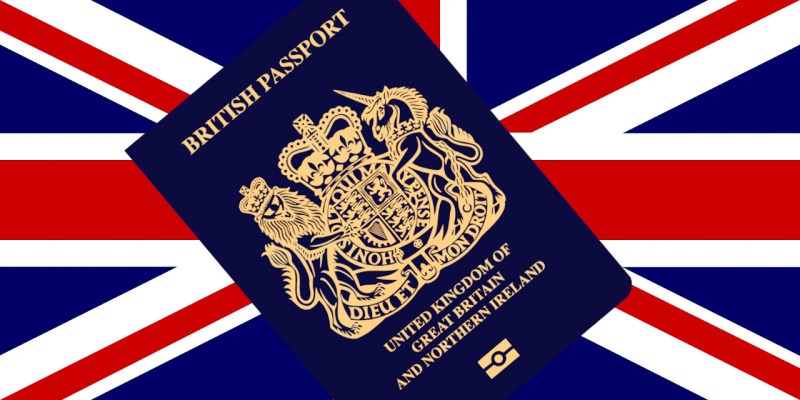
Art: British Passport SVG by Swapnil1101, Public Domain











The petition can be signed by the public to hearts content. Can have millions of signatures….
Government: The best I can do: No.
No one in government cares more than any cares about a rat’s hind quarters. :) look at the recent history of petitions, age versification, VPNs and what not.
Cheers lass and lads. have to go, My beer is getting cold in today’s blustery weather!
I see what you mean, but “my petition didn’t work, I’ll just give up” is a mindset that helps corrupt governments do this to us.
I say these three millions should take to the streets and bring along their family and friends. We’re the vast majority and we’re letting a handful of crooks control us.
More than that it helps corrupt governments come to power.
They ignore petitions, they ignore people who march, if they march and make noise, they ban protest.
The only thing they listen to is threats of civil disorder and violence.
See also BREXIT.
Not entirely true. Both road pricing and Blair’s ID cards were kicked into the long grass by previous petitions.
Tony Blair’s ID card scheme is back with a vengeance, it’s his hand behind this latest scheme.
https://www.google.com/search?q=tony+blair+institute+digital+id
The petition was debated and it seems they’ve paid no attention.
US government started as a copy of the UK government, so it is, too “the best I can do: NO”.
Witness our speed train network not in any visible hurry (compared with that in the EU countries) to move to the 21st century, 19 century was already good enough, bronze age economy, fat CEO salaries, what else is needed.
Hence, local car traffic roughly tripling every decade or so, if not quadrupling, whereas one or two local transit trains could accomplish the same with two-lane railroad, faster, more efficient, far, FAR smaller infrastructure footprint (no need for expensive pavement, storm drains, gazillion road signs, red lights, etc etc), less car accidents, deaths and handicaps, etc etc. The same planners planning new roads could be planning local transit infrastructure, both wide gauge and narrow gauge (aka “trams”), but no because no and no.
Ah, if only we could move the tracks around as populations shift. Or maybe if the track were laid first then people were forced to live at the stops along the lines, and the train stopped at the grocery store on the way home.
Wait! What if the train cars had work cubicles and Starlink? Couldn’t we get on the train in the morning and work as we ride. Employees and colleages get on or leave at the stops. Meetings in a lounge car, etc. Basically a “troffice”. The troffices can run in an 8 hour looping path so everyone gets in a full day’s work. This is definitely a California and EU solution!
The Soviets managed it just fine.
Home is here, factory is there. Bus goes 7 am, back 4 PM. If you miss bus, you go to sovkhoz, kolkhoz, or gulag – there home and work the same place. Not possible be late from work.
The heart of the problem is, as usual, government doing things.
Governments do by and large also do a lot of good things. No roads, no police, no laws that the police polices without governments.
The problem is when a government sees evasion of it’s laws, responding with making the laws more difficult for the law-abiding citizens, yet at no difference to those who did not abide them in the first place. The proper response would be more stringent patrolling — or, in rare cases, seeing the times have changed and abolishing certain laws altogether.
People usually confuse government and administration. The police, the public roads department, etc. work just fine in the absence of the government. The government sets the policy and the administration executes it. If the government sets good policy, they can very well leave it be and let the country run itself.
In the most ideal case, we would assemble a government once, let it write the fundamental laws of the nation (say, a constitution), and then disassemble, never to be seen again. The fact that we keep electing governments as a perpetual institution is because it’s impossible to write perfect law, and the governments are generally incompetent and impotent to do so.
Even when they get it right, the problem with government is that they can never leave well enough alone. Every government has to undo what the previous did and change things, even if no thing needs changing. After all, setting policy is their business and if they do nothing then the public complains that they’re useless. Newsflash: they are useless, most of the time. The best thing they can do is very often absolutely nothing, lest they change something for the worse.
But the bigger problem is that governments, or the political class in general, has always seen itself as the better people – wiser, smarter, more knowledgeable than the “hoi polloi”. They’re either aristocratic gits who think it’s their birth right as the superior people, or they’re leftist do-gooders who derive their justification to rule (and get paid) from saving other people from themselves, whether they need it or want it. Then there’s the centrist who have no big idea – they promise everything to everyone and therefore not really anything to anyone – except power to themselves and the special interest groups funding them.
The fact of the matter is that while you may concentrate power on a small group for the sake of bureaucratic efficiency, information about the different factors of society is not concentrated: the fewer the people in charge, the less they know and understand as a group about anything that is happening in the society. In other words, governments tend to be elitist and dumb on top of everything. Most of their time and effort is wasted of fighting off rival political groups and campaigning for re-election.
Exactly. Look at Belgium; a few years ago, with no party unable to gain an electoral majority or cobble together a working coalition, the country went (…checks Wikipedia…) 589 days without a government.
The bins were still emptied on time; the police still kept the peace; taxes were paid and Armageddon signally failed to happen. The administrative side of things, as you allude, kept ticking along.
My pet theory is that the political parties only formed a government after that out of a mix of embarrassment and self-preservation, because the populace were starting to ask awkward questions, like “everything’s still working and we haven’t faced any new laws or tax increases… why do we need a government, again?”
Quoting your comment, “Even when they get it right, the problem with government is that they can never leave well enough alone”
That’s the Sir Humphrey syllogism in action (from the 80s political sitcom “Yes Minister”); the bureaucratic thinking when presented with a chance to pass a new law is “Something must be done. This is something. Therefore it must be done.”
Belgium is weird in that respect, it has not one but six governments and administrations on it’s national and “state” (Belgium has 2 states) level, in a way that everyone is governed by at least 3 (except in Flandres, there 2 because they merged) sorta-national governments/administrations, and the ones governing most aspects of daily life were still functioning, as was the (demissionary) old government, so it’s not true there was “no government”.
However, disfunctioning governments (either due to incompetence or after an election or cabinet crisis) might affect the long-term stability of economy, but in cases of crises (think the 2007 financial crisis or Covid) also real day-to-day doing of normal people.
To say demcratic governments are by rule incompetent and doing more harm than good is demissing the idea of democracy, the least bad way to govern a country.
Re: IIVQ:
Strictly speaking, in a democracy everything is determined by vote. That’s pretty close to mob rule.
To make a democracy work well, a large number of conditions have to be applied to it.
It should be a representative democracy (democratic republic.)
It must have a stable constitution (a basic set of laws that all other laws must be consistent with.)
It must have a stable, published, rational and enforceable bill of rights.
Powers must be separated and somewhat independent, to impede the takeover of government by one group. These powers should be adversarial to keep each other in check.
Delays have to be built into the system to prevent fads and panics from leading to bad laws and bad policies.
That’s taking the argument too far. Democratic governments may well be competent, while representative democratic governments where power is invested into a small group of autocratic “leaders” is by rule bound to be incompetent and harmful.
I.e. the “elect your dictator” model doesn’t work. Other democratic models may.
I would modify Josephus’ remark to say “Federal Government”. Local governments do a lot of good things, as you mentioned. People generally don’t mind when their local police are out and about; when the national guard, military police, or the army show up, people start to get concerned.
The general issue is that the bigger the government the more difficult it is for that government to correctly identify what all (or even most) of its governed individuals want. Local governments more accurately and easily do what their (much smaller) population wants. Also, the bigger the power structure, the more motivation for corruption.
The Federal Government should essentially be completely unconcerned about its own people; it should be almost exclusively concerned with foreign threats, and occasionally mediate between the smaller internal governments (states, provinces, etc.)
That’s how the system is set up in the “Nordic model”. The government isn’t a dictator: the society is organized into interest groups which negotiate policy together and the state is the chairman in the meeting. The state has power over matters that concern all equally, such as criminal law, or border control, or state pensions and taxes, while the rest is left to local governments and to be decided between the people themselves.
https://en.wikipedia.org/wiki/Social_corporatism
Though again, the political left is resisting it and trying to undo it, because it removes the concept of class struggle and the dictatorship of one class; that the political class should have absolute rule by the subtle trick of calling themselves “the people”. The political right is also resisting, because having to negotiate with everyone else means that isolating yourself into a tiny group to concentrate wealth and ownership means you become democratically small as well: you lose social power, and you can’t directly buy the government to make the rules you want when the government is not in power to decide by itself.
This “government not actually in power” point is why the US federal government has set up extra-governmental agencies which have direct power that go down all the way past the state governments, despite not having such allowances by the constitution. It’s one way to institute top-down control back into the society when it was originally conceived as a collaboration between states and not an empire ruled by a small central elite.
Or for the same matter, why the EU regulations were supposed to be merely “suggestions” that have to be implemented into law by the member countries as they see them fit, and why the EU federalists are trying to change that to bypass the local governments and force the point.
The original version “worked” because the regulations that were mutually beneficial were adopted and the ones that weren’t became impotent as they were either voted down at the union level or ignored by the countries anyways. But, as always, the EU became an accessory in crime instead: the political class in each country can pick and choose among the regulations the rules that benefit themselves or their partners, and then pass the blame up to say “Sorry, EU says so.”. Then they send representatives up to the EU to lobby for more regulations that “bind their hands” from doing what their own voters want.
I counter that with private corporations making dumb decisions at about the same rate, we just learn about it decades later.
Witness recent foldings, Sears, Enron, etc etc. Witness Chrysler ceding to its only two worthy competitors and selling to the lowest bidder. Also, DuPont, while at it, a sorry skeleton of its former glory mostly riding its patents’ royalties.
I do NOT buy “government bad private corporations good”. Both make dumb costly decisions at about the same rate, just government has (mostly) mandatory transparency, while private companies do not. They hide their shitworks better, but the end result usually about the same.
I’m generally opposed to handing everything off to corps either. I’d prefer to organise about the rules which transcend (thou shalt not kill, thou shalt not steal, maybe one or 2 others), and leave everything else to people to organise voluntarily.
I regularly work with both, government and private entities, and regularly observe both kinds making about the same mistakes in about the same way.
The problem with privatization, forced or voluntary, that things that became private will never be made government again. It is one-way traffic, once something becomes private property, no government can take it back under any circumstances.
This US law worked well 100 years ago, and protected private properties from being just taken by the government entities, but now the reverse tide is doing more damage that it should, because private becomes basically unaccountable for any faults. Private entities mostly answers to its investors who are usually not regulated by any governments – and can be foreign, chinese, russian, no matter. Private entities also regularly turn to government for tax-paid handouts, loans, etc. Plain vanilla backscratching favors happen, too – look the other way while we dump this toxic refuse in plain citizen’s view, or you let us go unregulated, while we hire your fruitless progeny as one of our vice-presidents (ha, you can guess one of such high visibility cases as of late – the names are still in the US news).
Case in point, our local municipal water company was privatized in the mid-2000. The quality of water hasn’t changed much (it was always subpar – we always filtered drinking water, and I lived in this exact location for quarter century now, since 1999), but the price gradually doubled in a decade. The company has been sold and resold few times now, and one of the last companies (some kind of french water company, forgot its name, it is usually well-known like Unilever or Nestle) actually did invest in better water treatment plants, but then sold off to another nobody-heard-of entity shortly after, after taking my tax moneys (obviously).
Point being BOTH government and private entities can (and regularly do) become dysfunctional entities with self-awarded powers it wasn’t delegated. Both regularly avoid scrutiny by anyone “not in the system”.
The trouble with the government that being a monopoly itself, it openly prefers similar monopolies in the private world. Not just “prefers” it regularly creates them – for example, one well-known example is the fake “market” for the airport landings slots. It prefers large monopolies with surefire planned/predictable number of landings, so that it can budget the regulations around these. In very real sense it awards the worst possible monopolies (Delta, United, etc etc) instead of local/regional companies because that’s how it knows how to go forward with the next years’ fiscal budget (fiscal year usually runs July to June, not January to December) figures. It is also required that such and such place has AT LEAST that many flight slots, and not less, and only large companies are capable of doing that – regional airlines and low cost kinds are given the breadcrubs that nobody wanted. (which also explains why we in the US never really have any usable regional flights, one HAS to fly from a hub to another hub instead, even if it is way out in distance – and there are NEVER enough regional flights to reach any destination – re-watch “Home Alone I” while at it and see this sorry fact in action – or “Planes, Trains and Automobiles” dating back to the era when there were SOME regional airlines that actually eked profit).
Reverse is true – private monopolies prefer government, local, federal, no matter, that is unquestioned monopoly, and not regularly shaken up by results of voting, hence “career politicians” in the US Congress installed by such corporations, and US general INABILITY to force two-term limits on ANY politician in general. I am afraid we are heading towards open dictatorship, and the first step may be removing the two-term limits for the prez, and I’ll stop at that.
They can poke their digital ID back up Tony Blair and Jacqui Smith.
It’s disgraceful that they’e gone back on a manifesto pledge to not make digital ID mandatory and to do so they’ve ridden the wave of far right xenophobia and hatred against immigrants..
Do you (and List) really think this is about immigrants? I would think the immigrants are just a handy vehicle to get this crap passed into law with slightly less incendiary reactions from the people. But I doubt it has anything to do with immigrants whatsoever.
I’d sooner assume it’s about locking down the internet for their citizens.
If course it’s not about immigrants, they’re just riding a wave of ignorance and xenophobia to sneak their surveillance scheme in.
question. you are a UK resident…
so you have an NI number, a NHS Number – on 2 different systems that do not share data unless you allow it to (GP and Hospital), a Driving Licence, a Passport and a Tax Record (linked to your NI Number but also a separate number) and a criminal record status (even if it’s clean)….
and you have – a credit score, with credit history, you have a Google ID, and many many many other online IDs, a bank account, Utility bills, credit card and a phone account.
…and you worry about a digital ID?? a Digital ID can cut a lot of that down (the Gov side) …but nope that’s bad. they already HAVE all the data ffs… think about it.
I’m English, born in London… and I pity this country.
It’s exactly the fact that a digital ID can become a “one stop shop” for accessing ALL your activities, online and offline, that is the danger to privacy.
The fact that you have these breadcrumbs of data laying around in different systems is an issue, of course, but it can only be made worse by bringing it all together on the government side.
Yeah, I worry about this country too, mainly because of people like you who are willing to sell out all our privacy and freedoms for convenience.
Papiere bitte.
Addendum:
And it makes sense mainly for locking down internet, a digital ID, once it’s there they can force everything to be restricted with digital ID’s.
The best thing is if politicians don’t do anything in my experience. Which can be achieved either by them being lazy/incompetent or because their infighting locks things in place.
That’s the advantage of having tons of parties and no majority, it locks their shenanigans in place.
Although obviously a lot of the nasty politics and long-term nastiness and plans or ‘visions’ originates from think tanks and they can have several parties in their stable and can be ‘managing’ politicians from a range of them.
“They can poke their digital ID back up Tony Blair and Jacqui Smith.”
hold on. they’ve been gone for DECADES… I suspect a Troll / BOT account.
Apparently Jacqui Smith is currently a government minister of something. Tony Blair is still hovering just behind the curtain. Apart from influencing UK government policy he’s been busy making money with his ‘Institute’ and is angling to become viceroy of Gaza.
Sigh, sure, everyone who knows more than you is a troll or a bot, yeah, that’ll be the reason you didn’t know that the Tony Blair Institute was consulting on and is one of the driving forces behind this latest authoritarian push for mandatory ID cards.
I find it quite amusing how brits really don’t understand the purpose of digital IDs.
In Scandinavia we’ve had it for at least 15 years, probably more close to 20 years now.
It is brilliant, much less bureaucracy, it is makes identity theft very difficult, and simplifies life as 99% of things can be done easily online.
And before anyone comes up with the “they just want to spy on me” argument, it is too late, you have already given away everything about yourself once you got a smart phone and made an account on social media, and also when you got that Tesco Clubcard. Not to mention all the CCTV cameras that cover every street in Britain plus the ANPR cameras you drive past every day.
In short, it is not the digital ID that will give away your data, it is already gone.
I think part of it is that we don’t at all trust the UK government to do a good job of setting up and running such a scheme, because successive governments have shown they’re totally clueless about technology, and previous national computer systems have been disasters.
But yeah, there also seems to be a large dose of paranoia. There was a lot of hand-wringing about a change which required people to show ID before voting a few years ago. Some small parts of the UK have done this for a long time, and it seems mad not to check ID before sometime as important as voting, but it was met with strong suspicion anyway.
The reason for the “hand wringing” is because voting fraud is vanishingly small, to the point where it’s utterly irrelevant and requiring voter ID over what’s already in place disenfranchises people, so it’s a solution to a non problem.
Digital ID is the thin end of a very nasty wedge and yes, we really don’t trust a government who want to backdoor all encryption so all private Comms are now no longer private.
I live in a small town; some elections are decided by a single vote. Even the smallest amount of fraud can change the result of an election.
There is no such thing as election fraud so small that it doesn’t matter if the fraud is greater than zero. Any government fraud increases distrust of all aspects of government, and increases the propensity of people to do harm.
Even the smallest amount of voter disenfranchisement can affect elections.
Your move.
It’s funny, from my point of view and experiences when I heard that you could vote in the US without an ID I was flabbergasted. Because where I am it has always been so that you ‘of course’ need an ID, and it has never been different.
The whole concept of not having to ID for voting seems alien.
However, and perhaps oddly, I do feel annoyed that you can’t vote in petitions without giving away your identity and then be ‘databased’ for supporting the initiative the petition is about.
Not even with non-official petitions like many that are online can you escape being traceable. But obviously if you would have it be anonymous the bots would go mad with activity and the results would be worthless, so I get it.
It’s no coincidence Camerafan85 that it happens all over the western world at the same time, these things are pushed by (often US based) think tanks and the politicians are just their assets.
And those think tanks are not changed by voting much, even if the ones in charge are not part of their ‘team’ they just wait for the next election, and meanwhile push propaganda through the media. these people have grand multi-decade ‘visions’ that they seek to implement and it’s hard to make them stop.
When other means of offline ID, such as your driver’s license, are no longer accepted you can’t access many common services and you may even get locked out of your bank account. For instance, registered mail stops working. The keys to your new rental apartment are distributed via a parcel box that demands digital ID to open it. Etc.
For my case, my bank suddenly started demanding my digital ID which I didn’t have at the time, and requesting for the digital ID from the police then required me to use the bank’s ID service to access the online system where I can fill in the forms. Catch-22. I had to physically go to the police station, fill the forms, book an appointment, and for the three weeks that I didn’t have valid digital ID my bank could have closed my debit and credit cards under the excuse of “preventing money laundering” or something.
Back in the day I just walked in the office and showed them my ID. Now there’s no office in town so it has to be done online, and even if there were and I went there, if the digital ID doesn’t work for any reason (communication error, expired, damaged) they would just throw me out. No valid ID.
Also note that the new EU digital ID expires every few years. They usually “forget” to send you the notification when it’s about to expire, so you have to keep a keen eye on the dates on the card and remember to renew or face the consequences. It’s now rather easy to become a “no person” by accident.
Another question entirely is, why do they need my fingerprints if I’m not suspect of any crime? If they don’t know who to suspect by other evidence, do they just randomly detain people whose fingerprints are found at the scene of a crime? That would be “guilty until proven innocent”.
In many places in the US the law allows for detention for a period of time, often 24 hours, without charges being filed. That’s not an assumption of guilt, that’s a public safety measure. Consider a drunk walking in traffic or brandishing a firearm.
One reasonable requirement for fingerprints is to get a security clearance.
If you were robbed of all your possessions while visiting another country, you’d want an absolute proof of your identity to start the process of returning home. It’s hard to beat fingerprints for that application.
See if the phone calendar can notify that far ahead.
Phones die, get lost and get replaced.
Where does the fingerprint requirement come from? I can’t find anything related to UK nor EU digital ID.
And since EU digital ID was introduced last year, how is it possible for “them” to forget to send expiration notification every few years? Or were you talking about some previous form of digital ID?
On the internet is easy to make things up to support one’s own agenda. It just needs to sound like it is true enough and most people wont verify the claims.
Normal physical ID’s require fingerprints in the EU
They claim they are only stored on the chip in the ID, but do we trust that to be true? Maybe they only store them there after first sending them to partners in the US eh.
The various security services are known to play such games, the CIA lets foreign services do for them what they are not allowed to and in return they do for them what they aren’t allowed to. So who knows, maybe the NSA has the data in one of their giant datacentres, and it’s perfectly ‘legal’ to ask the NSA for help right?…
As for for Dude, he says :’They usually “forget” to send you the notification when it’s about to expire’ about something that doesn’t even exist yet, so that doesn’t help him come across as a good source of information.
And anyway, what does he mean with a “no person”? You think that if you can’t sign up to facebook or pornhub with the special EU tracking and monitoring that would make someone a “no person”? I think the opposite, if you let yourself become their life monkey-on-a-string puppet you are a no-person
If you want to use the phone app that substitutes as your ID, or use any of the online services, you need a current and valid physical ID card and thereby you must get yourself registered with the police, because the digital ID is backed by the police database of your official European Union ID card. To get your official ID, you must give fingerprints, which means you have to give your fingerprints to the police in order to have a digital ID.
Whether the fingerprints are stored in the police database, or whether the digital ID system can access it is a moot point since they can change the rules at any time. It’s an invisible switch: we’ve already accepted the system and started using it, and it’s on their end to join the dots if they already haven’t.
I mean, if you accidentally let your ID card expire, you may become unable to prove that you are you, because the various other IDs you might give are now obsolete.
Simple things, like getting a registered mail parcel out of a parcel box machine become impossible if your ID card has expired. Whoops, there go my official documents, back to the sender while I run to the police to beg for a new card. Three weeks delay, bills go unpaid, permits expire, sanctions and late fees apply.
This is about the EU ID, and by proxy the digital ID that I already have. Nothing to do with the UK version, except to point out that it won’t necessarily be as convenient or fault-free as advertised.
I renewed my ID this year, as the previous one was set to expire. And, just like the previous ID on the previous system, they did not notify me three months in advance as they promised, again.
So I’m talking about both the previous form, and the current one. The same shenanigans continue because it’s the same people doing it.
For many it’s not the ID part, it’s the fact that our governments ALWAYS f*ck this sort of thing up so it will be badly administered, the contract to do it will likely be given to some awful company like Capita, G4S or Palantir who will make billions from it, fail to deliver the benefits but somehow manage to enrich themselves, their investors, and their customers at our expense and at the cost of our security and privacy – and probably also accidentally spill or lose a few million records to hackers along the way too.
If our governments were run the way “model” countries like Norway or Switzerland run we’d have a lot more trust in them and there’d be a lot less resistance to this.
Imagine how tickled Stalin would have been to know who was reading what newspapers where and with whom. He probably kept the roads more or less paved* and he certainly kept the police employed.
The fear is that this is just the beginning, or at least the beginning in the west.
The next big thing? Digital identity theft.
Very poor reasoning IMHO. In [mainland] Europe where I lived for over a decade Digital ID was and is an essential tool for proving who you are. Not just for employment. For example at any police stop, or visiting a bar. OR CRITICALLY getting a place to rent / buy In the UK we have already forms of ID that we might say we could use like passport or driving license, but they are not fully universal. IMHO we in the UK do need an ID, it can even be paper based to start with that is effective and a digital variant is just that but more secure and more difficult to fake.
Why should I prove who I am at a police stop? If they know who they’re looking for, they should be able to easily tell that I’m not that person.
Why should I prove who I am at a bar? All the bar needs to know is that I’m of legal drinking age.
spare a thought for all those under 16’s in Australia
come today, December 10th, everyone under 16 is banned from “social media”
including YouTube, Instagram, Snapchat, Facebook, Twitter(I refuse to call it “X”) and Redit
all to “combat online bullying”
the right wing nutjobs are going nuts over BlueSky and Masterdon being exempt
absolute bs, it’s an excuse to enforce digital ID
What happens if hackers steal and use DigitalID’s ?
The goverments next order will be chips that implanted into your skin for your own safety!!!
Do you hear something similar before?
If they order you to implant underskin chips right now, there will be bigger resistance.
So they expect you to swallow DigitalID pill first… Easier to swallow, slaves!
This is coming to the US too, in the form of digital IDs for online access. The aim is to “save the children” from porn, a convenient excuse to implement universal tracking for everyone online :-/
“Computer says no”, this old comedy sketch says it all.