
Despite the Commodore 64 having been out of production for probably longer than many Hackaday readers have been alive, its SID audio chip remains a very popular subject of both retrocomputing and modern projects. Consequently a range of substitutes have been developed over the decades, all of which seek to produce the audio quality of one or more variants of the SID. This raises the question of which of these to pick when at first glance they seem so similar. Fret not, for [Ben Eater] did an entire video on comparing some modern SID substitutes and his thoughts on them.
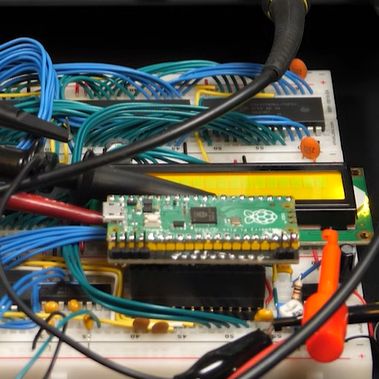
First is the SIDKick Pico, which as the name suggests uses a Raspberry Pi Pico board for its Cortex-M0+ MCU. This contrasts with the other option featured in the video, in the form of the STM32F410-based ARMSID.
While the SIDKick Pico looks good on paper, it comes with a number of different configurations, some with an additional DAC, which can be confusing. Because of how it is stacked together with the custom PCB on which the Pi Pico is mounted, it’s also pretty wide and tall, likely leading to fitment issues. It also doesn’t work as a drop-in solution by default, requiring soldering to use the SID’s normal output pins. Unfortunately this led to intense distortion in [Ben]’s testing leading him to give up on this.
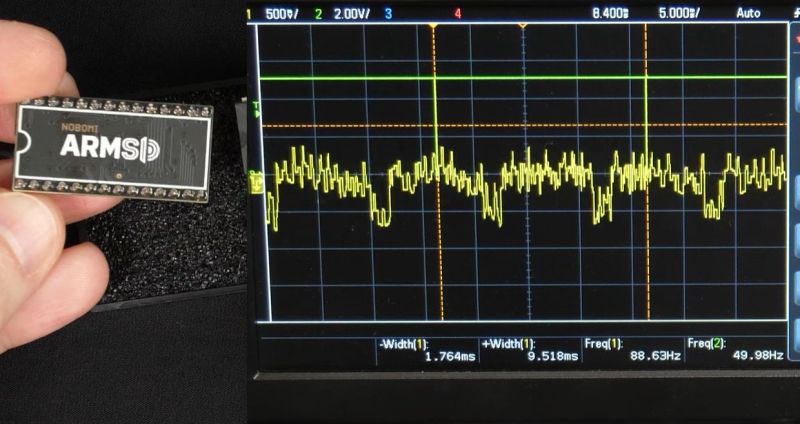
Meanwhile the ARMSID is about as boring as drop-in replacements get. After [Ben] got the ARMSID out of its packaging, noted that it is sized basically identical to the original SID and inserted it into the breadboard, it then proceeded to fire right up with zero issues.
It’s clear that the SIDKick Pico comes with a lot of features and such, making it great for tinkering. However, if all you want is a SID-shaped IC that sounds like a genuine SID chip, then the ARMSID is a very solid choice.
Thanks to [Mark Stevens] for the tip.












Really enjoyed this breakdown of modern SID replacements. It’s fascinating to see how far retro audio hacking has come from original MOS 6581 quirks to Pico-based boards and STM32 drop-ins. For anyone chasing that classic Commodore sound, the nuance between tinkerer-friendly boards and straight-drop-in substitutes matters a lot, and this article nails the practical differences while still honoring the legacy of the SID chip’s unique character.
I can’t wait for a 1:1 clone chip (including the analog parts) to be designed by low level hackers with projects like Tiny Tapeout
wafer.space just sent their their first MPW tapeout to Global Foundries.
On of the dies on those wafers from Tholin is actually a SID clone.
She also said there is also what she calls SID 2 which she says is “Its backwards-compatible with the SID, but adds a sine wave option to each voice and extends it all with some FM Synthesis features.”
Remember that you can also emulate a SID chip with a Parallax Propeller!
https://octetta.com/2013/05/01/propeller-sid-player.html here it is
SIDKick Pico has an all-in-one version like the ARMSID. It is the same size as the original SID IC.
As long as it can play “Ah. Another visitor …” properly it’s good enough! And if you’ve never heard that line check out Impossible Mission.
Agreed. If you’re doing some kind of SID synth, you’ll never be happy except with the original, but for use as a C64, anything compatible will work. Every used C64 I’ve purchased was missing the SID and substitutes seem to work just fine for me.
About the best you can get, and it is open source:
https://github.com/daglem/reDIP-SID
Fun fact: The SIDKick is also an ARM-SID ;-)
SID is nice and all but please let’s don’t forget about the POKEY, either! ;)
What a timely article considering the Commodore 64 Ultimate computer is shipping to happy purchasers around the world.
If it’s just software sound synthesis then I think how you accomplish becomes pretty much a moot point.
Being able to do so with a complete and inexpensive development board like the Pi Pico is neat.
I do think lots of people forget that the heart of the RP2040 is a Dual-Core ARM Cortex-M0+ clocked at 133 MHz which has access to quite a lot of static ram. It’s small but very powerful.