
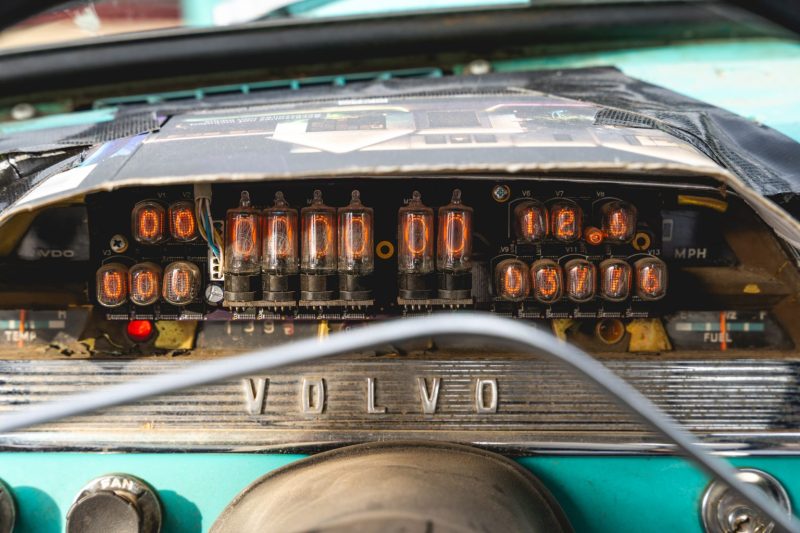
There’s no accounting for taste, but it’s hard to argue with The Autopian when they declare that this Nixie tube dash by [David Forbes] is “the coolest speedometer of all time” — well, except to quibble that it’s also the coolest tachometer, temperature gauge, oil pressure indicator, and voltmeter. Yeah, the whole instrument cluster is on [David]’s Volvo PV544 is nixified, and we’re here for it.
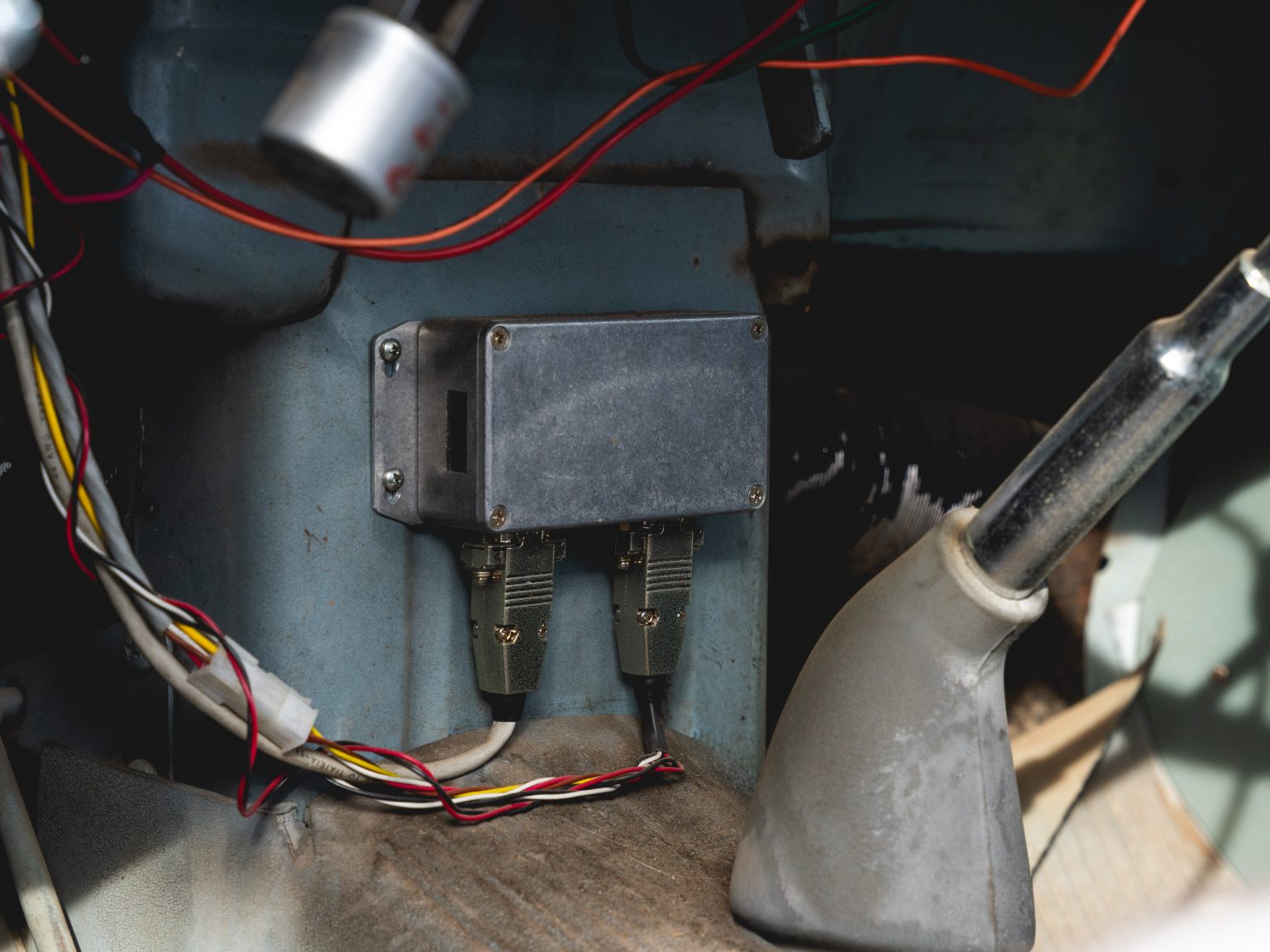
He’s using a mixture of tubes here– the big ones in the middle are the speedo and tachometer, while the ovals on either side handle the rest. There’s a microcontroller on the front of the firewall that acts a bit like a modern engine control unit (ECU) — at least for the gauges; it sounds like the Volvo’s engine is stock, and that means carbureted for a car of that vintage.
The idea that this hack could have been done back in the 50s when the car was new just tickles us pink. Though you’d have probably needed enough valves to fill up the boot, as our British friends would say. Translate that to “enough vacuum tubes to fill the trunk” if you’re in one of the rebellious colonies.
We’ve featured [David]’s projects previously, in the form of his wearable video coat. But his best known work is arguably the Nixie Watch, famously the timepiece of choice for Steve Wozniak.
Thanks to [JohnU] for the tip!
All images by Griffin Riley via The Autopian












This dashboard needs a pip-boy
This begs for a nice glass overlay similar to tube radio dial plates.
https://i.ebayimg.com/images/g/gSMAAeSwtW1nzj9b/s-l960.jpg
Put a sheet of red perspex in front of it and the 1976 calculator effect will be complete
(Completely awesome)
This project is fantastic and so good as to be confused with alternate-timeline OEN equipment… though without a lens/ shield it does look as though something is missing.
Red plastic is indeed good, though some nixie instruments had smoked plastic bezels.. which might or might not look marginally better against the interior paint color.
I want to see this as a video!
And double the perspex comment. that would be wicked!
me likey but it would draw too many amps to be fuel efficient.
Tubes are low-current components. Typical nixie draws about two or three milliamps. By my count of the tubes in there it’s around 50 milliamps. Quite a bit more on the 12v side of the circuit, but you’d still end up drawing a lot more just from turning on the fan for the heater. Like hundreds of times more.
The smaller nixie tubes use about half a watt each. All of the incandescent light bulbs in the dash of an older car will use a lot more power.
It’s beautiful, I love an old Volvo. Looks well-made, and it’ll be complete when you remove that cardboard and use it as a template to beat out some sheet metal.
Now if only we could restart making similar Volvos in the US … affordable DURABLE and modern … kind of like Tucker Torpedoes were …