
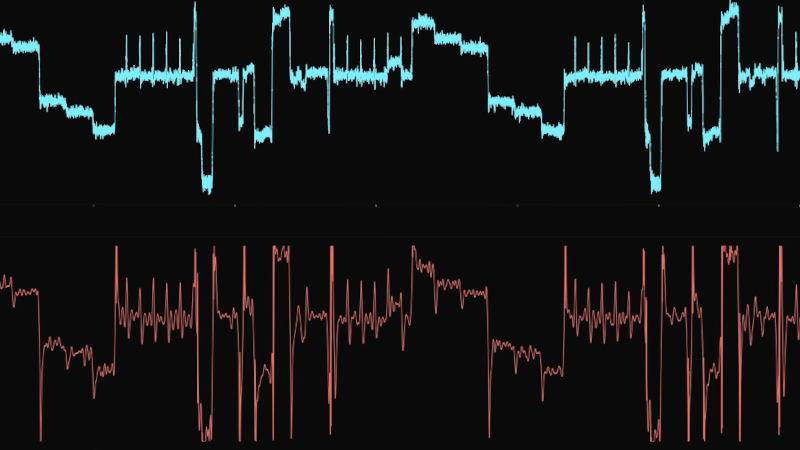
There was a period from the 1970s to the mid-2000s or so when a fixture underneath the family TV set was a VHS videocassette recorder. These were a masterpiece of cramming a color video signal into the restricted bandwidth of an affordable 1970s helical-scan tape deck, which was achieved by clever use of frequency shifting and FM carrier modulation. Very few of us will have had the ultimate iteration of the VHS format though, W-VHS, which managed the same trick but with HD video. But how? [Superchromat] is here with the answer.
W-VHS used a frequency modulated carrier, but instead of splitting luminance and chrominance in the frequency domain like its VHS ancestor, it did so in the time domain in the same way as some 1980s satellite TV standards did. Each line first contained the color information, then the brightness. Thus it sacrificed some color resolution and a little horizontal image resolution, but kept a much higher vertical image resolution. In the video below the break we go into significant detail about the compromises required to pull this off, and if you watch it through you’ll learn something about magnetic tape recording as well as FM.
The W-VHS standard is largely forgotten now as a last hurrah for the format, but it’s still in the sights of the VHS Decode project. The work in this video is helping them retrieve the highest quality images from these tapes, by capturing the raw RF from the heads and using DSP techniques to decode them.












The lengths people will to to to retrieve their favorite porn.
The big head often takes it’s orders from the little one.
True, but I won’t judge you for it.
D-VHS says Hi.
“Each line first contained the color information, then the brightness.”
That’s also how the MAC satellite TV format worked (Multiplexed Analog Component), in C-MAC and D2-MAC.
There was a good IBA Engineering Announcements video about it at the time. (Might be on YouTube.)
As mentioned in the article.
That was a remarkably concise and well-presented introduction to a tape format I never knew existed.
In my VHS universe S-VHS was the non plus ultra. Glad to have learned of this follow-on.
https://youtu.be/fT4lDU-QLUY
With constraints comes great progress.
There was also D-VHS which was another HD format. I believe W-VHS was analog where as D-VHS recorded a digital MPEG2 stream to the tape. Neither really took off. Most had moved to DVD’s by the time these formats came out and the HD based DVR replaced the function of VHS tapes for recording HD up until streaming took over.