
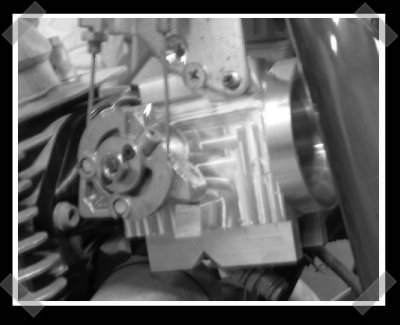
This one’s In honor of my new project bike. [wildwestsyndey] converted his Suzuki DR 350 from the stock carbs to EFI using the megasquirt EFI controller and a custom machined throttle body. You can find a few pictures of the conversion here. To handle the ever annoying need for a high pressure fuel pump, he adapted an in-tank scooter pump with a machined mini-reservoir to fit in-line with the original tank. For more motorcycle builds, check out the megasquirt success stories forum.
Transportation Hacks1709 Articles
Electric (off-road) Skateboard
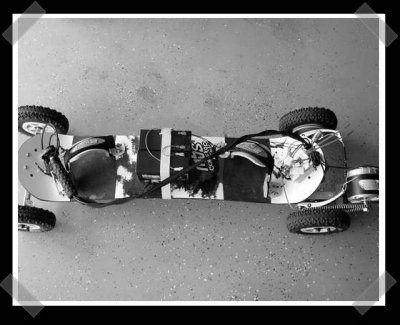
[Joe] sent along this sweet little instructable on making an electric skateboard. I like this one especially for the how-to nature of the build. [Vurp] used an off the shelf mountain board with a brake addition, a 300w scooter motor/controller and a pair of 12v SLA batteries. Now that I’m back on campus, I might just be tempted to build something along these lines. Just in time for this electric vehicle post, [Darin] sent in the forkencycle.
Inexpensive MPG Modding
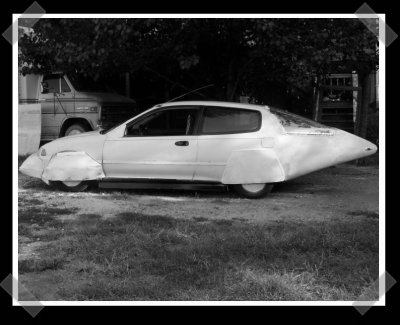
[basjoos] modded [via] the body of his ’92 Honda Civic – and managed to improve his fuel efficiency from 50-60MPG up to 95MPG for about $400. Even more interesting is the SuperMID (Translated) that he added to the car to monitor his fuel efficiency. It’s based on an ATMega8 that reads the CAN bus and displays realtime MPG information an a character LCD. The SuperMID is popular for Prius modders because the on-board display maxes out at a paultry 99MPG. If micro-controller’s aren’t your thing, [Atilla] put together his own CAN bus decoder and ported his code to a Zaurus SL-C700. He even added voice feedback notification for certain data events.
Nightvision Car Heads Up Display
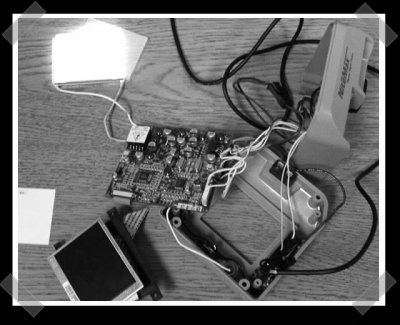
[alti] wants night vision for his car, so he picked up a nightmax night vision camera that has a built in LCD. The plan is to mount the display so that it will reflect off the windshield of his car to create a simple HUD. Unfortunately the image gets reflected from the inside and outside of the windshield. The discussion in the forum is getting pretty lengthy, but it’s an interesting project.
Inexpensive PIC Based OBD-2 Interface
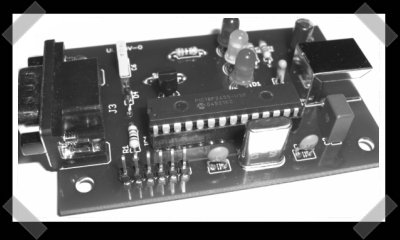
OBD-II became the mandatory I/O diagnostic port on cars starting around 1996 in the US. Considering that the interface consists of a couple of I/O lines, serial/usb adapters have been ridiculously expensive for quite a while – especially newer USB versions. [Renan] sent in this PIC18F2450 OBD-II interface. The designer says he can provide boards for just over $6 and programmed PICs if there’s interest. The chip is a few dollars, and everything else is pretty cheap too. Need to work on your car? This thing will cost $15 or so. I think I just might have to burn out a board on my mill later.
GVIF (Prius) Display Hacking
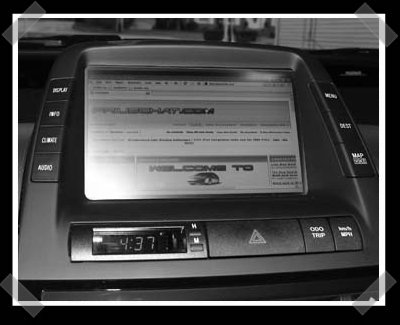
This is almost a lack of hack, but it bugs me. In 2006, Toyota changed the video interface on the Prius LCD display. The new system uses GVIF (Gigabit Video InterFace) rather than RGBs as before. So far success has been limited to some early commercial devices. Considering the number of guys that like to hack their cars, I’m hoping to see some diy solutions developed. The industry seems to be pushing GVIF in the same manner as HDMI for home theater – it even supports HDCP. Unfortunately, it seems that multiple displays are still the best option for now.
Build Your Own Car… From Scratch

Most of us settle for modding the latest car we’ve bought. [Steve Graber] took another approach and built his own car from scratch. [John] sent in this impressive project. The original was built around Toyota MR2 parts and the body was made from fiberglass after the design was hand made from a wooden support frame, foam and drywall mud that was sanded down to create the shape. After that, molds were made from the slug to allow the panels to be cast from fiberglass. [Steve] is actually offering the car up as a build-it-yourself kit. Personally, I’d like the see the price come down a bit – the 1,500lb street weight would make a sweet basis for an electric car.
Bonus: If you’d doing EVs, bots or R/C toys, you might like this comparison of the latest breed of Lithium Iron Phosphate batteries by [Ian Hooper].









