Typewriter As I/O; Lets You Play Zork

Okay, for many the fact that this typewriter plays Zork on paper instead of a CRT is the fascinating part of this hack. But we love the implementation that makes the keys of the device an input and output.

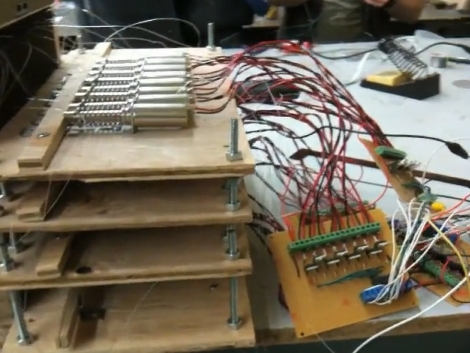
The electric typewriter has been fitted with a solenoid for each key (wow, that’s a lot of work). In the image above you can see they are housed on plywood platforms behind the typewriter and connect using a piece of mono-filament fishing line. This flexible connection means the solenoids have no adverse effect when you want to do the typing instead of the Arduino which drives the solenoids. [Johnathan M. Guberman] took advantage of this, adding a resistor for each key. When depressed the key completes a circuit with the resistor, acting as the input. In this way, you can play Zork with a piece of paper as the monitor, typing for the input, and watching the typewriter magically pound out responses. See it happen after the break.

Continue reading “Typewriter As I/O; Lets You Play Zork”

Z80 Emulated On PIC Hardware

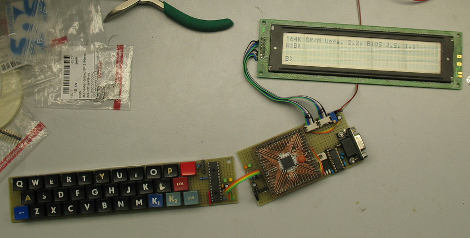
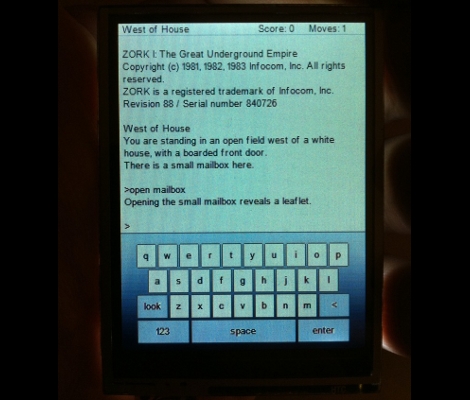
[Jaromir Sukuba] built a very portable, low power consumption Z80 emulator using a PIC microcontroller. Looking through his build photos we love the clean and resilient construction which includes a breakout board for the PIC 32MX795F512H that interfaces with the main board via pin headers and sockets. He’s using a home-built keyboard and a 4×40 character display but there is also the option to communicate with the device over an RS232 connection. Oh, and yes it plays Zork, which seems to be the benchmark whether you are emulating a Z80 with AVR hardware, or if you built one from transistor-transistor logic.

Emulating A Z80 Computer With An AVR Chip

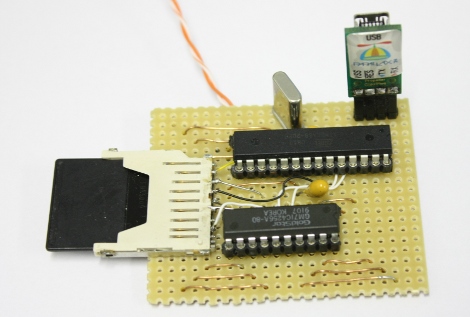
[Sprite_tm] dusted off his assembly skills and managed to emulate a Z80 computer using an AVR ATmega88. He’s using an SD card in place of the floppy and a 128 KB DRAM chip to handle the memory for the emulated machine. An FT232 board gives him terminal access which he uses for input and display. As you can see, the hardware is much simpler than building the original would have been. He makes up for this with complicated firmware. In the end, the emulated core occupies about 2 KB of programming space after he followed the Z80 Propeller project’s idea of dividing the instructions into different modules and using a lookup table to access them.