

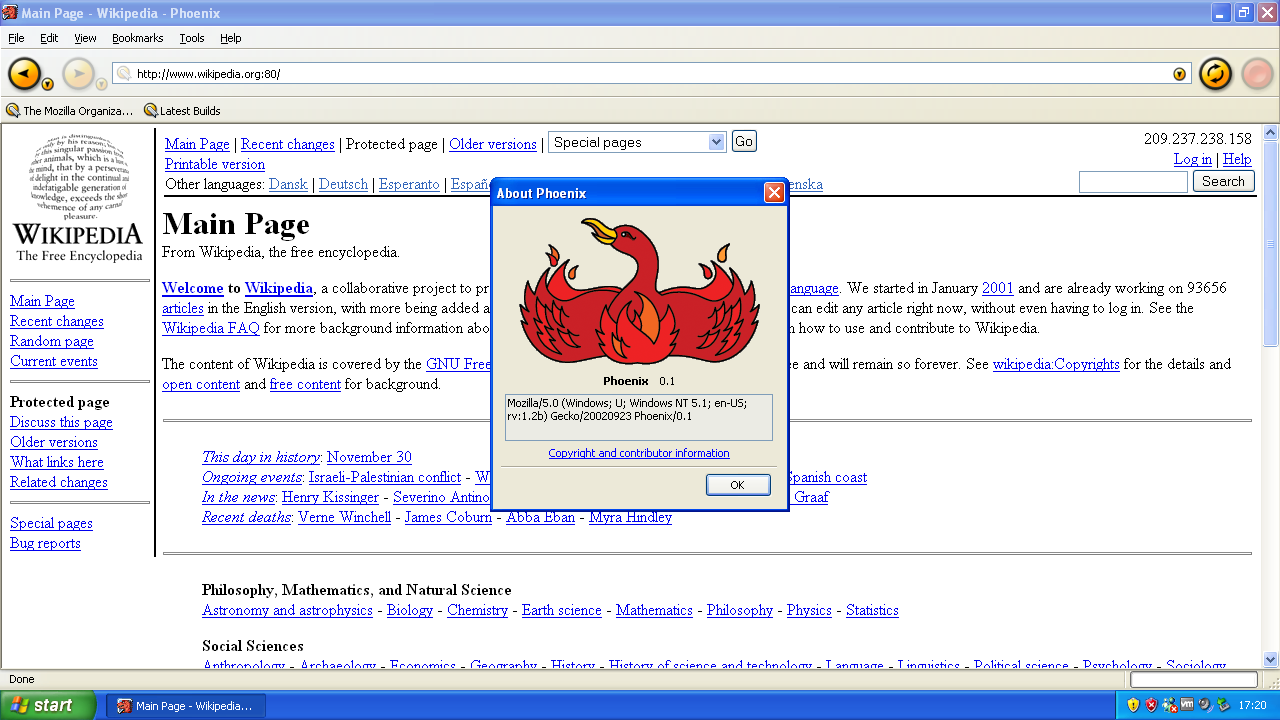
It’s likely that Hackaday readers have among them a greater than average number of people who can name one special thing they did on September 23rd, 2002. On that day a new web browser was released, Phoenix version 0.1, and it was a lightweight browser-only derivative of the hugely bloated Mozilla suite. Renamed a few times to become Firefox, it rose to challenge the once-mighty Microsoft Internet Explorer, only to in turn be overtaken by Google’s Chrome.
Now in 2025 it’s a minority browser with an estimated market share just over 2%, and it’s safe to say that Mozilla’s take on AI and the use of advertising data has put them at odds with many of us who’ve kept the faith since that September day 23 years ago. Over the last few months I’ve been actively chasing alternatives, and it’s with sadness that in November 2025, I can finally say I’m Firefox-free.
Just What Went Wrong?
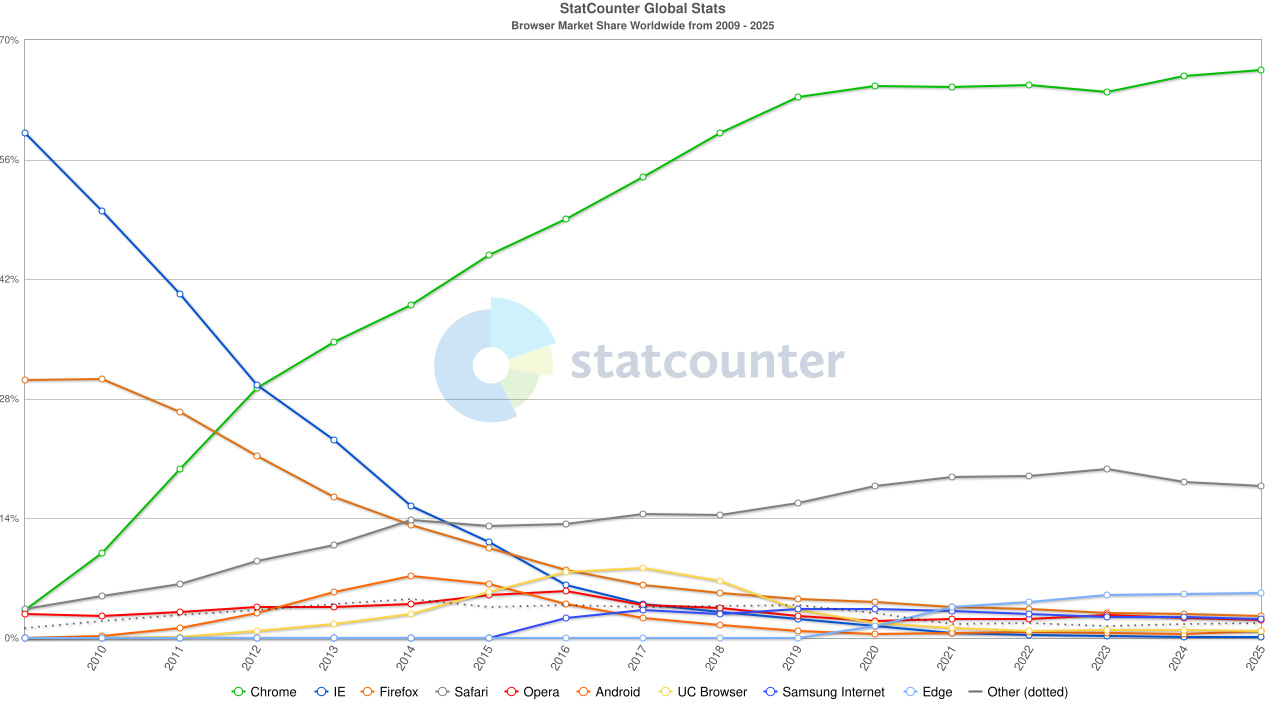
It was perhaps inevitable that Firefox would lose market share when faced with a challenger from a player with the economic muscle of Google. Chrome is everywhere, it’s the default browser in Android and ChromeOS, and when stacked up against the Internet Explorer of fifteen years or so ago it’s not difficult to see why it made for an easy switch. Chrome is good, it’s fast and responsive, it’s friendly, and the majority of end users either don’t care or don’t know enough to care that it’s Google’s way in to your data. When it first appeared, they still had the “Don’t be evil” aura to them, even if perhaps behind the warm and fuzzy feeling it had already worn away in the company itself.
If Firefox were destined to become a minority player then it could still be a successful one; after all, 2% of the global browser market still represents a huge number of users whose referrals to search engines return a decent income. But the key to being a success in any business is to know your customers, and sitting in front of this particular screen it’s difficult to escape the conclusion that Mozilla have lost touch with theirs. To understand this it’s necessary for all of us to look in the mirror and think for a moment about who uses Firefox.
Somewhere, A Group Of Users Are Being Ignored
A quick straw poll in my hackerspace revealed a majority of Firefox users, while the same straw poll among another group of my non-hackerspace friends revealed none. The former used Firefox because of open-source vibes, while the latter used Edge or Safari because it came with their computer, or Chrome on their phone and on their desktop because of Google services. Hackaday is not a global polling organisation, but we think it’s likely that the same trend would reveal itself more widely. If you’re in the technology space you might use Firefox, but if you aren’t you may not even have heard of it in 2025. It’s difficult to see that changing any time soon, to imagine some killer feature that would make those Chrome, Safari, and Edge users care enough to switch to Firefox.
To service and retain this loyal userbase then, you might imagine that Mozilla would address their needs and concerns with what made Phoenix a great first version back in 2002. A lightweight and versatile standards-compliant and open-source web browser with acceptable privacy standards, and without any other non-browser features attached to it. Just a browser, only a browser, and above all, a fast browser.
Instead, Mozilla appear to be following a course calculated to alarm rather than retain these users. Making themselves an AI-focused organisation, neglecting their once-unbeatable developer network, and trying to sneak data gathering into their products. They appear now to think of themselves as a fad-driven Valley startup rather than the custodians of a valuable open-source package, and unsurprisingly this is concerning to those of us who know something about what a browser does behind the scenes.
Why Is This Important?
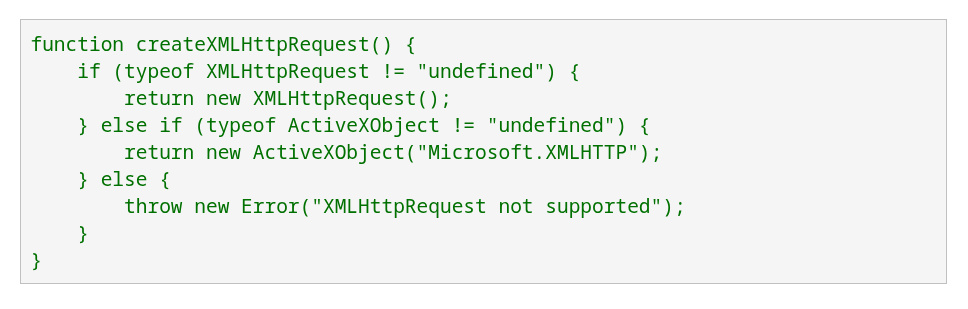
It is likely that I am preaching to the choir here, but it’s important that there be a plurality of browsers in the world. And by that I mean not just a plurality of front-ends, but a plurality of browser engines. One of the reasons Phoenix appeared all those years ago was to challenge the dominance of Microsoft Internet Explorer, the tool by which the Redmond software company were trying to shape the online world to their tune. If you remember the browser wars of that era, you’ll have tales of incompatibilities seemingly baked in on purpose to break the chances of an open Web, and we were all poorer for it. Writing Javascript with a range of sections to deal with the quirks of different browser families is now largely a thing of the past, and for that you have the people who stuck with Firefox in the 2000s to thank.
The fear is that here in 2025 we are in an analogous situation to the early 2000s, with Google replacing Microsoft. Such is the dominance of Google Chrome and the WebKit-derived Blink engine which powers it, that in effect, Google have immense power to shape the Web just as Microsoft did back in the day. Do you trust them to live up to their now-retired mission statement and not be evil? We can’t say we do. Thus Firefox’s Gecko browser engine is of crucial importance, representing as it does the only any-way serious challenger to Blink and WebKit’s near-monopoly. That it is now tied to a Mozilla leadership treating it in so cavalier a manner does not bode well for the future of the Web.
So I’ve set out my stand here, that after twenty-three years, I’m ready to abandon Firefox. It’s not a decision that has been easy, because it’s important for all of us that there be a plurality of browsers, but such is the direction being taken by Mozilla that I am not anxious to sit idly by and constantly keep an eye out for new hidden privacy and AI features to turn off with obscure checkboxes. In the following piece I’ll take a look at my hunt for alternatives, and you may be surprised by the one I eventually picked.












Firefox still supports uBlock Origin, Chrome does NOT. I have switched to Firefox.
Exactly, our rights are being eroded day by day and Chrome based browsers have done my dirty. Firefox still allows for privacy, even if I have to spend 5 minutes unclicking all of the sponsored and invasive reporting crap…that part irritates me a lot. As for AI, I wholheartedly embrace our AI overlords and look to ways to make my life easier to manage and data easier to find. Google search isn’t what it used to be, direct searches do not surface exact matches anymore, and the first page is often just sponsored crap. The lack of advertising, sponsored links, and “look at me, eyeballs” in ChatGPT has made it one of my first lines for internet searching.
It’s not just the user’s data that’s stolen when using Chrome. It also gathers metrics about any site you visit, even if that site is not using any Analytics, TagManager et al. Those data are not accessible to public research. The whole web is pwned by Google, and they are too big and too mighty to ever be questioned.
You and the sites you’re visiting are the product, not a valued customer.
So, if you need chromium for some reason, use a non-Google one.
I personally use two browsers, a chromium-based and Firefox. A popular application not performing well with FF is atlassian/JIRA which I have to use a hundret times a day. They don’t care, Mozilla doesn’t seem to care. Fine, RAM is cheap, fire up two browsers.
It would be nice to have a FF addon which embeds chromium within tagged tabs…
Aaaaaaand … Que a surge in DRAM prices….
Already priced up based on AI hardware demands and climbing.
Cue.
Que pasa?
I wish I could agree with, “ram is cheap.” Comparitavely, that’s totally true. The rub comes in the comparison. There are many of us on less than flagship versions of devices, where (fast) ram is actually quite less than might be expected. Hell, even, so called “cheap ram,” is less than optimal for use case. Users of new devices are better positioned than ever, but us poors, who have to make do with older stuff, are not seeing the benefit of so this new geewiz hardware, and corresponding software, which is optimized for newer hardware. See the rub?
Heartily seconded. FF all the way here. It might not be the fastest, it might not be the most full-featured, and it might not be the “coolest”, but it respects my privacy far more than any other mainstream contender. I say “mainstream” because I’ve considered switching to a fork like Waterfox or whatever, but is further fragmentation of an already-small userbase really in the interests of those of us who want to resist Chrome dominance?
You can create a file, ‘user.js’ with all your custom settings. Just drop it in each firefox profile dir, and restart firefox to make settings take effect.
e.g., to disable AI crud:
user_pref(“browser.ml.chat.enabled”, false);
user_pref(“browser.ml.chat.sidebar”, false);
user_pref(“browser.tabs.groups.smart.enabled”, false);
// style comments work
/* as well as
style comments
*/
Disabling e.g., telemetry is the same thing, but a lot more entries :/
You can use comm to see what settings you already have changed in an existing profile by comparing the prefs.js file from a new profile against the prefs.js from an existing profile. And, searching around about:config for words like ‘telemetry’ is enlightening, and provides targets to set in your user.js file.
Note that there is no error message, if a problem with your user.js file. If you set a dummy variable, every n lines of your user.js, to an incrementing value, you can check the prefs.js file to see if all of the user.js file was ingested, and if not, where it failed (you will want to delete/move the prefs.js file out of the profile dir to ensure you are getting only current settings from the user.js file you are testing.
You can also write your own browser, but if you want it to keep working, that becomes a job rather than a helpful tool.
If you’re maintaining multiple customization files and putting in heartbeat counts to warn you about frequent hidden intentional breakage … That isn’t a good tool; it t is an adversarial “game”.
It might be the least bad option, but it isn’t good.
I’m pretty sure the incrementing variable bit was suggested to track one’s own errors that manual tinkering with the config might beget; not some sort of “hidden intentional breakage”…
“You can create a file, ‘user.js’ with all your custom settings. Just drop it in each firefox profile dir, and restart firefox to make settings take effect.”
Nice!
Nice! 🙏
Thanks to your tip, I found https://github.com/arkenfox/user.js
No, google search is not what it used to be. It was made shittier by google, on purpose. Once upon a time you could tell the search engine “give me this exact text, but only if it does not also contain that, and ignore domain names that include this pattern”. Now it tries to guess what you “mean” and distorts your search terms. The results are also poisoned by pinterest etc.
The internet as we once knew it is a thing of the past. No longer do we use websites and follow links like digital breadcrumbs, we let some company hit every server a million times per day, driving up hosting requirements and costs (and making it a neccessity to move to cloudflare or be robo-browsed to death), and then let that company create a statistic automaton that gives us a text that (in probability space) is “likely to be similar” to texts it has ingested. This will not return exact matches, it cares not about truth, precision, reliability or accurateness. It is not a search engine.
and this degradation started before LLMs flooded the internet with SEO garbage, and before LLMs were used as search engines. I hope that search engines separate “exact text search” from “assisted search”. For now I have to use different websites.
I find it nearly useless today no matter how I try to narrow a search. And I KNOW the info is out there somewhere. The speed of the enshitification has been incredible.
Kagi, although paid, reclaimed traditional search for me. It is maybe worth trialling. https://kagi.com/
Why not use a command-line browser? Terminal Web Browsers – It’s FOSS
google isn’t the only one screwing up search results. Type a specific part number into Amazon. It’ll know that what you want is a, say, steering shaft for an lawnmower. You might get that exact part number come up in your results, but you will also get mixed in a wide range of other steering shafts for a wide variety of applications, none of which are compatible with what you ACTUALLY searched for. You have to read the descriptions REALLY carefully and make SURE you are getting what you ACTUALLY need. Ask me how I know.
I don’t know why they can’t just give you EXACTLY what you ask for. If there is nothing, then just say that. If they want to ASK the user, “would you like to see related results?” or even show “related results” but separately and well marked as such… Great. They may make more sales with this underhanded shit, but they get a LOT more returns because of it!
Ad Guard to block ads. Free. Great.
This is why I moved to opera, it’s chromium based so has the advantages of webgpu support (firefox only just got this in July I think)
But at the same time still has support for uBlock Origin / is more resistant to removing the older plugin api
Opera is run by a shady company and is definitely collecting your data. If you need to use a Chromium base then use Vivaldi.
i was happy with chrome and then google started being evil so im back on firefox as well. i dont like change. its why i still design my 3d prints in an old version of 3dsmax, why i still haven’t switched to linux or updated windows. i have no reason to change browsers at this juncture.
As someone who has worked for an MSP for several years, this makes cringe. We have several customers who refuse to move off of CentOS 6 and 7, and they constantly complain about things either breaking due to them no longer meeting standards, or because they got hacked by some script kiddy exploiting the most trivial of vulnerabilities. Don’t sacrifice security for comfort and familiarity. It ain’t worth it. Take a weekend to learn how to use Linux so you can shed that cognitive dissonance.
+1, desktop and android
So does Edge. Lots of chromium based browsers still do. And that’s what makes Firefox so frustrating – they did everything they could to drive away users. And they end up surprised they have no users.
And then they acquired an Ad Tech company created by former Meta engineers and slipped it in default enabled without telling people.
This. Once I switched to Firefox years ago I’ve never looked backed and I never will until it stops running on my Windows and Android devices. Ublock and the inbuilt privacy controls are a must for modern web browsing in a shark infested internet these days.
The reasons this article’s writer is quitting seems to be a bit fabricated and overreacting to me but to each their own.
I switched back to FF the day chrome announced manifest v3 a couple years ago. I’ve been on FF ever since.
There is an MV3 version of uBlock Origin but it needs some tinkering: https://ublock.r58playz.dev/
Edge and Firefox are my default install now for customers again.
Was chrome and edge. But the v3 manifest has been the final nail.
And now FF is my default on my main rig.
Mobile became a different ecosystem. I loved FF for firebug/dev console and the plugins. When they moved to quantum and killed the plugins, I was done. Extensions just aren’t adequate replacements.
People complained at quantum. The dev team at the time was rude and arrogant about it and told us to accept it. Another tick mark against them.
With mobile, firebug was replaced with Android studio. And FF was very late to the browser game. Chrome already had a huge head start on extensions. I think FF became irrelevant. There was nothing differentiating it from chrome. So, why waste the HDD space.
I no longer have a computer. If I need console I use Eruda. Maybe if FF reintroduced theming skins and plugins they could return.
Also, most android browsers are webview anyway.
They have helped to kneecap it though, and actively prune pepper anti-ad extensions.
Sadly, trying to install a webextension in development on standard Firefox has caused me to want to jump ship. They make it a requirement that you agree to at least 3 different sets of terms in order to get a signed extension file and if you don’t there’s no way to install it because the about:config toggles do nothing.
Ublock is great, keeps Amazon off my search results.
amen
Also NoScript. Once you got the hang of it, that is ^^
I consider two things essential for the web today – ublock origin, and Dark Reader (forces dark mode on sites).
When chrome started becoming questionable, I moved to Opera, which uses chrome’s core. However chrome went after ad blockers by altering how chrome’s core worked, and browsers based on it would follow suit. At the time, Opera would not give an answer on whether it keep chrome’s anti-ad block.
So I moved to firefox which has its own core, and allowed adblockers.
But likely many companies, Firebox is now having AI shoved everywhere it is not needed.
I certainly don’t blame anyone for switching but there are forks that remove such things.
I’ve been using Librewolf for many years now and will continue to. I still prefer Firefox but for me a fork that removes the things I don’t want/need has been and continues to be the answer.
Switched to Librewolf last month… It’s great. A bit sad that Mozilla is heading in wrong direction. I would happily donate to them if they ditched taking money from Google…
There’s also the Mullvad browser, based on the Tor project but for the clearweb. It comes with hardened security and privacy, ublock and noscript installed by default and if I’m correct Firefox’s new AI and machine learning components will be removed (as the Tor browser does).
It would have been nice to include in the article which non-Firefox, non-Chrome based web browser Jenny settled on this November that’s she’s finally fully parted from Firefox.
https://brave.com/ maybe.
We’ll have to wait for the next episode to find out.
Brave is Chromium-based and, while it is rather good at privacy, you should also know that its leadership is politically problematic.
Mozilla’s leadership is way more politically problematic.
How dare they support equality!
This is why I switched from Firefox I’m a big supporter of Brenden Eich, I get immense pleasure from watching Firefox die a slow and painful death.
“How dare they support equality!”
You are not fooling anyone anymore.
For whom? They’re not causing any problems for me.
Liberals.
After seeing all the comments about various browsers I haven’t tried, I’m heartened to see that ONE I remember using in the early 1990s is still actively maintained: lynx.
Now I wonder if there’s any hope it works on any of the financial or insurance websites I use every month… and how that support phone call would go when I complain….
Brave started off as a crypto-scam, so good luck to anyone who finds out what happens in the enshittification phase!
Does nobody else remember the time when they were modifying the URL you were visiting to insert their own referral links to make a quick buck? Having embedded features to covertly divert you to addresses you didn’t plan on going to doesn’t stand well with me.
It’s Hackaday’s version of the cliffhanger, so you have to tune in again next week. I was thinking the same thing… click-bait article.
Not really. Click-bait would be having some kind of sensational claim in the headline, causing you to want to click on the article itself. The article is usually rather un-sensational at that point.
Clearly, here, the title states what the article is about, and that it is Part One, thus implying that there will be a Part Two.
You don’t have to “tune in” again next week at all. Unless you are eagerly awaiting the second part of the story, in which case you will get what is promised. If you are disappointed you can get a refund of your subscription fee at any time.
I only keep portable Ungoogled Chromium for one of those edge cases where site refuses to work in Firefox. For everything else I can’t imagine web without uBlock Origin. Google and their Manifest can fill their filthy asses with expanding AB foam.
To be honest… I very rarely run into a website that doesn’t work on Firefox… Usually the site itself is just a ‘modern web experience’ and is generally terrible and broken no matter what device or browser I try.
….friggin…. looking at you Home Depot…. >:(
ui design is lostech.
I run into it a shocking amount. Probably about once a month. I’ve been forced to use chromium browsers to sign up for benefits.
Firefox 140.0 ESR on Fedora 29 KDE. No problems with Home Depot.
I tried uBlock Origin a year or 2 ago. Initial setup was too daunting; I gave up after a few hours. I use NoScript, which is a nuisance but effective enough.
I’m not sure what you mean about uBlock Origin? I use it on both PC and Android and in both cases it’s a one-click install and done.
You just install it from the extensions store page and it works? I’ve no idea what took you a few hours to sort when it literally takes 2 seconds.
After using it for more than two decades, nothing saddens me more than Firefox’s demise but the truth is, Mozilla embracing the worst side of AI now is hardly relevant at this point. Firefox turned back on developers when they replaced powerful XUL extensions with what essentially was a copy of Chrome’s crippled web extensions. And then again when they made signatures obligatory to run extensions on anything but nightly or unbranded releases, forcing people to use AMO whether they wanted or not.
Mozilla ignored thousands of complaints, even those coming from the devs of the most downloaded extensions. They replaced freedom with restrictions in the name of “security,” much like Apple or Microsoft, and using the same excuse, too. I guess it was unavoidable they’d abandon everything they ever stood for when most of their income comes from Google.
You raise fair points, but just to put the record straight, Firefox does not force anyone to use AMO – if your extension is signed you can distribute it anyway you’d like and it can be permanently installed on the release version.
And talk about replacing ‘freedom with restrictions in the name of “security”‘, remind me again which browser unilaterally came up with the MV3 spec and forced it down everyone’s throat, and which one committed to continuing to support MV2 in response to complaints.
Mozilla may not be perfect but if the alternative is to just cede the internet to the whims of a corporation that literally chose to abandon its pledge to not be evil, I for one will gladly stick with Firefox.
Glad we got an employee perspective! Don’t take it so personally bud, you didn’t invent Firefox, you just work there
No browser unilaterally came up with MV3. Mozilla were a major force in defining the spec etc, they just were smart enough to let someone else go first with actually adopting it.
You have to use AMO to get it signed, no? I was just working on porting a Chrome Extension over and discovered that I needed to agree to far too many terms in order to get it working if I didn’t want to get a copy of the dev version of Firefox from you guys directly. This pushed away a long time user who has been using firefox just to keep that 2% market share alive. Hoping Ladybird or Servo make it across the barely usable line soon cause it looks like it’s blink for me.
the problem is everyone in tech is embracing ai and few are giving us an option to turn it off.
airgap all the things. id like to see people start making operating systems and software that works well in an internet free environment. id like to see it become a major movement frankly.
There’s a big future in pirate packet radio, I think. The internet is on the verge of being unfit for purpose.
I concur completely. And, I blame the greedy companies for the internet’s and their own demise. During this post-xxxx dropping in other country’s underground location, and therefore the huge uptick in online attacks, it is clear to see that we need a redesign, update, or completely new (separate) internet.
“There’s a big future in pirate packet radio, I think. The internet is on the verge of being unfit for purpose.”
I’m envisioning a decentralized blockchain Web3 through satellites that employs mixnet techniques for all of us who cherish the Indieweb, freeweb, and privacy. We need at least a space reminiscent of the early web—decentralized and free from state control and censorship.
Uses satellites, but free from state control? Good luck lol.
Most Linux software works fine on airgaps. And for airgapped operating systems there’s Qubes OS.Giving you the option to be offline and online on one machine including the option to use different browsers in isolation.
Qubes OS is such an operating system. Both allowing being airgapped on- and offline on one system.
I still prefer Firefox developer’s tools over chrome. It makes it easier to pull content out of sites that do not want you to.
Phoenix user here as well. Strangely enough I ditched FF last week after being a die hard fan for 23 years. I moved all my devices to Waterfox.
There are a few reasons why Firefox’s market share fallen:
– lack of marketing, when was the last time you seen an ad for firefox (not their whatever service, but firefox itself as a browser)?
– their management trying to steal every last cent to themselves, just look at how their leadership’s payroll increased tenfold in a few years
– abysmal speed in the mid 2010s compared to webkit/blink based browsers (luckily they overcome this)
– lack of innovation (just look at chrome with their recent webusb/webserial or even webmidi), Mozilla is not driving the web standards forward anymore
– no competitor to electron/nodejs (as much as I hate both)
– random VPN / share / AI / junk services nobody needs, a browser should be a browser
– giving up control over (or abandoning) profitable IP (RUST) (not to mention the servo project)
– not to mention how they shoot themselves in the foot with the removal of NPAPI
Firefox is in a downward spiral, less and less websites support it, thus less and less users it can get/retain, thus less marketshare, thus less and less websites support it …
The only reason it lives is because Google’s support. But that was under attack not too long ago.
Bloody hellfire.
“Less and less websites support it [Firefox]”.
Let me use an expression from Pulp Fiction (slightly changed): “Standards. Do you know them, m****f***??”. Are we going back to the late nineties and early naughts? “This website was optimized for Internet Explorer and 640×480 screens”…
Chrome is the de facto standard endorsed by Google, Microsoft, Linux and many other big companies. If you don’t like it no one is forcing you to use the web.
I could spend a month implementing support for Opera 9 and I’ll get maybe 1 or 2 visits; or I can use that time to work on actual new features that cater to the needs of website visitors and bring increased revenue.
There are no standards anymore. Its called living standards: an euphemism for constant beta version of chrome viewpoint of the web.
Chrome obviously have the bigget market share as Google allready from day one where able to push Chrome both through their websites and as an ad in installers.
But, I wonder how correct the numbers are, taking into account all the nerds using Firefox but have set the user-agent to Chrome to get a better experience on Googles websites. I do use Firefox, but haven’t changed user-agent myself.
Firefox itself is imho still alive but no longer well, it’s Mozilla that’s rotten to the core and that rot has now spread to Firefox. Unfortunately Mozilla has been rotten for decades now and I doubt we can turn things around. The management has been lining their pockets with easy money from Google’s “we’re not a monopoly if we keep the other guy alive” payments to Mozilla and doing absolutely nothing with it. Firefox should be the main product and raison d’être for Mozilla, but when you look at what Mozilla does and how it advertises itself, Firefox seems to be mostly a footnote.
Download brave, then go to YouTube and get back here and share your results.
It just hanged for 20 seconds and asked me about some weird alt coint and BAT program to collect Brave points, what the heck.
Run brave on my phone and laptop. Just watched a couple of YT videos on both. No issues.
Brother, I hear you.
In addition to all the other complaints, I’ve noticed several trends over the years that make firefox less and less attractive.
They went from an inviting, warm color scheme (oranges and reds) to icy cold. Everything is now steel grey or icy blue, every time I use the product I want to scoot up next to the radiator.
Setting the browser to reload the pages on restart is a complete PITA. By default it wants to use local cached pages, which doesn’t work out for sites like Hackaday or the national weather service (or any news feed, or Slashdot). Then there’s “delayed load” which will only reload the tab when you bring it forward, because I totally want to do nothing for 10-15 seconds while each page loads, instead of having everything loaded in the background and ready for me when I want it.
(Note: That last bit might be better now, I only upgrade firefox every compile of years and haven’t looked at it recently.)
Then it changed the extensions API and several of my favorite ones no longer work.
You can no longer have a custom start page local to your computer, with links for things you frequently need, you can have an extension for that but it’s locked down so that the extension can’t blank the address bar and can’t put the actual location of the file in the address bar and can’t open the page with that address “selected”. And other things that made certain extensions very useful.
They got rid of the search field and use the address bar as both address and search, because whenever I typo an address I want to google search what I typed instead of showing an error.
(But you can put the search field back with an extension, but if you do that the address bar still does searches.)
I don’t upgrade mozilla on a regular basis, for the simple reason that I don’t want to spend 2 hours trying to find every obscure about:config setting needed to put the broswer back into the mode I’m used to. I do that once, about every 2 years or so.
I’m about ready to dump firefox and try something else.
You can get the search field back without an extension. Right click somewhere on the browser toolbar or toolbar buttons and select customize toolbar, then drag the search bar where you want it.
You can also disable address bar searching by going to special URL about:config – once there and past the warnings, set browser.urlbar.suggest.searches=false and keyword.enabled=false.
I was upset when a separate search field was no longer the default (if I wanted a Chrome-like UI I’d use Chrome, barring all the other nonsense with Chrome anyway) but at least it’s not hard to get back.
My biggest love of Firefox is that it will happily hold 2000 tabs open without crashing my machine by trying to load them. I would hate it if it started background refreshing.
WTF is this guy talking about? what AI?
Yeah, I use firefox and I checked all the settings and the only AI thing I saw was “use ai to suggest tabs and a name for tab groups”. Firefox might be constantly pushing browser ad-on services but I have not seen any AI forcibly integrated into my experience. If it tried I just clicked and disabled it immediately. I don’t even remember. Is it annoying when software adds questionable features in updates which you then have to remove? Yes. But I’m also using windows and by comparison firefox is a dream. It feels like every day microsoft adds some BS thing to my start menu which takes half an hour to remove, an then like a weed it comes back over and over.
They’re overplaying the terms-of-use debacle from last spring: https://techcrunch.com/2025/03/03/mozilla-rewrites-firefoxs-terms-of-use-after-user-backlash/
The clause was written stupidly, it was fixed, who cares anymore.
https://blog.mozilla.org/en/firefox/ai-window/
https://www.mozilla.ai/
It’s going to start as opt-in, but I’m sure I’m not the only person who doubts it’ll stay that way.
Using debian package, see no AI. Mac and Windows users have already lost, so it doesn’t really matter what they use.
When Chrome first came out it was just faster than Firefox. I switched to it until Google started making me uncomfortable about a decade ago, and only go back to ungoogled chromium (like others said) when a website won’t work with anything else. Even if Google didn’t make me Squamish, I’d stick with Firefox over chromiums because of the Manifest v3 stuff hamstringing adblockers.
Looking forward to the next installment.
Your story arc matches mine too, and probably most people here. But my most burning-est question is… you’re not from BC, Canada, are you? interesting autocorrect going on there s/squeamish/Squamish/ :)
I use Firefox home (Linux) and work (Windoze). I guess I don’t see problems here. I use the stock one with no extensions except those for blocking (ublock origin, adblocker). Browsing seems no different than in years past. Pulls up webpages, stores my bookmarks. Plays videos. Best part is it still allows a MENU bar. Yesss. Nothing is missing. It just works. No thought of having to ‘move’ to another browser.
Other customization is to default to duckduckgo for searches. But that is it.
Doesn’t DuckDuckGo have AI crap now too?
yes but there is also a hide button, and its stays hidden. So the UI is cleaner than Google or Bing.
I was a firefox user for a long time. Their updates seem to be frequent and obstructive to smooth use but that wasn’t the deal breaker. After an update it no longer kept me logged in to Youtube. I didn’t want to keep logging in as I go there more than once a day. So I switched to Edge. Wouldn’t use Chrome I tried years back and wasn’t impressed. Beats me how Microsoft got anti-trust over Windows and IE but google flips by with Android and Chrome. Didn’t want to but I could not find a solution for the login problem.
Firefox seems to log me out of everything after a few days inactivity, even with updates turned off. It has been a problem for a good few versions.
I still like and use firefox. I don’t care for all the tie in products they keep pushing, and I don’t like their data gathering. But the browser stands against google, supports u-block origin, is easy to lock down privacy wise. It also displays the vast majority of web pages just fine. That last point is important as I’ve tried a few of the forks of firefox and the problem I’ve always had with them is compatibility. With websites, and add-ons.
I expect that with googles market dominance they will strategically break compatibility in order to crush firefox at some point. But so far they haven’t….
I loved Firefox, but it always seemed to use up all my system resources. Not sure why, but I had to ditch it.
Posting from Servo — it works!
But actually, I use Firefox everywhere. Sure it’s annoying to see the company flounder, but literally anything is better than a Chrome monoculture.
At least it’s open source so it’s forkable when Mozilla inevitably goes the way of Netscape.
iceraven
DuckDuckGo is my normal browser on my android phone. Firefox and Brave are backup there and I never have to use Chrome. My Windows PC has DuckDuckGo, Firefox, Opera, Edge and Chrome (wife has some specific office software that does not like any other browser) installed. Mostly I use O,F and DDG and I never use Edge or Chrome. I use the DuckDuckGo search engine in all browsers and Ghostery helps to block trackers. Other than Windows I try to stay as far away from Google and Microsoft as I can. Maybe one day I will venture into the Linux world and in the meanwhile I do the best I can with what I think I know.
I like your solution in the multi-browser no kings version. Until we can “agent” built our own browser, lol, we might have to keep several around. Been online since 1984, and landed with FF when it came along. Still my daily one, but like you I have Edge, Chrome, Atlas (Comet), and probably should get DuckDuckGo. I have times the site needs another browser, and it’s often right in my PC. :)
The web is in a sad state, and it’s probably unfixable at this point, which is why a lot of us more technically inclined moved on from the web to other things (gemini, gopher, etc…) or gave up on computers all together.
This is just a symptom of a wider problem: The industrialization of computing, has destroyed computing as we knew it. Those of us who were around when computing was less profit-centric, and when there was still hope for the world, have a very different idea of what computing should be, than the majority of people involved in the industry today. Almost everything is about short term profit and/or ego gratification above selling anything remotely useful to an end-user or academically interesting.
And even all that is but just a symptom of an even wider problem: The power-hungry, greedy, and loud, rule everything. Because we let them. I’m not just talking about wealthy billionaires – that’s just the tip of the iceberg. The rot goes all the way down the bottom. Even on a smaller scale, like a small business, the loudest, most boastful “engineer” spouting the most bullshit people want to hear, will get their way over someone experienced pointing out reasonable and well-thought out reasons why something might not work or be a bad idea. After all, one can make up bullshit a lot faster than actual thought out ideas, and it’s all about speed now. Same reason politics is in such a dire state. Lies are fast and easy. Truth is slow and hard.
Until humanity can fix it’s collective bullshit-detector and give psychopaths and sociopaths mental help rather than putting them in charge of business and countries, we are doomed to destroy everything at scale.
Really i think i 99% agree with you but i just want to push back on the pessimism a little bit. Imagine, we used to be in a room where there were 10,000 people who used computers and they were all doing awesome things. Now it feels like we’re in a room where 10,000,000,000 people use computers and 99% of them are awful. But 0.1% of 10 billion is 10 million.
Even as our share of the computer userbase has become rounding error, our numbers have grown. A bit of a metaphor maybe but there are still cool people, still cool things happening. More than ever. There’s a lot more noise but the signal is doing better than it ever was.
We also just use FF. We have another browser on our PCLinuxOS install for when a site doesn’t work, but i can’t remember the last time that happened. i’m waiting and hope it don’t miss the article in Dec. or whenever it comes out. Would really love to find another – backup – just-in-case… Tried to use Butterbird or whatever as our email client and it was alright – it just worked – until we did a reinstall or something and couldn’t get it to import the Thunderbird folder anymore.
Librefox is the answer. It’s built on FF code without all the extra junk no one asked for.
No technical reasons for leaving Firefox? Just not aligned with Mozilla? Sounds naive. Mozilla is still giving the user the right to opt in or out of those features, and most browsers do the same. You should not generalize so much as well. I’m a Firefox user, and I liked the new AI integration quite a lot.
I am a FF user since the beginning and I stay with it until the better end. I assume first the Mozilla organization needs to crumble completely so that FF can live on as a real Open Source project.
I use FF on mobile. It has unlock origin. I’ve been trying Brave on my work computer and it’s a pretty good chrome fork. No ads and support for MV2.
I remember Phoenix, and my small (silly, but that’s the way my brain is wired) period of sulking when they changed the name to Firefox. I’ve dabbled with the others, but the fox continued to be the most suitable to my style of use.
I guess I’ll see if any major changes drop that right up ruin my flow of using it (again, my brain – the big ui changes of the past have thrown me off for too long)
They shouldve long decoupled the engine from the interface and made the engine a seldomly updated (say trimestrially or even yearly to accomodate ESR) immutable core reusable by 3rd parties so its very easy making gecko-powered shells, gecko-embedding applications/games and update firefox’s own user-facing features.
AI is a blackhole for zero return spending. Any money going to that should be an internal loan that has to be repaid at least partially to mozfo/foundation. The browser funding everything shouldnt be encumbered with endless money waste like its scams meant to drain reserves. Keep stuff like this VC fighting for its own funding or non-employed volunteers’ addon.
We use Firefox not because it is good, but because it is the least worst.
As far as I can tell, outside of various prototypes & betas that are nowhere near ready, everything else is just another clone of Chrome wearing a different hat & fake moustache and even de-googled that’s a monoculture that’s bad for all of us.
Firefox have mis-managed themselves to a level not seen since Commodore or perhaps British Leyland, I don’t know why they have seemingly spent 20 years chasing every butterfly in the garden other than “just make a really good browser”.
Mozilla got off track awhile ago. Besides the open source community ignoring the fact that Google provided much of the revenue for Mozilla and Firefox to exist. Let’s face it, most browsers are based on Chromium today which is mostly developed by Google and Microsoft. Some could say Brenden Eich being forced out did nothing to help Firefox. But it goes deeper than that. Because Mozilla failed at providing a product that most wanted and instead relied on the fact it was open sourced and that would be enough. They had plenty of revenue but wasted away on foolish products that went nowhere. Nobody is to blame but Mozilla and its inability to produce a product that people wanted to use.
You still have options.
On Linux I use Waterfox: https://www.waterfox.net/
It’s Firefox ESR, with all the Mozilla telemetry etc. turned off. There’s also LibreWolf and Floorp but unlike them, Waterfox still has working global-menu-bar integration.
On macOS there is Zen, which I quite like. I have my own tiling solution, Rectangle, but if you don’t then Zen is worth a look.
There are also Pale Moon and Basilisk but I prefer a newer Gecko engine and multiprocess support.
I don’t use Windows much but when I do, like on macOS, I use Firefox with all the
browser.mlsettings turned off.Using ad blockers like ublock origin is no better than shoplifting.
Really?
So shoplifting is based?
LET’S FREAKIN GOOOOOOOO!!!!!
Or would I?!
I’ve been using Firefox for nearly two decades and I encounter none of the problems in this article. I have plenty of friends also using Firefox who also encounter none of these problems. I’m beginning to suspect that a lot of the “problems” people have with Firefox people seemingly have stems from the pervasive urge to modify, customise, configure literally everything when in reality Firefox does what it does better than any other browser. Seeing people complain about eroding privacy and etc and then saying ditch the one browser still actively trying to protect it is… well, it’s odd to say the least, nefarious at worst.
Timing is everything. I saw this post after having only yesterday started my switch from Chrome back to Firefox. I had used Firefox for about 5 years and then switched to Chrome 10 years ago. But I have grown uncomfortable with Google integrating AI and tracking me across devices and apps, and my final straw was the news that Gmail was about to disable the ability to pick up my POP mail accounts, which I have been using forever. So I am switching to Proton Mail and its other apps, and will cancel or reduce my Google Drive subscription and my use of Google altogether.
I had looked at and tried other browsers, including Brave and Cromite, but have settled on Firefox because it can sync across platforms, and I can manage the AI and privacy settings the way I like. So Firefox is still alive and kicking, at least for me.
How many years have people been saying Firefox is dead?
Does anyone have a browser that:
• Works on Linux, Android and Windows (I don’t need Mac but someone reading might)
• DRM support. Yah, I know… boo! But I want Netflix, Hulu and Pandora to work. Same with whatever other service I might want to get in the future.
• Has good developer tools, at least on the desktop. Maybe not as much on Android but at least let the user view source without too much difficulty even on Android. (A good dev console all around, including Android would be best of course)
• Allows for easily syncing bookmarks and sending tabs to other devices
• Allows one to self-host the server for the above features thus eliminating all calling back to “the mothership”. Calling back for error reporting is ok although it should be possible to disable that.
• Syncing extensions between installs might be nice. But… make it possible to say some extensions only get installed on specific devices. Or at the very least don’t try to install Linux-specific extensions in Windows and vice-versa.
It looks like it used to be possible to install the server for Firefox and sync to it. Did that eliminate all telemetry back to Mozilla.org? I don’t know. But it also looks develoment stopped and I’m not sure if it still works with a current browser or not. This was on my list of things to try in the future.
Even that doesn’t really satisfy the “view source on Android” requirement. :-(
After seeing all the comments about various browsers I haven’t tried, I’m heartened to see that ONE I remember using in the early 1990s is still actively maintained: lynx.
Now I wonder if there’s any hope it works on any of the financial or insurance websites I use every month… and how that support phone call would go when I complain….
Firefox is far from dead. I use it as my secondary browser. I use it as my browser when visiting family on their pc. And as my main browser on my media pc.
Firefox handles tabs so much better than chrome. I could never do ebay with chrome, the lack of page titles on Chrome is why.
This article feels like it’s severely hampering itself by not actually mentioning whatever Firefox did wrong that has the author so upset with it.
I too feel that without change, more browsers will lose us. At least if you are going to data grab, do it openly and maybe even in concert with the user (approvals, upfront, etc). But, I can not ignore the similarities I see between the big data collectors (not necessarily the brokers) and our government. I feel like we have less freedom daily with both entities.
I used Firefox for years, but every reason evaporated about a decade ago. Like, the dependency nightmare has gotten a lot better, especially with Chrome, and on top of that i run my browser under a container so its dependencies are isolated from everything else. And my performance concerns are gone, because i run chrome on my PC and access it from my laptop using VNC. Besides, everything is fast now.
But i think the biggest change is just that i’ve accepted that ‘the web sucks’. I want a least-common-denominator browser. I want a hegemonic browser. I want to be able to run all the modern javascript nightmares without constantly working around ad-blockers, script-blockers, and UI customization. I used to override the font, override the colors, override the keyboard shortcuts…and all of those things just get in the way of the least common denominator web. It used to be, when a website doesn’t work, i would go through a long laundry list of different changes i had made that might be causing the trouble…but now, if it doesn’t work, it’s broken. The last time i had a big localized problem that broke a random subset of websites, it turned out it was just that my telco had sent an update to my router that broke its built-in NAT in a way that made 50% of DNS requests fail, and had nothing to do with my quirks at all. Ironing out my quirks really worked!
The nail in the coffin for Firefox… when i abandoned it more than a decade ago, i had a laundry list of complaints i had lived with for years. And then more recently (firefox 86, so i guess 2021), i tried it again just because i was curious, and because my containerization meant it wouldn’t break my Chrome install. And i found out, they still had the exact same bug that had irritated me all those years before. I don’t even remember what the bug is, but i’m certain if i installed it today i’d bump into the same bug again. Regardless of its other merits, today, firefox is a graveyard :(
I’m sticking with it so far. I have not found the data privacy policy troiblesome. And AI is overhyped, but moving translation from ‘send your stuff to translate.google. com’ to ‘use local AI’ is genuinely useful and good for privacy. It all only runs on demand, and the other AI stuff (AI page summaries and who knows what else) is unobtrusive and doesn’t seem to even be making the software bigger so I don’t mind it being there.
Until another browser makes available the rich suite of security and privacy add-ons and extensions which Firefox provides, I will–with no reservations whatever–happily stay with Firefox.
For your edification, here are the reports on my systems, from two different security tracking programs:
(1) “Yes! You are unique among the 4557459 fingerprints in our entire dataset.”
(2) “Your Results: your browser fingerprint appears to be unique among the 305,895 tested in the past 45 days.”
If anyone can provide proof of a browser which offers better protection, I will definitely entertain the idea of switching. In the meantime, I will “…leave well enough alone…”
[I am particularly fond of the Firefox add-on / extension which catches, and TRASHES, any attempt by Facebook to gain access to my computers.]
Eagerly awaiting not just a comparable, but better solution, I am, sincerely…
I’m pretty sure the development team of FF was infiltrated by Google people long ago, to help it’s demise along.
Same way they seemed to make people (web developers) make often invisible and/or pointless updates to websites so that they don’t/didn’t work with with non-chrome browsers.
Fortunately we don’t have too many real journalist, and too many foulness on the world for it to all be investigated and covered by real ones.
And as we know from several incidents, whenever Google does gets found out doing something blatantly foul they just come with the most ridiculous ‘oops’ excuse and get away with it.
I suppose it’s still better than MS who does it all in the open.. with a blessing from all lawmakers and legal institutions.
I’m really angry at myself for posting “it’s” instead of “its”.
I apologize.
How very refreshing; thank you very much!
What with most everyone who posts anything these days thinking that an apostsrophe absolutely must precede the ending “s” of any word, this is a breath of fresh air.
[…think that this improper usage is referred to as “the greengrocer’s (or greengrocers’) apostrophe”]
It’s too late, the grammar nazis are readying the gas chamber as we speak.
Mozilla bought up a bunch of software companies I used, several that I bought a ‘lifetime’ license for, and a few I subscribed to. Then, like others have gone, just closed up shop. Frustrating, but okay. I could deal with the name changes and other pivots the company made, but they literally stole money from me. They charged me an annual subscription the day after after a product was killed, ignoring the fact that I turned off annual subscriptions when the announcement was made, and then refused to make a refund. All told, it was more than 90 days of dealing with my banks’ fraud department to finally claw back the funds. When they initially refused, the refund I uninstalled everything with their fingerprints in it. There’s no way I’ll go back.
Hey Ma, that is unbelievable…sorry you had to go through that ordeal. I’m trying out Brave…
has some interesting features like Tor, and the ad blocking seems pretty good so far.
Firefox is a fantastic browser. I love the adaptability, and it feels snappier on mobile than Chrome did. Also, mobile Firefox extensions are sick!
Sadly, as of late 2024, I don’t think Mozilla is a great custodian of the codebase any more. Mozilla doesn’t have to be a big tech company. They don’t need to shove AI features into their products. Hell, if I had to pay $50 a year to have a high performance browser that respected my privacy and got out of the way so that I can get my work done, I would be all over that deal.
While it is concerning to see the last big gecko browser start to fall, there is hope on the horizon. Hope powered by people who share the same disdain at the webkit monopoly.
There are multiple privacy focused forks of FF, such as waterfox, librewolf, mercury, to name a few, so you can chose as much or as little of the 2025 Mozilla feature set that you’d like.
Then there’s Servo engine, originally a Mozilla project to replace Gecko. It’s not ready for prime time yet, but you can download a tech demo browser to feel what it has to offer. And Ladybird is targeting an early 2026 alpha with their browser and engine. These projects are each seeing hundreds or thousands of commits a month.
At the end of the day, it takes losing something important to you for you to fight back. Jenny may have given up today, and I don’t blame them. Using an unpopular browser sucks. I do a decent amount of webUSB and need to keep chromium installed along my daily driver Waterfox, and that sucks. But hope is on the horizon, and using these unpopular browsers sends a message, directly to the webmaster’s logs, that people care about these browsers, their privacy, and their online future. And if you stick around for a bit longer, I’m betting that future is going to have a bright spot or two.
With the Win10 EoL deadline, I did a fresh install and decided to move away from Google services and increase my privacy/security, so I switched to Firefox because in the past I had used it and felt that it ran very well, but I don’t know if it’s Win11 or what, but the FF experience has been garbage. Broken webpages, laggy input, poor layout. Guess I’ll be moving to Brave.