
The BBC wanted to show everyone how a computer might be used in schools. A program aired in 1979 asks, “Will Computers Revolutionise Education?” There’s vintage hardware and an appearance of PILOT, made for computer instructions.
Using PILOT looks suspiciously like working with a modern chatbot without as much AI noise. The French teacher in the video likes that schoolboys were practicing their French verb conjugation on the computer instead of playing football.
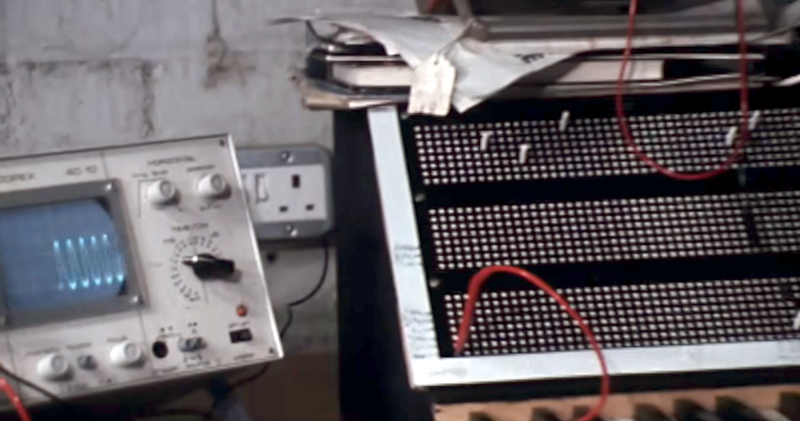
If you want a better look at hardware, around the five-minute mark, you see schoolkids making printed circuit boards, and some truly vintage oscilloscope close-ups. There are plenty of tiny monitors and large, noisy printing terminals.
You have to wonder where the eight-year-olds who learned about computers in the video are today, and what kind of computer they have. They learned binary and the Towers of Hanoi. Their teacher said the kids now knew more about computers than their parents did.
As a future prediction, [James Bellini] did pretty well. Like many forecasters, he almost didn’t go far enough, as we look back almost 50 years. Sure, Prestel didn’t work out as well as they thought, dying in 1994. But he shouldn’t feel bad. Predicting the future is tough. Unless, of course, you are [Arthur C. Clarke].












I was 8 in 1979. Didn’t see a computer in school until the BBC micro, and then only got to use it rarely. No computing lessons at all until I did a CS degree!
I was 15 in ’79. I credit my HS for getting me interested in computers. The school had a VAX where we programmed in Basic on a teletype terminal. My interest was aerospace and computers when I graduated. Ended up going to college for a CS degree.
High-school Electronics class in 1980 there was a small drum-type computer with many leaf microswitches. You programmed it by paper with holes punched out, taped on the drum. The leaf switches read hole present or not. I can’t remember what we did with it. Good for educating about sequential logic and state machine I think.
Pretty much how washers and diswashers used to work in the day.
Even 10-20 years later, there was the problem of not enough teachers who knew what a computer was, let alone be able to use it beyond a simple word processor. Computer education was reduced to a bag of tricks, like “Fill in blank” language education programs, or multiple choice quizzes – not students coding their own educational software under the instruction of competent experts. The kids largely learned on their own, or at least some did, regardless of what the education system tried to teach them.
Films like these showed a Potemkin Village of computer education. What it should have been, instead of what it was. You only have to think about what all those gadgets cost back then to conclude that 99.9% of schools never had access.
Over here (Germany) the main problem was (and is) that schools expect IT teachers to also be IT admins without setting aside work hours for it. Most don’t want to admin a school network off the clock all the while being responsible for compliancy (GDPR!) and all.
Admin? What’s that? The kids are doing something with the box in the corner – we don’t touch it.
Some teachers knew enough to take the terminator off the coaxial cable so the kids wouldn’t be looking for porn on the internet during class.
They’re saying that any IT teacher was also expected to run the school network ..
Interesting. I mentioned I had (circa very early 80s) a PILOT cassette tape for my australian S-100 system on VCFed a week or two back, and my thoughts on it compared to BASIC: it was rubbish.
Odd no mention of the Research Machines 380Z which was common in schools in the UK in the late ’70s thanks to a government grant that gave schools 50% off (one!). https://en.wikipedia.org/wiki/Research_Machines_380Z
Was it? I didn’t see one at school, the only computers I saw at school were Commodore PETs. College had Nascoms and RMLs I left in 78
Yes, our school in Oxford had a 380Z. I remember clearly when it arrived as in assembly the teachers asked if anyone had a computer at home and would help set it up. I found it kind of funny at the time, how the teachers that were supposed to be teaching the kids how to use it were asking for help.
Now, I realise that those teachers were had no training themselves and asking kids that had computers for help was probably a smart thing to do. I didn’t have a computer at home at the time, but I was one of the few kids that took an interest in using it, I would get to use it at lunch times.
I particularly remember having to press the B key to boot the system.
For all the failings of UK governments at the time, their initiative to make Britain IT literate was something that benefited me enormously, it was what enabled me to get into IT. I think if I had been born a decade earlier I would have ended up in a dead end factory job or something.
The UK could have become a major player in the tech sector if it had stuck with the focus on developing technology skills in schools and at vocational colleges. Sadly we lost that, in the 90s when teaching kids how to use Microsoft Office became their idea of computer literacy coupled with all promising technology companies being sold to foreign buyers, mainly from the USA.
Yep. My school have a Research Machines 380Z… 8 inch drives… The maths teacher brought round to me house for me to use overnight.
My school had two. By academic year 1987-8 they were very old-fashioned. They had two 5¼” disc drives and a hell of a lot of circuit boards inside. It was understood that when one of the machines refused to boot you had to take the lid off, remove a certain ribbon cable, blow on it, and put it back. And don’t touch that metal casing because it’s live 240V mains. I don’t know if it was true about the electric shock hazard…Anyway, I learned the basics of CP/M and wrote an adventure game in s-Algol, all of which was a bit outdated by then.
I can’t edit my previous comment, so I have to add a new one: there are RM380Zs visible at 6:37 in the video. I’d know that face plate anywhere, with the Apollo-style illuminated reset button and the key to turn it on!
Timeshared Teletype to a PDP-8 at an adjacent town’s HS. FOCAL-69 language.
In 1975, US grade 7, we were taught BASIC that we ran on an HP mini system, entered on a model 33 ASR teletype, and connected to the system at 110 baud using a phone-in-cradle modem.
Not to sound like I am tooting my own horn here, but while my classmates were satisfied typing in programs out of a book, I used to come in 1 hour before school even started for the opportunity to try out my own ideas. I had figured out that there was a relationship between the punched holes on the paper tape and the ASCII , and wrote a program that you could enter a line of text and then it would punch out the tape with a pattern to spell those words on it. Many other fun efforts came down the road, including a multi-school chat system and a rudimentary record-based “database” that I used to track fundraiser money brought in / owed find my fellow students. Fun times!
In 1972 US grade we were taught basic that ran on the Count school system mainframe. We entered punched paper tape that we dropped in a basket. Someone would run it overnight and we’d get the answers bak. Then you either re-typed or created a patch tape and cut and taped it together. I remember leaving black sections to give you a place to patch but maybe that is just corrupt core memory at this point.
The step up was to get APL access via something, I think a terminal. I got access but could never figure out APL.
In the above, where the color changes it was supposed to say “a long time ago”
That’s what I get for putting “a long time ago” inside the less than greater than.
It’s worse if you add “in a galaxy far, far away…”
Noted with interest: no “help” button documenting the formatting options. “” some text “” gives italics.
\test text backslash
\test text\ enclosure backslashes
/test text forward slash
/test text enclosure forward slash
~test text tilde
~test text~ enclosure tilde
test text backticktest text` enclosure backtick<test text less than
<test text enclosure less than
The first line above initially said quote mark asterisk quote mark some text quote mark asterisk quote mark.
And it appears that a single greater than sign produced the yellow line text in italics box which I’m sure has a name but don’t know it.
For thoroughness, this time without the leading greater than:
&test text ampersand
&test text& enclosure ampersands
%test text percent sign
%test text% enclosure percent sign
!test text exclamation mark
!test text! enclosure exclamation mark
@test text at sign
@test text@ enclosure at sign
$test text dollar sign
$text text enclosure dollar sign
^test text caret
^test text^ enclosure caret
enclosure less than greater than
|test text pipe
|test text| enclosure pipe
Our high school had timesharing, one ASR-33 online and two offline to write with, on the other end was a Honeywell minicomputer. We had lots of DEC books and programs in BASIC to work with. We had to translate DEC BASIC to Honeywell BASIC. In 1974, that was atomic rocket surgery for sophomores in high school. I run some old computers at 110 baud today for laughs and I can’t believe that we could stand how slow that was. But back then, this was absolutely the coolest thing that could possibly exist on Earth.
The program was run by a math teacher who had the rare capability for infinite patience for slow students AND he was was maddeningly challenging for smart students. My father, also a teacher, was actually jealous of the skill that he had in doing this!
I learned to write BASIC in eighth grade on the high school’s computer in fall of 1975.
I love the conclusion and how we never see the negative consequences until its too late…
I love his idealism.
When I was at school in the UK, early 80’s, all the kids knew how to code assembler thanks to Sinclair. The BBC micro was the computer only the posh kids could afford. I was in remedial class because of being dyslexic as were some of my friends. No teacher asked “if these kids are failing school how come they are playing chess and writing games in class?”. We all now work in IT and me personally, have a degree and masters in IT. No thanks to the school, who kicked me out at 15 with a reading age of a eight year old. It’s good to see that schools now know the difference between kids with dyslexia / ASD and the ones who are truly low intelligence.