
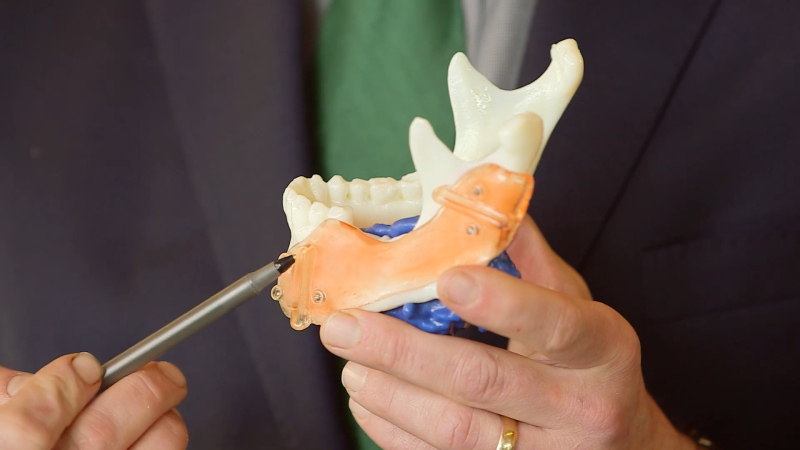
Surgery is hard, there is a reason why school is so long for the profession. Making the job easier and smoother for both patients and surgeons is valuable for all parties, which is why [Mayo Clinic] is now working on including 3D printing into its more regular medicine pipeline.
Prepping for surgery often requires examining CT scans of patients to figure out, well, what they’re even going to be doing. Every body is different, and complex surgical procedures require checking to see where certain organs or features are located. This can be made much easier with a physical model of where the bones, organs, or nerves are specifically located in a patient. While this isn’t true in every case of treatment, there are even cancerous cases where custom equipment can be used to decrease side effects, such as mini-beam collimator adapters.
What if you could use the same pipeline to print what was lost from certain procedures? In a mastectomy, the breast tissue is removed, which can cause negative attention from curious gazes. So why not 3D print a custom breast? Cases like these are generally considered poor commercial investments from industry, but are relatively easy for an existing medical facility to add to treatment.
[Mayo Clinic] is far from the first to consider 3D printing in the medical setting, but seeing the technology see actual applied use rather than future seeking is exciting. Medical hacking is always exciting, and if you want to see more examples, keep sure to check out this commercially available simulator (with some free models).












It would have to be FDA approved for Medicare and then insurance to pay for it. Regular hospitals (other than Mayo) aren’t going to doing things for which they’re not paid.
Not exactly true, if you go into an ER and have no money you will still be treated
It depends upon where you are. In some of the United States the hospital must provide complete treatment. In others they need only stabilize.
Dentistry and replacement implants. Till we can grow teeth that is.
You should have taken better care of them.
Your comment is poorly considered. Not all loss or compromise of permanent dentition is the fault of the patient.
Thank you. As someone who has lost a number of teeth due to a lifelong need for seizure medication, I appreciate this comment.
This is what I do for work for the last 5 years. Some stuff done under the practice of medicine doesn’t need FDA clearance depending on the doc and risks involved. Dental is almost all under practice of medicine, all sorts of dental clinics are already using 3D printers. We do have FDA cleared products as well. Prosthetic soft tissue is still more likely to be made using silicone as the options/finish are still better but the molds can definitely be printed.
Wonder when Mayo will work with University of New South Wales and their endoscopic 3d bioprinter technology