
Modern hospitals use a lot of computers. Architecturally speaking, they’re pretty typical machines—running the same CPUs and operating systems as any other PCs out there. However, they do tend to have some quirks when it comes to accessories and peripherals, as [tzukima] explores in a recent video.
The video starts by looking at typical power cables used with hospital computers and related equipment. In particular, [tzukima] talks about the common NEMA 5-15P to IEC-320-C13 style cable, which less sophisticated users might refer to as a kettle cord. In hospital-grade form, these cables are often constructed with translucent plug housings, with large cylindrical grips that make them easier to grip.
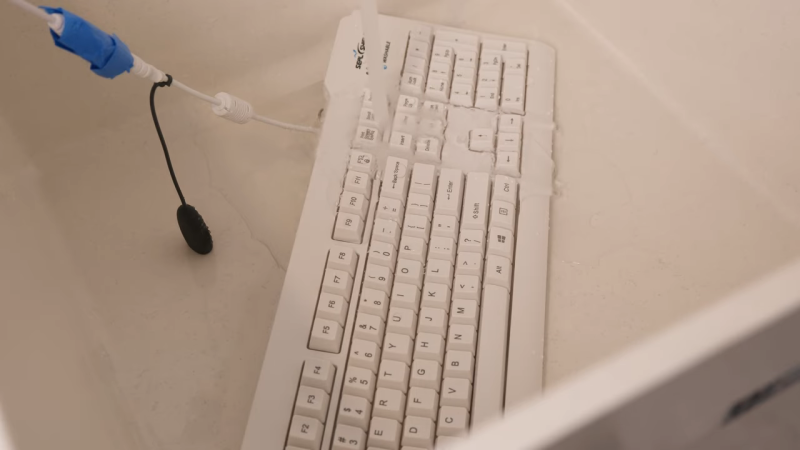
Digging further through business supply catalogs lead [tzukima] to discover further products aimed at hospital and medical users. In particular, there are a wide range of keyboards and mice that are designed for use in these environments. The most typical examples are regular peripherals that have simply been encased in silicone to make them easier to wash and disinfect where hygiene is paramount. Others, like the SealShield keyboard and mouse, use more advanced internally-sealed electronics to achieve their washable nature and IP68 ratings. These are peripherals that you can just throw in a dishwasher if you’re so inclined.
It’s a great look at weird hardware that most of us would never interact with.











I’ve worked with people in offices who could do with these. In one memorable case, they were so dirty that we binned the entire contents of their desk when they left – PC, monitor, keyboard, chair, the lot.
Washable keyboard would be nice. Harder to otherwise.
We simply used blue plastic flat sheets to cover keyboards and mice and just disposed them. Most quite type keyboards work fine.
I love the idea, but having worked in hospitals for 15+ years, I absolutely hate typing on them! Whatever membrane or seal they use makes the keys mushy and harder to actuate… if i see one, I go try to find the dirty, regular keyboard!
The silicone encased keyboards are without exception a hate crime against typists. They’re mushy, with no feedback, and very sporadic keypress recognition. The silicone also stretches with use so the switches don’t line up exactly with the printed glyphs.
The internally sealed sealshield ones are wonderfully adequate though.
Hospitals also use Medical Grade Isolation Power Transformers for the equipment like ECG. And the medical grade power outlets labeled with green dots.
what make a “medical grade isolation power transformer” different from a regular one? Only casing difference where that one is washable or are they electronically different and if so how?
Stricter leakage/insulation/clearance/emission requirements than consumer equipment as outlined in an electrical ISO standard. I’ve been to an Intertek testing facility a few times to get new medical devices approved for my day job.
Sometimes they come with a ground connected electrostatic shielding between primary and secondary winding. To reduce leakage currents.
There’s a whole ISO (60601) standard for equipment that connects to the patient, and an even stricter part of that standard for equipment that connects directly to the heart. An isolation transformer is not necessary, the spec just requires that the leads connecting to the patient be isolated from mains power and carry no more than a specified current and voltage.
Everything in the OR is ungrounded- two fault interrupt with a line isolation monitor. That way if you touch a patient with something hot it doesn’t flow to ground and electrocute anyone. That’s the idea anyway. Probably mis-remembering something but I learned it a long time ago and it works quite well.
Medical grade keyboards do have better isolation against radio interferences. I have seen case where diatherm (electric knife) induced errors to keyboard which were on OR. That keyboard was used for typing medicals to the patient. It was found out that there where “,” and “0” markings on drugs given to patient. It is totally different if drug is 10mg or 1,0 mg.
Hospital Engineer at Finland.
The blue painter’s tape on that connection doesn’t look janky at all.
At least in Canada Isolation transformersbare no longer allowed the devices power supply (typically double insolated) must pass current leakage testing. This includea and device withinba 2m envelope of the paitent.
Washable keyboards are pretty much a standard to protect the keyboards from the chemicals they used to clean that areas.
Most of the other work is around locking down the device from a security point of view
IT Director for a rural hospital here. Most workstations and devices in hospitals are more standardized and less ‘wild’ nowadays. Our Dental offices use SealShield keyboards, but everyone else uses standard peripherals. Before I came on board there was a Sun Solaris (x86) telemetry machine, we had white Welch-Allyn monitors that were literally re-branded ViewSonic’s, and of course proprietary EKG machines and more. Now a lot of medical devices are USB peripherals into a Windows-device (unreliable, imo), we use standard grade PC peripherals and even our XRay portable runs Windows 10.
I liked some of the exotic hardware from a learning/history standpoint, but glad things have standardized, although at a drop in overall quality. (imo)
What makes a power cord “Hospital Grade” is more than just a large, easy-to-grip plug. The plug conductors are actually physically larger than the typical consumer standard. This is so that, when used with a hospital grade outlet, they are more resistant to being unplugged. Outlet pull strength testing is actually part of the electrical safety program at most hospitals. Given that hospitals are one of the few places that we intentionally pass electrical current through humans on a regular basis (and sometimes while they’re in various stages of disassembly), they unsurprisingly have pretty strict electrical safety requirements. This is reflected not only the design of hospitals and medical equipment, but also in the testing done to ensure that safety is maintained. I’m honestly surprised Hackaday hasn’t done an article on this yet.
I’ve known people who washed motherboards and addon cards in the dishwasher. The important things seemed to be don’t use detergent and wait for it to thoroughly dry before plugging in.