
Cartridge-based consoles have often been celebrated for their robust and reliable media. You put a simple ROM chip in a tough plastic housing, make sure the contacts are fit for purpose, and you should have a game cart that lasts for many decades.
When it comes to the Nintendo 3DS, though, there are some concerns that its carts aren’t up to snuff. Certain engineering choices were made that could mean these carts have a very limited lifespan, which could now be causing failures in the wild. It may not be the only Nintendo console to suffer this fate, either, thanks to the way modern cart-based consoles differ from their forebearers.
Lost Memory
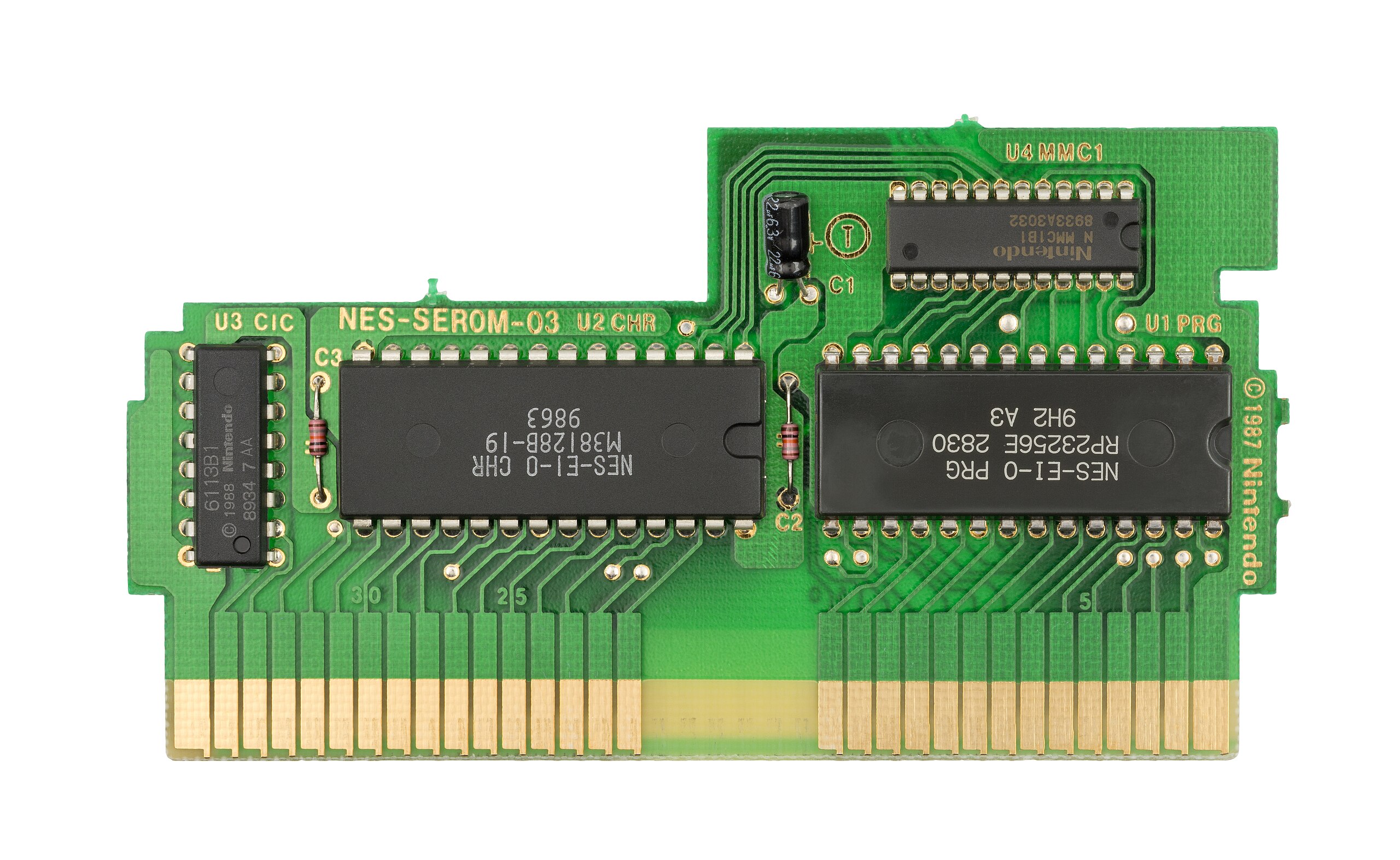
To understand why modern cartridges are at risk, we should first understand why retro consoles don’t have the same problem. It all comes down to how cartridges store their data. Old-school consoles, like the Sega Mega Drive or the Super Nintendo, stored their games on mask ROMs. These are read-only chips that literally have their data hard-baked in at the lithography stage during the chip’s production. There is no way to change the contents of the ROM—hence the name. You simply fire in addresses via the chip’s address pins, and it spits out the relevant data on the data pins.
By virtue of being a very simple integrated circuit, mask ROMs tend to last a very long time. They don’t require an electrical charge to retain their data, as it’s all hard-etched into the silicon inside. Indeed, there are a million old game carts from the 1980s that are still perfectly functional today as proof. Eventually, they may fail, like any other integrated circuit, but if treated properly, by and large, they can be expected to survive for many decades without issue. Game carts with battery-backed save chips will still lose that storage over time, unless the battery is regularly replaced, but this is a side issue. The mask ROM that stores the game itself is generally very reliable as long as it’s not abused.
The problem for modern cart-based consoles is that mask ROM fell out of favor compared to other rewriteable methods of storing data. To a certain degree, it comes down to economics. You could spin up a custom mask ROM design for a new game, and have many copies produced by a chip foundry, and install those in your carts. However, it’s far easier to simply design a writeable cart in various capacities, and have all your company’s games released on those formats instead. You can use standard off-the-shelf parts that are produced in the millions, if not billions, and you have the flexibility to rewrite carts or update them in the event there’s a bug or something that needs to be corrected. In contrast, if you’d relied on mask ROMs, you’d have to trash your production run and start again if the data needs to be changed by even a single bit.
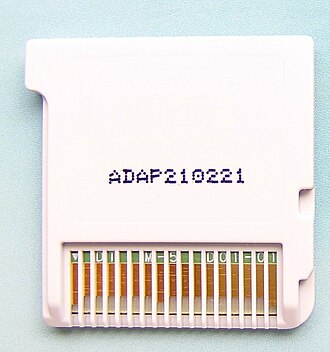
This has become a particular issue for some Nintendo systems. Up to the Nintendo DS, it was still common for cartridges to be built with bespoke mask ROMs; only certain titles that needed greater storage used writeable chips like EPROMs. However, when the Nintendo 3DS came along in 2011, norms had shifted. Carts were produced using a product called XtraROM from Macronix. Flip through the marketing materials as one forum user did in 2021, and you won’t find out a whole lot of real technical detail. However, on the basis of probabilities and datasheets in the wild, XtraROM appears to be a technology based on NAND Flash storage.
Exact details of the technology used in Nintendo carts are unclear to a degree, though, as datasheets for those part numbers are not readily available. Carts would often also contain a small amount of user-rewriteable memory for game saves, but the main game data tended to be stored in XtraROM chips. It also appears from certain Nintendo leaks that the 3DS may have certain built-in commands used to refresh this storage regularly, to keep it healthy over time.
If you’re a video game archivist, or just someone that wants their old Pokemon carts to still work in 2030, this is a bad thing. It’s all because of the way Flash memories work. Data is stored as electrical charges that are trapped in a floating gate transistor. Over time, those charges tend to leak out. This isn’t a problem in regular use, because Flash memory devices have controllers that continually refresh the charges as long as they’re powered. However, if you leave such a device unpowered for long enough, then that process can’t take place, and data loss is the eventual result. This has become a particular problem with modern solid-state drives, which can lose data in just years or even months when left unplugged, particularly in warmer environments where charge loss occurs at a faster rate.
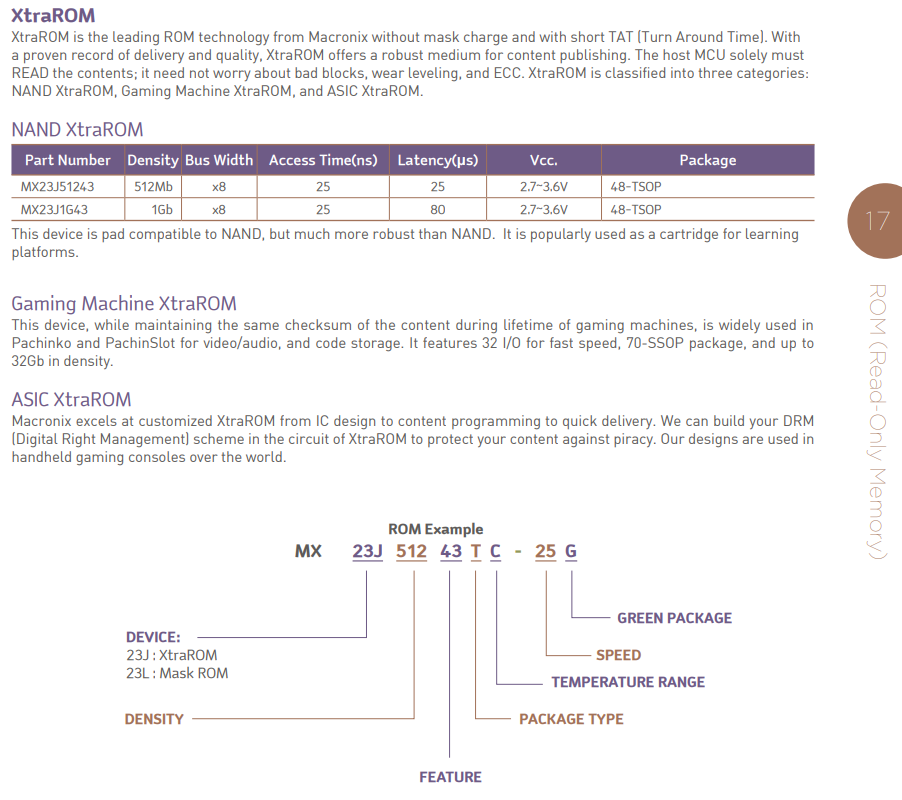
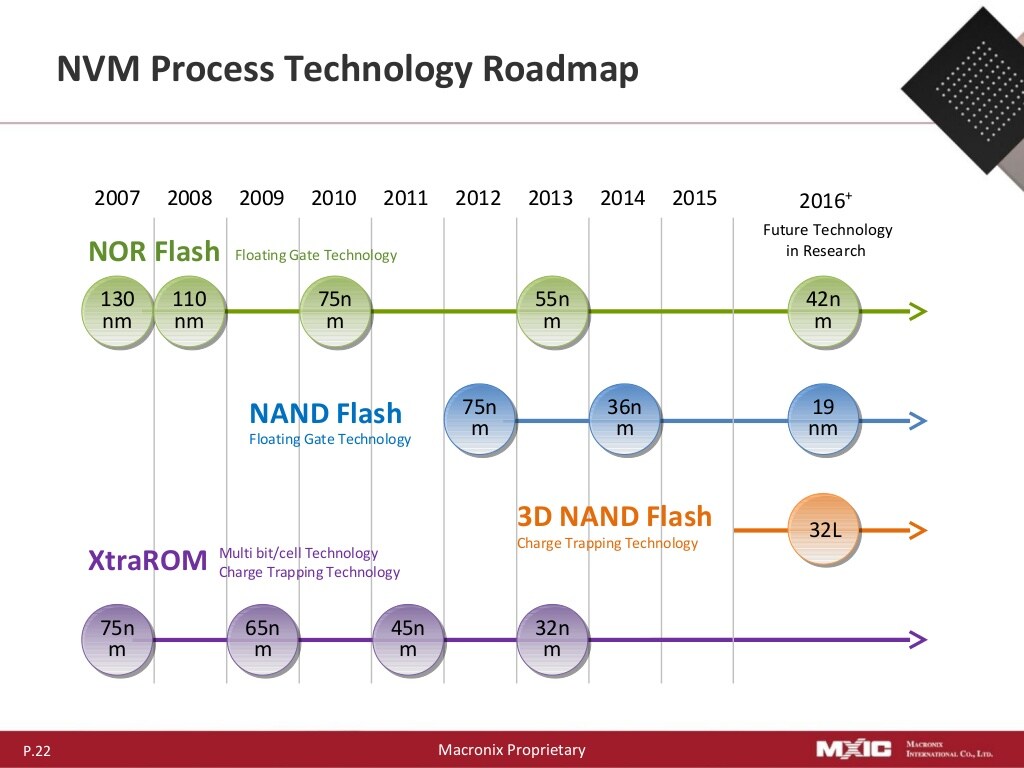
If they are indeed based on flash technology, Nintendo 3DS cartridges could be subject to the same phenomena of data loss after long periods without power. The same problem could affect the Nintendo Switch, too, which uses XtraROM chips from the same family. Fine details are hard to come by due to it being a proprietary product, but Macronix has claimed that its XtraROM-based products should offer 20 years of reliable storage at temperatures up to 85 C. However, these products haven’t existed that long. Those results are from accelerated aging tests that are run at higher temperatures to try and back-calculate what would happen at lower temperatures over longer periods of time. Their results don’t always map one-to-one on what happens in the real world. In any case, the fact that Macronix is quoting that 20-year figure suggests that XtraROM is perhaps a particularly long-lived flash technology. You’d expect a more robust mask ROM to outlast even the best EEPROMs that claim longevity figures in centuries.
Fears around widespread cartridge failures float around social media and gaming websites every now and again. It’s believed to be a particular issue with a certain Fire Emblem title, too. However, what we don’t have is a clear idea of the scale of the problem, or if it’s actually happening in the wild just yet. There are many people complaining on the Internet that they’ve grabbed an old cartridge that has failed to boot, but that can happen for a wide range of reasons. Without dumping the cart, it’s hard to definitively put this down to bit rot of the flash storage inside. There are other failures that can happen, for example, like bad solder joints.
There are hints that flash rot really could be affecting some Nintendo 3DS cartridges in the real world, though. A particularly interesting case from a forum concerned a copy of Mario & Luigi Paper Jam Bros. that completely failed to run. After some investigation, the owner decided to see if the 3DS’s cartridge refresh routine could possibly bring the cart back to life. This led them to develop a tool for “fixing” 3DS carts, with files shared on Github. It works in a simple fashion—using the 3DS’s built-in cartridge refresh routines when errors are detected in a given area of data.
This copy of Mario & Luigi Paper Jam Bros. was reportedly resurrected by using the 3DS’s built in cartridge refresh routines. It’s a very anecdotal piece of evidence that NAND flash rot could be affecting these carts. It also suggests that it can be guarded against by regularly plugging in carts so the console can run the refresh routines that keep them alive.

Ultimately, if you’re precious about your 3DS or Switch games, it probably pays to boot them up and run them once in a while. The same may go for games on the Sony PSVita, too. Even if the stated 20-year lifetime of these carts is legitimate, it’s helpful to juice up the flash every once in a while. Plus, at the very worst, you’ve spent some time playing your cherished games, so it’s hardly a waste of time.
We’d still love to see the issue investigated further. The best way would be to see some dumps and checksums of sealed 3DS games from over 10 years ago, but that’s perhaps unlikely given the value of these rare items. In the meantime, the best way forward is perhaps the cautious one—if you’re worried about data loss on your flash-based cartridges, boot them up just in case. Happy gaming out there!











Not all Flash memories. SD cards commonly have no wear levelling, and no self-refresh.
Uh, SD cards definitely have built-in wear levelling. I don’t know about self-refresh though.
Some have wear levelling, definitely not all.
SD cards certainly have wear leveling, they don’t have TRIM/DISCARD commands so they don’t know to free a physical block until the host resues the logical address. This means rather than pre-emptively managing memory all their consolidation happens as it’s needed = painful slowdown on SD cards as the filesystem becomes fragmented.
I have no idea if they have a refresh – I suspect they do because I’ve never had a read only SDcard fail. And most non-read only SDcards need to be formatted and re-written to maintain performance because of the above issue.
That said, if you buy 10 x 32GB from AliExpress do those SDcards have a particularly smart controller? I doubt it compared to SanDisk etc highly optimized ECC and wear leveling. Compared to a modern high spec SSD they are probably laughable.
Even eMMC is better than SDcards.
I have. The one in my phone started corrupting files older than five years, so I had to copy everything off of it and replace it.
That’s is interesting. Would have been cool to see if the SD had failed (
badblocksis good for that especially in write test mode) But was it used read only? Or do you mean files you never wrote failed?Wear leveling means that worn blocks, most likely to fail, are used to store cold data.
Paradoxically the data you haven’t touched in years is moved into your least reliable blocks.
Photos I had taken five years prior on a different phone started coming out corrupted, while newer files worked fine. It was basically used “read-only” because nothing was ever deleted, just new photos added.
Wear levelling on SD cards wasn’t always a thing, and still isn’t always a thing. That’s why some cards weren’t recommended for installing an operating system on, for things like Raspberry Pi:s
Oh, and you might comment, “If you don’t have wear levelling at all, then the FAT region would wear out almost instantly and the file system would be lost.”
Yeah. SD cards did that. They weren’t originally designed to work for shuffling data in and out constantly, because they were designed for consumer digital cameras and MP3 players etc.
That does sound like it didn’t refresh then. Hard to explain otherwise.
I’ll take your word for it on the lack of wear leveling.
I’ve no proof but I can’t imagine a SD card without minimal wear levelling they weren’t very reliable to start with and a lot of progress has been made on the number of writes a block can take.
I’m sure there are very terrible SD cards out there (plenty fakes and frauds misreporting size).
I’m glad SD cards are much better today.
It’s actually gone backwards. Good CF cards had write endurances up in the 100,000 range, and so did the early generation SD cards – with the caveat of “budget” versions – because these were SLC chips. There’s a couple variants of those as well, but they were generally good.
Nowadays the flash memories are all MLC and lower voltage to save power, which makes the problem of leakage worse, and reduces the write endurance significantly to the point that they can only take around 4,000-5,000 write cycles in cases. The difference is that the device now contains hundreds of gigabytes, up to terabytes of flash, so wear levelling and over-provisioning can multiply the write endurance of the whole thing. It’s not uncommon to have flash drives with 30% extra flash hidden away just for the sake of having enough blocks to shuffle through, and because they expect a lot of the blocks to be damaged right out of the factory.
This also happens with fake SD cards – the ones that pretend to be e.g. 512GB, but only have 16GB of actual storage. After you write past the end of the storage I believe it starts corrupting the old data.
I expect that somebody will cook up some sort of “active archival storage” thingy that will provide the necessary support to keep these cartridges alive.
That is, assuming they just need power, that the refresh logic is on board hardware and not buried in the game software. If the game code does need to execute, then maybe somebody will build a device that fires up a different stored cartridge every day and displays the output on a screen. Or maybe captures screen data and uploads to a digital picture frame.
For me, I don’t need any of that there newfangled, super modern game tech. I’ll just stick to looking at the 300+ Atari 2600 cartridge collection in my closet and feel fairly confident that they’ll work when/if I plug them in.
Very sure these will appear within weeks. Like camera, wine, cigar storage cabinets! “Well here we have my vintage 1999 sd card from …etc”
If only there were some way of preserving these games, matey.
Something, something, affordable broadband, and an FCC not beholden to the wrong things.
The article would make a lot more sense if someone hadn’t mis-spelled ‘cards’ everywhere …
It’s not a mispelling, cart is short for cartridge (well known vernacular for those in the video game space). No one in handheld gaming refers to games as cards, they call them carts.
Your youth is showing ;)
That thing about blowing on the edge before plugin. The copper fingers turn brown and the floor is where these and the console lived. Carpet fibers for start pet hair etc. Slide ’em around, static enhanced dust collector! I’ve cleaned many organ circuit boards that have copper or worse tinned fingers, they need it about every 10 years.
Naphtha or contact cleaner on a Tyvek covered-spatula to get in that space no “Q-tips”, shine that copper.
I even found a motor toothbrush that goes in and out that with an mounted alligator clip soaked Tyvek on tiny spatula gets into the socket and really restores the connections. The edge connector on game consoles is down in a dust socket. Do not move any cleaner tool back and forth in that slot, only in and out (tedious) or you will bend or break fingers!
In the case of organs 20 years is not much.
Honestly, 3DS carts have little use beyond novelty these days. With the end of Nintendo services and the eShop, there’s no reason not to mod the console and either dump your games to an SD card (which can then be be moved to something more resilient) and play them from there or acquire identical game ROMs through “other legitimate means”. Nearly all, if not all, retail 3DS game, whether digital or physical, have been preserved in a playable, digital form.
It’s a similar situation with Wii U games, although those are on discs. I’ve heard of people struggling with disc rot, but I personally haven’t had issues despite owning the console since 2013 or so.