Large-Scale Pokémon Eviction Looms With Pokémon Bank Server Shutdown

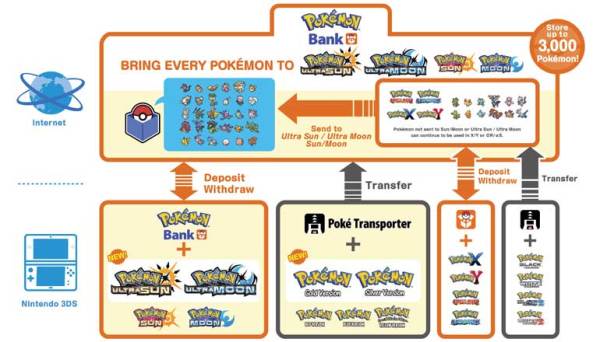
After the Nintendo 3DS handheld console saw most its online services including the online store (eShop) taken offline not too long ago, it was only a matter of time before the demise of even the remaining paid services, such as the Pokémon Bank which Nintendo has now announced will be shutting down on February 25 of 2027.

The ability to transfer the digital pocket monsters, or Pokémon, between physical systems has been a staple of the series since the early Gameboy days when a link cable would be all you needed to trade and catch’em’all, as they say in the trade. Naturally over time this Cloud-based aspect wormed its way into this series as well, starting with the 3DS and this continuing on the Nintendo Switch in the form of the Pokémon HOME app.

With this paid service an avid Pokémon fan could collect up to 3,000 of these digital critters, move them between various Pokémon games and generally allow players to keep the same Pokémon with them across games. As noted by [Kevdog Plays] in an informative video on what to do before the shutdown, the service is free during these final months.

What’s interesting is that certain Pokémon can only be obtained from 3DS Pokémon games, which means that without either an alternative to this transfer mechanism or these games becoming available on newer Nintendo consoles, there will forever be that gaping hole in one’s Pokedex. Naturally this raises the usual questions about software archiving and preservation when an online service is required for the full game experience.
Hacking Around The Financial Pain Of New 3DS XL Top Screens

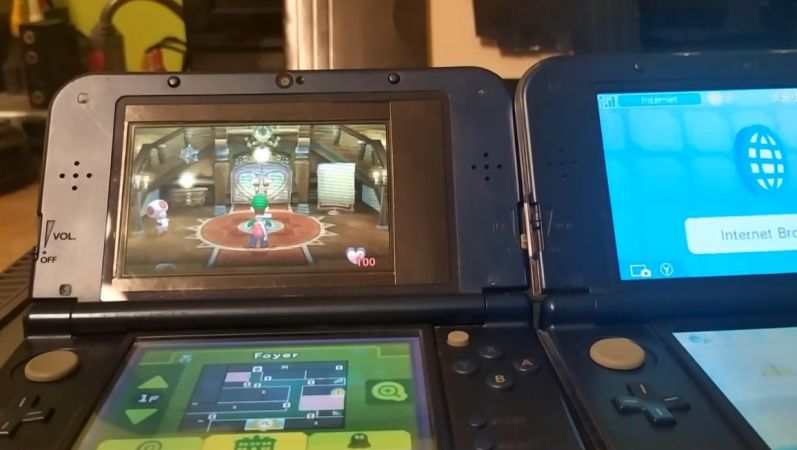
With Nintendo’s 3DS experiencing a bit of a renaissance lately, prices for functioning systems have shot through the roof. Getting a busted one with a broken screen is a lot cheaper, but then you run into the eye-watering price difference between a replacement top screen for the regular version and the larger XL variant. The latter costs about the same as a whole new used 3DS, while the former goes for peanuts. Here the solution is obvious, with [Skawo] demonstrating how they hacked the cheaper, smaller top screen into a New 3DS XL.

The price difference on AliExpress as shown in the video is on the order of $120, with the smaller screen going for less than $10. Since they both use the same connector pin-out and display technology, you can plug either display into the New 3DS XL mainboard.

Where you’ll run into issues, other than the replacement display being obviously not XL, is the physically shorter flat flex cable for the controls that forces the display to be installed in an offset manner. You need jailbroken firmware like Luma3DS here to adjust for the screen offset. Filling in the missing screen real-estate is the other issue you have to patch over somehow, which was done here in barbaric fashion with some cardboard.

Beyond that it does work, and as a fix to at least get a broken New 3DS XL back into the game it’s worth considering. Do note that there’s a difference between regular 3DS and New 3DS (second generation) screens with neither being compatible, so be careful before you try such a fix.

Continue reading “Hacking Around The Financial Pain Of New 3DS XL Top Screens”

Porting The Legend Of Zelda: Twilight Princess To The 3DS

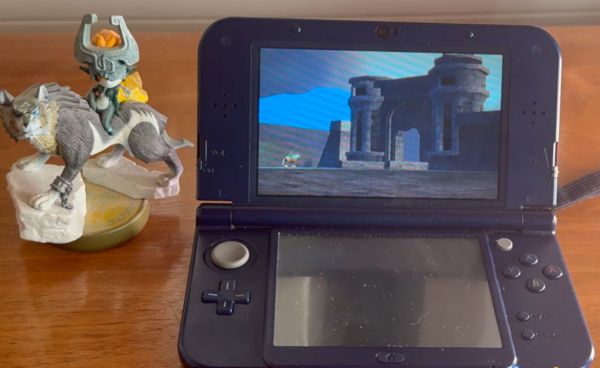
After the Nintendo 3DS saw various Nintendo 64-era titles like Super Mario 64Ocarina of Time and Majora’s Mask ported to it, there was a lot of speculation that the GameCube/Wii title of Twilight Princess might soon make its way to this handheld gaming system too. Unfortunately no official release happened, but with the recently decompiled source code of the game in hand, [Tobi] set out to see whether such a port was realistic.

Compared to the somewhat scruffy Nintendo DS and DSi handhelds, the 3DS hardware is decidedly more beefy, both in the processor department as well as in terms of RAM with 128 MB of FCRAM (Fast Cycle DRAM). This puts it within batting distance of the game’s original two consoles.

In the video the current status of the porting effort is demonstrated, with the game actually running surprisingly well despite the early state of the porting project. Even with the rather impressive graphical glitches and overall instability that one would expect at this early stage, the game is essentially already playable.

As noted by [Tobi], the next steps will involve fixing these bugs and above all actually optimizing the so far quick-and-sloppy port. Along with the possibility of actually having Twilight Princess rendered in 3D, this is a rather exciting development that demonstrates that an official version of the game for the 3DS would have been easily possible.

Continue reading “Porting The Legend Of Zelda: Twilight Princess To The 3DS”

Turn ‘Em On: Modern Nintendo Cartridges May Have A Limited Lifespan

Cartridge-based consoles have often been celebrated for their robust and reliable media. You put a simple ROM chip in a tough plastic housing, make sure the contacts are fit for purpose, and you should have a game cart that lasts for many decades.

When it comes to the Nintendo 3DS, though, there are some concerns that its carts aren’t up to snuff. Certain engineering choices were made that could mean these carts have a very limited lifespan, which could now be causing failures in the wild. It may not be the only Nintendo console to suffer this fate, either, thanks to the way modern cart-based consoles differ from their forebearers.

Continue reading “Turn ‘Em On: Modern Nintendo Cartridges May Have A Limited Lifespan”

One Lucky 3DS Gets A Switch-Style Dock

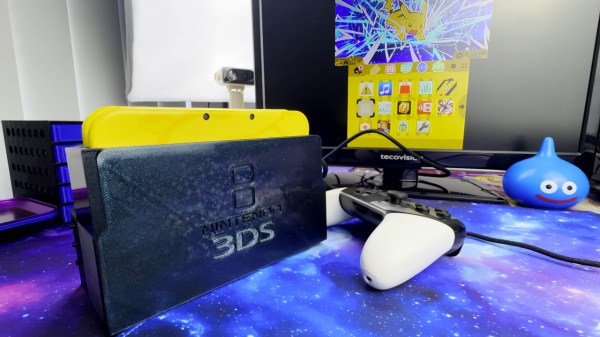
The Nintendo Switch dock set a new bar for handheld docking user experience – just plug your console in to charge it, output image to your monitor, and keep it working with any USB peripherals of your choice. What if a 3DS is more your jam? [KOUZEX] shows off a Switch-style dock design for his gorgeous yellow 3DS, with Switch Pro controller support, and this dock wasn’t just a 3D printing job – there’s a fair bit of electronics to show, too.

While the 3DS looks stock at a glance, it has already been upgraded internally – there’s a USB-C capture card built in, half-ticking the “monitor output” requirement, and a Raspberry Pi board turns that output into HDMI. Building a charging dock is also pretty simple, with just two contacts on the side that desire 5V. Now, the pro controller support was a fair bit harder – requiring an internal modchip for emulating buttons, and trying out receiver boards for the Switch controller until a well-functioning one was found.

The build video is quite satisfying to watch, from assembling some QFNs onto tiny OSHPark boards using a hotplate and soldering them into the 3DS, to planning out, building, and dremeling some prints to create a true slide-console-into-dock experience, same way the Switch pulled it off. It even has the same USB-C and HDMI arrangement as the Switch dock, too! Want a simpler dock for your 3DS? Don’t forget that you can build a charger dock for yours with just a 3D print and a few wires.

Continue reading “One Lucky 3DS Gets A Switch-Style Dock”

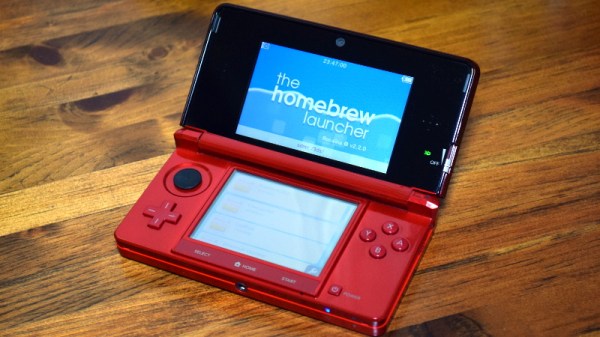
Exploring The World Of Nintendo 3DS Homebrew

When Nintendo officially ended production of the 3DS in September 2020, it wasn’t exactly a surprise. For one thing, some variation of the handheld system had been on the market since 2011. Which is not to say the product line had become stagnant: the system received a considerable mid-generation refresh, and there was even a more affordable variant introduced that dropped the eponymous stereoscopic 3D effect, but nearly a decade is still a fairly long life in the gaming industry. Of course Nintendo’s focus on the Switch, a hybrid device that blurs the line between console and handheld games, undoubtedly played a part in the decision to retire what could effectively be seen as a competing product.

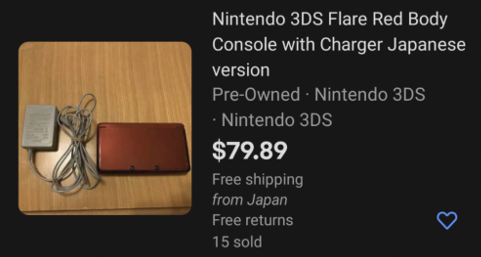
While putting the 3DS out to pasture might have been the logical business move, a quick check on eBay seems to tell a different story. Whether it’s COVID keeping people indoors and increasing the demand for at-home entertainment, or the incredible library of classic and modern games the system has access to, the fact is that a used 3DS in good condition is worth more today than it was when it was brand new on the shelf this time last year.

I’ve certainly made more expensive mistakes.

In short, this was the worst possible time for me to decide that I finally wanted to buy a 3DS. Then one day I noticed the average price for a Japanese model was far lower than that of its American counterpart. I knew the hardware was identical, but could the firmware be changed?

An evening’s worth of research told me the swap was indeed possible, but inadvisable due to the difficulty and potential for unexpected behavior. Of course, that’s never stopped me before.

So after waiting the better part of a month for my mint condition 3DS to arrive from the land of the rising sun, I set out to explore the wide and wonderful world of Nintendo 3DS hacking.

Continue reading “Exploring The World Of Nintendo 3DS Homebrew”

3D Print That Charging Dock For Your 3DS

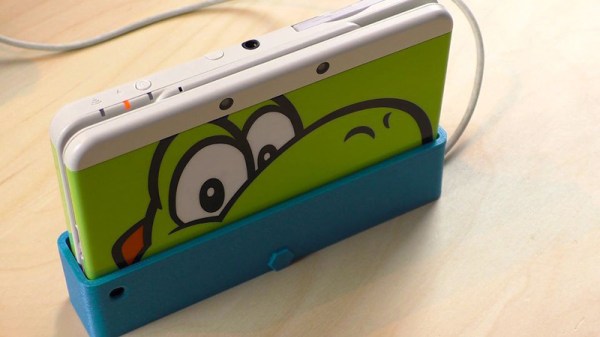
The Switch is the new hotness and everyone wants Nintendo’s new portable gaming rig nestled in a dock next to their TV, but what about Nintendo’s other portable gaming system? Yes, the New Nintendo 3DS can get a charging dock, and you can 3D print it with swappable plates that make it look like something straight out of the Nintendo store.

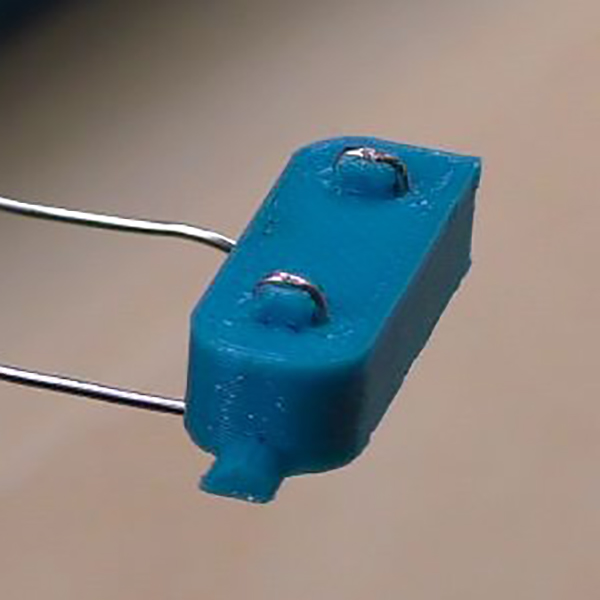
[Hobby Hoarder] created this charging dock for the New Nintendo 3DS as a 3D printing project, with the goal of having everything printable without supports, and able to be constructed without any special tools. Printing a box is easy enough, but the real trick is how to charge the 3DS without any special tools. For this, [Hobby Hoarder] turned to the small charging contacts on the side of the console. All you do is apply power and ground to these contacts, and the 3DS charges.

Normally, adding contacts requires pogo pins or hilariously expensive connectors, but [Hobby Hoarder] has an interesting solution: just add some metal contacts constructed from LED leads or paper clips, and mount it on a spring-loaded slider. A regular ‘ol USB cable is scavenged, the wires stripped, and the red and black lines are attached to the spring-loaded slider.

There is a slight issue with the charging voltage in this setup; the 3DS charges at 4.6 Volts, and USB provides 5 Volts. If you want to keep everything within exacting specs, you could add an LDO linear regulator, but there might be issues with heat dissipation. You could use a buck converter, but at 0.4 Volts, you’re probably better off going with the ‘aaay yolo’ theory of engineering.

[Hobby Hoarder] produced a few great videos detailing this build, and one awesome video detailing how to print multicolored faceplates for this charging dock. It’s an excellent project, and a great example of what can be done with 3D printing and simple tools.

Continue reading “3D Print That Charging Dock For Your 3DS”