
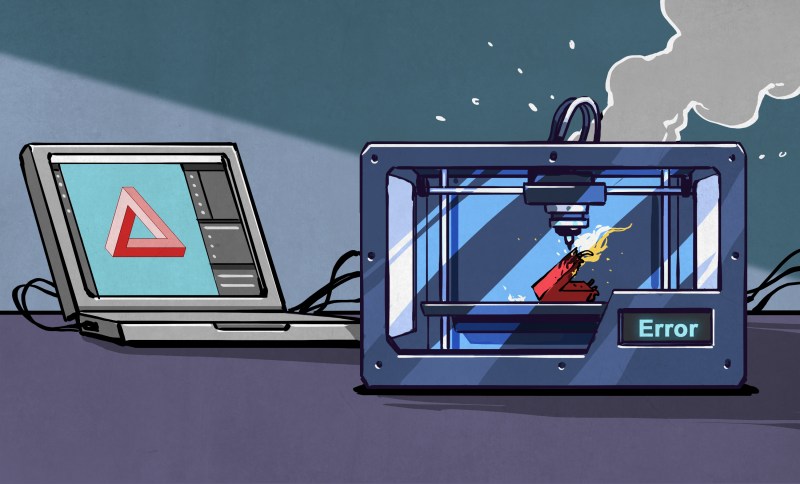
A friend of mine and I both have a similar project in mind, the manufacture of custom footwear with our hackerspace’s shiny new multi-material 3D printer. It seems like a match made in heaven, a machine that can seamlessly integrate components made with widely differing materials into a complex three-dimensional structure. As is so often the case though, there are limits to what can be done with the tool in hand, and here I’ve met one of them.
I can’t get a good range of footwear for my significantly oversized feet, and I want a set of extra grippy soles for a particular sporting application. For that the best material is a rubber, yet the types of rubber that are best for the job can unfortunately not be 3D printed. In understanding why that is the case I’ve followed a fascinating path which has taught me stuff about 3D printing that I certainly didn’t know.
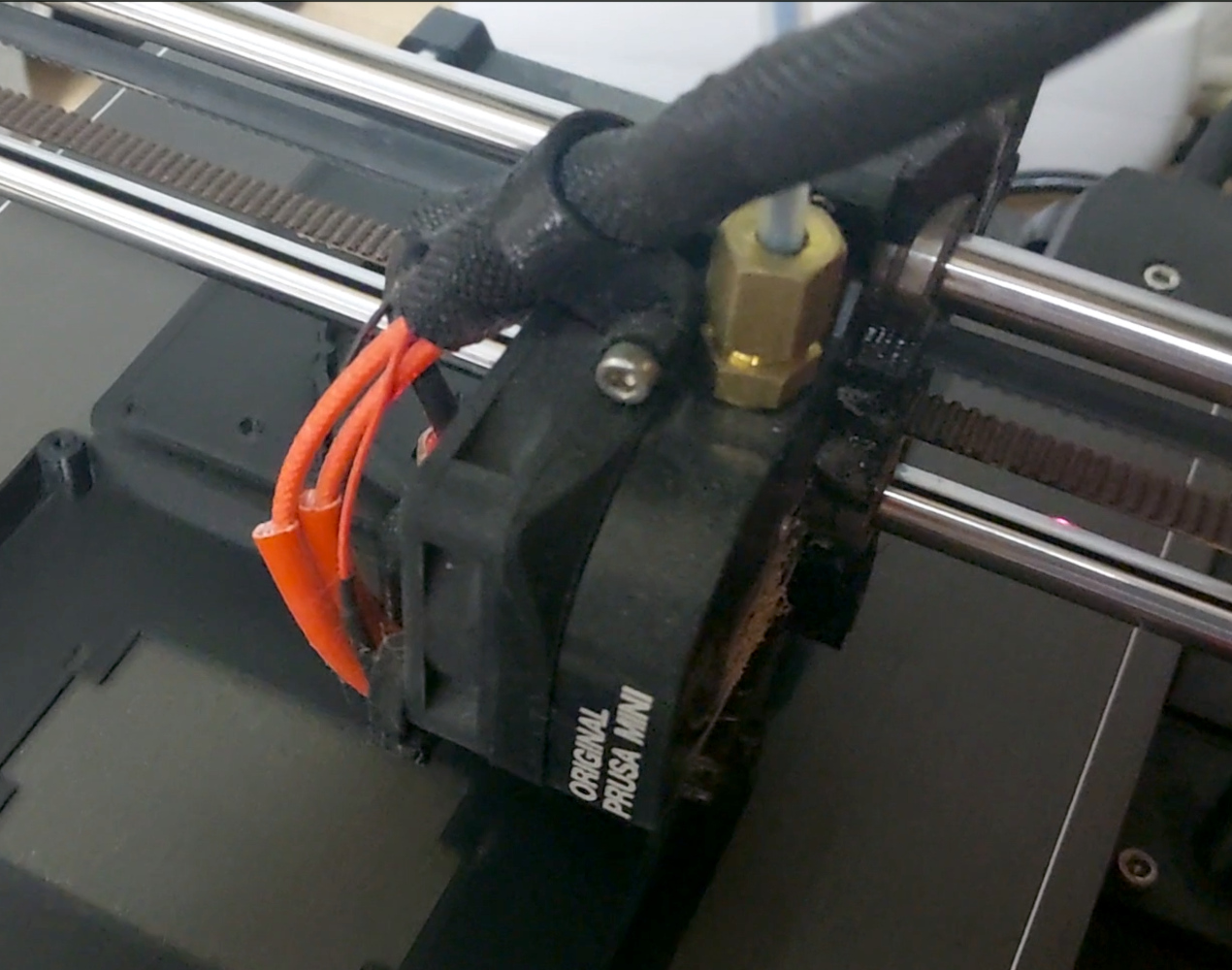
A friend of mine from way back is a petrochemist, so I asked him about the melting points of various rubbers to see if I could find an appropriate filament His answer, predictably, was that it’s not that simple, because rubbers don’t behave in the same way as the polymers I am used to. With a conventional 3D printer filament, as the polymer is fed into the extruder and heated up, it turns to liquid and flows out of the nozzle to the print. It ‘s then hot enough to fuse with the layer below as it solidifies, which is how our 3D prints retain their shape. This property is where we get the term “plastic” from, which loosely means “Able to be moulded”.
My problem is that rubber doesn’t behave that way. As any casual glance at a motor vehicle will tell you, rubber can be moulded, but it doesn’t neatly liquefy and flow in the way my PLA or PET does. It’s a non-Newtonian fluid, a term which I was familiar with from such things as non-drip paint, tomato ketchup, or oobleck, but had never as an electronic engineer directly encountered in something I am working on.
A Newtonian fluid has a linear relationship between shear stress and shear rate. That’s dry language for saying that when you press it, it moves, if you press it more, it moves more, and the readiness with which it moves, or its viscosity, is the same across all pressures.
I’m used to viscosity, having run all manner of dodgy old cars I’m particularly familiar with selecting the correct oil by viscosity figure. A non-Newtonian fluid doesn’t have this linear relationship, and its viscosity changes with pressure. For example the non-drip paint has a high viscosity until you press it with a paint brush, at which point its viscosity falls and it becomes liquid enough to spread around. Rubber does this too, and were I to attempt to squeeze rubber filament through my extruder, it would become very viscous and block it up. The closest thing to a rubber I could reasonably use is TPU, or Thermoplastic PolyUrethane, but as you might guess from its name, it’s not a rubber in the same sense as the rubbers I’m looking at, even though it’s what many people use for shoes. It’s flexible, but not grippy.
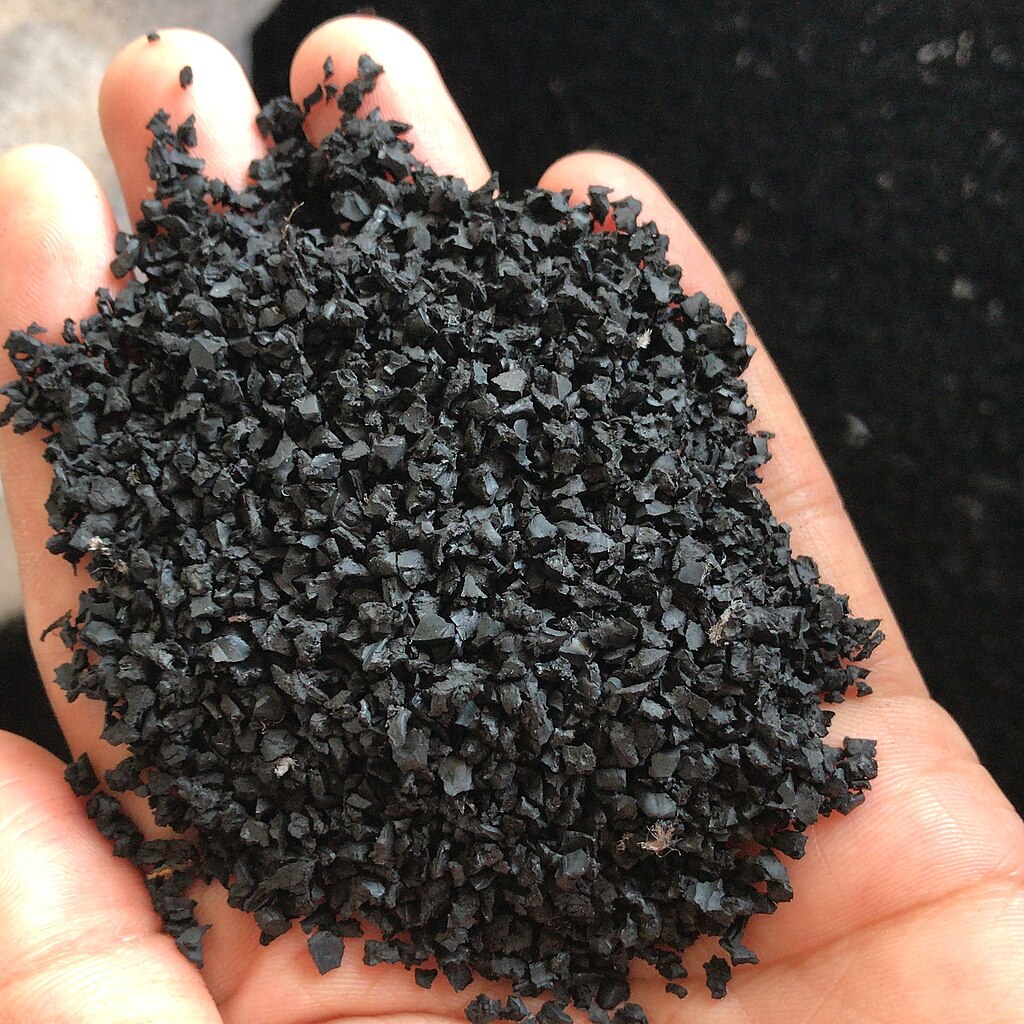
So if rubber is non-Newtonian and I can’t print with it, how do they mould it? An online search finds specialist plants for rubber extrusion and moulding so it’s possible, but in fact those rubber moulded items you’re familiar with won’t be made with liquid rubber. Instead they press shredded rubber into a mould and heat it so that it fuses, resulting in a moulded shape. I was fascinated to find that the process doesn’t require excessive temperatures, though whether that makes it achievable in a hackerspace is yet to be determined. Has anyone out there experimented with real rubber? Meanwhile I have those multi-material uppers to work on.








Ya, i dont know about all that. If you ever burned a tire it drips as it burns.
That drip is not melted rubber, it is pyrolytic oil. Vulcanization, the process by which rubber crosslinks are formed curing it into a solid, is not a reversible process. Rubber hardens by a chemical process, not a thermal state transition.
In other words, it’s like comparing polyethylene to epoxy cement when it comes to plastics.
That is called reversion, you are breaking down the polymer matrix and creating new compounds. Natural rubber, polychloroprene (neoprene), nitrile rubber (buna n), EPDM, styrene-butadiene rubber (buna-s), fkm (viton) ect are all thermosets, they degrade revert and burn before their melting point. I’m rubber injection and transfer press molding you are mixing a curative with a prepolymer, then hearing that up to flow it, and keeping heat to it to let it cure to a solid.
Can you 3D print with SBS or SEBS plastic? Lego uses those plastics for its tyres and they are pretty flexible.
It can be printed, it’d require two part mixer injection nozzle and UV curable polymerizing agent. I made the nozzles for spraying rubber (thin rubber coating) and deployed UV for epoxy resins, but haven’t done it for 3D printing and haven’t tried to formulate UV curable rubber polymer, but it can be done
Then it sounds like it would be a better fit for SLA (uv resin style) printing since those printers cure their models with UV light. Seems like the two part aspect might be the big hurdle as UV printers usually just have the medium in a tray with a transparent bottom with the UV light source underneath. This article seems to only consider FDM printing as an option.
Rubber typically hardens with heat. When you heat rubber extrusion the process is more like aluminum extrusion than a 3d printer. Goo goes in, and a solid is pushed out of a heated die in the desired shape.
If you want to form actual rubber your best bet is to first print your part with a flexible filament, then create a mold with a heat durable material like plaster, fill the mold with cushion gum and vulcanize,
3d printers are cool, but not every problem is solved by a hammer.
Might be a good time to review thermoplastic vs thermoset polymers, cross-linking, vulcanization etc.
Oversimplified, thermoplastics are the ones that you can heat up and melt, and they turn into the original material when cooled. Thermosets “cure” in some way, just like how you can’t unbake a cake.
Normal 3D printing uses thermoplastics, while most rubber-like material is thermoset, except for “thermoplastic” elastomers (TPE), one type of which is thermoplastic urethane (TPU).
This.
I don’t think tires are made of rubber crumb like the article claims. Rather, rubber crumb is made of tires.
Real rubber grows on treesin the form of latex, and was famously first vulcanized with heat and sulphur on Charles Goodyear ‘s wife’s stove. Almost all of what you call rubber is something else.
Maybe a filament with some thermoplastic with a lower melting point then rubber with rubber particles mixed in might have qualities that you’re looking for in terms of traction. I vaguely recall some experiments with actual footwear where they tried mixing carborundum powder into the rubber for shoe soles to increase grip on icy surfaces and for where properties, but it turned out that it wore flooring out like crazy.
Didn’t Nike founder Bill Bowerman, Phil Knight’s former track coach, pour rubber into his wife’s waffle iron at first?
Actually I looked it up, and they used urethane
Laser sintering thermoplastic polyurethane powder would be one way, or easier yet, printing a mold and pouring two part PU into it.
The ever fabulous public library of Lebanon Ohio has this wonderful video on YouTube
https://youtube.com/shorts/LNL5tyuhlmw
No. REAL rubber is a class of properties.
What YOU think is rubber is actually called “Natural Latex Rubber”.
There are plenty or ‘real’ rubbers, that people associate with the term ‘rubber’, that don’t meet your definition. Neoprene is an example.
‘Rubber’ doesn’t have the same confusion as ‘plastic’, but clearly even (internet) ‘experts’ are using it wrong.
You got one thing right though.
Print the MOLD.
3d printing is for art and prototyping. And molds.
No object or tool with mechanical requirements should ever be 3d printed.
That isn’t what 3d printing is for.
And it’s not a clever misuse, it’s just doing it wrong.
Rubber is Rubber
There is natural rubber, from latex
and there is synthetic rubber from petrochemical byproducts
Neoprenes are a family of synthetic rubbers that are produced by polymerization of chloroprene.
The word youremissingr is ELASTOMER
Elastomers are materials with rubber like properties, including but in no way limited to natural and synthetic rubbers..
I wonder if it would be possible to 3d print (or machine) a mold and then use that to heat press/vulkanize the shoe parts.
This is frequently the answer to 3D printing with materials that can’t be fed to a 3D printer.
Either directly 3D printing the mold, or 3D printing the part, surrounding it with mold material, then removing the original 3D printed material.
https://en.wikipedia.org/wiki/Lost-wax_casting – instead of wax, use PLA and you have lost-PLA casting – https://all3dp.com/2/lost-pla-casting-guide/
Rubber doesn’t melt. It’s not a thermoplastic or did I get something wrong?
Crazy idea: what about infill? Could someone make a TPU filament with 70% (or higher) infill of 0.1mm rubber grains?
Yo author, if you do read this on the off chance, TPU foam has just come onto the market, and PEBA offers many of the same properties as TPU while being much more grippy. Hope this helps on your 3D printed footwear adventures
Wanted some comfortable walking around the house slippers so I tried out NinjaTek’s Chinchilla 75A TPE Filament and Filaflex’s 60A TPU. Grip and skin feel on both is very acceptable for shoes BUT, it is a PAIN to work with, like trying to print with a rubber band.
Most likely there will have to be printer mods done to accommodate how soft the filament is, lots of clogs getting the settings right and super slow printing to help prevent clogs and stringing.
The 60A was used for the underside of the sole and the Chinchilla was used for the uppers.
Here’s a basic line of events:
About a day of drying the filament (Super Important!)
After many (lost track of amount) fails on a modified Prusa XL (Constrain that filament path!) a single successful shoe took 18 hours of printing.
Then realized I had my foot dimensions too small and adjusted the other shoe’s size.
Multiple additional fails.
More filament drying.
More fails.
Successful 18 hour print! Yay!
Wow, this shoe sole is quite pleasing and they don’t slide along tile like regular TPU does, but it’s too tight in this area and digs in in that area so I’ll have to adjust and print again.
Ugg, I’ve spent a week and a half of printing time, and half a roll each of these very expensive filaments (each one is over $100 USD per kg).
Game ends, had fun, learned a lot!
Use the filament and lessons learned on other, smaller, projects that pop up. A vase mode sock for a Spacemouse with 60A TPU is amazing!
Frame the challenge for US Government R&D project managers. The independent community is ahead by years. You found the problem today. They’ll find it eventually. What would you want them to invest in today? You’re the innovation engine. They’re the financial horsepower.
Maybe Santoprene ?
I was looking for a solution to a similar issue the other day with wanting a TPU softer than 85A that is also somewhat porous and “grippy” as you say. I think this foaming TPU might be the way to go.
https://siraya.tech/products/flex-tpu-air-65a-82a-foaming-flexible-filament
It “foams” (expands) more at higher printing temperatures, allowing the shore hardness to lower as the printing temperature goes up. The one caveat is that the foaming actually expands the material. So, there is probably a good amount of testing and refining the model until you get your print to look like you intended. I’m sure there are some geometric configurations, especially fine details, that may not be possible.
There’s also another company that makes a similar product. I can’t remember who it is though.
What about silicone? I know prusa have been working on something there. Theres also PEBA which is grippy.
Silicone doesn’t melt. It cures through a chemical process known as cross-linking.
With high temperature cure silicone, it’s mixed with a catalyst and crosslinker, then heat it up to allow the chemical reaction to take place. This has to be done with the least air contact as possible, so it’s generally done in an autoclave or wrapped with some type of high temperature film.
RTV, which is like your caulking, sets up at room temperature but reacts with moisture in the air too cause the reaction.
You could print rubbers, it would just have to be a specialized printer just for that where you extrude the rubber that’s been mixed with the catalyst and crosslinker, and then heat it up to cure it.
Until then we have TPE That can be made soft enough to basically have the same properties as rubber, except they can be melted back down again and reshaped, which is a pro or con depending on what you wanted for.
Technical term for people who use 3d printed rubbers:
Parents.
Also: He has amazing convincing skills…
You could 3D print TPU for the structure and programmed bandies, and then overmold rubber on the bottom surface.
FilX in Cape Town, South Africa produce a most interesting “rubber” filament called TPR. I have used this with great success. https://www.filx.co.za/tpr/
Atomstack sold TPR for a while, not sure if it’s the same. 2.85mm thickness to handle the softness, but the stuff can be out for YEARS and not absorb moisture.
Tire rubber 150 ~ 200°C .
So, you can 3D print a mold of PETG (260 °C), ASA, etc.. and use it to mold with.
If that doesn’t work, use gypsum inverted casting. Cured Plaster of Paris can take 1200°C.
Inject rubber at the right temp… Presto! 😁.
As soon as I get back to work next week I need some silicone rubber custom seals at work… Doing them with PLA molds and 2 part silicone… The once validated I’ll get them molded.
3D silicone print needs completely new heads like Prusa is testing with 2 part mixing nozzle… Neat, but it’s a new machine.
Look into Atomstack’s Cambrian printer. Prints their thermoplastic rubber (TPR) at 65A hardness, which is approximately the harness of standard car tires, but not as durable. Discontinued a couple years ago though.
There’s also this.
https://siraya.tech/products/siraya-tech-rebound-peba-air-70a-95a-foamed-elastic-filament
Could use TPU as a midsole and then simply buy a vibram rubber sole in the pattern wanted and use PTA adhesive to bond them.
You mentioned TPU but didn’t mention TPE, it might be worth you looking into TPE to see if there’s anything suitable for your needs.
Polymers will never be rubber in the Newtonian fluid sense. I have found TPE (first cousin to TPU) to give properties closest to rubber via FDM printing. I believe the saying is: all TPE are TPU, but not all TPU are TPE.
Using a gyroid infill to varying densities will significantly modulate the perceived pliability and flexibility of the TPE. For each object shape, there’s a sweet spot that gives that “I can’t believe it is not rubber” feel in the printed output.
For example, I use TPE to print sealing gaskets. With surface ironing and 0.2 mm layer heights or less, the printed output looks and feels as if molded or extruded versus FDM printed!
Well, ain’t a rubber what’s stopping 3D printing of a new human?
Happy New Year y’all!
Watch a “the next layer” video on YouTube. He goes in depth into printing shoes with TPU and other flexible filiments. It’s not quick or easy.
For a fairly simple explanation of rubber (the vulcanizing type, not the thermoplastic type), you might check out my free downloadable PDF book, especially chapters 1-4: https://www.northstarfootwear.com/Rubber_Boots%E2%80%93Understanding_an_Industry_plus_Hacks_and_Compromises.pdf
You can buy the soles separately and glue them on to a 3d printed shoe. Vibram is a well known brand for making soles for other brands and I can find up to size 12 soles online, albeit it is a bit pricey at size 12. Not all rubber is made equal when it comes to shoes, so you would get the best result getting manufactured soles.
Doing this is actually on my to-do list, as my shoes strongly affect my back pain. I get zero drop shoes because when midsoles compress unevenly it causes me pain, so I want to experiment with shoe design to see if I can make better shoes for myself.
Very practical except for the OP who has “significantly oversized feet”. I know someone who wears size 14.
I also get a yellow crotch alert w angle of dangle indicated from the TSA backscatter scanners.
After seeing many smiles, nudges and side eyes between the female TSA agents I snuck a peek.
Big old shoes are easy in modern days.
Used to suck.
I can wear some 12s, but they always split at the sides.
Shoes are a huge factor in backpain.
I was puzzled for years about the temperature pain correlation.
Then I studied the anatomy a little.
Return veins from legs go right past the back and can be significantly cooled.
Warm socks and long thermal underwear significantly reduce my back pain.
But the fact is their is significant weight putting torque on my pelvis.
3D print an ice mold, surround that with some kind of powder…inject rubber into the hollow?
Pantograph a flying 3D head over that?
If your goal is custom treads for shoes (a project I’ve also had in the back of my head for the same reasons), I have a couple of ideas I’ve been meaning to try out.
I’d print the structural elements in TPU, and then either cast silicone on the bottom, or glue a cut up piece of car tire. A used tire has plenty of grip for shoes and would make several pairs.
“Why can’t I 3D print with rubber?” “Because it’s widely known that only thermoplastics have the correct properties to be used in an FDM 3D printer, and rubber is known not to be a thermoplastic.” I would enjoy an analysis of the differences between thermoplastics and other materials, and why the difference is important, but this was a lot longer than it needed to be because it was approached from such a weird angle.
“[A]s the rubbers I’m looking at.”
As you stand in the gas-station looking at the box on the wall.
The one with the artwork depicting a happy guy and a car with tail fins.
two thoughts
first off, make your own mould with a 3d printed material, likely an engineering grade one, use that to make your shoe with the regular process. or find a suitable material alternative.
secondly, this isn’t just limited to rubber but why don’t we have any kind of bonding or binding filaments that we could hot mix? or possibly some kind of solvent to better fuse layers? imagine printing a chemical with your filament that helps chemically bond not just thermal bond. there’s a method now using two filaments simultaneously that hot mix to print silicone. that seems like something we need to pursue.
I operate a rock shoe resole service, which I suspect is the subject of interest for this article. I also suspect from the passion and quality of the comments that I will be among the last generation of rock shoe resolers. 3d printing and filament types are advancing at breakneck speed, soon a printable compound will be developed that rivals the durability and grip quality of current climbing compounds. But personally I think that quality “automatic resoling” will require a more advanced machine, one which can first scan the used shoe, then print a new sole directly onto it. It may not be too far off, but for now my business is safe I think. (Famous last words haha!)
Maybe you could get some uncured rubber as a powder, and use sls instead of extruding it.
Harbor Freight has a kit for repairing flexable car bumpers that uses sticks of ‘rubber’ that get melted by a soldering iron and then solidify to fill a hole or tear in the rubber bumper. Not sure of the material – not specified. Possibility?
The fact that anyone asked the title question is proof that people are using 3d printing wrong.
Even if you could make it ‘work’, it wouldn’t actually work, because the material properties of something coming out of a 3d printer disqualify afual USE of the item.
3d printing is for art and prototyping.
And mold making, which is how it should be used when making small runs of rubber parts.
If mechanical properties or dimensional accuracy mean anything to the part, do not 3d print it.
3d printing is a FANTASTIC tool.
But it is the WRONG tool most of the time.
hi, my names toni and I am a bio-mechanical designer by trade, I work with tpu all day every day! I tried to use it for footwear as well so I know what you mean by it flexible but not grippy. Great for midsoldes and uppers but not soles.
The bottom tread design will increase the effectiveness of the grip but you might also try experimenting with materials such as flexible-pla, TPE, or PEBA fillaments. Brand, color additives and hardness are factors that can influence the filaments inherent grip. They can be more rubber like with their grip and energy return but typically the softer it it the more difficult it will be to print correctly. Hope this helped!
Jenny, where are your favorite sites to find larger sized shoes? Currently in our house we are wanting to find some women’s trail shoes in a us womens 13