
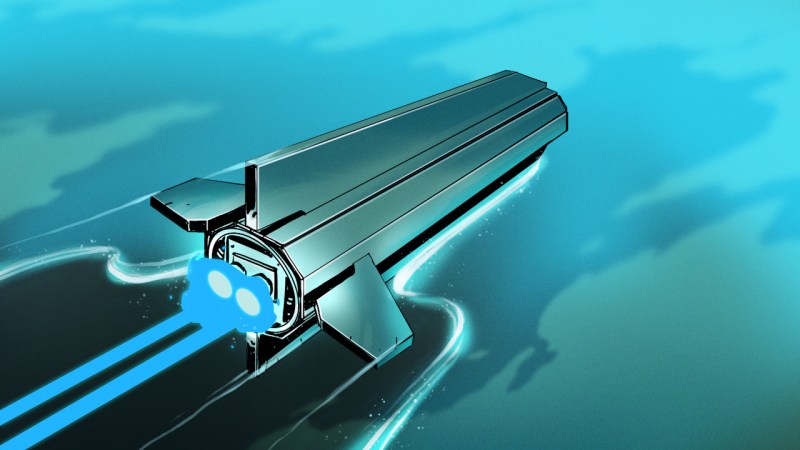
There’s little about building spacecraft that anyone would call simple. But there’s at least one element of designing a vehicle that will operate outside the Earth’s atmosphere that’s fairly easier to handle: aerodynamics. That’s because, at the altitude that most satellites operate at, drag can essentially be ignored. Which is why most satellites look like refrigerators with solar panels and high-gain antennas attached jutting out at odd angles.
But for all the advantages that the lack of meaningful drag on a vehicle has, there’s at least one big potential downside. If a spacecraft is orbiting high enough over the Earth that the impact of atmospheric drag is negligible, then the only way that vehicle is coming back down in a reasonable amount of time is if it has the means to reduce its own velocity. Otherwise, it could be stuck in orbit for decades. At a high enough orbit, it could essentially stay up forever.
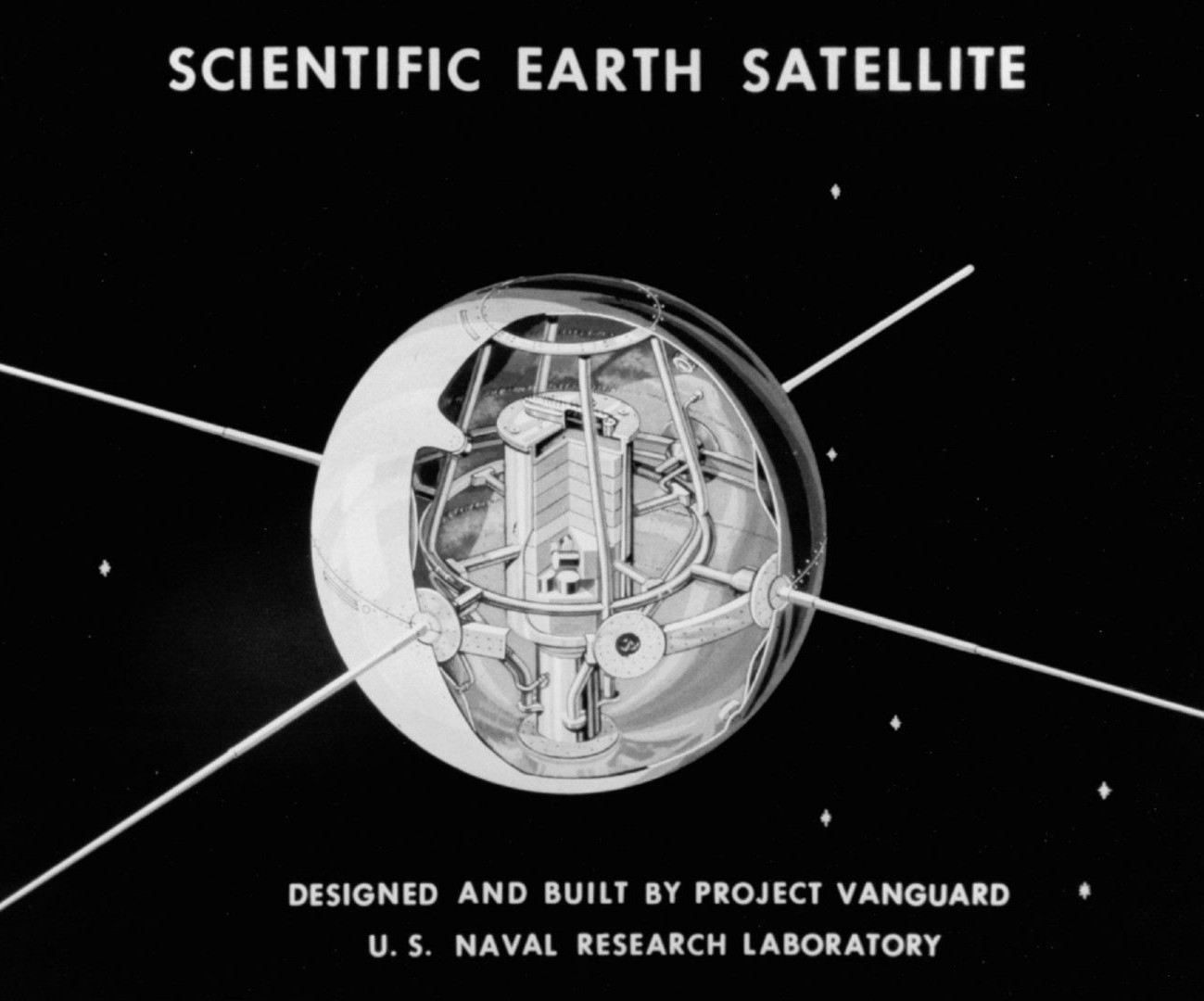
There was a time when that kind of thing wasn’t a problem. It was just enough to get into space in the first place, and little thought was given to what was going to happen in five or ten years down the road. But today, low Earth orbit is getting crowded. As the cost of launching something into space continues to drop, multiple companies are either planning or actively building their own satellite constellations comprised of thousands of individual spacecraft.
Fortunately, there may be a simple solution to this problem. By putting a satellite into what’s known as a very low Earth orbit (VLEO), a spacecraft will experience enough drag that maintaining its velocity requires constantly firing its thrusters. Naturally this presents its own technical challenges, but the upside is that such an orbit is essentially self-cleaning — should the craft’s propulsion fail, it would fall out of orbit and burn up in months or even weeks. As an added bonus, operating at a lower altitude has other practical advantages, such as allowing for lower latency communication.
VLEO satellites hold considerable promise, but successfully operating in this unique environment requires certain design considerations. The result are vehicles that look less like the flying refrigerators we’re used to, with a hybrid design that features the sort of aerodynamic considerations more commonly found on aircraft.
ESA’s Pioneering Work
This might sound like science fiction, but such craft have already been developed and successfully operated in VLEO. The best example so far is the Gravity Field and Steady-State Ocean Circulation Explorer (GOCE), launched by the European Space Agency (ESA) back in 2009.
To make its observations, GOCE operated at an altitude of 255 kilometers (158 miles), and dropped as low as just 229 km (142 mi) in the final phases of the mission. For reference the International Space Station flies at around 400 km (250 mi), and the innermost “shell” of SpaceX’s Starlink satellites are currently being moved to 480 km (298 mi).
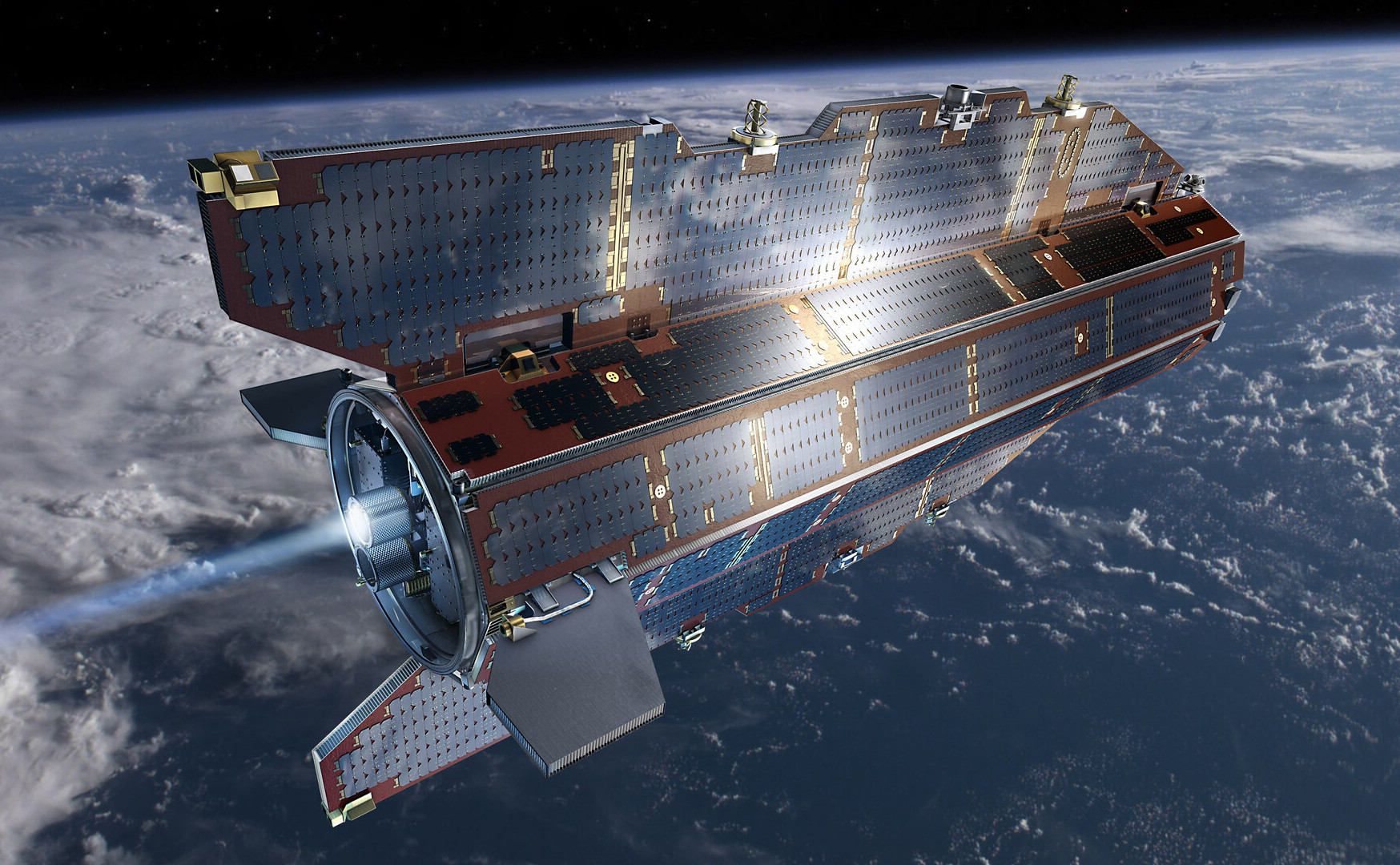 Given the considerable drag experienced by GOCE at these altitudes, the spacecraft bore little resemblance to a traditional satellite. Rather than putting the solar panels on outstretched “wings”, they were mounted to the surface of the dart-like vehicle. To keep its orientation relative to the Earth’s surface stable, the craft featured stubby tail fins that made it look like a futuristic torpedo.
Even with its streamlined design, maintaining such a low orbit required GOCE to continually fire its high-efficiency ion engine for the duration of its mission, which ended up being four and a half years.
In the case of GOCE, the end of the mission was dictated by how much propellant it carried. Once it had burned through the 40 kg (88 lb) of xenon onboard, the vehicle would begin to rapidly decelerate, and ground controllers estimated it would re-enter the atmosphere in a matter of weeks. Ultimately the engine officially shutdown on October 21st, and by November 9th, it’s orbit had already decayed to 155 km (96 mi). Two days later, the craft burned up in the atmosphere.
JAXA Lowers the Bar
While GOCE may be the most significant VLEO mission so far from a scientific and engineering standpoint, the current record for the spacecraft with the lowest operational orbit is actually held by the Japan Aerospace Exploration Agency (JAXA).
In December 2017 JAXA launched the Super Low Altitude Test Satellite (SLATS) into an initial orbit of 630 km (390 mi), which was steadily lowered in phases over the next several weeks until it reached 167.4 km (104 mi). Like GOCE, SLATS used a continuously operating ion engine to maintain velocity, although at the lowest altitudes, it also used chemical reaction control system (RCS) thrusters to counteract the higher drag.
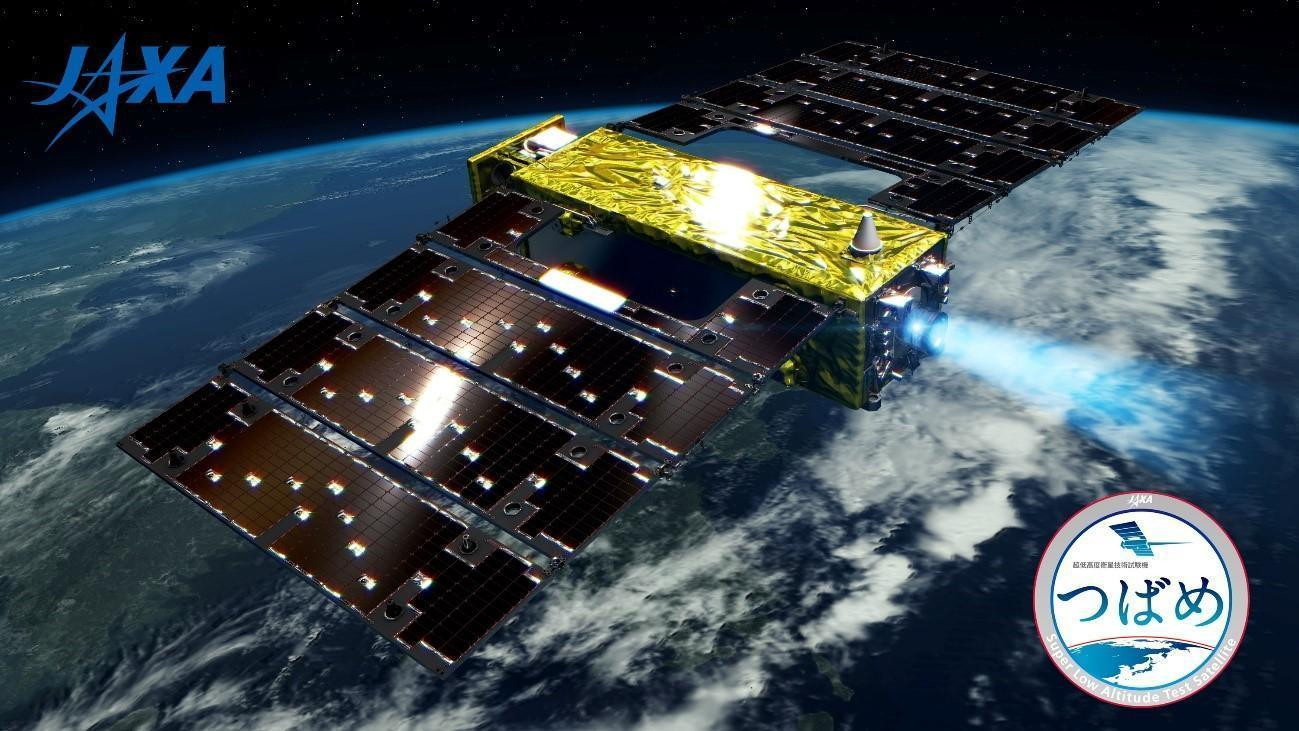
SLATS was a much smaller vehicle than GOCE, coming in at roughly half the mass. It also carried just 12 kg (26 lb) of xenon propellant, which limited its operational life. It also utilized a far more conventional design than GOCE, although its rectangular shape was somewhat streamlined when compared to a traditional satellite. Its solar arrays were also mounted in parallel to the main body of the craft, giving it an airplane-like appearance.
The combination of lower altitude and higher frontal drag meant that SLATS had an even harder time maintaining velocity than GOCE. Once its propulsion system was finally switched off in October 2019, the craft re-entered the atmosphere and burned up within 24 hours. The mission has since been recognized by Guinness World Records for the lowest altitude maintained by an Earth observation satellite.
A New Breed of Satellite
As impressive as GOCE and SLATS were, their success was based more on careful planning than any particular technological breakthrough. After all, ion propulsion for satellites is not new, nor is the field of aerodynamics. The concepts were simply applied in a novel way.
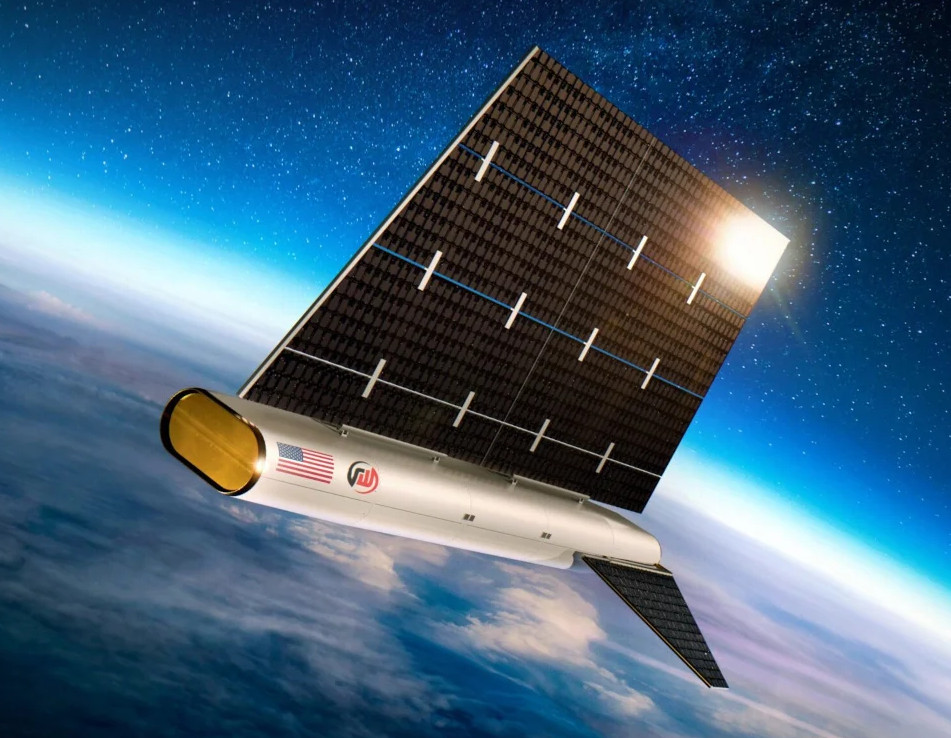 But there exists the potential for a totally new type of vehicle that operates exclusively in VLEO. Such a craft would be a true hybrid, in the sense that its primarily a spacecraft, but uses an air-breathing electric propulsion (ABEP) system akin to an aircraft’s jet engine. Such a vehicle could, at least in theory, maintain an altitude as low as 90 km (56 mi) indefinitely — so long as its solar panels can produce enough power.
Both the Defense Advanced Research Projects Agency (DARPA) in the United States and the ESA are currently funding several studies of ABEP vehicles, such as Redwire’s SabreSat, which have numerous military and civilian applications. Test flights are still years away, but should VLEO satellites powered by ABEP become common platforms for constellation applications, they may help alleviate orbital congestion before it becomes a serious enough problem to impact our utilization of space.












I’m curious about whether these satellites experience micro-gravity. I keep thinking that they are kind of not orbiting, but kind of are? Maybe someone with a better understanding of the math can chime in.
I don’t have the math, but I’ve played KSP so what the heck, I’ll take a stab at it (the aerospace equivalent of I stayed at a holiday inn last night ;) ). I’d think the only possible way they wouldn’t be in micro-gravity is if the thrust to keep it in orbit exceeds just keeping it in orbit which should mean that it’s orbit is rising and probably be undesirable.
I briefly pondered if they were remotely low enough to worry about aerodynamic lift, but google tells me the X-15 got high enough it had to rely on RCS for attitude control and it’s peak altitude was way below the SLATS'(SLATS’s? ¯_(ツ)_/¯) 167.4 km at 31km.
“I’d think the only possible way they wouldn’t be in micro-gravity is if the thrust to keep it in orbit exceeds just keeping it in orbit which should mean that it’s orbit is rising” That sounds like the opposite of right.
Hah I reread the sentence a couple times when I typed it so that’s fair let me say the same thing but flip some verbal negatives: They should be in micro-gravity (/free-fall/weightless) unless the thrust exceeds what is necessary to maintain the orbital velocity for their target height. If it does exceed that speed, the orbit will grow increasingly elliptical as the heights of apogee/perigee is changed which defeats the purpose of using thrust to maintain a low orbit.
Google’s hallucinating things again. The X-15 regularly flew above 90 km and its highest flight reached 108 km. I believe that 31 km figure is the altitude at which it reached its highest speed.
By definition of the orbit, the object is always is at microgravity, because the centrifugal force of the motion equals the centripetal atraction of gravity.
Orbiting – at least in the ‘free fall/microgravity’ sense – isn’t about altitude. It’s about speed. Orbital speed for stuff in LEO is basically sqrt(g*R) – are they moving at that speed? Then they’re in free fall. It’s just “does the centrifugal term cancel gravity in my rotating frame.” Airplanes could be in orbit – they’d just have to be going oh, Mach 23 or something.
If the satellite is continuously thrusting, yes, the inside of the satellite will be in free fall.
Periodic thrusts would be different because of the overall dynamics. That’d be more interesting. Imagine the inside is vacuum, and after launch you pushed off and centered yourself in the middle. You’d slowly drift to the top of the satellite (so very low ‘negative’ gravity – because it’s being slowed and therefore falling and you are not) and then suddenly it’d seem like you’d be jerked away toward the bottom where you started (bigger ‘positive’ gravity).
The zero-gravity airplanes like the “vomit comet”, or even a Cessna 172 in parabolic flight, can be considered “in orbit” during the free-fall phase — they really are at the apogee of an orbit.
It’s just that you can’t complete that orbit because there’s a great big rock blocking your way to perigee. Failure to perform a course correction (atmospheric reentry procedure) shortly after apogee will result in extreme lithobraking and loss of the hull.
Sure, although generally I would consider an orbit something that can, you know, go around a planetary body rather than through it.
Otherwise you could just say you’re in orbit every time you jump. I mean, you are (and you do experience free fall and zero g, that’s…. what falling is) it’s just that big ole rock got in the way.
You can orbit a Lagrange point, and there is no planet there at all.
Yeah, that’s a grand idea: burn up orders of magnitude more sattelites and inject even more crap into the upper atmosphere, it’s not like we f’d up things up there already (hi, ozone layer….). I think we are doing ourselves quite a disfavour, to put it mildly. Life has come back after all sorts of things, it has, in general, not included the most widespread genera afterwards…
So fewer bugs? Bonus! Oh, you were talking about people? Oh honey.
There is already research coming out that adding many hundreds of tons of particulate aluminum and steel to the upper atmosphere on a regular basis isn’t a great idea.
Can you expand on the “research coming out”, provide a link, or clarify what the problem is?
The mass of the atmosphere is on the order of 5×10^18 kg. Hundreds of tons of anything does not seem likely to have a major impact. Also meteors are estimated to add more than 10000000 kg per year of vaporized metals and carbon to the upper atmosphere whether we like it or not.
https://pmc.ncbi.nlm.nih.gov/articles/PMC10614211/ covers most of it.
Primary concern is ozone depletion, secondary concern is “dunno, might do something weird up there”.
Speaking of “up there”, meteors burn up at low-ish altitudes, don’t hang around for long, and tend not to have much of the metals that cause problems like aluminium, lithium, etc while these satellites do the opposite.
It doesn’t matter because Musk, Bezos, that Chinese dude et al are just going to keep tossing as many satellites as fast as they can up there. Invest in sunscreen or skin cancer clinics.
Maybe the rules will change to “dump in ocean” (aka probably someone’s house”) rather than the “safer” burn up in atmosphere.
Isn’t ‘dump in ocean’ basically already the rule? Point Nemo?
They kinda do both. The aim is to de-orbit over the ocean, but also burn up so large bits don’t make it down. Burning up is also good if it comes in uncontrolled.
Doesn’t always work, like when NASA put a battery thru some woman’s house last year.
The various agencies are more concerned with keeping space clean (well, the useful orbits anyway) rather than the integrity of your roof.
coincidence? today’s xkcd addresses this probem: https://xkcd.com/3197/
Could a lifting body shaped VLEO satellite use it’s shape to “skip” of the atmosphere to save on fuel/energy? You know fall, skip and thrust, climb, fall, skip and thrust and repeat or would drag from the skip eat up any possible gains?
That sounds like a hypersonic missile…
And, as a bonus, they’ll be less likely to fail due to anomalous drag during a solar storm (cough Starlink *cough**cough*).
Kessler syndrome incoming I guess…
CRASH Clock Measures Dangerous Overcrowding in Low Earth Orbit
One solar storm could trigger a catastrophic collision in orbit
21 Jan 2026
https://spectrum.ieee.org/kessler-syndrome-crash-clock
Across all Low-Earth Orbit mega constellations, calculations show that a “close approach”, defined as two satellites passing within less than 1 kilometer of each other, happens about once every 22 seconds. For Starlink alone, such encounters occur roughly every 11 minutes. In addition, each of Starlink’s thousands of satellites must carry out an average of 41 maneuvers each year to avoid collisions with other objects in orbit.
An Orbital House of Cards: Frequent Megaconstellation Close Conjunctions
8 Jan 2026
https://arxiv.org/abs/2512.09643
Here we propose a new metric, the CRASH Clock, that measures such stress in terms of the timescale for a possible catastrophic collision to occur if there are no satellite manoeuvres or there is a severe loss in situational awareness. Our calculations show the CRASH Clock is currently 5.5 days, which suggests there is limited time to recover from a wide-spread disruptive event, such as a solar storm. This is in stark contrast to the pre-megaconstellation era: in 2018, the CRASH Clock was 164 days.
In my novel “Zen’s Solution,” Earth becomes dependent on VLEO satellites and when the Yellowstone Supervolcano erupts, it destroys entire network consisting of thousands of satellites in a manner of days. The eruption and loss of the Network leads to the inevitable collapse of civilization.
There are already many “shooting stars” coming from the swarm of satellites in LEO orbit, the light show from VLEO was still missing. We live in interesting times.