
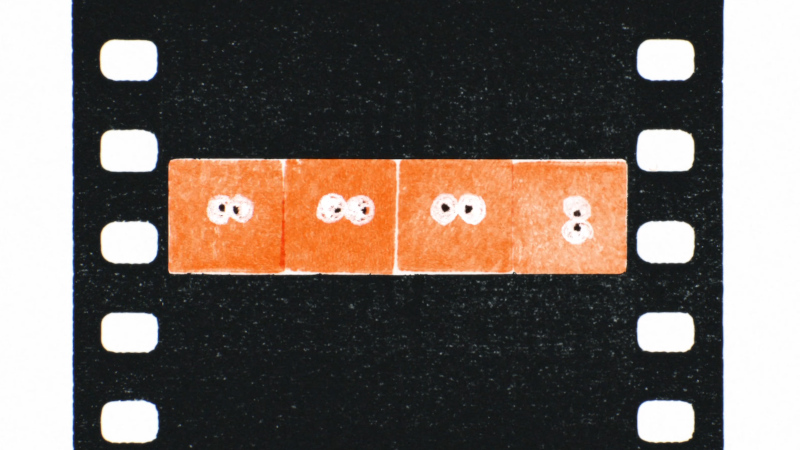
If you want to play with the coolest kids on the block when it comes to photography, you have to shoot film. Or so say the people who shoot film, anyway. It is very true though that the chemical medium has its own quirks and needs a bit of effort in a way digital cameras don’t, so it can be a lot of fun to play with.
It’s expensive though — film ain’t cheap, and if you don’t develop yourself there’s an extra load of cash. What if you could get more photos on a roll? It’s something [Japhy Riddle] took to extremes, creating a fifth-frame 35mm camera in which each shot is a fifth the size of the full frame.
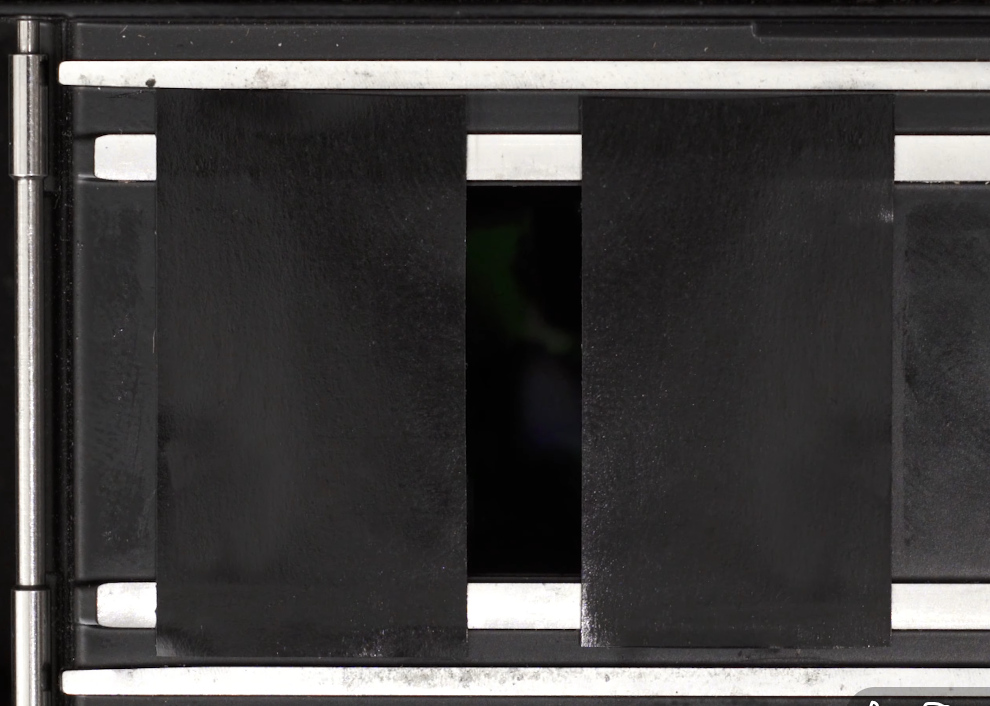
Standard 35mm still film has a 24x36mm frame, in modern terms not far off the size of a full-size SD card. A standard roll of film gives you 36 exposures. There are half-frame cameras that split that frame vertically to give 72 exposures, but what he’s done is make a quarter-frame camera.
It’s a simple enough hack, electrical tape masking the frame except for a vertical strip in the middle, but perhaps the most interesting part is how he winds the film along by a quarter frame. 35mm cameras have a take-up reel, you wind the film out of the cartridge bit by bit into it with each shot, and then rewind the whole lot back into the cartridge at the end. He’s wound the film into the take-up reel and it winding it back a quarter frame at a time using the rewind handle, for which we are guessing he also needs a means to cock the shutter that doesn’t involve the frame advance lever.
We like the hack, though we would be worried about adhesive tape anywhere near the shutter blind on an SLR camera. It delivers glorious widescreen at the cost of a bit of resolution, but as an experimental camera it’s in the best tradition. This is one to hack into an unloved 1970s snapshot camera for the Shitty Camera Challenge!












So, fifth-frame, or quarter-frame?
Bravo!! Fun hack, and I really like the stop motion aspect of his work.
It was also a pleasure and to watch a video about somebody’s project and passion that doesn’t start with the lame, “Hey guys, today I’m going to tell you…”.
This reminds me of VistaVision that Paramount developed back in the 1950s. It basically turn the 35mm film on its side to get the widescreen effect. It only lasted for about 7 years, then fell out of favor. However, the first three Star Wars films were shot using VistaVision
https://en.wikipedia.org/wiki/VistaVision
Two very recent films were filmed on VistaVision and still on my backlog:
The Brutalist
One Battle After Another
“What if you could get more photos on a roll?”
But now you have to get the images off the developed film. If you do your own enlargements with photo paper you have saved nothing post-film. If you scan your negatives, you are trading time and resolution quality. Is it worth it? Not in my opinion; just go full digital.
IMO: Photographers still in film-land really are not trying to save on the film & processing. Film photography in 2026 is about the art and creativity delivered by the older mechanical cameras.
Fujifilm example: 36 exposure of Fuji 200 + C41 developing + scanning is in the $35 range, or approximately $1 per image and no compromises.
Being a techie, I was an early adopter of digital: my first being a Kokak DC40 with a resolution of 756×504. My daughter in college at the time claimed it: It was big and heavy but she did not care. Next, my little Ricoh RDC-1 was fun but not too useful for anything beyond amusement… 768×576 pixels is a bit low-resolution.
The digital I took with me to London was a Canon Powershot S10 with a 2.1 Megapixel CCD (1600×1200). From that trip on, I forgot about film and moved on up to a Canon Powershot S60 5 MP (2592×1944) and then I got somewhat serious with a Sony Cybershot DSC-717 5 MP (2560×1920 CCD) with an outstanding Carl Zeiss 38mm to 190mm zoom.) I went on to buy many more digital cameras such as a 12MP Nikon, etc.
But while I have a pro-sumer $1200+ digital camera in a to-go bag with extra batteries and filters it very RARELY get used as the cameras in my Pixel+ smartphone is simply fantastic. The Pixel is used all the time as it us always with me or nearby. Non-professional photography is completely satisfied by the Pixel.
At 15, I was doing B/W portraits with an old $15 wooden Grapflex Speed Graphic and sheet film; developed in the bathroom closet; I did contact prints in the bathroom at night.
At 20, I was doing B/W and E100 at the base hobby lab from my Pentax 35mm.
60 years later, I have a dedicated Win-11 workstation with a dedicated Epson 8×10 color inkjet and a legitimate Adobe Photoshop environment.
If the 15 year old me could see my setup today, he would say, “Far Out.”
I also went from film to digital to phone, also got a color printer with film paper. But now I’m back to film. My reason is that you can do film at home, not because is more practical but because you have fun, because it is you who make the picture, because you see it happening, because you guide it. Is like you love good food and you cook it, even if you can go to a restaurant and get fancier food, or going for a night hike to find a place out of the city to see the stars instead of searching pictures of stars on the web. Cheers.
View-Master cameras managed to get 138 pictures on a 36 exposure roll of 35mm film. Yes, that is 69 stereo pairs.
The major issue is the grain size. That’s a problem with all stereo cameras, since people look carefully and critically at the images, rather than just glance at yet-another-flattie image.
I think it would be quite interesting to learn how many film vs. digital cameras the average consumer owned before their smartphones became their go-to for taking pictures; limiting survey participants to those having spent a significant portion of their time in both eras. I wonder if any interesting trends would appear, especially if acquisition were plotted by year or age.