
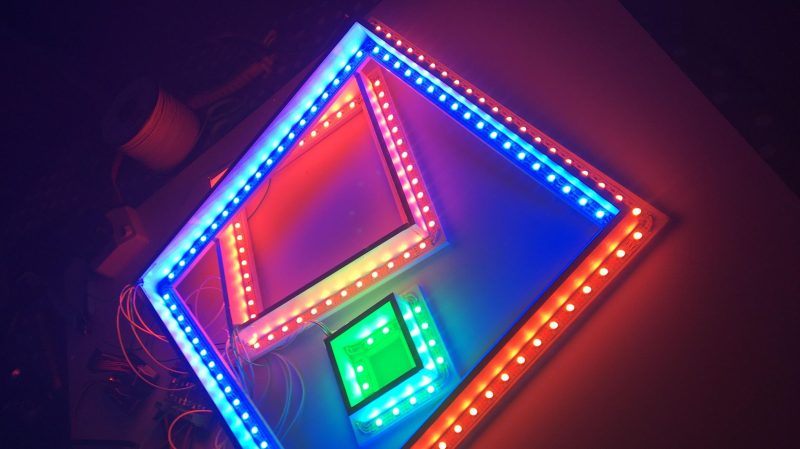
Anyone can string up some LED string lights in a space with mixed results. However, if you want to create a lighting environment that’s classy and stylish, it takes a little more finesse. [ipad.bendavid] has a great example of this, with a rather tidy architectural LED installation.
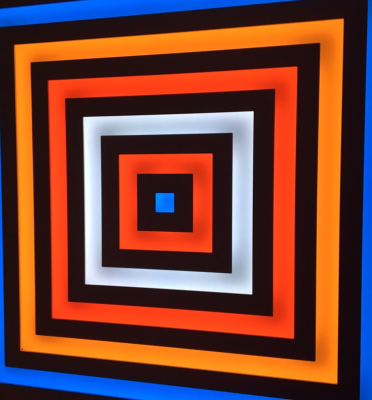
The electronic side of things is relatively straightforward. There’s an ESP32 running the show, commanding the colors for 928 individually-addressable WS2812 RGB LEDs. It uses the WebSocket API for real time control, integrates with Home Assistant, and even offers audio reactive lighting modes with the aid of an INMP441 I2S audio input module. A hefty 5 V, 60 A power supply ensures the LEDs are never short of juice. There was also careful attention paid to power distribution to avoid any dim spots or other issues.
Where it gets really cool, though, is the attention paid to the construction of the installation. The LED strips are installed in concentric square frames, which block light in specific areas to create a nice square pattern, with the LEDs facing the wall they’re installed on rather than projecting out to the viewer. This hides the strips themselves and eliminated the need for diffusers which can be a pain to get right.
Overall, the build is a pleasing one that plays with light and darkness and looks rather stylish in a way so many LED installs don’t. If you’re cooking up your own neat glowable projects, you know we’d love to see them on the tipsline.












This is really well thought out and done. Inspiring, I need to do something similar.
Except for the electric design that wants a 60÷ amp power supply. Not to mention its hailed as great design with 2 pictures and a page and a half
Yea and I dont buy the second picture even facing up you will have Hotspot and flare … crap design fake results
Yeah the 12V version would have been better. I think I saw a 24V version aswell but I am unsure if the protocolls are compatible.
What, now you want a clickbait video with AI-slop narration and faked thumbnail? There’s no pleasing HAD commenters.
LEDS have always opened possibilities, especially DC powered.