
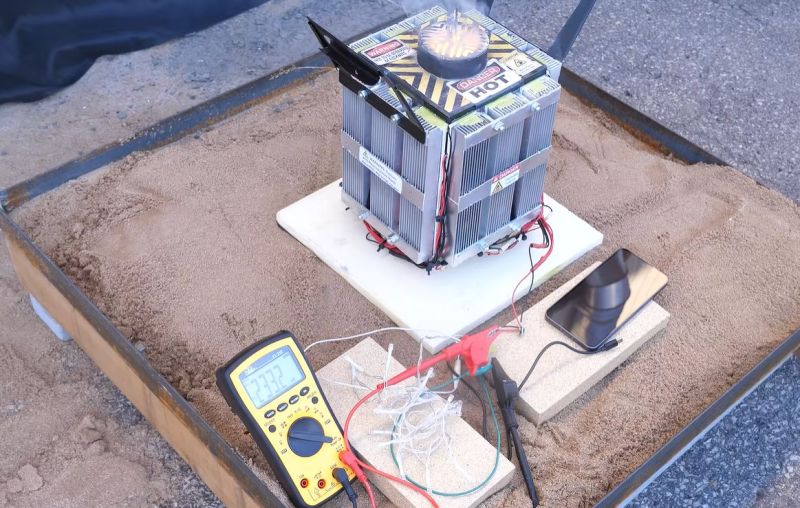
 Thermite is an amazing material, using mostly easily obtainable ingredients like aluminium and iron(III) oxide in a redox reaction to create a rather spectacular amount of thermal energy in very little time. In addition to its welcome use in e.g. welding railroad tracks, thermite has also seen use by the folk over at [The Thought Emporium] for less conventional uses like heating up hotdogs and more recently charging a cellphone.
The rough idea is basically inspired by the radioisotope generators that power for example all the rovers currently scurrying about on the surface of Mars, not to mention the venerable Voyager 1 and 2 spacecraft on their journey through Deep Space.
Of course, the nice thing about plutonium or similar isotopes in an RTG is that they release their energy in a rather slow and controlled fashion, whereas thermite tends to be slightly more violent and of a significantly shorter duration. In short, much like how using the immense power in a lightning strike is highly impractical, is there any way to make using thermite’s redox reaction for electricity production at all practical?
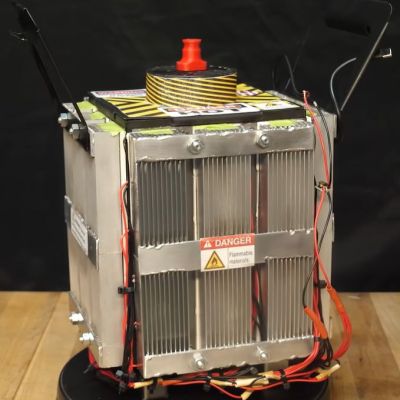
The core of this thermite generator uses a similar thermoelectric cooling (TEC) plate, also known as a Peltier element. After spending most of the video discussing why RTGs are far superior, 300 grams of thermite is loaded into the chamber of this thermite generator. It then took ten minutes for enough heat to build up, and produce maybe a Watt of power. Although they managed to have a slow enough thermite reaction to give the TECs some time to churn out some power, ultimately its probably the most flashy and least productive way to charge up your phone.











Please be kind and respectful to help make the comments section excellent. (Comment Policy)