[Justin] is a bit of an astronomy geek, but that doesn’t mean he’s always prepared for celestial phenomena. When he realized the May 20th annular eclipse was only a few days away, [Justin] dropped everything, built a pinhole solar viewer, and drove three hours for the best view of the eclipse. He learned something watching the eclipse; these sort of things sneak up on you, and you really need to plan ahead if you want to truly enjoy the music of the celestial spheres. After the eclipse, [Justin] set to work building a filter to watch a Venusian eclipse with his telescope.
If [Justin] pointed his 8 inch Schmidt–Cassegrain directly at the sun, he would most likely damage the optics in his ‘scope, burn several retinas, and other very, very bad things. The best way to view the Sun with a telescope is with an expensive Hydrogen alpha or a general solar filter, but these are expensive and the clock was rapidly ticking down to the transit of Venus. After reading that blocking most of the light from coming into the ‘scope, [Justin] built an aperature reducer out of a few bits of foam board, foil, and dark fleece.
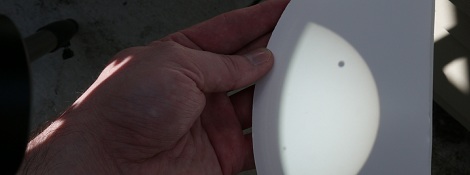
How did viewing the transit with a telescope turn out? Well, if you don’t compare [Justin]’s pictures to the multi-million dollar toys NASA and astronomers have, pretty good. It’s a very good job considering the entire foam-core aperture reducer was built in the course of an evening.
While it may be a little early to be planning for the next Venusian transit in the year 2117, there will be a transit of Mercury on May 9, 2016. All [Justin] has to do is remember when it will happen.