One Hundred Years Of Telly

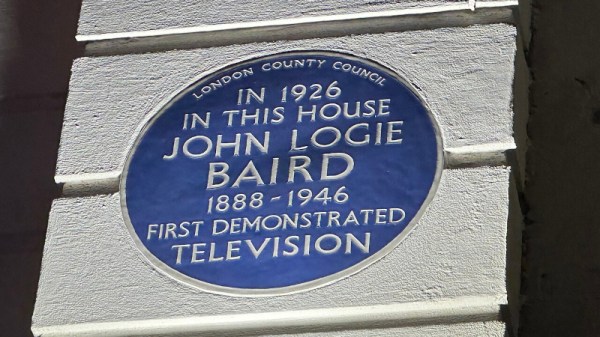
Today marks an auspicious anniversary which might have passed us by had it not been for [Diamond Geezer], who reminds us that it’s a hundred years since the first public demonstration of television by John Logie Baird. In a room above what is today a rather famous Italian coffee shop in London’s Soho, he had assembled a complete mechanical TV system that he demonstrated to journalists.

Television is one of those inventions that owes its genesis to more than a single person, so while Baird was by no means the only one inventing in the field, he was the first to demonstrate a working system. With mechanical scanning and just 30 lines, it’s hardly HD or 4K, but it does have the advantage of being within the reach of the constructor.

Perhaps the saddest thing about Baird and his system is that while he was able to attract the interest of the BBC in it, when the time came for dedicated transmissions at a higher resolution, his by then partly mechanical system could not compete and he faded into relative obscurity. Brits instead received EMI’s 405 line system, which persisted until the very start of the 1980s, and eventually the German PAL colour system in the late 1960s.

So head on down to Bar Italia if you can to raise a coffee to his memory, and should you wish to have a go at Baird-style TV for yourself, then you may need to print yourself a disk.

Header image: Matt Brown, CC BY 2.0.

Television Built From A Tin Can

A tin can and string telephone just doesn’t impress the kids anymore. Luckily, now you can  turn that tin can telephone into a television, as [aussie_bloke] over on the Narrow-Bandwidth Television forum showed us.

[aussie_bloke]’s tin can TV is a mechanical television, a TV where the scanning lines of a CRT is replaced with a spinning disk with very small holes.(if you have a better analogy in this day of LCDs, tell us). Instead of the usual Nipkow disk, [aussie_bloke] used a small tin can.

The image displayed on this TV isn’t very large; there are only 30 scan lines and the pattern of the holes results in a display 10.5mm in width by 7.85mm high. Basically, this display is microscopic but it’s still very impressive.

Sure, you may not be able to sit your kids down in front of this can-powered TV and let them watch Yo Gabba Gabba for hours on end, but it’s more than enough to impress those technically minded kids.

You can check out a video of [aussie_bloke]’s can TV after the break. Thanks [gary] for sending this in.

Continue reading “Television Built From A Tin Can”

Hackaday Links: January 16, 2012

Finally the 13-year-old on Battlefield 3 will get their comeuppance

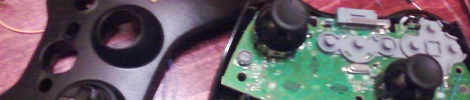
[Shawn] sent in his fully adjustable auto-fire mod for an XBox360 controller. It’s pretty simple – just an ATtiny85 soldered to a button with a pot to adjust the rate and switch to turn it on and off. It could have been done with a 555, but this is good enough.

Now one for the PS3 bronies

[Capt-Nemo] loves and tolerates everyone so he modded his 60 Gig PS3 with a bunch of LEDs to display Rainbow Dash’s cutie mark. Yes, it’s from My Little Pony. Don’t judge us. Watch the demo video instead.

How do you organize resistors?

A while ago we saw a neat way to store resistors in a piece of foam with a grid according to the first and third color bands. [Greg] did it another way that just puts a label on a piece of foam. Can you think of a better way?

It’s not a synthesizer, but is it fake?

A lot of people have been sending in this video of [Stephen] turning his kitchen into a synthesizer. We’re thinking he turned a bunch of bowls and cans into an MPC / MIDI controller at best, or it was all done in post. We’ll let our readers duke it out in the comments.

Blinky things spinning very fast

A gracious Hack a Day reader sent in a mechanical television demo he found during late night intertube browsing. We know it’s from a 1992 episode of Computer Club that aired in Germany. It’s four rotating bars of 232 LEDs that will display a standard TV signal. We think it might be time for an RGB LED version of this. Any takers?