Mesh Network Telephony Over Bluetooth On Android Phones

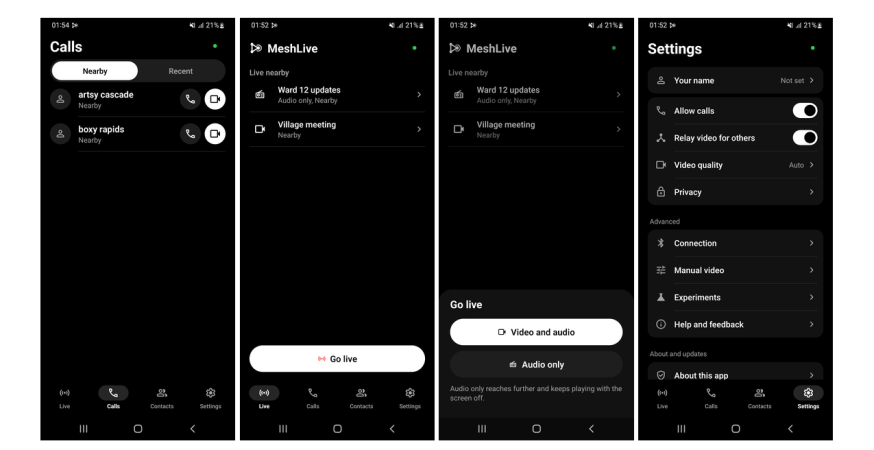
Telephony is a bit of a mixed bag. On the one hand, being able to talk to people in far off places is kind of neat, at least in theory. On the other hand, you’re usually reliant on a centralized network, which isn’t ideal to the mindset of most hackers.[Gautam]’s MeshLive project deals with that last one, offering a decentralized mesh network solution based on Bluetooth for Android phones that can handle both voice and video.

Rather than relying on dedicated hardware, this particular mesh piggybacks on your phone, and exists only as an Android application. Calls are end-to-end encrypted for both voice and video — though two-way video calling is still experimental. More testing has gone into video broadcasting, where a stream goes out one-way. The capability is available for voice, as well.

Each user has a unique identifier that can be scanned to create contacts, but it isn’t otherwise clearly identifiable to everybody. You’ll only appear with a random name that changes every 15 minutes to other users in range who aren’t your contacts. Range is of course the Achilles heel of this project, since it’s using the Bluetooth hardware of ordinary smartphones. It’s possible to extend the range of Bluetooth significantly with the right hardware, but we imagine most folks aren’t carrying directional antennas around with them. While every phone does forward the signal to as many others as it can, it can only do so for about 20 meters.

Of course LoRa remains the protocol of choice for mesh networking, though it’s normally used for text messages only. We have seen voice packets over LoRa, but anything LoRa requires dedicated hardware while this only requires an app.

Continue reading “Mesh Network Telephony Over Bluetooth On Android Phones” →
Retrotechtacular: Ma Bell’s Advanced Mobile Phone Service (AMPS)

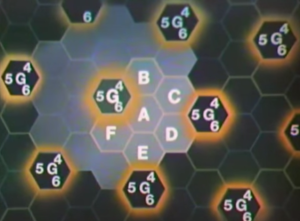
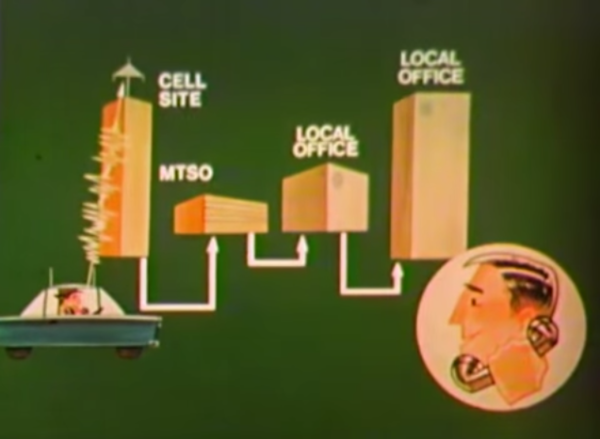
This gem from the AT&T Archive does a good job of explaining the first-generation cellular technology that AT&T called Advanced Mobile Phone Service (AMPS). The hexagon-cellular network design was first conceived at Bell Labs in 1947. After a couple of decades spent pestering the FCC, AT&T was awarded the 850MHz band in the late 1970s. It was this decision coupled with the decades worth of Bell System technical improvements that gave cellular technology the bandwidth and power to really come into its own.

AT&T’s primary goals for the AMPS network were threefold: to provide more service to more people, to improve service quality, and to lower the cost to subscribers. Early mobile network design gave us the Mobile Service Area, or MSA. Each high-elevation transmitter could serve a 20-mile radius of subscribers, a range which constituted one MSA. In the mid-1940s, only 21 channels could be used in the 35MHz and 150MHz band allocations. The 450MHz band was introduced in 1952, provided another 12 channels.

repeated channelsThe FCC’s allocation opened a whopping 666 channels in the neighborhood of 850MHz. Bell Labs’ hexagonal innovation sub-divided the MSAs into cells, each with a radius of up to ten miles.

The film explains quite well that in this arrangement, each cell set of seven can utilize all 666 channels. Cells adjacent to each other in the set must use different channels, but any cell at least 100 miles away can use the same channels. Furthermore, cells can be subdivided or split. Duplicate frequencies are dealt with through the FM capture effect in which the weaker signal is suppressed.

Those Bell System technical improvements facilitated the electronic switching that takes place between the Mobile Telephone Switching Office (MTSO) and the POTS landline network. They also realized the automatic control features required of the AMPS project, such as vehicle location and automatic channel assignment. The film concludes its lecture with step-by-step explanations of inbound and outbound call setup where a mobile device is concerned.

Continue reading “Retrotechtacular: Ma Bell’s Advanced Mobile Phone Service (AMPS)” →