Skip to content
Logo

Hackaday

  • Home
  • Blog
  • Hackaday.io
  • Contests
  • Submit
  • About

physical feedback

1 Articles

Putting Wind In VR By Watching The Audio Signal

December 14, 2017 by Donald Papp 11 Comments

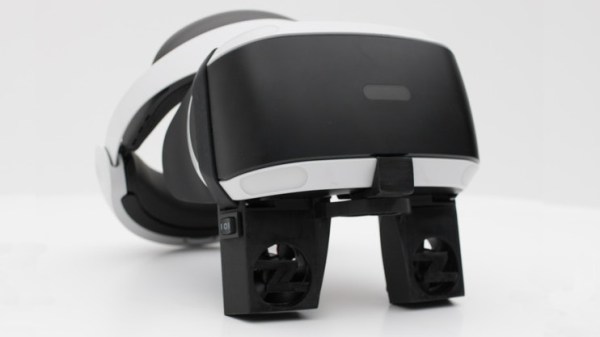
A simple way to integrate physical feedback into a virtual experience is to use a fan to blow air at the user. This idea has been done before, and the fans are usually the easy part. [Paige Pruitt] and [Sean Spielberg] put a twist on things in their (now-canceled) Kickstarter campaign called ZephVR, which featured two small fans mounted onto a VR headset. The bulk of their work was in the software, which watches the audio signal for recognizable “wind” sounds, and uses those to turn on one or both fans in response.

The benefit of using software to trigger fans based on audio cues is that the whole system works independently of everything else, with no need for developers and software to build in support for your project, or to use other middleware. Unfortunately the downside is that the results are only as good as the ability of software to pick the right sounds and act on them. Embedded below is a short video showing a test in action.

Continue reading “Putting Wind In VR By Watching The Audio Signal” →

Posted in Virtual RealityTagged 3d printed, audio, feedback, kickstarter, physical feedback, pivot, virtual reality, vr, wind, zephvr

Search

Never miss a hack

Follow on facebook Follow on twitter Follow on youtube Follow on rss Contact us

Subscribe

If you missed it

  • The Sextant: Navigating The Old Way

    25 Comments
  • EV Batteries Are Proving Hardier Than Expected

    58 Comments
  • DeviceTree For Hackers: Intro

    21 Comments
  • Radon Active

    30 Comments
  • I Think We Should See Other SBCs

    76 Comments
More from this category

Our Columns

  • An INA219 board with a QWIIC connector and "female barrel jack to male barrel jack" cable soldered on. the qwiic end is plugged into the side of the Blepis PDA, with the screen showing a device found on the 0x40 address

    Just Use QWIIC Already

    13 Comments
  • FLOSS Weekly Episode 883: Telnet Broke Us

    3 Comments
  • CHIP 8: The Pong Game’s Afoot!

    8 Comments
  • How CRISPR Could Mark Mutated Cancer Cells For Termination

    11 Comments
  • UDP Broadcasting Meets The More Focused Multicasting

    8 Comments
More from this category

Search

Never miss a hack

Follow on facebook Follow on twitter Follow on youtube Follow on rss Contact us

Subscribe

If you missed it

  • The Sextant: Navigating The Old Way

    25 Comments
  • EV Batteries Are Proving Hardier Than Expected

    58 Comments
  • DeviceTree For Hackers: Intro

    21 Comments
  • Radon Active

    30 Comments
  • I Think We Should See Other SBCs

    76 Comments
More from this category

Categories

Our Columns

  • An INA219 board with a QWIIC connector and "female barrel jack to male barrel jack" cable soldered on. the qwiic end is plugged into the side of the Blepis PDA, with the screen showing a device found on the 0x40 address

    Just Use QWIIC Already

    13 Comments
  • FLOSS Weekly Episode 883: Telnet Broke Us

    3 Comments
  • CHIP 8: The Pong Game’s Afoot!

    8 Comments
  • How CRISPR Could Mark Mutated Cancer Cells For Termination

    11 Comments
  • UDP Broadcasting Meets The More Focused Multicasting

    8 Comments
More from this category

Recent comments

  • Joshua on A Desktop OS For The ESP32-P4
  • Joseph Eoff on A Desktop OS For The ESP32-P4
  • dremu on A Desktop OS For The ESP32-P4
  • mhier48 on A Desktop OS For The ESP32-P4
  • GEORGE PEARSON on A Desktop OS For The ESP32-P4
  • GEORGE PEARSON on A Desktop OS For The ESP32-P4
  • GEORGE PEARSON on A Desktop OS For The ESP32-P4
  • Bart Zuidgeest on Baochip-1x: A Mostly-Open, 22nm SoC For High Assurance Applications
  • Bart Zuidgeest on Baochip-1x: A Mostly-Open, 22nm SoC For High Assurance Applications
  • Bob A. on Hacking Meta’s Smart Glasses
Logo
  • Home
  • Blog
  • Hackaday.io
  • Video
  • Submit A Tip
  • About
  • Contact Us

Never miss a hack

Follow on facebook Follow on twitter Follow on youtube Follow on rss Contact us

Subscribe to Newsletter

Copyright © 2026 | Hackaday, Hack A Day, and the Skull and Wrenches Logo are Trademarks of Hackaday.com | Privacy Policy | Terms of Service | Digital Services Act | Do not sell or share my personal informationCookie Management
Powered by WordPress VIP