Want Driving Simulator Feedback? Make The Robot Do It

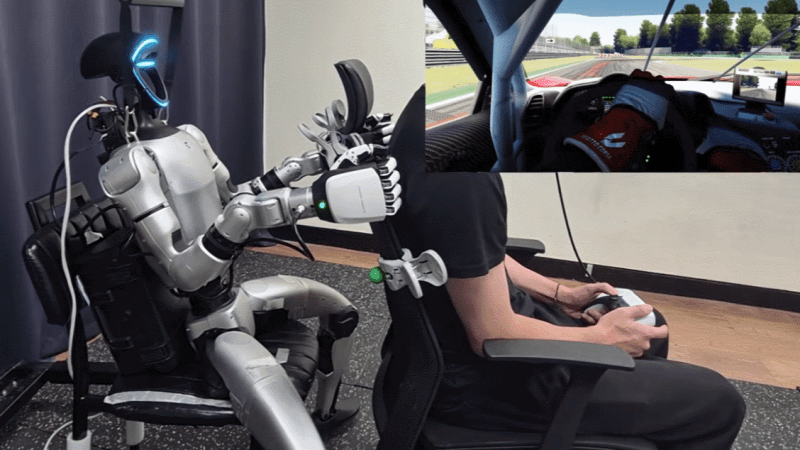
Humanoid robots are a thing now, and here’s an interesting research project that explores using one as a form of haptic media. Specifically, using a humanoid robot to move a chair while one plays a VR driving simulator.

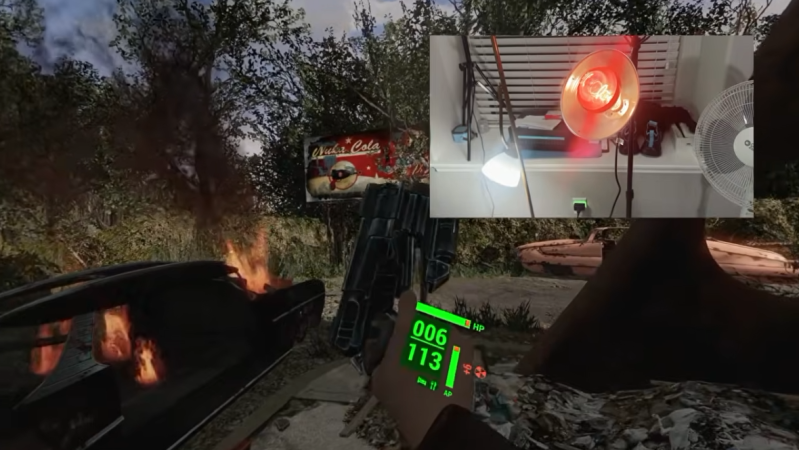
Here’s how it works: a Unitree G1 robot sits behind a player’s chair and grasps it with its hands. Spherical markers on the chair help the robot’s depth camera know the chair’s position, and real-time G-force signals fed from the simulator (Assetto Corsa, running on PC) tell the robot how much and in what direction to shift the chair to match in-simulator events.

Continue reading “Want Driving Simulator Feedback? Make The Robot Do It”

How To Better Enjoy VR On Linux

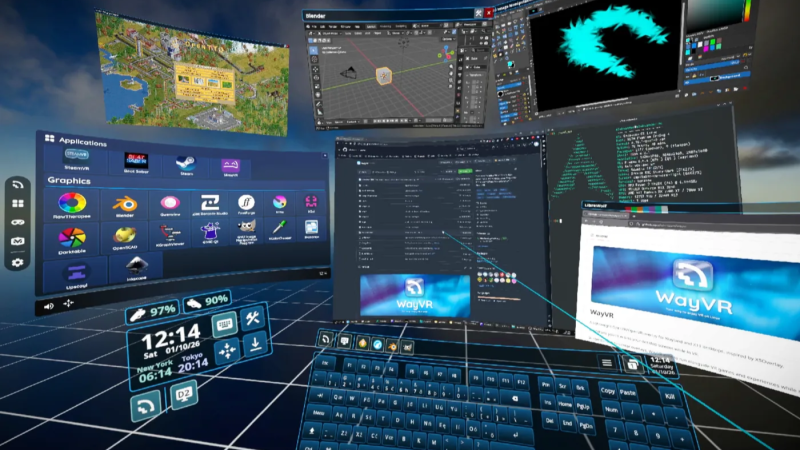
Linux folks are used to having to roll many of their own solutions, and better Linux desktop usability is a goal of the WayVR project, which aims to provide desktop control and app launching from within a VR session.

VR applications can already stream from Linux to standalone headsets with projects like WiVRn (check out this WiVRn setup guide for a fuller understanding), but what WayVR does is let one launch programs and access desktop screens within VR. Put another way, instead of the headset being limited to acting as a pseudo-monitor that only receives the output of an already-running VR application, the headset and controllers can now be used to interact with one’s computer as if one were physically sitting at it. Controls and user interface are highly flexible and help users to do anything they need — including clicking, typing, and launching applications. It’s a considerable step forward for convenience and general usability.

Naturally, when it comes to using a computer from within VR there is plenty of unexplored territory regarding user interfaces. It’s fertile ground for experimentation in everything from DIY headsets to ways to input text without a keyboard, so if you enjoy working on the frontiers of such things, it’s a good scene to dive into.

Custom VR Headset Uses Unconventional Displays

Cathode ray tubes (CRTs) are a fascinating display technology that has been largely abandoned outside of retro gaming and a few other niche uses. They use magnets to steer a beam of electrons rapidly across a screen, and while a marvel of engineering for their time, their expense, complexity, and weight all led to them being largely replaced by other displays like LCDs and LEDs. They were also difficult to miniaturize, but there were a few companies who tried. [dooglehead] located a few of the smallest CRT displays he could find and got to work putting them in the most unlikely of situations: a virtual reality headset.

The two displays for his headset come from Sony Watchmans, compact over-the-air black-and-white handheld televisions from the late 1900s. [dooglehead] had to create a method for sending video to these units which originally had no input connections, and then also used an FPGA to split a video signal into two parts, with one for each display. The two displays are placed side by side and attached to a Google Cardboard headset, with an off-the-shelf location tracker attached at the top. An IMU tracks head rotation while this location tracker tracks the motion of the unit through 3D space.

With everything assembled and ready to go, the CRT VR headset only weighs in a few grams heavier than [dooglehead]’s modern HTC headset, although it’s lacking a case (which is sorely needed to cover up the exposed high voltage of the CRTs). He reports surprisingly good performance, with notable interlacing and focus issues. He doesn’t plan to use it to replace any of his modern VR displays anytime soon, but it was an interesting project nonetheless. There are some rumors that CRTs are experiencing a bit of a revival, so we’d advise anyone looking to toss out an old CRT to at least put it on an online market place before sending it to a landfill.

Continue reading “Custom VR Headset Uses Unconventional Displays”

A DIY Headset For SteamVR

The modern era of VR started a long time ago, and a wide range of commercial headsets have proliferated on the market since then. If you don’t want to buy off the shelf, though, you could always follow [Manolo]’s example and build your own.

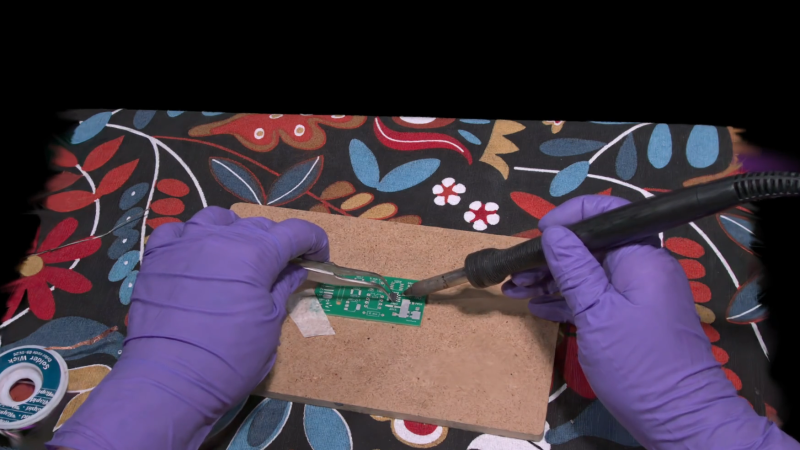
This DIY headset is known as the Persephone 3 Lite, and is intended for use with SteamVR.  It’s got the requisite motion tracking thanks to a Raspberry Pi Pico, paired with an MPU6500 inertial measurement unit. As for the optics, the headset relies on a pair of 2.9-inch square displays that operate at a resolution of 1440 x 1440 with a refresh rate up to 90 Hz. They’re paired with cheap Fresnel lenses sourced from Aliexpress for a few dollars. Everything is wrapped up in a custom 3D-printed housing that holds all the relevant pieces in the right place so that your eyes can focus on both screens at once. The head strap is perhaps the only off-the-shelf piece, sourced from a Quest 2 device.

If you’re eager to recreate this build at home, files are available over on [Manolo’s] Patreon page for subscribers. We’ve featured some other DIY headset builds before, too. Video after the break.

Continue reading “A DIY Headset For SteamVR”

A closeup of a transparent-bodied example of the new Steam Frame VR headset

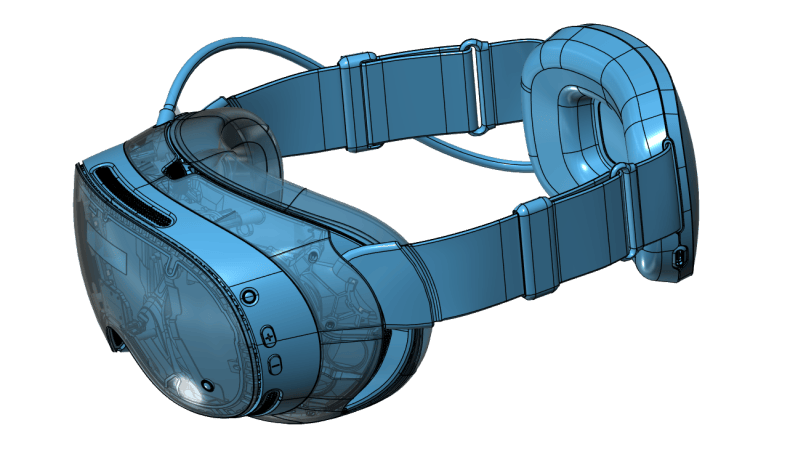
The Engineering Behind Valve’s New VR Headset

Valve’s new Steam Frame is what all the well-connected YouTubers are talking about, but most of them are talking about what it’s like to game on it. That’s great content if you’re into it, but not exactly fodder for Hackaday — with one exception. [Gamers Nexus] gives us a half hour of relatively-unedited footage of them just chatting with the engineers behind the hardware.

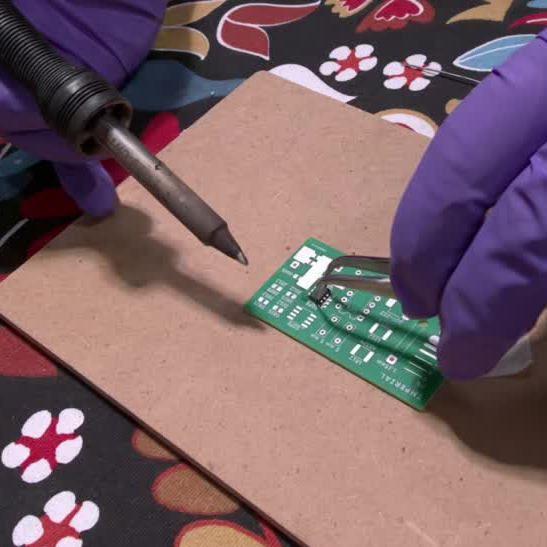
It’s great stuff right from the get-go: they start with how thermal management drove the PCB design, and put the SoC on the “back” of the chip, sandwiched betwixt heat pipes. We don’t usually think of taking heat through the PCB when building a board, so it’s a neat detail to learn about before these things get into the hands of the usual suspects who will doubtless give us teardown videos in a few months.

From there wanders to power delivery — getting the voltage regulators packaged properly was a challenge, since impedance requirements meant a very tight layout. Anyone who has worked on this kind of SBC might be familiar with that issue, but for those looking in from the outside, it’s a fascinating glimpse at electrical sausage being made. That’s just the first half.

The heat-regulation conversation is partially repeated the next conversation (which seems to have happened first) where they get into the cooling requirements of the LCD screens. This requires less than you might think, as they like to run warm for fast refresh. It’s really more about keeping your face cool. They also they discuss acoustic vibration — you don’t want your integrated audio shaking your IMUs apart — and why the prototype was being blasted with freakin’ laser beams to monitor it.

If you haven’t seen or read any other coverage on the Steam Frame, you’re going to miss some context here, but if you’ve not hid under a rock for that announcement, this is amazing detail to have. We’re hugely impressed that Valve let their engineers out of their cubicle-cave to talk to media.

Sure, it’s not an open-source VR headset, but compared to the deafening silence coming from the likes of Meta, this level of information is still awesome to have.

Continue reading “The Engineering Behind Valve’s New VR Headset”

ABCCAD Is Voxels Meets LEGO In AR

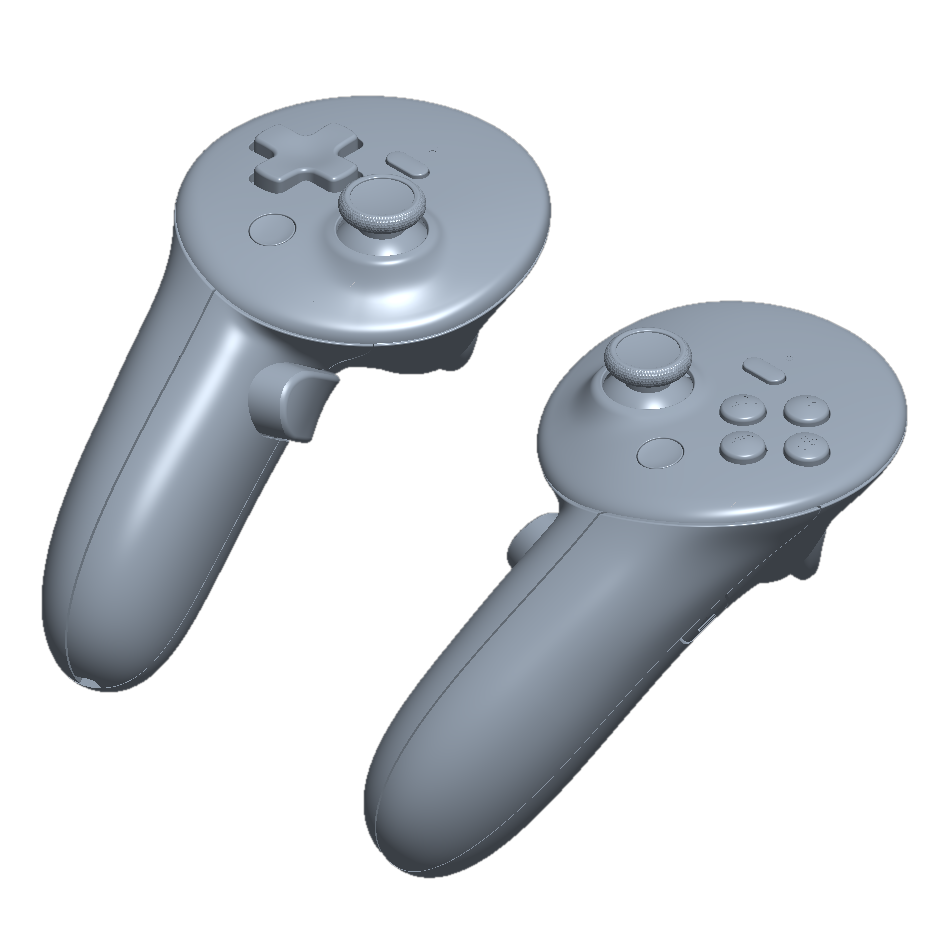
We get it, CAD software can be daunting to learn. Somehow [Boaztheostrich] found it so daunting he procrastinated his way into a AR voxel-based CAD app he calls “ABCCAD”, written in Godot for the Meta Quest 3.

The app is simplicity itself: pressing A or X on the controller spawns a cube, which you can place wherever you like in virtual space by moving the controller in real space. The trigger then saves the cube position. Grabbing a cube uses the controller’s grab buttons. You can even change colors (with B or Y), but like in OpenSCAD it appears that’s not actually going to have any effect on the exported STL. Check it out in action in the demo video embedded below.

As far as CAD applications go, this is as simplistic as it gets, but there’s a certain charm to its simplicity. It’s almost like virtual LEGO. Besides, TinkerCAD wasn’t much more complicated when it started out, and look at it now.

Sure, one could say if [Boaz] wanted to do CAD he’d have been better off putting the time into learning good old OpenSCAD or FreeCAD (which can now get you SolidWorks certs, apparently), but this is a fun little app that let him stretch his chops in Godot, another great open-source tool. ABCCAD is, itself, open-source under an MIT license.

We seem to have a paucity of posts under the Godot tag, so if you’ve got a hack that uses the open-source game engine, please send us a tip.

Continue reading “ABCCAD Is Voxels Meets LEGO In AR”

Microsoft Removed WMR Headset Support? No Problem!

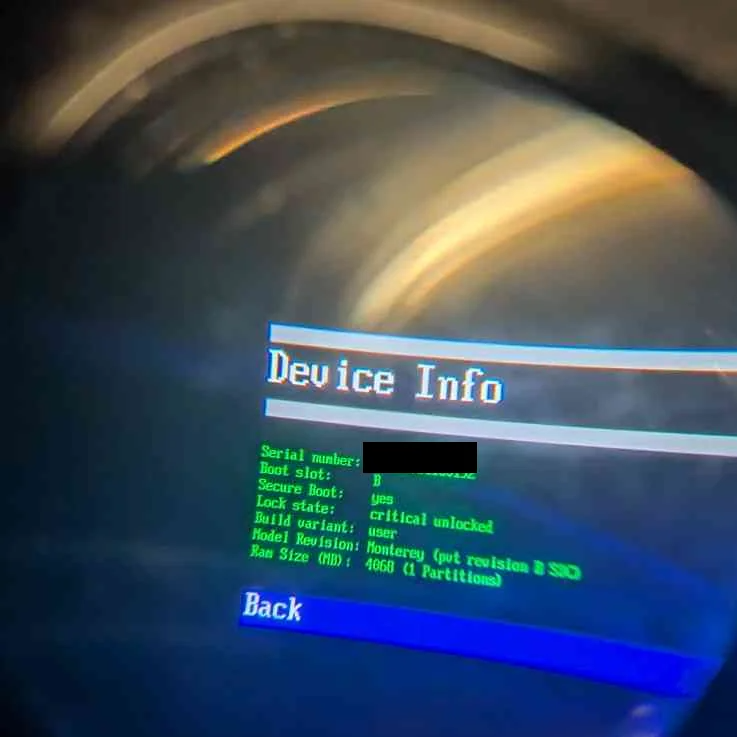
In late 2024 Microsoft removed support for WMR (Windows Mixed Reality), and they didn’t just cease development. As of Windows 11 version 24H2, headsets like the HP Reverb and others by Acer, Samsung, Lenovo, and Dell stopped working at all. But the good news is developer [Matthieu Bucchianeri] created the Oasis driver for Windows Mixed Reality which allows WMR headsets (and their controllers) to work again.

Oasis is available as a free download from Steam and involves a few specific setup steps in order to get working, but once the headset and controllers are unlocked and room setup is complete, the hardware will be usable again. Note that while SteamVR is handy, one’s headset and controllers are not actually tied to SteamVR. Any VR application that uses OpenVR or OpenXR should work.

It’s an extremely well-documented project, and anyone willing to read and follow a short list of directions should be off to the races in no time.

Now that there’s a way for folks to dust off their WMR hardware and get back in the game, it’s a good time to mention that if you have ever suffered from VR sickness, we’ve covered ways to help deal with and adapt to it.