Adapting A 100-Year-Old Lens To A Modern Camera

You can get all kinds of fancy lenses for modern cameras, with all sorts of mechanical and electronic wizardly to make them shoot better images. But what if you paired a vintage lens with a modern camera? It would take some work, as [Mathieu] found out, but you’d also get some interesting results.

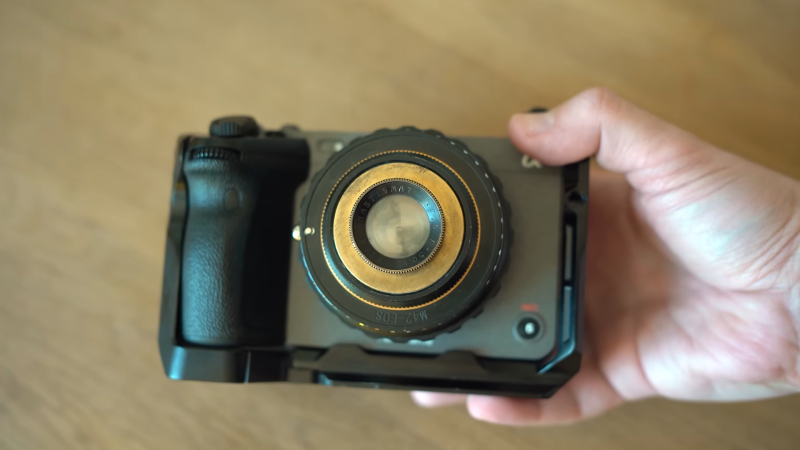
The optic in question is a 100-year old lens—a Foth 50 mm f2.5 to be precise, originally used with a folding film camera. It was sourced from a market for just 3 euros. Notably, the lens was not designed for modern cameras, and so lacks an aperture and focusing mechanism. [Mathieu] thus had to fabricate something to fit the lens to a Sony FX3. A first attempt used an aperture adapter from Amazon and an elcoid adapter, but there were vignetting problems due to the lens placement in this case. Ultimately, [Mathieu] went with a special macro adapter that allowed him to control focus and tuck in an ND filter behind the lens, which made up for the lack of an aperture.

The vintage glass isn’t the sharpest lens out there, but that’s kind of what’s fantastic about it. The center of the frame is certainly focused, but it fades out softly towards the edges of the image, giving a cinematic, dreamlike effect. The bokeh in the background are particularly charming, too. As far as 3 euro lenses go, this one was a hit.

You can slap just about any lens on anything if you get creative with how you do it. Video after the break.

Continue reading “Adapting A 100-Year-Old Lens To A Modern Camera”
Custom Sony Camera Remote Built With ESP32

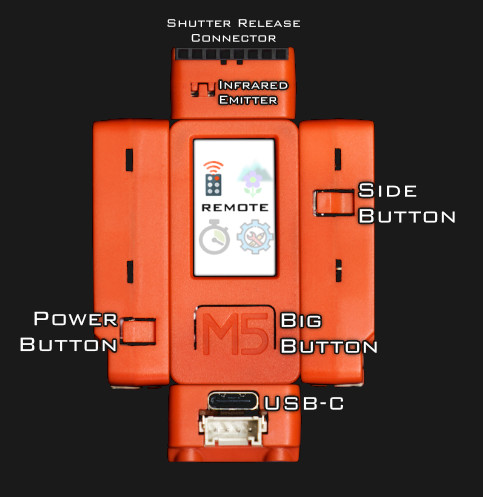
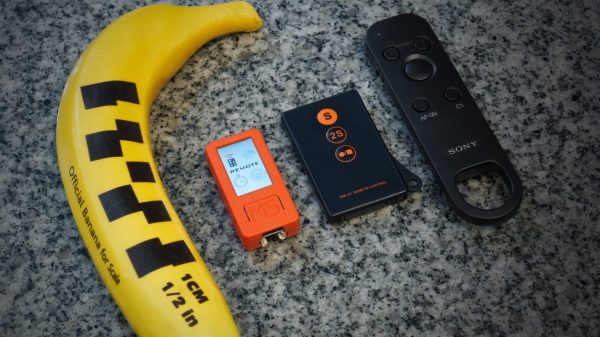
Whether you’re shooting video or photos, having a camera remote can really improve your productivity. No longer do you have to run back to the camera to press its tiny buttons! [Frank Zhao] is a Sony user, so decided to whip up a custom remote using the ESP32 for his Alpha camera, adding special features along the way.

The build communicates with the camera over WiFi, but can fall back to Infrared if there’s an issue with the radio link. It’s built around the M5StickC, which is a pre-built device featuring an ESP32 and a small display in a handheld form factor. It let him build the remote in half the size of the official Sony device. With limited buttons on board, though, he relies on the IMU to control many advanced features with motion gestures.

The remote enables a bunch of functionality that Sony didn’t bake into its cameras from the factory. There’s a sound-activated shutter release, dual shutter mode, and several timer-based tools including astrophotography modes. There’s also a big knob you can add for focus pulls, and a mode to reset the auto-focus when you’re frustrated that it isn’t working properly. Some of the features work better than others, as sometimes, the camera doesn’t respond to commands quickly enough. Regardless, it’s pretty neat that [Frank] has unlocked so much extra functionality with his custom $20 remote.

We’ve seen other homebrewed tools open up new creative possibilities for cameras before, too. If you’ve got your own nifty camera hacks, let us know on the tipsline!

Macro Photography With Industrial Lenses

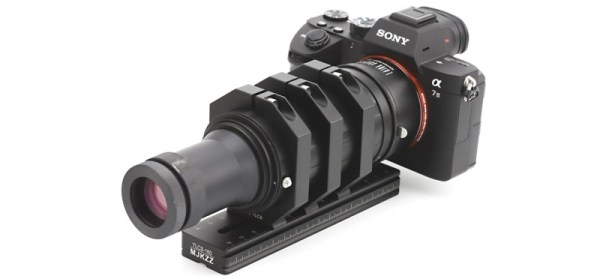
Line scan cameras are advanced devices used for process inspection tasks in industrial applications. Used to monitor the quality of silicon wafers and other high-accuracy tasks, they’re often outfitted with top-quality optics that are highly specialised. [Peter] was able to get his hands on a lens for a line-scan camera, and decided to put it to work on some macro photography instead.

Macro image taken with the hacked lens.

Judging by the specs found online, this is a fairly serious piece of kit. It easily competes with top-shelf commercial optics, which is what piqued [Peter]’s interest in the part. Being such a specialised piece of hardware, you can’t just cruise over to eBay for an off-the-shelf adapter. Instead, a long chain of parts were used to affix this lens to a Sony AIII DSLR, converting from threaded fittings to a Nikon mount and then finally to Sony NEX mount.

Further work involved fitting an aperture into the chain to get the lens as close as possible to telecentric. This improves the lens’s performance for certain tasks, and makes focus stacking macro shots more readily achievable – something we’ve seen [Peter] tinker with before.

You never know what you might find when sorting through surplus industrial gear, could could score some high-performance hardware if you know where to look. It’s always great to see a cheap find become a useful instrument in the hacker toolbox!