
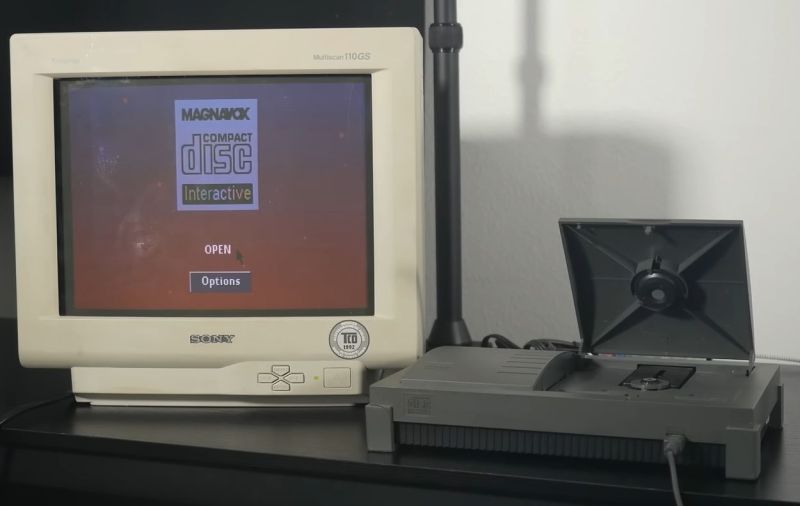
Although not intended to be a game console, the CD-i would see a a couple of games released for it that would cement its position in gaming history as the butt of countless jokes, some of which still make Nintendo upset to this day. That aside, it’s still a fascinating glimpse at the CD-based multimedia future envisioned in the early 90s, starting with its release in 1990. Recently [MattKC] decided to purchase another CD-i in a fit of nostalgic rage, and repair it to show the world what the future could have been like.
Although Sony and Philips co-developed the device, Sony would go on to release the PlayStation a few years later, which made the CD-i’s life and expectations for it that much harder, leading to it slowly fading into history. The Magnavox one that [MattKC] got is one of the later models, based on the CD-i 450 that was introduced in 1994 as one of the more gaming-oriented models.
As is typical with older devices that use optical media, it would not read discs. It also would sometimes boot up with a ‘Memory Full’ error. This is a common fault due to the built-in battery having run out, erasing RAM-stored values and causing random glitches like this when garbage values were read in on boot.
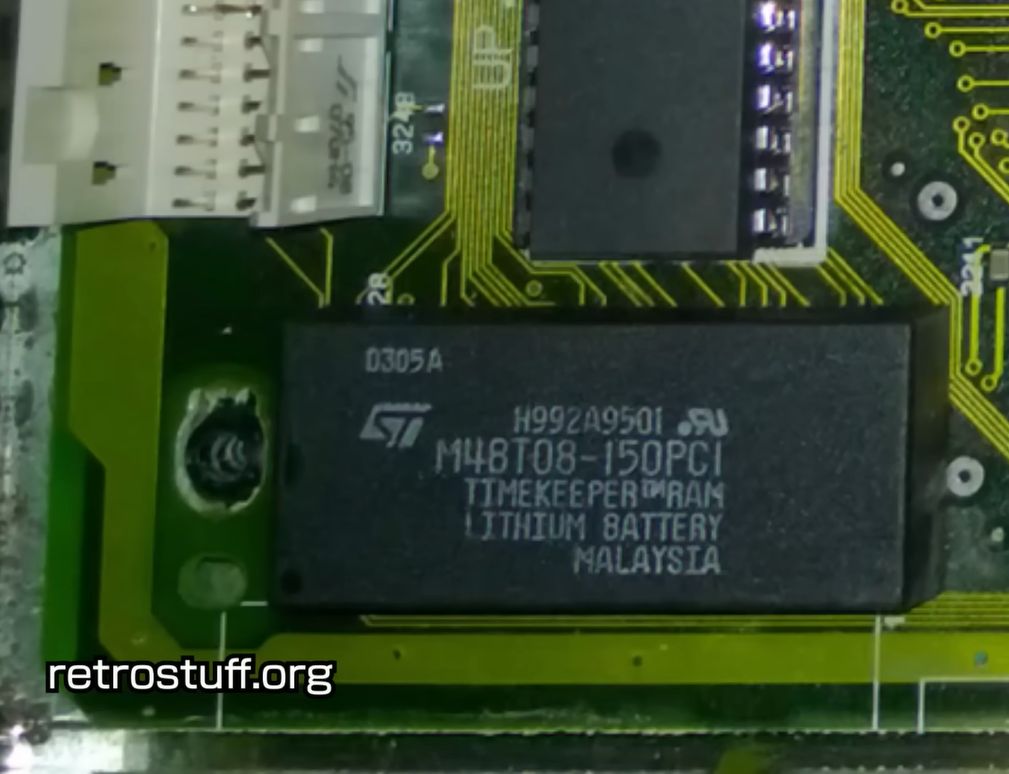 Of course, there cannot be simply a removable battery on the mainboard. Instead it uses one of those integrated battery-RAM units, specifically an ST Timekeeper device.
These use an internal lithium battery which will inevitably run out after the guaranteed ten-year accumulated memory retention period, after which it’s just typical volatile memory. The solution here is to either replace the entire module, or the more appropriate method of chopping it open and wiring up an external CR2032 coin cell that can be easily replaced.
Ultimately this is what [MattKC] opted for, taking a Dremel to the Timekeeper chip and chopping off the top half. There are open replacements for the top half that contain the crystal and the CR2032 cell holder, which makes it into very clean-looking mod, and makes replacing the lithium cell in the future a snap. Of course, this didn’t fix the CD player.
The CDM 12.1 CD player mechanism is a standard module that Philips used throughout its consumer electronics, and is known for failing. Funnily enough, this time it wasn’t the laser module that had failed, but rather a stuck turntable. A bit of prodding helped to loosen it and the mechanism could read CDs just fine again.
While not a popular series of devices in their day, the CD-i actually has a thriving community around it today, featuring countless mods and hacks to make these devices do things never imagined in the 90s. They’re also quite easy to hack, and relatively affordable. Plus you get to play all the amazing Nintendo titles on the CD-i on the real hardware.












Sometimes, I wonder if certain tasks deserve certain machines.
The way this thing works is like the “ban the box” movement…so someone who really does want to turn his life around will have their records on this..if non-violent.
“Zit er een CD-i speler bij?”
“CD-i? Dach ut nie.”
“Dan hoef meneer ‘m nie.”
Despite the funny commercial, this was (again) a brilliant invention that Philips managed to f*ck up.
It wasnt an invention, there were earlier consoles and earlier CD consoles. And it wasnt brilliant with its downright embarrassing specs. It was a C suite product like Commodore CDTV and had similar “success”.
While CD-i sucked donkey balls in terms of gaming, we had one in school and it was fun. Our history teacher (who was a member of B&H and knew ISD personally) used it to play us Hitler speeches “for education”. As a bunch of angry working class teens (unlike the current woke SJW snowflake generation raped by social media) we enjoyed it and never told principal that we used to shout “sieg heil” instead of studying history. Sadly the dude got arrested in 1997 for posession of CP.
I’m not sure why this merits an article. This has been done so many times before and there are several brand new DIY replacements on the market like those made by necroware and others. MattKC is an excelent channel, but this is just not news.
It is however a hack. Quite literally as the top of the CMOS, Clock/Battery module must be cut open.
Because it is a hack.
You know what they say – all toasters toast toast!
Oh no! This old machine used old components. How could they, what were they thinking?!?! It’s not that they didn’t want to use flash memory, it was more that they couldn’t as it wasn’t as easy/cheap as it is now. We are talking about the late 1980 when this machine was created, no commercial product used flash to store settings.
Therefore battery backup clock modules with usable RAM locations were pretty common back in the day, which is one of the reasons why they are still “relatively” easy to find or find fixes for. There is absolutely no need for it to be surprised in the video that they chose such a component. The reason why this component is soldered onto the board is simple, if they don’t solder it, it might drop out of it’s socket during transport. Now I have to admit, it may be a simple component to use, it isn’t very practical to replace. But face it, who would ever expected this machine to be used more than 20 years after it was sold, it was never intended for that. Meaning that a 10 year stand-by period on top of it’s normal usage is more than enough. And you do not need to buy another replacement module every 10 years, keep it plugged in and use it (like it was intended).
I think this might be a Gen Alpha thing. They assume everyone before them was stupid and never look for evidence to contradict that claim. They just double down when confronted by truly remarkable engineering within parameters they may not even understand, which, I suppose, is much of the same as from the Boomer generation: “don’t trust anyone over 30”. Og course these generations hate each other, they are so much alike!
Dad worked wrote educational software back in the 90s and we somehow wound up with one of these at our house, the 220 model I think. No games, but it did come with a few intereactive versions of childrens books, like the Little Monsters titles. The remote wsa terrible, an IR T.V. style remote with a sort of joy-stick and noticible lag.
We were unimpressed with it overall and I distinctly remember him calling it “a half-hearted attempt by an appliance company to break into the PC-market”.