
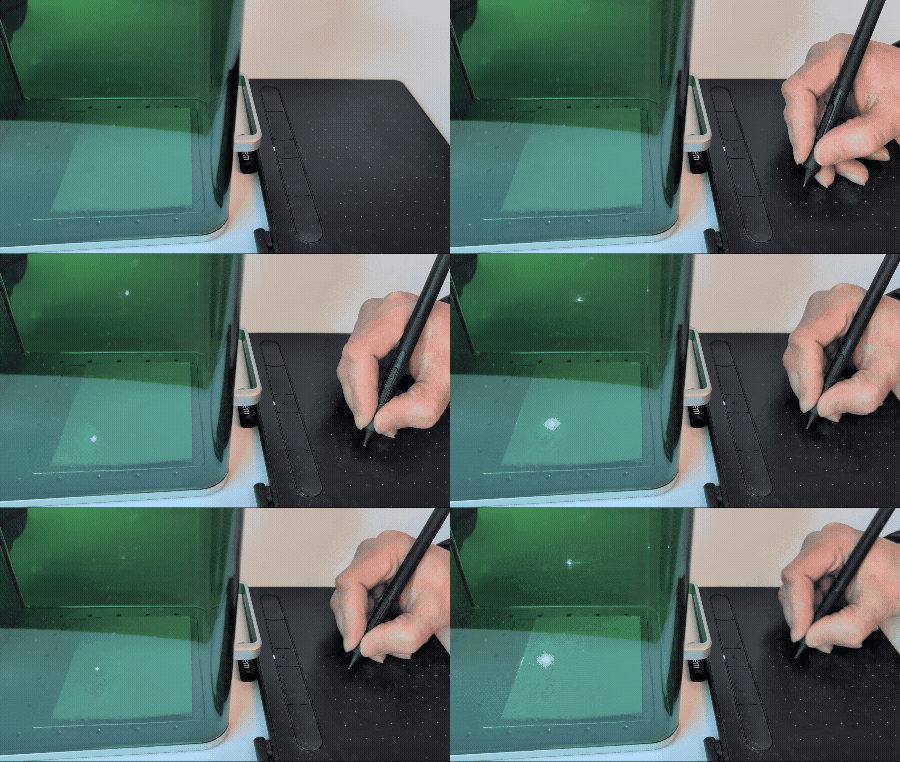
Some projects need no complicated use case to justify their development, and so it was with [Janne]’s BeamInk, which mashes a Wacom pen tablet with an xTool F1 laser engraver with the help of a little digital glue. For what purpose? So one can use a digital pen to draw with a laser in real time, of course!
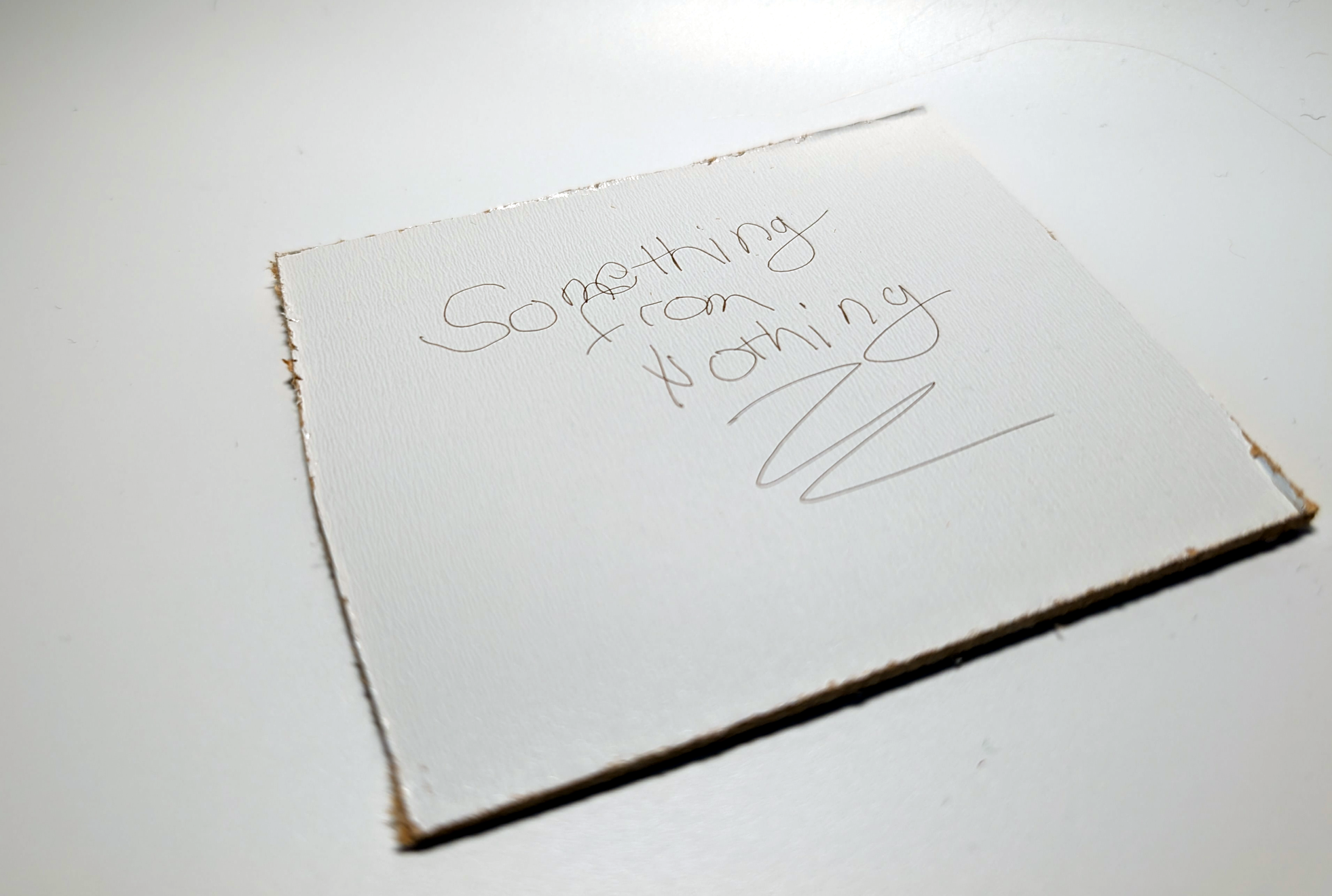
Here’s how it works: a Python script grabs events from a USB drawing tablet via evdev (the Linux kernel’s event device, which allows user programs to read raw device events), scales the tablet size to the laser’s working area, and turns pen events into a stream of laser power and movement G-code. The result? Draw on tablet, receive laser engraving.
It’s a playful project, but it also exists as a highly modular concept that can be adapted to different uses. If you’re looking at this and sensing a visit from the Good Ideas Fairy, check out the GitHub repository for more technical details plus tips for adapting it to other hardware.
We’re reminded of past projects like a laser cutter with Etch-a-Sketch controls as well as an attempt to turn pen marks into laser cuts, but something about using a drawing tablet for real-time laser control makes this stand on its own.












Very inspiring!
I started thinking about how that could be used to trace outlines of real world objects. But now I’m thinking that I should build a box with some kind of telecentric camera setup and calibrated scale, to transfer scale-accurate photos of objects into CAD with a single click.
Someone should do a modern version of the pantographic router, so you could make a simple cardboard template and trace that to mill parts out of sheet with reduction. Make little gears and fine mechanical parts.
Unfortunately the idea goes belly up on the point that people nowadays know how to do CAD/CAM better than they know how to draft or make any physical object by hand, so they would need a laser cutter, a CNC machine, or a 3D printer to make the template. Having those, they wouldn’t need the pantographic router because they already have the object.
A robot arm with a stylus point would do the trick.
Just manually touch the stylus on several points of the object to gradually stretch a sphere onto a mesh that matches the reference object. The trick will be in measuring the joint angles and the reverse kinematic maths.
Really cool! I wonder if there was some way to adjust the power from the pressure. So you could see where your pen tip is without leaving a mark.
I already did it, to control a pen plotter with brush: https://youtube.com/shorts/Y4klsFDjydk?si=HZghlR7Lk172cDMo
There are now chip components that can withstand high heat–that might also be of use… perhaps a bit laser proof
https://techxplore.com/news/2026-03-memory-chip-survives-temperatures-hotter.html