
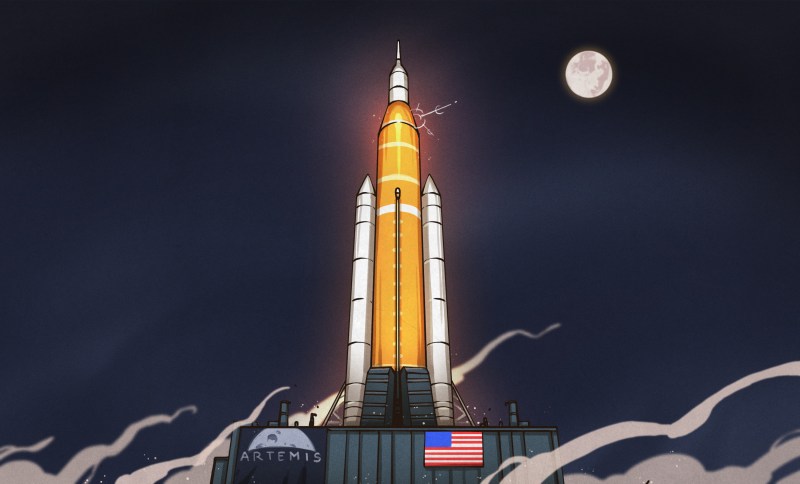
NASA is going back to the Moon! We’ll follow the crew of Artemis II every step of the way.
It’s not everyday that humans make a trip around the Moon — in fact, most of us weren’t alive the last time it happened. In recognition of the occasion and the incredible engineering that made it possible, we’ve decided to do something a little different: this post will remain on the front page for the entirety of the Artemis II mission, and will be regularly updated with new information and images.
Use the comment section below to share your thoughts and hang out with other Hackaday readers as we experience this historic event together in real-time.
Day 1 – Liftoff!
After resolving a last-minute communications issue with the Flight Termination System (FTS), the Artemis II Space Launch System (SLS) rocket lifted off from Launch Complex 39B at NASA’s Kennedy Space Center in Florida at 6:35 PM EDT.
Main engine cutoff (MECO) for the SLS rocket occurred at 6:43 PM, placing the Orion spacecraft and crew members Reid Wiseman, Victor Glover, Christina Koch, and Jeremy Hansen safely into orbit around the Earth. Just before 7:00 PM, all four solar array “wings” were successfully deployed from the European Service Module.
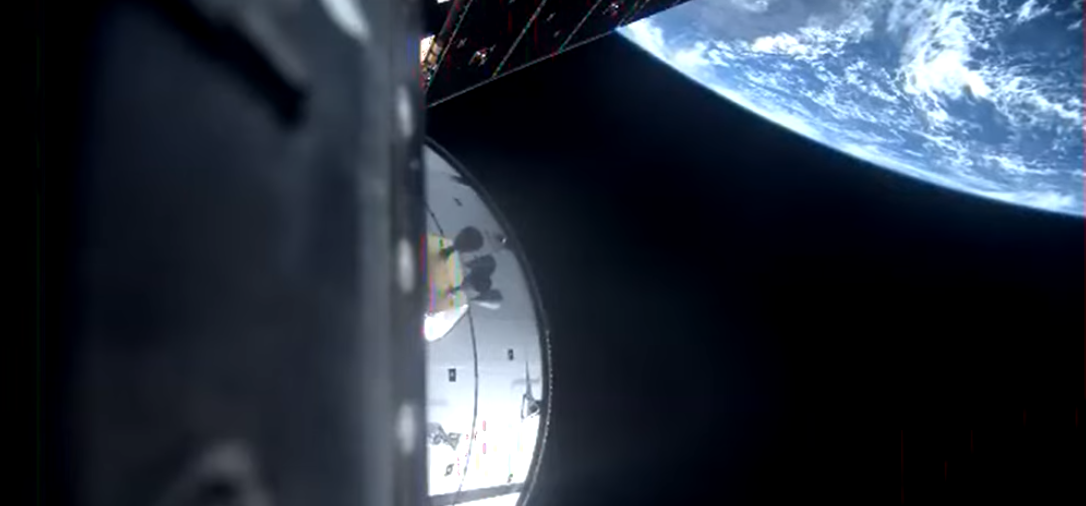
The perigee and apogee raise maneuvers were completed as scheduled — two burns by the RL10 engine on the interim cryogenic propulsion stage (ICPS) lifted the Orion spacecraft to a higher orbit, and put it in position for the eventual trans-lunar injection (TLI) burn which will put the vehicle on course for the Moon.
Between the execution of these two maneuvers, audio and video communication with the Orion spacecraft was briefly lost. Mission Control was still able to receive the telemetry downlink from the vehicle during this period, and was able to determine the spacecraft was operating normally. The cause of the communication glitch is still being investigated, but according to statements from NASA Administrator Jared Isaacman during the post-launch press conference, engineers do not believe it to be a critical issue.
Day 1 – Proximity Operations Demo
Following the separation of the ICPS, the Artemis II crew performed the Proximity Operations Demonstration.
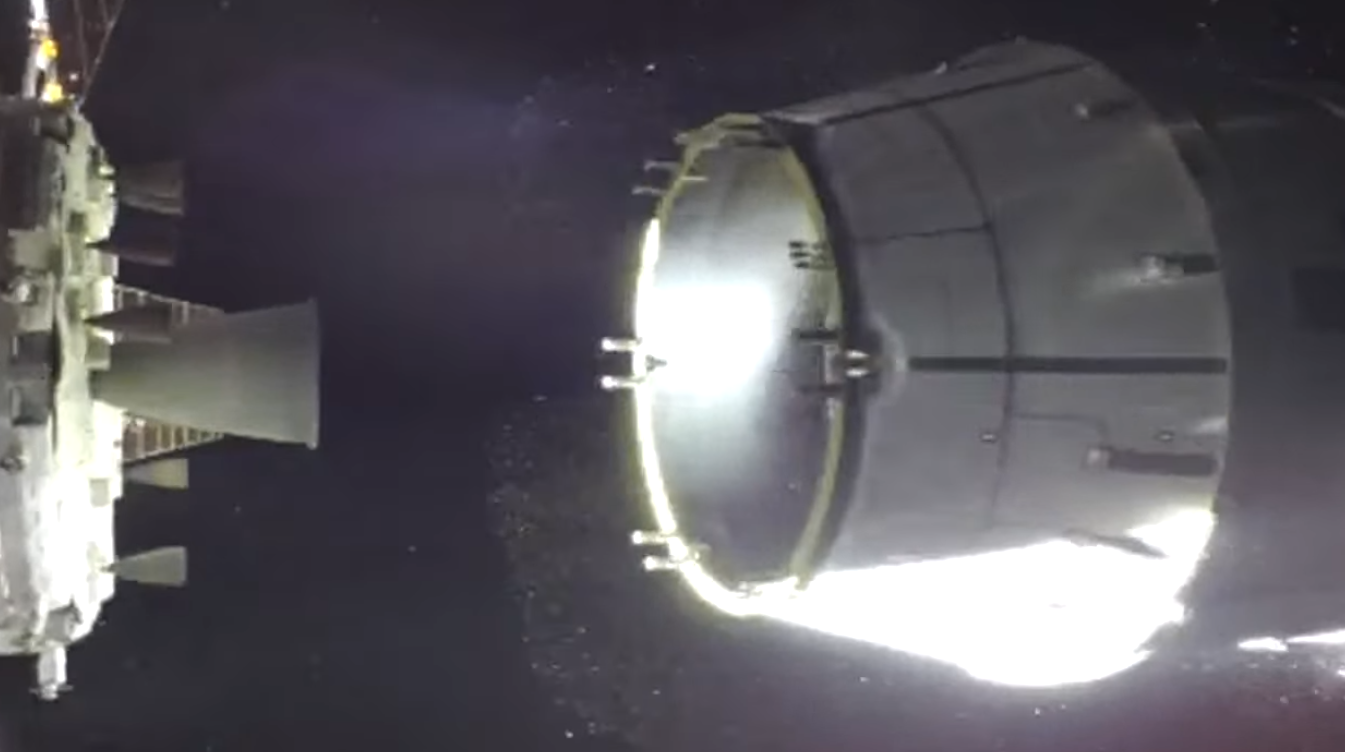
Pilot Victor Glover took manual control of the Orion spacecraft, and performed a 180 degree turn to face the discarded ICPS. While flying the Orion, he told Mission Control that the vehicle’s real-world performance was better than in the simulator, and specifically commented on the accuracy of the controls and the clarity of the camera system.
The crew reported a rumbling sensation coming from the Service Module, and were advised by Mission Control that they were feeling expected thruster firings. They noted that crews on both the Soyuz and Dragon spacecraft have reported similar experiences.
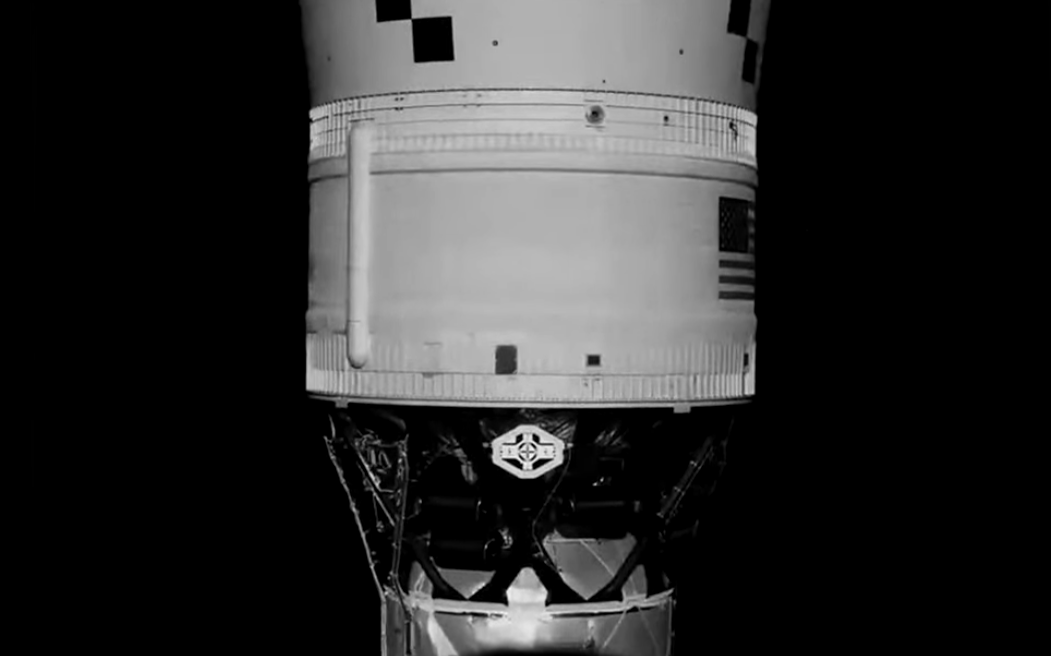
Glover spent slightly more than an hour at the controls of the Orion spacecraft, before finally backing away from the spent ICPS and returning the vehicle to automatic control. Once the Orion was a safe distance away, the ICPS performed its own disposal burn which put it on target to reenter the Earth’s atmosphere over the Pacific Ocean.
Day 2 – Trans-Lunar Injection
Approximately 25 hours after launch, at 7:49 PM EDT, the Orion spacecraft completed the trans-lunar injection burn that put it on course for a rendezvous with the Moon. As Artemis II is utilizing what’s known as a free return trajectory, the maneuver also put the spacecraft on target for its eventual return to Earth in nine days.
Although the final figures may change slightly as the spacecraft’s course is refined over the coming days, it’s currently calculated that its closest approach to the Moon will put it 6,617 kilometers (4111 miles) over the lunar surface. The craft will achieve a maximum distance from the Earth of 406,840 km (252,798 miles), which will set a new record for the farthest crewed spaceflight — a record previously held by Apollo 13.
Day 3 – Settling In
While a brief course correction burn was scheduled for today, Mission Control decided that yesterday’s TLI maneuver was so accurate that it was not needed. At the same time, the Moon is still too distant to perform any of the planned observations. This left the crew with a relatively light agenda to get through.
Most of the day was spent settling in to life aboard Orion, which included performing exercises and unpacking equipment that will be used in the coming days. The crew will spend only a relatively short amount of time in the vicinity of the Moon, so they also rehearsed the various activities that are scheduled to take place during their closest approach on Monday. While they have trained extensively for this moment on the ground, being in space literally adds a new dimension to everything they do within the capsule. Rehearsing their movements now can help save precious seconds later on.
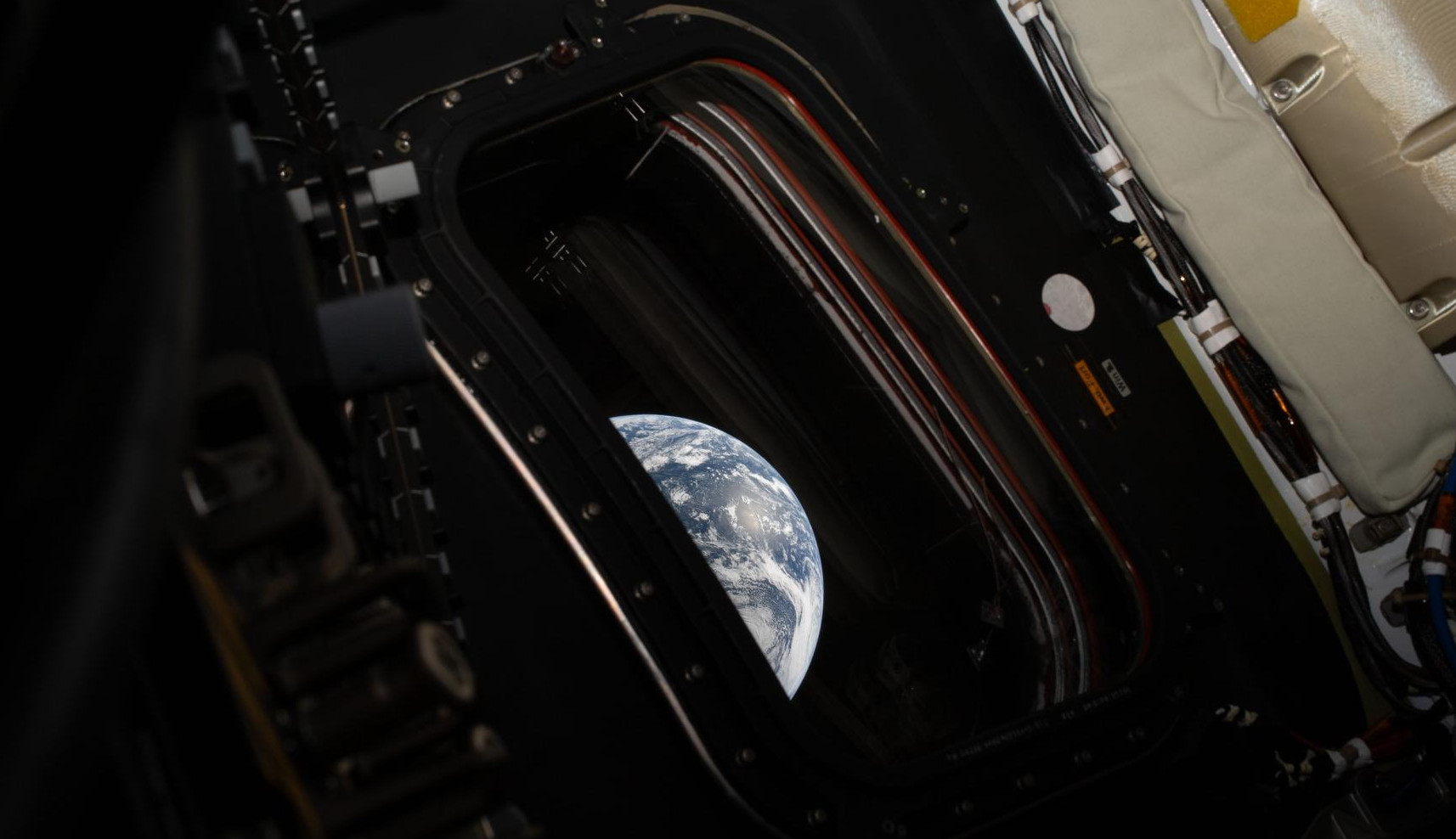
The crew also ran through several emergency response demonstrations, focusing specifically on what to do if an individual was choking or required cardiopulmonary resuscitation (CPR). As humanity ventures farther into space and for longer periods of time, these sort of scenarios will only become more likely.
Arguably the most important task on today’s agenda is a demonstration of using NASA’s Deep Space Network (DSN) for backup communications. While the high-speed Optical Communications System (O2O) offers enough bandwidth to transmit live HD video from lunar distances, the nature of laser communications means that poor weather back on Earth could degrade or completely block reception. The “old school” DSN link might not be able to handle 4K video, but it can still provide a secondary channel for communicating with Mission Control if necessary.
Day 4 – Prepping for the Moon
While Artemis II is primarily a demonstration of the Orion spacecraft and the overall architecture for future crewed lunar flights, sending humans into the vicinity of the Moon provides an excellent opportunity to make detailed observations of our nearest celestial neighbor. This is especially important as NASA begins to select the landing sites for future Artemis missions.
Unfortunately, as mission planners didn’t know when Artemis II would actually launch, there was no way to accurately predict which parts of the Moon would actually be visible to the crew when they made their close approach. But now that the Orion spacecraft is well on its way, today Mission Control was finally able to tell the crew which areas of the lunar surface the science team wants them to focus on. Given the importance of these observations, the crew was also provided time to focus on studying the new information.
The agenda called for another course correction to take place today, but Mission Control once again determined it wouldn’t be necessary. Christina Koch and Jeremy Hansen did get the opportunity to take manual control of the Orion spacecraft however, providing further data on the spacecraft’s performance now that it’s beyond low Earth orbit.
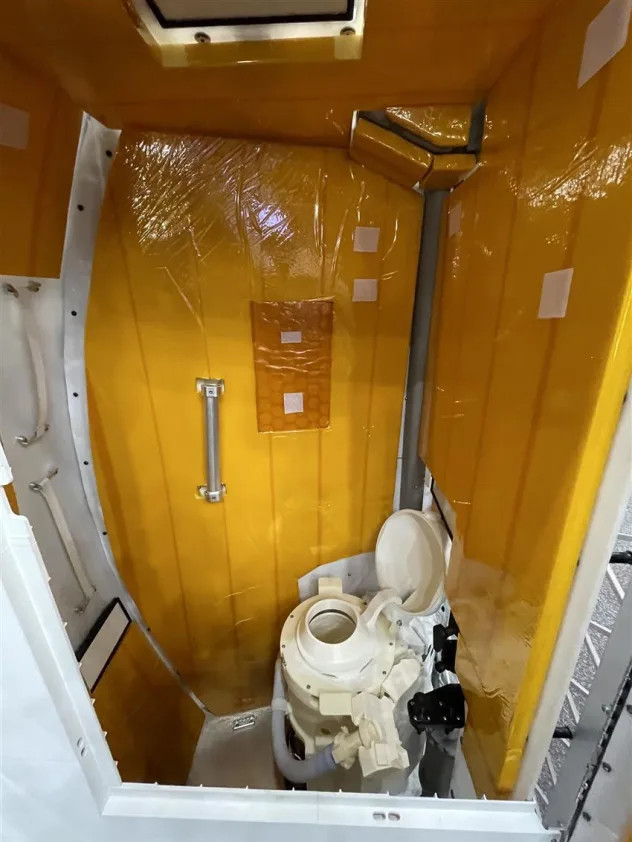
Although the mission has been progressing smoothly, it hasn’t been without a few technical hiccups. Today the crew continued to struggle with the Orion’s toilet, or as NASA likes to call it, the Universal Waste Management System. A burning smell was noted — not for the first time — when the toilet was in operation. The crew reported this to Mission Control, but at least for now, they don’t believe it to be a serious issue.
More pressing is the fact that the vent that’s used to pump the liquid waste out into space seems to be freezing up. Mission Control reoriented the spacecraft to face the vent towards the sun in an effort to thaw it out, but for the time being the crew has been instructed to avoid using the system.
Of course, the fact that the Orion capsule even has a toilet, much less one in an enclosed room, is a considerable luxury as far as lunar spaceflight is concerned. Even if it only works occasionally, it’s a big improvement from the plastic bags that the Apollo astronauts had to use during their missions.
Day 5 – On Final Approach
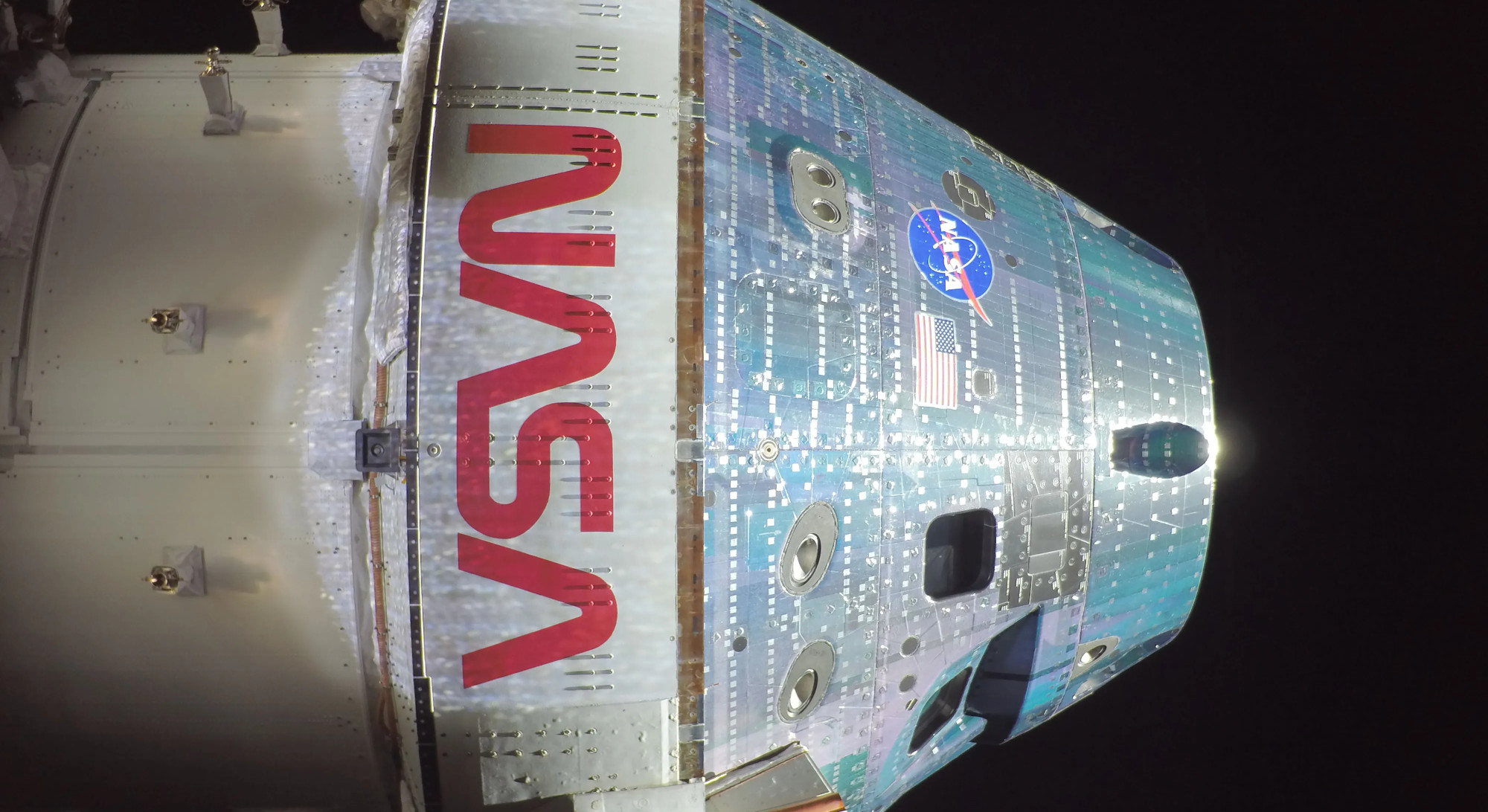
After skipping the last two course correction opportunities, today Mission Control decided to have the Orion spacecraft fire its Orbital Maneuvering System (OMS) for a little over 17 seconds to fine-tune its approach to the Moon. Not long after, the craft entered the lunar sphere of influence — that is, it’s now close enough that the Moon’s gravity is the primary force acting on its trajectory.
With the closest approach to the Moon now less than 24 hours away, the crew took more time to study the list of 30 lunar surface features the science team would like them to focus their attention and instruments on. They also held a conference with Mission Control to make sure everyone was clear on the timeline and their individual assignments. As Orion is performing a lunar flyby and won’t be entering orbit, they’ve only got one chance to get everything right.
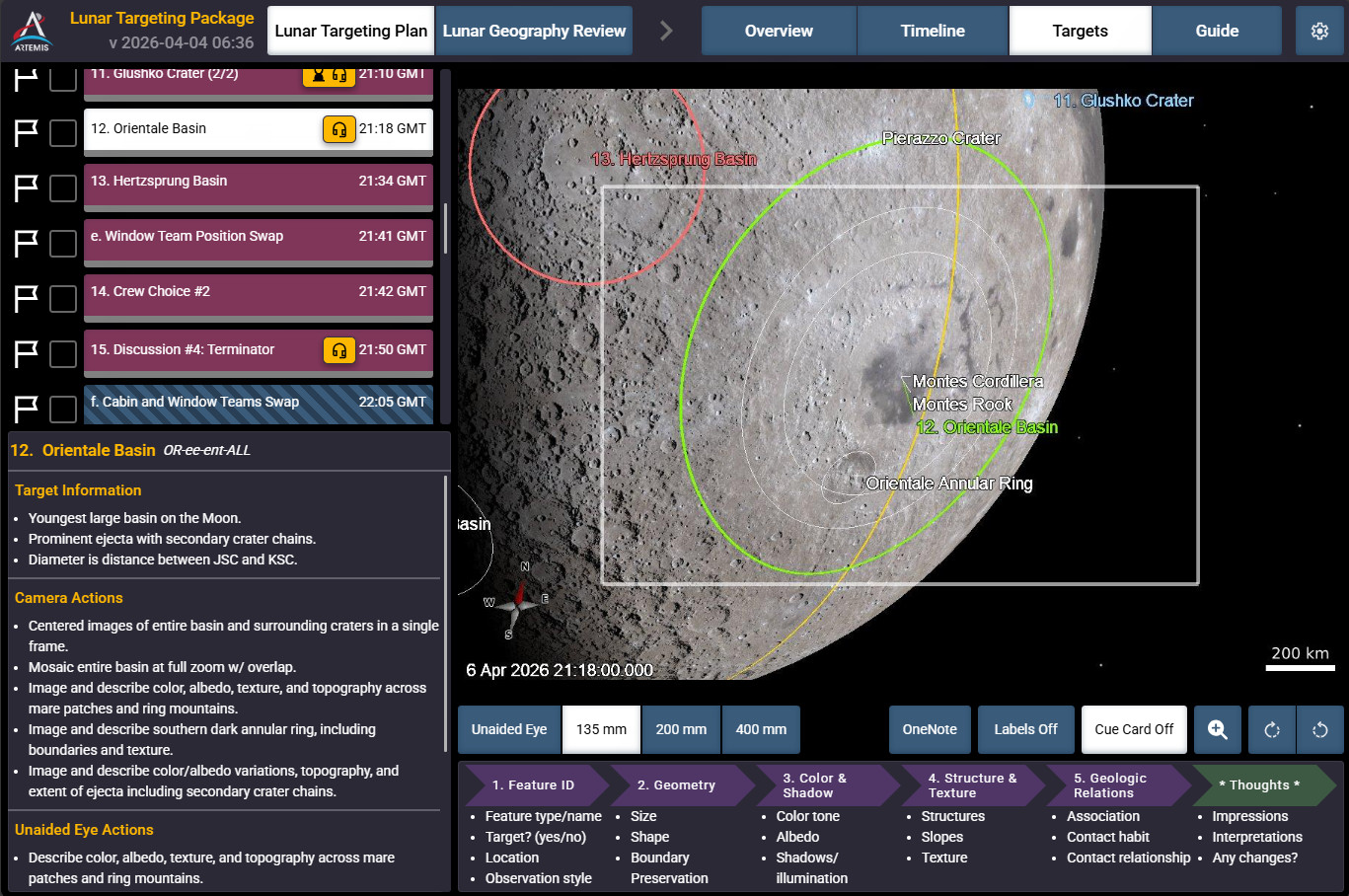
After making preparations for tomorrow’s close approach, the crew performed a demonstration of the Orion Crew Survival System suits. The astronauts already wore the striking orange spacesuits during launch, but this was the first time they were tasked with not only putting the suits on in space, but getting themselves strapped back into the seats of the spacecraft.
This was not only a dry run of the procedures they’ll need to perform before Orion reenters the Earth’s atmosphere and splashes down at the end of the mission, but also evaluates their ability to put on the suits in the event of an emergency. The suits are designed to protect the crew should the capsule depressurize or the life support system fails.
Day 6 – Lunar Flyby
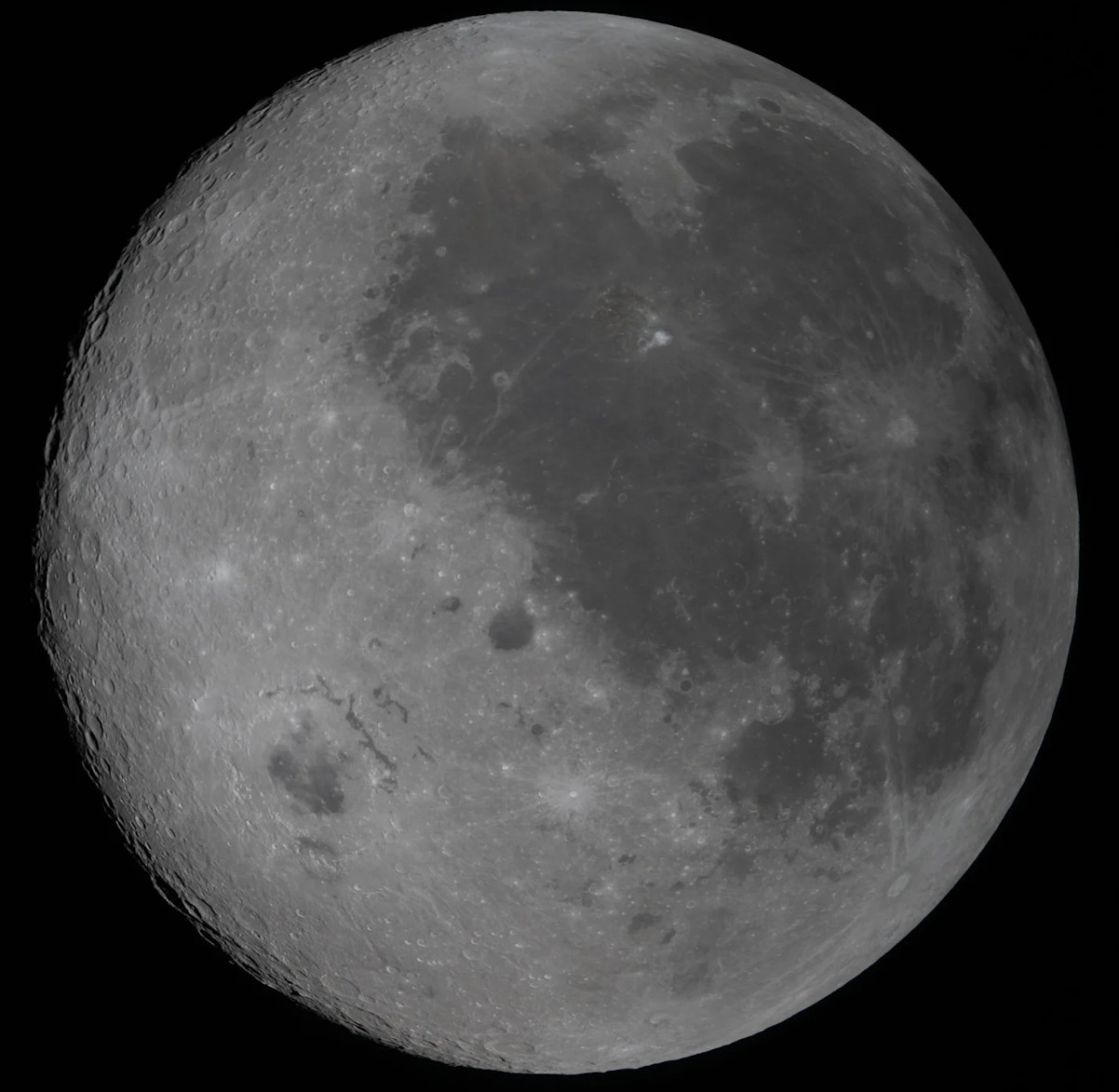 Just before 2 PM EST, the Orion spacecraft reached its peak distance from the Earth — 406,771 kilometers (miles 252,756 miles). This officially breaks the record set by Apollo 13, meaning the Artemis II crew have traveled farther from Earth than any humans in history.
They didn’t have long to celebrate however, as within the hour their lunar observation period started. Their trajectory through space meant they would spend just seven hours in close proximity of the Moon, and not a moment was to be wasted. Being the first humans to directly observe the lunar surface from this distance since 1972, they got to work not only taking photographs and videos, but dictating what they were seeing into wearable recorders as they swung around to within 6550 km (4,070 miles) of the surface.
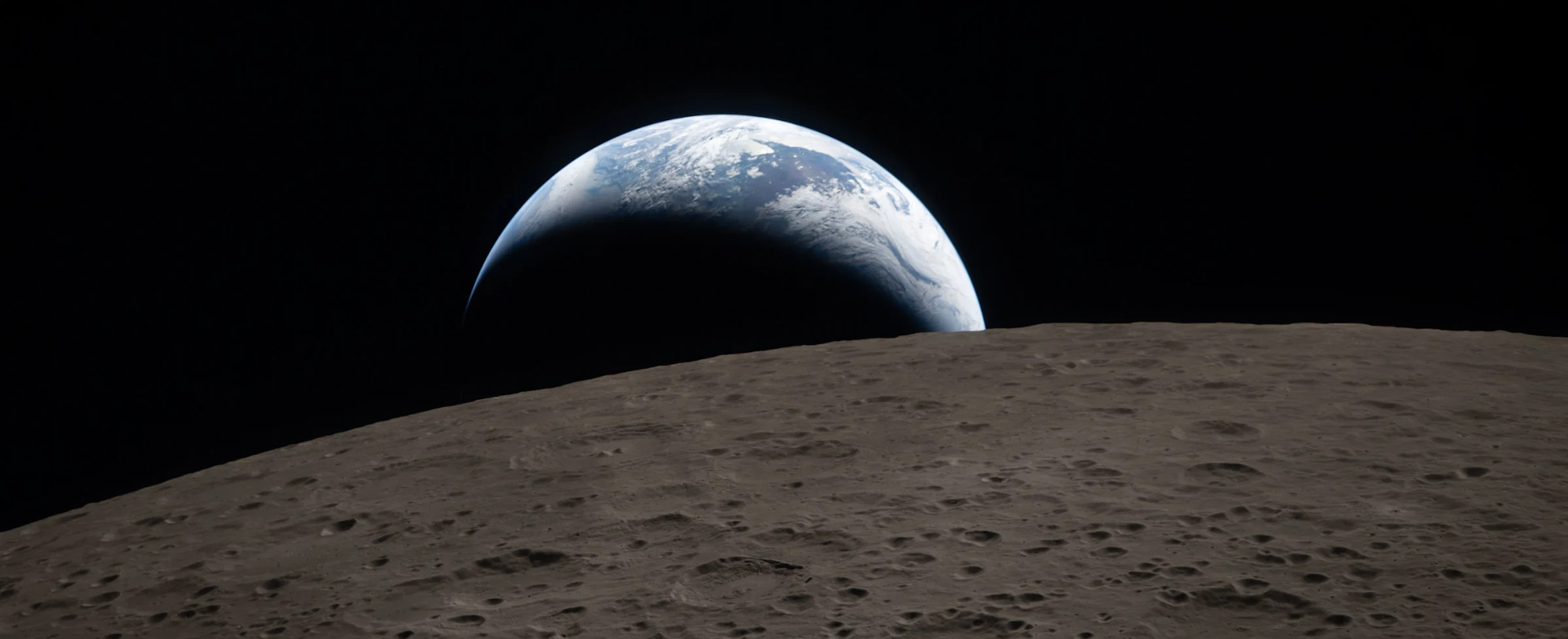
The crew was especially taken with the colors visible on the surface. From our vantage point here on Earth, we see the Moon in shades of gray. But when when viewed from such a close distance, the astronauts reported seeing shades of blue and brown on the surface.
At approximately 6:40 PM, Mission Control lost contact with the Artemis II crew. But there was no cause for alarm, as this temporary communications blackout was expected. Once the Moon itself was between the spacecraft and the Earth, the radio and laser data links were blocked for approximately 40 minutes. As data couldn’t be sent back to Mission Control during this period, all of the astronaut’s observations were recorded locally on the vehicle until communications could be restored.
Day 6 – Solar Eclipse
With the Moon between themselves and the Earth, the Artemis II crew became part of the exceptionally small group of individuals who have seen the far side of the Moon with their own eyes. But as luck would have it, an even rarer sight was yet to come. Leaving Earth on April 1st meant that the position of the Moon and Sun was such that the crew experienced a solar eclipse in space.
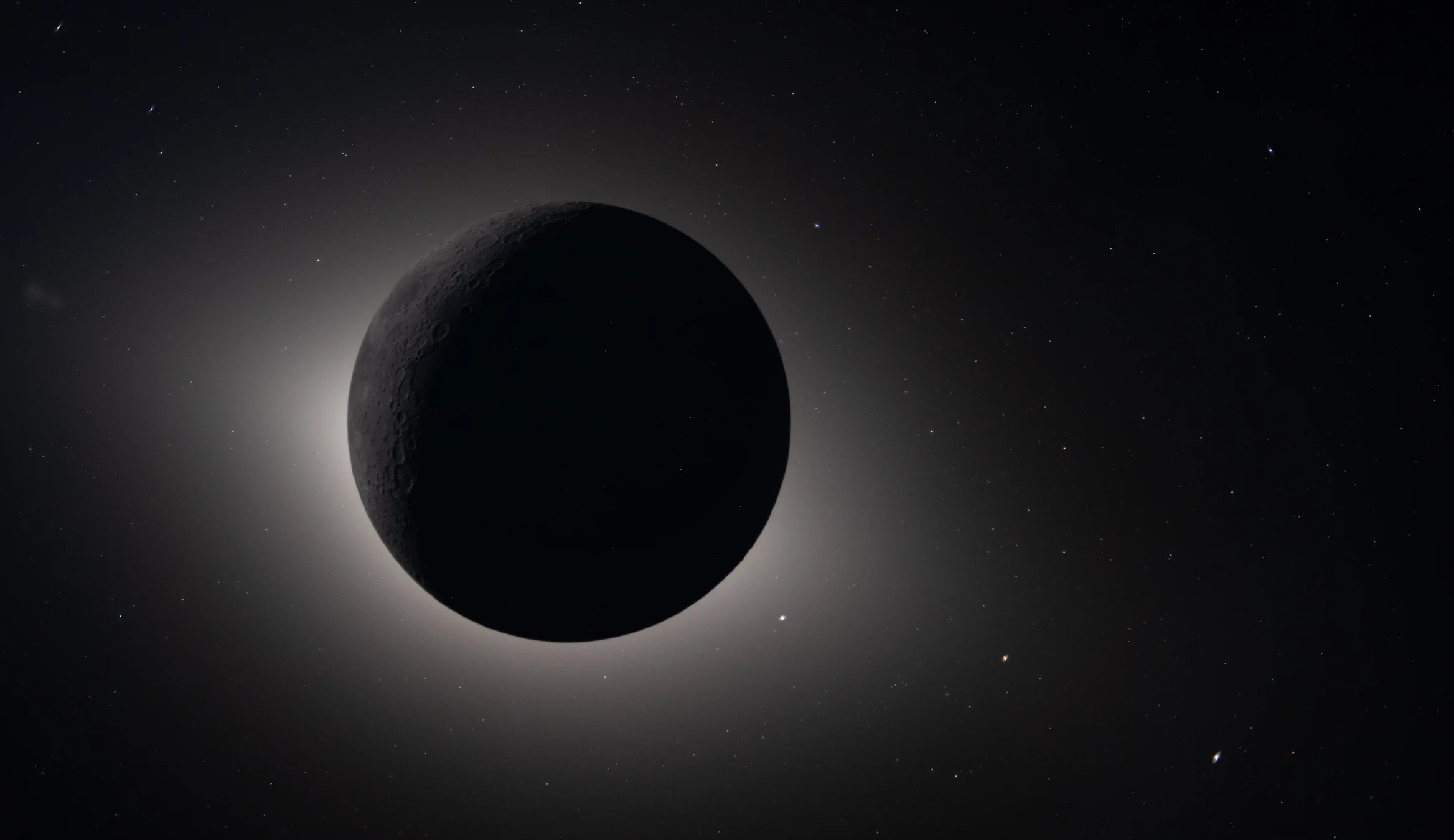
Up until this point images and video from the Orion spacecraft were devoid of stars, as they were during the Apollo missions. But with the Moon blocking out the Sun, the crew were able to see the blackness of space in a way that’s not normally possible. The photographs that have been downlinked from the spacecraft so far are stunning, but seeing the celestial phenomena in person was even more breathtaking. As Victor Glover commented during the hour-long eclipse, “Humans probably have not evolved to see what we’re seeing. It is truly hard to describe.”
The darkened Moon combined with the unique perspective offered by their retreating spacecraft provided the Artemis II with an opportunity to see meteoroid impact flashes on the lunar surface in real-time. Six such flashes were described by the crew during the eclipse, but it’s possible even more will be detected when teams on the ground get the chance to analyze the imagery recorded during the flyby.
Day 7 – Homeward Bound
Given the flurry of activity that took place during the lunar flyby, it’s perhaps unsurprising that the Artemis II agenda called for the crew to spend most of today off-duty — or at least, as off-duty as one can be when they are responsible for a spacecraft operating in deep space.
But before they got too comfortable, the crew was debriefed by the mission’s science officers. The idea was to get the astronaut’s first-hand accounts of the lunar flyby while the experience was still fresh in their minds. Combined with all of the data recorded by Orion’s systems, the testimony of the crew will play an important role in planning future missions.
The crew also took time to place a call to the International Space Station. The audio-only conversation between the Orion and Jessica Meir, Jack Hathaway, Chris Williams, and Sophie Adenot aboard the ISS lasted approximately 15 minutes. Given that crewed spacecraft regularly visit the ISS, performing this sort of ship-to-ship call isn’t particularly unusual. But everything is just a little bit more noteworthy when it happens around the Moon.
Day 8 – Change of Plans
The original mission agenda listed two major tasks for the 8th day of the mission: a demonstration of how the crew can shelter themselves in the event of a solar flare, and another period of manual piloting. But as occasionally happens in space, the reality of the situation ended up being a bit different.
With just two days left in the mission, it was decided that the crew’s time would be better spent getting the capsule ready for reentry and splashdown. As such, the radiation shelter demonstration was truncated considerably and the manual piloting exercise was canceled entirely.
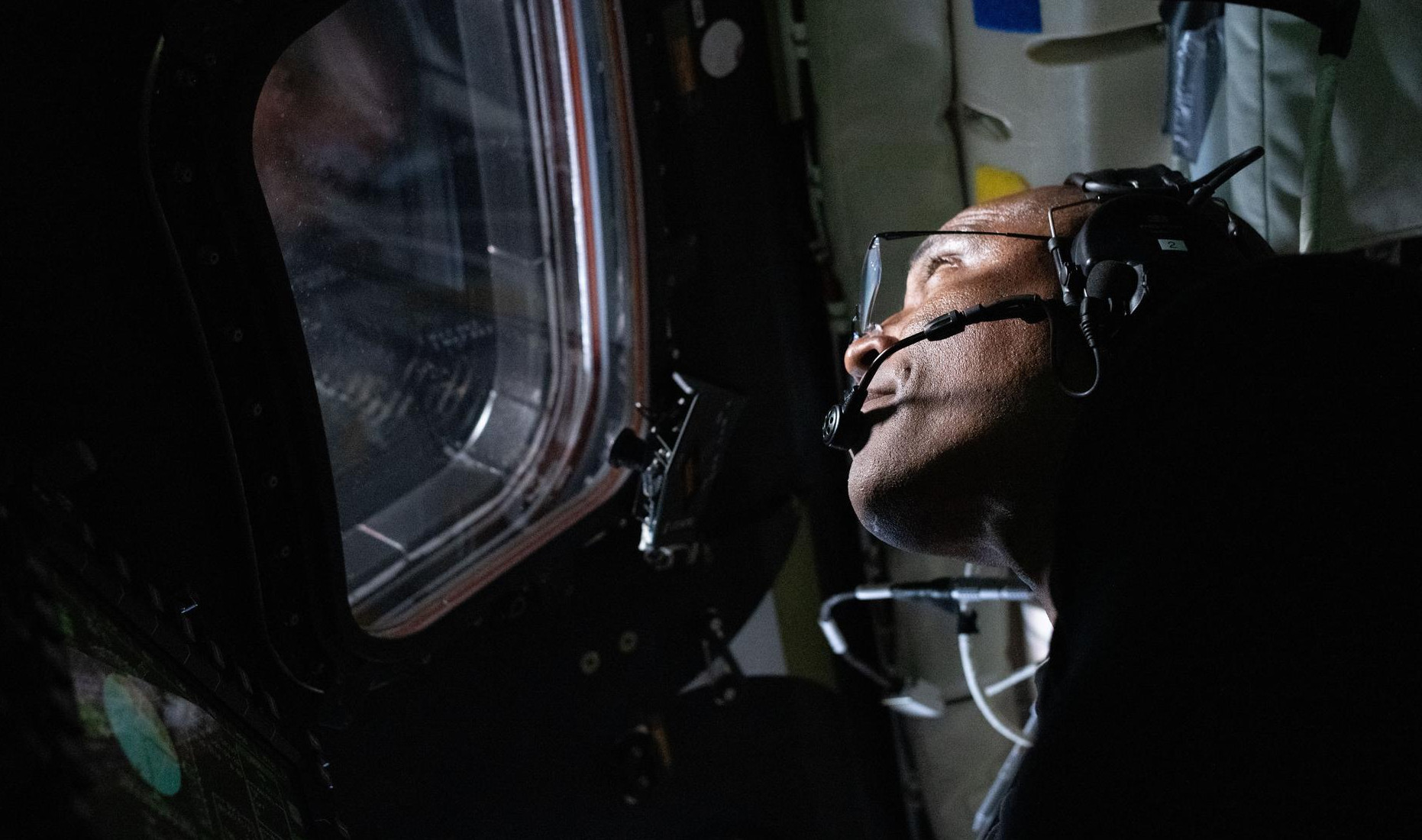
Given how many times the crew have taken control of the Orion capsule already, and how well those demonstrations went, skipping this latest piloting opportunity makes sense. However the radiation shielding demonstration was billed as a fairly important milestone for the mission, so this last-minute change of plans is fairly surprising.
But as explained in today’s press conference, the radiation shielding demo was actually cut short for similar reasons. According to Entry Flight Director Rick Henfling, a considerable chunk of the demonstration had to do with moving stowed materials around to reconfigure the inside of the capsule — a task with which the crew has already become very familiar with during their week in space.
Day 9 – The Final Countdown
Today was the crew’s last full day in space, and as you might expect, all of their activities were focused on getting home safely.
The bulk of the day was spent reconfiguring the interior of the Orion for reentry and splashdown. After living and working within the confines of the capsule for the last 8 days, there’s plenty of gear and personal items that need to be packed up and stowed away. The spacecraft and everything in it will be subjected to just under 4 Gs as it rips through the upper atmosphere at more than 38,000 kph (23,600 mph), so anything that works itself loose pose a major hazard to the crew and equipment. The crew also reinstalled their seats, which were removed shortly after reaching orbit to free up precious space inside the spacecraft.
Towards the end of the day, the spacecraft’s engine was fired for 9 seconds during the second Return Trajectory Correction (RTC) of the mission. It’s expected there will be one more RTC maneuver tomorrow afternoon to put Orion on target to splashdown less than 160 km (100 miles) off the coast of San Diego.
Day 10 – Entry and Descent
At 7:33 PM EST, the Orion capsule separated from the European Service Module (ESM) which provided it’s power and propulsion during the Artemis II mission. Using its onboard maneuvering thrusters, the capsule reoriented itself so the heat shield would face forward as it descended into Earth’s atmosphere.
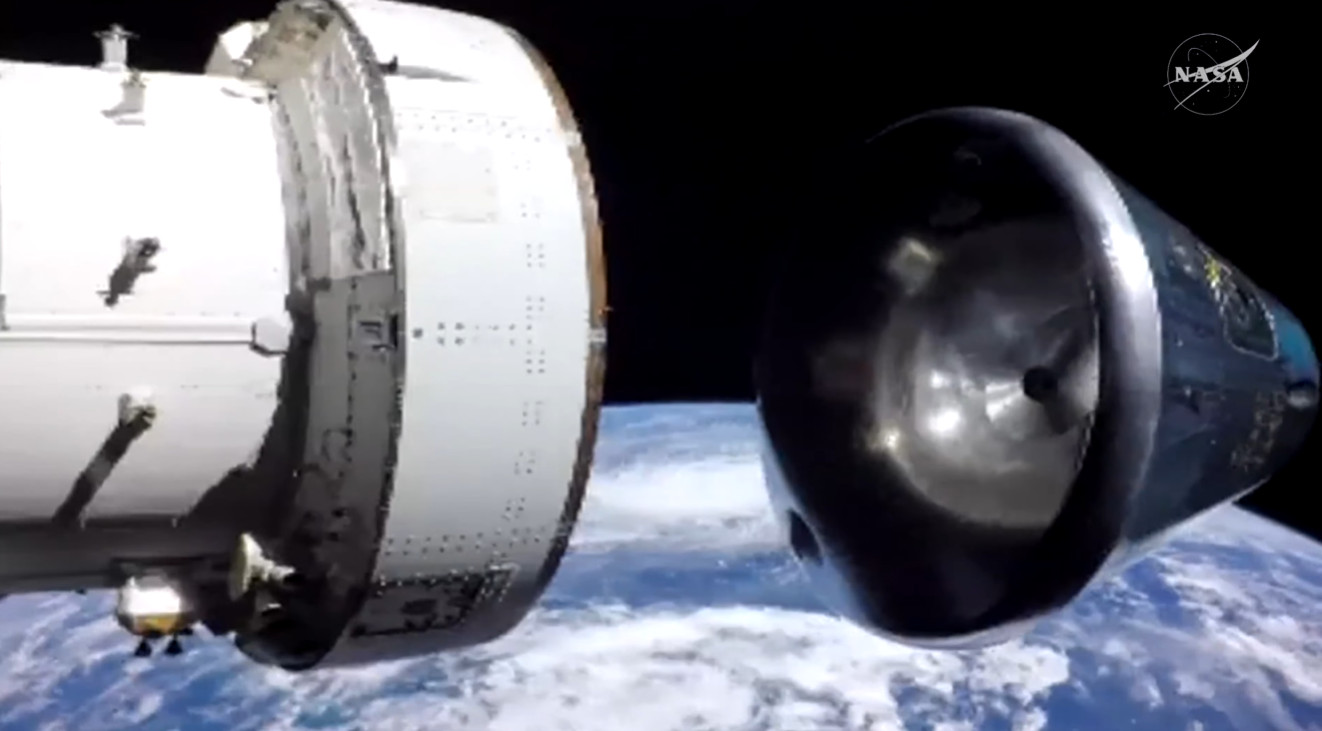
The entry interface, that is the point at which the capsule came into contact with the atmosphere, occurred at an altitude of approximately 120 km (75 miles). Orion’s maximum velocity was calculated to be 38,405 kph (23,863 mph), which is just shy of the record set during the reentry of Apollo 11. Shortly after entry interface, Mission Control experienced an expected loss of signal from the Orion spacecraft due to the superheated ionized plasma forming around the heat shield.
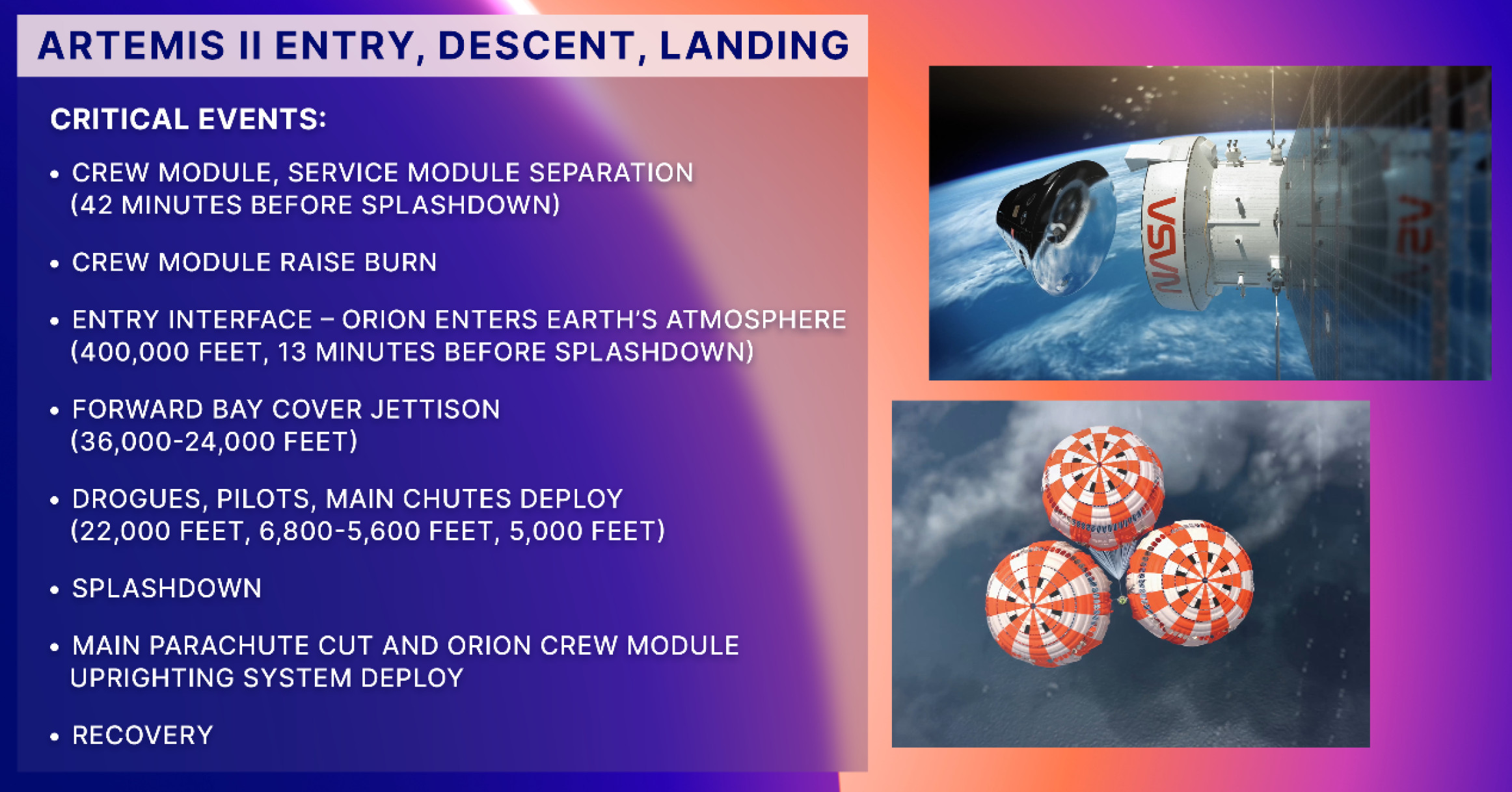
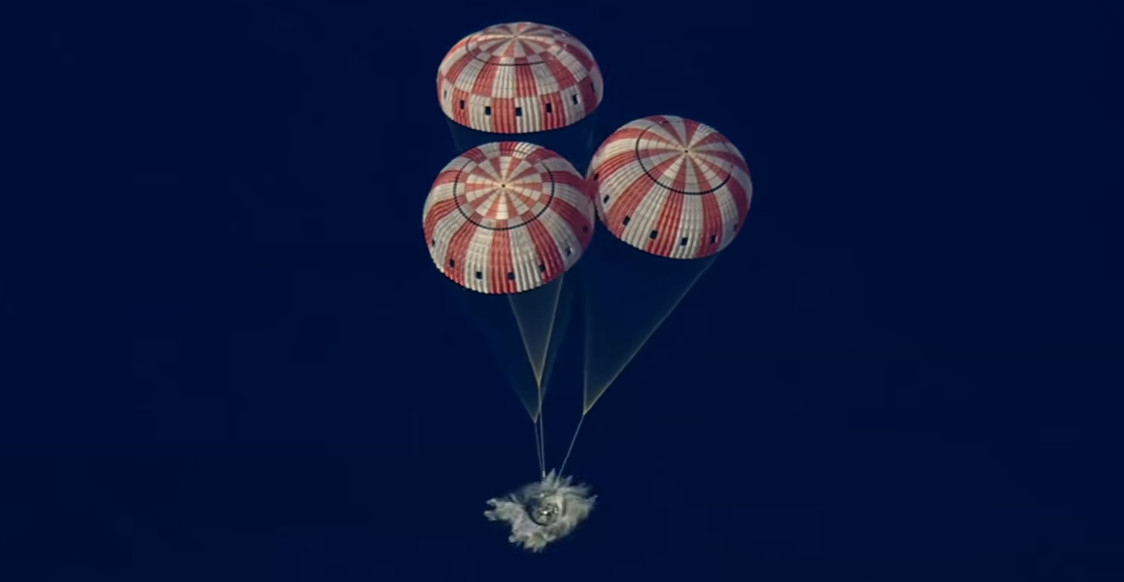
Communications were restored roughly eight minutes later, and at an altitude of around 7 km (23,400 feet), the spacecraft’s drogue parachutes were deployed to slow and stabilize its descent. Around a minute later, the drogues were jetisoned and the three main parachutes were released to bring the capsule’s final velocity to less than 32 kph (20 mph).
Day 10 – Splashdown!
The Artemis II crew officially ended their journey around the Moon at 8:07 PM when their capsule splashed down off the coast of San Diego. The final mission elapsed time (MET) was 9 days, 1 hour, 32 minutes and 15 seconds.












It was a magnificient live stream where billions of dollars were burned through the nozzles of the Senate Launch System to perform a task which could’ve been easily achieved by a robot for 1/100th of a price.
Fun fact: unless NASA develops an actual, working replacement for the Shuttle-era SRBs they’re now burning through – a project which is currently going nowhere – the whole Moon thing will in the best case see 5 more launches and then it’s over. They simply won’t have the hardware to lift any more cargo up there.
I’ve watched a CBS (?) live stream at midnight over here in Europe.
The special was fine so far, I think, but watching the regular American TV news in-between made me realize how strange, -err special-, that country is from my/our point of view.
That being said, it’s good to see that citizens now have something to aim for again.
May it cause a similar fascination that the first moon landings and Star Wars caused.
I just hope nothing goes wrong in the next few days.
Who’s to say you have to ascend quickly, an astronaut on a deck chair, dozen weather balloons and a small rocket for the final push, then skydive back.
As opposed the the vastly larger sum wasted on war-mongering.
That’s okay, both SLS are loud, polarizing …and orange.
What about the ESM, though? Isn’t it a promising piece of technology, too?
Wow, I’m glad you pointed that out! I’m sure no one at NASA thought of that.
Oh wait. They did. Which is why if you actually look into it, SLS’s original plan would’ve taken them roughly as long as it would take to human rate Falcon Heavy. And why in a lot of the old documentation it referred to SLS “or similar capability” launchers.
It’s almost like SLS was foisted in them and they made sure that it wouldn’t hurt them to use it in the short term.
I did not approve this message, that’s a fake Dude.
i can’t imagine a more stupid allocation of resources. if AI is all that it’s supposed to be (right, trillion-dollar companies>), hook it up to a camera and send that to the moon!
You should see how much California has spent on a high speed rail system in the last 18 years or so. And they don’t even have any track! Definitely a Hold my Beer project.
It could’ve worked in the era when video entertainment was provided only through the OTA TV and cinemas. I really doubt it will work with current population of smart-slaves to the mighty algorithm – be it TikTok, Netflix, YouTube, Instagram or whatever else. With attention span less than that of a fly looking for a shit they’ll be almost immediately distracted by the latest gossip, new rap “song” or another Urinal Engine 5 video game to be grinded through.
How are we supposed to know? If the current generation simply is too young to have never had a chance to try something different before?
Who knows, maybe they might like reading books and listening to CDs and stuff!
Let’s be more optimistic! 😃 It’s a possibility that they’re fed up with digital live after so long and love to try something else!
I myself was into astronomy and sci-fi novels in the 90s!
I had books about about space travel, solar system, dinos and so on.
One of the magazines I sometimes bought in the 90s was called “Star Observer”.
It had pretty computer paintings of far places, MIR space stations and space probe missions.
What now? Sorry I was looking at Tiger Woods’ flipped car.
Fake Dude.
Though I don’t disagree, but if you’re going to be me then you should avoid cheap edgelord shots like “Urinal Engine 5”.
i can’t imagine a more stupid allocation of resources. if AI is all that it’s supposed to be (right, trillion-dollar companies>), hook it up to a camera and send that to the moon!
Oh my, I often think that people that think that way seem to have been disappointed by life. 😟
They’re the ones who need to an opportunity to dream again the most,
who need something that’s meaningful to the them again.
At least the launch is not Zingy Ping’s, and Trump gets the glory. This IS the space race 2.0, US and them.
What? Is this going to be a sticky?
I’ll go to Nasa if I need to be informed… this is going to be a shitscroll
Artemis II Timeline tracker: https://www.sunnywingsvirtual.com/artemis2/timeline.html
An excellent comment – thanks! Super-detailed status.
That’s a good resource, though a legend of what all the acronyms mean would be useful
That’s against HaD policy.
What doe HaD stand for?
Our actual style guide, FWIW, is to spell out acronyms when we think they are not commonly used. So not PCB, or even CVE in the context of the Week in Security article, but absolutely for the kind of things that NASA is pulling off in that link.
Maybe your style guide doesn’t spell out what an acronym is but “HaD” isn’t one. The acronym would be H. Generally people who ask “What does S.A.S. (such and such) mean?” get slammed and techshamed. Apparently the era of geeks and nerds and I mean that in T.B.P.W. (the best possible way) needing payback will never end.
Feynman made the same complaint about NASA in the write up of his investigation of the Challenger disaster.
Thank you.
A wonderful perspective from the Carl Sagan of our day
https://m.youtube.com/watch?v=vo3Dy6Zd30g
Literally never heard of this person.
Same. “Science communicator,” he may be. Carl Sagan, he is not.
The person with the best weed on campus?
I am still fascinated by all the space stuff but the ISS and the Mars missions have shown how unrealistic human space travel is in any substantial form for hundreds of years to come.
All these missions can’t do anything without ground control babysitting every little detail. The autonomy is a Potemkin village. So if you need that anyway, just send robots: they are way more robust than us bags of water and nobody cares if you blow one up or leave them stranded. Get the basics down first, then worry about adding humans.
Actually, robots are not very robust. For the simple reason that they badly adept to unforeseen situations. Humans can asses and adept to a lot more situations.
I’m curious how you think humans will adapt to deep space radiation, the lack of oxygen and extreme temperatures. we can adapt to situations on earth, but not in space
Radiation shielding,
Mining oxygen from silicon dioxide, aluminum oxide, iron oxide, calcium oxide, magnesium oxide, etc
and finally proper spacesuit/vehicle/habitation design.
Radiation shielding can be done in various ways.
Forms of water (ice, liquid, gel etc), lead, electrostaticity etc.
People just have to get a bit creative here.
Electrostatic shielding is certainly creative.
OP meant unforeseen situations. Humans are great at thinking on the fly, adapting to failure modes not previously considered.
The things you mention are problems to be solved ahead of time.
Survivor bias.
Most people put in positions requiring that, fail, die and are forgotten.
Some get lucky and spend the rest of their lives telling the world that playing the lottery is a good financial plan and to ‘keep dreaming’.
well yea survivor bias. Thats how we grow.. by people doing dangerous things and then learning from those experiences. Not all of those experiences will be good ones.
How would humans react if their urine-to-water system failed on a Mars mission? In case of abort return flight takes about 2 years. That’s not an issue when it’s a bunch of electric motors powered by a piece of red-hot plutonium instead of a human.
And how would a robot execute a nonstandard, non-documented repair process invented on the fly by ground control to fix an issue (which is apparently what was done to solve the urine-to-water issue)? Humans are flexible and adaptable, with onboard AI (Actual Intelligence) that can grasp concepts and infer data much quicker than a machine.
When the human mission goes wrong, the objective changes from science to bringing the humans back alive. The science is lost while the costs keeps racking.
When a robot mission goes wrong, the loss is a tiny fraction of the cost of the human mission, so it can just be abandoned without further loss.
“When a robot mission goes wrong, the loss is a tiny fraction of the cost of the human mission, so it can just be abandoned without further loss.”
Exactly.
And because human spaceflight missions are inherently VASTLY more expensive than unmanned ones, the question SHOULD be “What science REQUIRES a highly fragile biological unit which requires food, water, a room temperature pressurized oxygen/nitrogen atmosphere with CO2 scrubbing, massive shielding and exercise machines for long flights, low G loading, and functional Zero-G toilets, all in an otherwise empty, large volume that can’t be done with a unit in a much smaller space that only requires sunlight (or Pu-238) in a vacuum?”
NASA, in my opinion WASTES 50% of its budget on human spaceflight thanks to lobbies, their politicians, and NASA administrators selected because they love Spam in a can spaceflight as Chuck Yeager called the Mercury capsule. That’s why the, according to NASA’s OIG, $4.1 BILLION per launch SLS is also called the Senate Launch System. Science via lobbyists and politicians. Brilliant.
I’d rather see MORE surfaces of planets and moons through HD robotic eyes than send people on what are mostly just taxpayer funded joy rides that millionaires/billionaires pay millions to experience.
And on the myth that it requires human payloads to hold public interest, the public quickly bored of the Apollo missions until Apollo 13 temporarily renewed interest while record web site hits have been seen for some of NASA’s robotic missions.
Book: The End of Astronauts: Why Robots are the Future of Exploration (2022)
@Dude @Winston The way you speak makes me wonder: Do you value human life, at all?
When you talk about costs, it’s not clear to me what you guys mean.
If it’s a high cost to send humans into space or if it’s a huge loss if humans get lost in space.
That’s why I’m asking for clarifying, because someone could misunderstand it and think you value robots over real people (and not just in space).
Thanks in advance.
In the USA, maybe. People on other places on earth with a longer attention span and less sensationalism might beg to differ!
Alas, it probably doesn’t matter to you guys.
To you guys, “to all mankind” wasn’t more than a PR stunt, right?
While the rest of us saw human beings landing on the moon, your kind saw nothing than a flag and some tax money spent on a rock. So sad! I pitty you. 😮💨
So it looks like you’re trying to say that robots aren’t very adept at adapting.
Oh look, SLS was really a balloon
https://m.youtube.com/watch?v=fNPqkBLAm4M&source_ve_path=OTY3MTQ&embeds_referring_euri=https%3A%2F%2Fwww.secretprojects.co.uk%2F
Moon Hoax Believers and NewSpacers
Both full of garbage
Have you seen how far Perseverance has traveled on Mars in five years? 25 miles. The lunar rover on Apollo 17: 22 miles. In 4 hours, with 1970’s battery and motor technology. And with dudes and movie cameras running.
The moon isn’t Mars, and the science missions were different, so I’m not saying one mode should be favored exclusively over the other. But watching people tooling around on the moon…
https://www.youtube.com/watch?v=QJW2Za9sg0c
Although now that I think about it, the first two lunar rover missions were purposefully limited to a radius that the astronauts could plausibly walk back from if things broke. But the third, they had enough confidence to push out the boundary even further.
Risks are higher with people in the seats. But so are the rewards.
I think the reason no one has been to the moon in half a decade is because all the possible rewards were reapt. They did an incredible proof of concept but discovered so many pitfalls along the way that they simply could not reason or justify to push that concept any further at the time.
Since then it seems all that institutional knowledge has been lost and we are bound to discover again that not having a million-million ton-cubic-kilometers big life support system will make things really really hard for us. Given the amount of humans that will actually travel there: for the rest of us it does not make a difference if we send a robot who does the exploration.
Maybe slower now, but until humans can actually set foot on the Moon again the artificial agents will easily be good enough to do the same job much better much faster. We can even send some crates with backup units if failure occurs.
Personally I have no problem with the Moon inhabited by Boston Dynamics Bots running on OpenClaw agentics – let them roam the Moon wild and free and see what happens.
I don’t think the possible rewards were realized, I think the politicians lost their will. There was no motivation to beat the other guys to whip people up to justify the budget which was a significant part of the Federal budget, now it’s not even a 10th of that. There wasn’t the memory of murdered young(ish) visionary to drive pride and to also distract from a very unpopular war and multiple missteps in socio-political fronts. NASAS’s engineers wanted to do a lot more, but the reality of budget restrictions caused them to re-evaluate where to put effort.
There’s a lot more to discover on the Moon. We’ve barely scratched the surface, literally and figuratively. However, I’d rather see them spend effort on capturing an asteroid and mining it, but maybe a private company should be doing that work?
What would you do up there that can’t be done on the ISS or on earth?
That would be mainly studying the geology of the moon, which might be interesting from an academic point of view, but not very useful in any other. To sell it to the public, you’d need to use the old rhetoric about developing new technology as a side effect, which is begging the question that we couldn’t develop the same without actually going to the moon.
The “new technologies” argument about the original moonshot was also a bit fake, since the major technologies that did come out of it existed prior and were adopted into the program. They scoured the market for things that they needed and put a NASA spin on top for marketing.
@Dude China doesn’t seem to care about that.
If the US doesn’t want to participate in manned moon missions, it doesn’t have to. That’s fine.
The US had its heyday and relevance in the 20th century, anyway.
Now follows the inadvertible decay, as you and your sameminded fellows had wished by the virtue of your mindsets.
Other nations would be happy, even, if Coca Cola and Starbucks wouldn’t set a foot on the moon, eventually. ;)
So far, China has been sending robots.
Like everyone else, so far? Artemis II hasn’t even left orbit “so far”.
And it’s not even sure that the expertise for a moon landing is still there.
The flyby is an historic event for sure, but it’s less ambitious than Apollo 8 (real orbit) and it’s not sure if 50+ years of standstill can be overcome so easily.
US space program has fallen behind a lot since the late 20th century.
While China by comparison has done a lot since it had been excluded by the US from an ISS partnership.
China has its own space station right now, which other nations haven’t attempt so far.
It’s a nation that rises, unlike the US, which looks like an old empire on a descent.
Please don’t get me wrong, I’m not looking forward to that, it’s worrying.
But the very obsession with money and profits now shows its consequences.
You over there have shaped a culture that values human life very little.
And it shows on all levels. Health, food production, quality of appliances.. Profits about everything.
If people have no ideals and dreams anymore they become mere consumers and producers, rather than human beings.
In the end, they might be become or replaced by robots, too, maybe?
They’re further up the far than China. Your point?
So far it’s been catching up to what the Soviet Union did in the 1980’s. Launching orbital stations is not new, it’s just a matter of how much other people’s money you’re willing to spend on it.
Ah, I see. Money. The k*ller argument again.
Maybe, just maybe, there’s more in life than money.
It could maybe cross someone’s mind that some nations care about the future and the development of their society?
Last time I’ve checked space programs were also peace projects and a matter of international co-operation.
They allowed certain acts of diplomacy that were not possible here on earth.
Which are priceless in times of war and international conflicts.
The co-operation of space programs between US and US/SR maybe prevented WW3 in the height of cold war.
– I know sounds sentimental and naive. But really, this co-operation built a certain level trust and mutual respect. At least among adults.
It allowed both opponents to de-escalate without loosing face.
This is something that robot missions alone can’t do.
Astronauts are heros or do represent humanities, best, at least.
Like philosophers or priests. And right now, the US needs some heros the most.
Not Superman or Captain America, but real people they can look up to.
People who remind them that everything is possible, even reaching for the stars.
And this is priceless. Because people don’t just seek power and wealth but also purpose in life.
People want to be useful, want to be needed. Even the rich.
That’s why they do these crazy projects when money becomes irrelevant to them.
They want that their live has a meaning, a purpose, want to be truely loved for something done right.
Dude, I see that your knowledge is very profound in terms of business and various forms of goverment (capitalism, socialism, marxism etc). Kudos.
But what I’m encouraging you to do is you try to learn more about human psyche, how people feel inside.
Money is important to pay safety and to provide comfortable living, but it alone doesn’t bring people an inner fulfillment.
China is a high-tech nation, though, which the UdSSR wasn’t exactly.
And it already has surpassed the US and Europe in certain fields.
Solar panels, for example. Or engineering, mechanical high-precission, e-car production, microchips etc.
Unlike the US it also has clean streets, trams and subways and health care.
With their average citizen being well educated, disciplined, not obese and good mannered in public.
By direct comparison, the US looks like a slum most of time.
The cities, not the breathtaking North American nature, I mean.
The subways are dirty and are running on 80s era technology (the one part I find fascinating),
most cars run on conventional petrol.
Public transportation (trams) is barely existing, because of cars. Buses lines are next best thing.
Bikecyclists and pedestrians are people second class.
Kids have no place to go to nowadays (few playgrounds, malls, etc).
Playing on street is dangerous, again because of car centric planning.
In political sense both have more in common than what sets them apart, I’m afraid.
Both are lead by authorian regimes that spy on their people and want to dominate the rest of the world.
And they’re both into ice cold capitalism, too. Business comes first, diplomacy second.
The interviews of their leaders make it seem like that, at very least.
The lunar rovers had a limited range of 57 miles with single-use batteries, while the Mars rovers are built to move indefinitely using solar power. They’re power-limited to move very slowly.
And they generate more data faster than scientists can write papers about, because the Mars rovers actually stop and take photos and measurements along the way.
Or an RTG, but that’s the same point: it only has 110 Watts to run everything, with a margin to account for the RTG fading over the years.
The popular Voyager RTGs are no reference, though.
They were designed for a small lifespan of a few years.
The radioactive material itself isn’t even the problem here, but the decay of the Voyager RTGs themselves.
In simple words, it’s like with a carbon battery that dissolves before the material itself has lost its value as an energy source.
I’m not talking about Voyager’s RTGs, but the one in the Perseverance rover.
https://en.wikipedia.org/wiki/Multi-mission_radioisotope_thermoelectric_generator
A great deal of the power will be consumed on the computers running the communications, data collection and path planning. Relatively little is used for actually moving the rover because it does not need to travel very fast.
It’s more fun to drive a slow rover fast then a fast rover slow.
American rovers should have capacitors for bursts of extra power.
Roosting gravel as the probe starts moving or makes a turn is America marking territory.
The lunar rovers had 1 HP of power in total, and an effective weight of 73 kg fully loaded under lunar gravity, so in terms of sticking to the ground they were driving around like a kid on a minibike.
Of course, weighing 73 kg while having a mass of 440 kg meant that you were going around like a curling stone on ice. Lots of inertia, no traction.
The key is COST versus scientific or commercial return. Just to support the ISS for one year costs as much as the total cost thus far of the entire 13 year Curiosity rover mission. The total cost thus far for the ISS has been greater than the total cost for ALL NASA unmanned probes since 1958. Which do you think have been more scientifically productive.
How about those chocolate chip cookies baked on the ISS:
Grok 3 AI: Amortizing the oven development, oven and ingredient transport to the ISS, and crew time at $130,000 per astronaut per hour charged by NASA for commercial operations across just the five cookies baked, that comes to $272,000 per cookie. Most realistic midpoint, recognizing it was a partly subsidized demo: ~$75,000–$150,000 per cookie.
Check out the firms working on helium 3 mining on the moon. What are they planning to use? Robotic miners remotely supervised from Earth.
BTW, for Mars, if and when humans biologically pollute it, we will never be able to answer for certain one of the most important questions in science – did life evolve there independently. Even an uncrewed Starship landing there, being totally impossible to clean to the planetary protection level of unmanned Mars landers, will do the same.
Human spaceflight is incredibly expensive. Apollo was 99% political wiener waving and the reason no human has been back to the moon in 54 years is because for science or commercial reasons it is not even remotely worth the huge cost. But now, once again for mainly political reasons we’re doing it again in a moon race v2.0 with a country WE BEAT TO THE MOON 57 YEARS AGO!
Q: What is the total cost thus far for all aspects of the Artemis program?
Grok 3 AI:
A 2021 NASA Office of Inspector General (OIG) report estimated $93 billion in total projected costs for the Artemis program from FY 2012 through FY 2025 (including about $37.2 billion already spent as of early 2021, with the rest projected through 2025).
Q: What would be the height in feet and miles of a $93 billion stack of crisp, new $100 bills and what distance would they span in miles if laid end to end?
Grok 3 AI:
The stack would be about 333,250 feet tall (roughly 63 miles high).
Laid end-to end they would span about 90,120 miles. For comparison, Earth’s circumference at the equator is about 24,901 miles, so this chain of bills would wrap around the Earth roughly 3.6 times.
Book: The End of Astronauts: Why Robots are the Future of Exploration (2022)
The Martian atmosphere is as useless as the lunar atmosphere for human purposes. Mining oxygen? Pull the other one.
Shoot, I better go tell the scientists with an experiment on Perseverance doing exactly that that ialonepossessthetruth on Hackaday says they’re wrong!
Young whipper snapper !!! Heresy against the church !!! If man were meant to fly, he’d have wings !!
And this thing called, eeellektrissity… it is demonic !!! work of the Devil !!!
We must get horses !!! God is angry at these abominations called – aautowmobeels ! (why do you think so many people are taken to the firey pit every year ?)
Heathens !!! all o ya ! Repent ye sinners !! tek-na-la-gee is evil !!!
Muahaha! Best answer around, even if it misses the point of my post. ;-)
Did you see too much Catweazle?
You can never see too much Catweazle!
Science fiction novels have some interesting ideas here.
Traveling inside solar system isn’t too unrealistic, also, I think.
Colonies on moons and asteroids are possible even with our primitive technology of today – and the more sophisticated one from 50 years ago. ;)
It has the “fiction” part in its name for a reason. ;-)
Take a look around you unless you are in downtown somewhere: even the tiniest garden on a balcony is a bigger and more extensive life support system than even the whole of ISS can provide. 100m² are the rough requirement for sustainable self sufficient food supply for a single person on Planet Earth. And that does not cover oxygen supply, medicine requirements, and other little things.
An algae bioreactor capable of supplying oxygen for one person typically requires a volume of up to 100 liters of dense, highly illuminated Chlorella culture, To maintain this, a surface area of approximately 8 square meters (86 sq ft) of illuminated area is generally required. If using artificial light and spiralized tank design you can pack the that surface area and a greater than needed volume into a 1 meter diameter cylinder that is 1.25 meters tall.
Food production would naturally reduce the total algal requirement as well but its a reasonable size on its own.
As to your 100m2 calculation for food production is a very earthbound notion where space is not at a premium. Most plants have performed poorly in low grav so it will likely be necessary to use simulated gravity to efficiently grow in space. A 6 meter diameter cylinder that is only 3 meters in height exceeds your 100m2 requirement. That would require ~17.25rpm to approximate 1G.
Scaling for multiple spacepersons could be accomplished either by increasing these cylinders heights or by nesting multiple units together.
Another option would be to surround the first growth cylinder with a larger diameter, slower rotating cylinder for additional growth/simgrav environment.
There was a guy on Youtube that actually tried to make enough oxygen for one person from algae, and with several 100 liter barrels full of it he still failed. Turns out the algae is a bit picky on how it likes to live.
Yes a guy on youtube certainly represents the potential for the greatest minds on earth to construct an algal bioreactor capable of the task. /s
Sure. Because without actual testing things do remain a mind experiment only.
But many of the ideas are scientifically being backed rather than being based on, say, magic.
A lot of science fiction authors do spend some deep thinking into their imaginary worlds and their physics.
That problem is being covered by sci-fi novels, too.
There are various ideas that try to solve it.
From genetically modified plants and humans over alternative types of food (protein bars etc) to food synthesizers..
Star Trek picked up the latter, before replicators were introduced.
One notable reason as to why space exploration is so delayed is the conservative thinking, maybe.
It’s been over 50 years since the first moon landing and best that space agencies have to offer are flying cigars.
If, for example, other types of propulsion had been tried out in the past 70 years, then the situation would be different now.
Ion drives are one of them which materialized and they are useful for longer travels.
Ion drives are limited by the amount of electricity you can generate, so they’re not powerful enough to push you off the ground.
Generating electricity up in space is another matter entirely. If you want high thrust, you need hundreds of megawatts of electricity. That’s one mighty solar array. Batteries simply don’t have the energy density to drive the system, and other types of generators run into trouble with thermal exhaust into the vacuum, because there’s no convection to carry the heat away.
Not in human time scales, because the thrust is so low that it takes years to accelerate and stop.
Ion drives provide a steady acceleration over a long period of time that can build up, which is already used for space probes.
Putting humans in winter sleep might be one way to make a 10 years journay happen, maybe.
I’m just a layman here, of course, so I don’t know the exact numbers.
Another, more radical concept was using atomic power directly for propulsion.
“If, for example, other types of propulsion […] Ion drives are one of them which materialized ”
The concept of ion drives dates back to the 1910s. The first ion thruster was built in the 1950s and flew in the 1960s. The only propulsion type that is remotely reasonable that we haven’t tried yet is nuclear thermal (nuclear electric is just an ion thruster), and we’ve flat-out built those – we just haven’t flown them.
And as impressive as it sounds to say “nuclear thermal” they’re not that much better than chemical rockets. It’s like a factor of two, and it might not even be that depending on what’s needed for the humans.
What you’re not understanding is that it’s not propulsion that’s been limiting deep space travel. It’s biology. Nothing you do is going to get people even to Mars in less than ~month time scales, which means you need to understand how humans survive in space for months.
And guess what we’ve been doing for the past 50 years? And we’re actually getting to the point where we understand it now!
“Putting humans in winter sleep might be one way to make a 10 years”
Do you have any idea how long it would take to prove that you could put people to sleep for a decade safely?? Something like that is centuries away. Biology research is slow. It has to be. Because biology is slow. You can’t speed up the Universe.
“Not in human time scales, because the thrust is so low that it takes years to accelerate and stop.”
Ion drive thrusts just depend on how much power you want to throw at them. NASA actually worked out how realistic Andy Weir’s Hermes trajectory was in the Martian – to make it work was a VASIMR-style ion engine at 15 MW, obviously nuclear powered, but certainly not crazy. (Weir’s original estimates sidestepped the details by just assuming a constant acceleration, not a practical drive).
And there are studies for extremely large solar arrays, because it’s not like there are actual fundamental constraints there: multi-thousand square meter solar arrays also aren’t impossible, although the nuclear option makes more sense to me.
I was thinking in a minimum time scale of months, actually.
Sailors on sea had to spend a long time abboard the ship.
Up to 12 weeks (3 months), depending on the journey.
From a psychlogocial point of view it was doable centuries ago already, obviously.
And the men had no entertainment or mental support.
In a space ship there’s more piracy and companionship than on a 15th century sailship.
I was thinking about something more, um, radical, actually.
Wikipedia: https://tinyurl.com/45bsfund
How to properly stop remains a question, though.
Simply turning around is a tad bit too simple, obviously, I guess.
Another kind of propulsion was featured in Space:1999 decades ago.
It was in episode “Voyager’s Return”.
It might haven been a fusion drive, according to the sources.
https://tinyurl.com/2mcexy4s
@Joshua
“Up to 12 weeks (3 months), depending on the journey.
From a psychlogocial point of view it was doable centuries ago already, obviously.”
Psychological? The issue is PHYSIOLOGICAL.
Astronauts lose approximately 1% to 1.5% of their bone mineral density per month in microgravity
Astronauts can lose up to 20% of their muscle mass within just 5 to 11 days in space due to muscle atrophy in microgravity. Without the need to support their weight, postural muscles in the back, neck, calves, and thighs deteriorate rapidly, with significant loss occurring within the first two weeks This can reach up to 50% loss in long term missions.
The absence of gravity confuses the inner ear and brain, leading to “space motion sickness,” spatial disorientation, and difficulty in controlling movement.
And thats just some of the issues that weve spent the last few decades attempting to sort out in low earth orbit.
Goes quite a bit deeper then youre considering
@joshua
PS A complete round trip to mars takes over two years (roughly 6–9 months there, over a year waiting for proper alignment, and 6–9 months back)
If you do not wait for the optimal planetary alignment (which happens every 26 months), you must cross a much greater distance to reach Mars. This requires significantly more fuel reducing cargo capacity.
Is that so? Um, did I say (write) anything wrong so far? If so, what exactly? 🤷♂️
The loss of muscle mass, bone density and other physiological issues had been a topic in both science fiction and research for ages.
And I think I’ll leave it that way for now.
To my understanding, the mental health for a crew is most important.
In case of trouble, it has to keep calm and rational all time.
A panic would be worse than loss of muscle mass, I think.
As long as they’re in zero gravity, that issue is econdary.
Okay.
Physiological effects are NOT secondary. Theyre the primary obstacle to deep space travel. Mental stress is far easier to overcome than the degenerative physical conditions.
You cite 3 months at sea, and shrug off the reality of 2 years of low G that mars really requires. Yet Valeri Polyakov 437 days, 18 hours and Frank Rubio 371 days, the two longest continuous periods a human has been in space fall far short.
it’s not propulsion that’s been limiting deep space travel. It’s not psychology, Its biology.
“I was thinking about something more, um, radical, actually.
Wikipedia: https://tinyurl.com/45bsfund”
NASA’s Project Orion was still the same scale timewise. It’s just specific impulse. Nuclear pulse is still on the order of thousands, which is similar to ion drives. The advantages that Orion would have is that it’s high max thrust, but that’s not as big an advantage as you might think (send the humans separately).
It’s just not as big an advantage as you think it is, and definitely not for the additional complications compared to, say, nuclear electric.
“One notable reason as to why space exploration is so delayed is the conservative thinking,”
Conservative?!? The current spaceflight fatality rate is around 1 in 40! These agencies aren’t conservative! This stuff is just not easy.
“100m² are the rough requirement for sustainable self sufficient food supply for a single person on Planet Earth.” Without hunting or fishing? Not buying it. Challenge.
It’s a “spherical cow” approximation, or “first principles” as Elon Musk would call it.
You can grow X calories of food on a square meter of land, a person needs Y calories to live…
Still not buying it. Metaphorically is this the 100m² you want to die on? Again challenge. Double jinx super challenge.
https://www.google.com/search?q=how+much+land+is+needed+to+sustain+one+person
https://www.google.com/search?q=how+many+square+meters+in+an+acre
And because I’m fair-minded, https://www.reddit.com/r/Permaculture/comments/ayiz0t/400kg_800lb_of_home_grown_produce_over_12_months/
Elon Musk? Hmm, that’s the Hypertubelink guy, the guy who got government subsidies, innit?
https://www.congress.gov/119/meeting/house/117956/documents/HMKP-119-JU00-20250226-SD003.pdf
Why yes it is.
Health and safety culture.
Kill it.
Look at mega projects on earth in the 21st century.
In the so called first world we spend a fortune on site safety which is very over the top. It’s a huge amount of the budget in any project.
Look at HS2 in the UK for an example and whilst corruption is rife, the H&S culture is a massive part of it.
Now lets just do away with it.
Hire people with common sense. but tell them hey, this is dangerous but we’re going to pay you a ton of money and if you get injured these are the agreed payouts.
No one is forcing them to sign up, but you’ll have a queue round the block.
Many competent people just hate the H&S culture which stops them from doing the actual job because some moron with a clipboard whose never done the job or any physical labour let alone anything remotely dangerous in their life has “risk assessed it” and they have decided as the dictator in charge that it’s too dangerous.
Climbing a ladder….
That doesn’t mean that corners would get cut. No, have peer review. No H&S culture doesn’t mean everyone starts running with scissors!!
It would cost less than enforcing the H&S culture in the first place which actually doesn’t stop accidents anyway.
Meanwhile in developing nations, people die and they hire a new guy.
It’s how we got stuff done back when we were building infrastructure in our golden ages.
I most ly agree, but this one reminds me of Alien 1, the crew of the Nostromo and the evil Weylan corp.
To non-US citizens, this film is less sci-fi but more of an documentary of American work culture.
People should never be treated as resources, otherwise they’ll stop to really care about their jobs and their missions.
Weyland-Yutani were not evil in the first Alien film. I assume you are referring to order 937? “Return organism, crew expendable.”
It’s a sensible order, if a vessel encounters alien life, return it. Due to the value of that discovery nothing else matters. Callous, sure, but not evil.
Reminds me of the steel workers falling from Empire State Building in the early 20th century.
They too had no safety or worker rights. They were simply disposable.
That’s NewSpacers
Rockets reusable…workers expendable.
https://www.workerscompensation.com/daily-headlines/workers-file-lawsuits-against-spacex-for-workplace-injuries/
Common sense won’t help anyone if the people making the decisions are not effected by the results. Most recent example I have here, is I work on medical products. We ran into an issue where the device goes into error. Reaction: “Disable that error, it’s not needed, other checks cover the risks”.
As software developers, our spider sense tingled. And after sitting down for 30 minutes, we found two scenarios where disabling this error could kill people.
Proper investigation of why the error happens takes time, and will delay rolling out the product. So management decides that it’s worth risking other peoples lives for profit.
Common sense? These are the same guys who do override a fuse in a CB radio with a bit of alu foil “to fix things” and then do wonder why some magic smoke comes out of it! 😂🥲
I’ve actually heard using a ladder (for anything) in an industrial setting being a ‘huge red flag’.
They didn’t mean you should use a pallet on a forklift and get a ride.
‘They’ mean you should always get a scissor lift when you see something you can do with a ladder.
But give ‘them’ some credit, their rules are written with ‘tards and scammers in mind.
OMG! I recommend watching “Staplerfahrer Klaus”. 🥲
https://www.youtube.com/watch?v=TJYOkZz6Dck
Best training video ever.
Also classics are “Elektriker Horst” (Electrician Horst) and “Schadensmeldung eines Dachdeckers” (Damage report from a roofer).
I don’t think they have English subtitles, though.
But that’s okay. The pictures alone tell most of the story anyway.
In the roofer video it’s basically about the roofer himself telling the events that caused his damage.
He types a letter to his health insurance very politely on a typewriter.
The funny part is also how calmly he describes everything (action/reaction),
which is in stark contrast to the cartoonishly violent events that happened to him.
Even with limited German skills it can be understood by the sound of his voice.
“Schadensmeldung eines Dachdeckers”
Also known as “The Bricklayer’s Lament.”
Mythbusters had a go at attempting to reproduce this:
https://www.youtube.com/watch?v=M-XLvINquy8
They do that in Russia. The problem isn’t safety culture, which doesn’t exist there, it’s unaccountability, which is prevalent in both places. Your payouts – are they financially debilitating to the company? Do they target executive wealth? Are there jail terms for executives for willful endangerment? Are there precisely zero ways for the company to get out of paying these payouts? Are lawyers engaged in blocking these payouts under mandatory threat of investigation for malpractice and disbarment? Of course not! that’s why we invented safety, because we would have to turn our society literally upside down to avoid turning our citizens into disposable meat.
Health and safety culture.
Kill it.
Your the type of guy that safety videos feature on what not to do.
It’s really a waste of tax money just for a high risk fly by for political propaganda.
We should learn to live together on this planet first, before spreading to another like a virus.
The world doesn’t need more Teflon pans, it needs less war and less tarifs.
Because some people would rather make wars than undertake exploration and science … we should just stop doing science?
Let’s not forget that the Service Module is built by ESA, the European Space Agency. This is not an all-American effort. :)
That part was gleefully ignored by all news anchors on the call. I had to look it up myself, yes, Lockheed-Martin and ESA.
wrong ESA.
AIrbus and the European Space Agency worked on the service module
Lockheed separate from those organizations built and ESA Electronically Steerable Antenna
“…Airbus / ESA (Europe): Built the European Service Module (ESM-2), which provides propulsion, power, and life support…”
That’s quite a LOT and shouldn’t be ignored.
On the outside it has an US flag decal with ‘united states’ under it, a stretch below it a large round NASA logo with right underneath that the ESA sign and the letters ESA, and the lettering of the ESA sign are equally wide as the US flag and NASA sign, but the letters are bigger because there are fewer of them of course.
So the actual rocket doesn’t hide the partnership.
Incidentally I like the coloring of the rocket. the amber/yellow combi looks nice in the sun.
Now if you want the ESA to partner with the US at this point.. that another question, it’s certainly not something that fills one with pride.
And those PR people talking ‘mankind’ and ‘humanity’ is so ludicrous, when it’s about the US and exploiting the moon for resources for the US and for the idiotic ego of Tr-mp.
And neither of those goals are inspiring for sane people.
RE: ESA partnering with NASA – they should because, I am afraid, NASA soon may find itself repeating what JAXA and ISRO did already – meaning accomplishing things using rather slim budget.
ISRO should be the NASA’s other partner, btw, and it should be truly international cooperation, but it never really was with the local (US) politicians’ egos growing too tall to notice their own shadows they are casting.
Pride, meh, if pride would be important to NASA they’d be on the Moon already many times over using 100% US technology and 100% US engineers. Apparently neither of the three were important to them, so there.
The US ego fears China being on the moon with people while they are not.
It’s that simple. And that is openly stated by people like the NASA administrator I might add.
China is a daily threat to Taiwan and India, neither of which is a threat to China. Allowing China to obtain military supremacy in space is suicidal; China would use it to threaten everyone else. It’s not a question of ego, it’s a question of survival.
Well here we go, the US can’t make a comment land in the right thread but think they can land on the moon..
The solar panels are also from the EU.
Since my post was removed, I’ll say it again:
It was a magnificient live stream where billions of dollars were burned though the nozzles of the Senate Launch System to perform a task which could’ve been easily achieved by a robot for 1/100th the price.
Fun fact: unless NASA develops an actual, working replacement for the Shuttle-era SRBs they’re now burning through – a project which is currently going nowhere – the whole Moon thing will in the best case see 5 more lanches and then it’s over. They simply won’t have the hardware to lift any more cargo up there.
Yes, and their animation after the hardware was out of visual range was way off the timeline shwoing events that were yet to happen. They had a very cool looking onboard HD view of stage separation from the lower stage, but either lost it or just decided to cut away from it far too soon. Looking forward to compiled replays.
From the post launch press conference: Comm with capsule intermittent for a few minutes during TDRS comm link satellite switchover. May have been misconfiguration on the ground. Crossover valve between two of the four H2O tanks closed due to vibration. Manually reset to open. Current limit switch activated during, most likely, a cosmic ray event. Automatically reset by fault monitoring software. Zero-G toilet controller had flashing fault LED when turned on. Now fixed.
SpaceX’s coverage is an advertisement for their product, and they have a massive advertising budget.
NASA has to justify every cent of their spending to a science-hostile government.
I know, if only they were doing additional science on the way or something, but no, just sitting there twiddling their thumbs doing nothing until they fly around the moon!
(Sarcasm mode disabled)
Each one of these flights generates a tremendous amount of data that’s used to improve future technologies, not just spaceflight related ones. If we waited until the world was 100% fixed to do any science, we’d still be hunting and gathering.
Perhaps instead of waiting for the government to help our neighbors, we should dig into our own pockets and directly help those in need. How much have you given to children in Africa? Have you sacrificed all your nice things at home to do so? No? Why not? Is it because you’re a monster? Probably not. Is the stuff you spend your money on considered wasteful by others? Absolutely. Congrats, you’re acting just like the US government (and all governments worldwide).
You have a plank in your eye; stop complaining about the sliver in the eyes of others.
Wait until I tell you that the NFL could fund the entire Artemis program TWICE. We’re only allowed to go to the moon once, but we have the Super Bowl every year.
The first government to take you back to the moon…. That science hostile government….
So they make every program a jobs program?
Splitting the work, so some lands in every GD rent-congressperson’s district.
Face facts, if SLS survives at all, it will be as a backup, that basically never flies.
ULA is tired of losing money.
As bad as they’ve blown budgets, they still aren’t doing anything but amortizing cap expense at ‘Hollywood rolling break-even’…(Shenanigans in the cap accounts…10^9$ in BS and goodwill!)
If they’re not careful, in 20 years, ‘Hollywood rolling break-even’ will be known as ‘(Major Aircraft Manufacturer) rolling break-even’.
Digressing again.
Also: Once Russia turns over to nuvo-Putin, we’ll be back to supporting the Russian space program, to keep the Rusky rocket scientists off the job market…Same as 30 years ago.
Could slip a few portable geiger counters see how the off the shelf stuff works, how much radiation over the whole trip does it log
Id be the type to slip some LSD and THC, how does that work in zero g, a hundred micrograms shouldn’t throw off trajectory, and a few edibles
Sure would help kill up to 48 hours, mostly just sitting around
I’m pretty sure that the crew are carrying personal dosimeters of some sort.
Probably the colour changing badges/stickers
why is this post still on top of the list? marked as such in wordpress?
Why are there 85 comments but only 70 are visible? I guess just like in the Soviet Union, it’s not permitted to be critical of wasteful projects that only serve the current nomenklatura.
Comments are hidden while they are being reviewed.
Mostly it means that some doofus hit “Report post” to hit back at something somebody else said. That gets the post sent to review. While it is in review, it is hidden. Once an editor checks it, it’ll show up in the comments.
It can also happen when someone new posts a comment. Those all land in the review queue automatically. They are also hidden until approved (checked and determined to not be spam.)
If there actually were a “Report” button on this page I would report you for using victim shaming abusive language (“doofus”).
The “doofus” is the person misusing the report system to hide comments with opposing views, not the person affected by the misuse.
Is this “report system” in the room with us right now?
“The “doofus” is the person misusing the report system to hide comments with opposing views”
And you know this how?
I’m failing to see the point of this mission other than as a publicity stunt. The rovers on mars seemed like they were doing useful stuff but
THIS ??Just seems like a joyride into space. Robots on the moon seems like a much better idea IMO. Maybe humans could go there in decades to come, but not now.The point is usually located at the top of the rocket.
The point is that humans can’t go there in decades to come without testing / developing the tech now. You can’t just skip the small steps.
If the rinky dink bomb-disposal robots that the Delta II thumped up there were all that great–how many geologists have been replaced by them in the field?
Although I agree this looks mostly like a PR stunt, you are wrong about “decades to come”. Humanity should have been on Mars already, but we have done nothing since the ’70s. Also, because the previous first steps were taken by a previous generation, with no continuation, we now have to retake those first steps to rebuild the institutional knowledge.
Rebuilding the institutional / technical know-how.
Although my understanding (I wasn’t around at the time) was that there was a lot more Apollo planned, but funding dried up. Priorities for space exploration shifted to orbiting stations, space shuttles, and robotic missions and away from manned spaceflight outside of the earth’s sphere of influence.
Mars is a whole different order of magnitude, and if you asked me to draw a humans-this-far-robots-only-further boundary, Mars would be on the other side. But if you can’t set up a moonbase, it doesn’t make any sense to start thinking about people on Mars.
Judging from some of the comments here, there is apparently some real public sentiment against even doing further lunar exploration. To me, it’s hard to imagine how you can’t at least be curious. But I’ll absolutely grant that it’s expensive curiosity.
“Robots on the moon seems like a much better idea IMO.”
It’s seriously amazing what we’ve done with robotic exploration and rovers, etc. But they’re not people. What they can do is tremendously limited. Significant sample return is next to impossible. Bandwidth is incredibly small. Instruments need to be tight and compact.
I mentioned it elsewhere here, but one easy example is drilling. Drilling in space is just a massive pain. Go look it up – we’ve tried a ton. Several of the CLPS projects are drills, because our success rate with robotic drills is just pathetic. And their target depths are like, 1 meter. When Apollo 15 drilled to only 1 meter, it was a failure.
The US ego fears China being on the moon with people while they are not.
It’s that simple. And that is openly stated by people like the NASA administrator I might add.
(re-post to get it in the right thread)
OK I give up, bloody hell, working comments system knowledge is gone too.
The above comment was a reply to Mr Nobody April 3, 2026 at 5:40 am.
Don’t know how we can expect to land people on the moon if we can’t even manage to code a hierarchical comment structure.
So far so good, the toilet came up as an anomaly but they told ’em how to jiggle the handle.
I don’t like to comment where my comments are rejected for no reason, but.. a funny story:
I was checking a few live YT channels of the launch and one had a live chat and somebody in that chat said “why don’t they park the ISS over the launch site to film it”, and that person was not persuaded by people pointing out that is not possible saying that it was ridiculous and primitive that it can’t be done.
(And yet, it was one of the more coherent comments there, most of it was insane spam.)
Speaking of the ISS, is that the ISS near the center of one of the pictures of the earth taken from Artemis II? https://www.nasa.gov/image-detail/fd02_for-pao/
Don’t know, hard to say.
What is interesting about that picture though is that I hear it was taken with the sun behind the planet and the light is from the moon, taken with very high ISO (Nikon D5 – 1/4s ISO5100 according to the EXIF).
And I’m told for that reason you can actually see the lights from the cities.
It’s ‘upside down’ with north being pointed down I’m told, so that would be Spain and north Africa then on the bottom right and the Americas on the bottom left?
Oops, I mean Spain and north Africa then on the bottom left and the americas on the bottom right of course.
Funny how you are used to see north being up.
I made another post as a reply to Winston, it did not go through but if by some miracle it does it will probably appear here instead of where is belongs.
You were warned, thanks for your attention.
Not Nikon.
Film cameras didn’t have EXIF back then.
What does the “D” in “D5” stand for?
“it was taken with the sun behind the planet and the light is from the moon”
You got some splainin to do Lucy.
I see now I was super wrong on this, completely. I apologize. IF THERE WERE A REPORT BUTTON I would report myself.
That photo ( https://www.nasa.gov/image-detail/fd02_for-pao/ ) has a scale of about 3 km per pixel.
The ISS would have a length of about a tenth of a pixel.
And that halo around the Earth is about 50 km off the surface: It’s NOT the kilotons of Starlink debris — That’s ten times higher.
The halo is (says Scott Manley) sodium ions deposited in the upper atmosphere by micrometeors and fluorescing by the backlit sunlight.
Robotic missions don’t need toilets and, something I forgot to mention before, not only are they vastly cheaper for the reasons I listed, except for sample return missions they’re ONE WAY TRIPS.
Burning heater smell. Lucky they no longer use 100% O2 like in Apollo 1:
Artemis 2 Crew Reports Burning Smell from Orion’s Space Toilet
Apr 4, 2026
Artemis II toilet acts up again as astronauts speed toward the moon to break Apollo 13’s record (for some reason)
Apr 5, 2026
“Until the Orion capsule’s bathroom is fixed, Mission Control has instructed the astronauts to break out more of the backup urine collection bags. The so-called lunar loo malfunctioned following Wednesday’s liftoff and has been hit-and-miss ever since. A version of the Artemis II toilet was tested on the International Space Station several years ago. Engineers suspect ice may be blocking the line that is preventing urine from completely flushing overboard. The toilet is still open for No. 2 business.”
The $23 million toilet. (cue Six Million Dollar Man sound effects) Gentlemen, we can fix it. We HAVE the technology. We have the capability to make the world’s first deep space toilet actually work. Orion’s toilet will be that toilet.
What did the development of UWMS cost?
Grok 3 AI:
The development cost of NASA’s Universal Waste Management System (UWMS) is most commonly reported as $23 million. This figure, widely cited across NASA-related coverage from 2020 onward, covers the core design, engineering, and production of the system by Collins Aerospace (under a contract initiated in November 2015).
Key details on the cost:
The $23 million primarily funded the development of the universal toilet technology, including the innovative dual fan separator (which combined multiple functions into one lighter unit), ergonomic improvements, 3D-printed titanium components, and modular design suitable for both the ISS and Orion spacecraft.
It explicitly covered two units: one for the ISS (launched in 2020 for testing and operations) and one adapted for the Orion capsule (delivered in 2019 and installed for Artemis II).
Development spanned roughly six years of focused effort (with preliminary packaging concepts dating back to the mid/late 2000s), emphasizing cost reductions through simplification compared to prior systems like the Shuttle Waste Collection System.
If Christoph Kolumbus hadn’t discovered America in 1492 on his exploration mission, we wouldn’t have had such comments.
In retrospect, it makes someone think that perhaps it wasn’t exactly the best bad idea to build ships and set the sails.
Speaking of numbers.. 0,35% budget for NASA, but 15% of total budget for US military?
Why does the US need such a big spending on warefare? To bring peace and democracy?
Why does it need up to 800 military bases in a dozen of countries around the globe?
Why is that never really questioned by US citizens?
Let see.
Space, uninhabitable without an unimaginable amount of resources being funneled off our planet with minimal benefit beyond some sort of eventual species security in the event of a world collapsing event, provided our colony has become self sufficient by then.
Military, When was the last time US citizens had to worry about a foreign government deploying troops on US soil? I mean other than the sneak attack on some vacation islands waaaay out in the pacific, we’ve really only had to concern ourselves with some random terrorist attacks and our own home grown crazy.
Space is neat, space is cool, but frankly at this point Id rather trillionaire/billionaire tech bros dump their fun money stroking their egos filling that niche than see our tax dollars being dedicated to it.
I would be happy however to see some sort of bill passed that mandated that every dollar allotted to foreign military activity, and foreign aid be matches with a dollar, in addition to the existing funds, being allotted to domestic issues like healthcare, education, low income housing, etc.
Want to make america great again? Keep our tax dollars on our own shores until every citizen is food secure, housed, has healthcare, and educated.
The best instruments
https://phys.org/news/2026-04-artemis-astronauts-moon-surface-eyes.html
“Want to make america great again? Keep our tax dollars on our own shores”
lolol where do you think the money that’s spent on space actually goes
Well said
lolol U nO CaN ReAd?? CoMpEeHeNsHuN hRd?
Joshua said:
“Why does the US need such a big spending on warefare? To bring peace and democracy?
Why does it need up to 800 military bases in a dozen of countries around the globe?
Why is that never really questioned by US citizens?”
And in the segment before the bit youve cut and commented on I had written:
“I would be happy however to see some sort of bill passed that mandated that every dollar allotted to foreign military activity, and foreign aid be matches with a dollar, in addition to the existing funds, being allotted to domestic issues like healthcare, education, low income housing, etc.”
So clearly I commented on keeping OUR tax dollars on our shores I was referring to our out of control, and ever spiraling military and general foreign aid spending.
Money spent on Space lines the pockets of billionaires and megacorps.
“Money spent on Space lines the pockets of billionaires and megacorps.”
You can literally replace “space” with anything else and this statement will still be true.
That’s a systemic issue, not something to do with space.
lolol
You really like to address small tidbits with half baked snark dont you? Was this simply a dodge? deflection? or do you really struggle to comprehend more than a line or two of text at a time?
“The $23 million toilet.”
Do you know how ridiculous pointing stuff out like this is? NASA didn’t go to Space Walmart, find the toilet with a $23M price tag and pick it out.
The actual materials costs involved are negligible. It’s all development time. Which means people. You’re paying people, who then spend that money back, pay taxes on it, etc. And they learn, and develop, and become more capable designers and engineers. It’s not wasted money. It’s an investment. And you can’t say “they could be working on something else.” You need things that get people excited and interested. Otherwise they… just don’t do it.
Arguments like this are just absurd. The entertainment industry is trillions of dollars in size, and your “it’s a total waste” argument applies even more so to it.
“except for sample return missions they’re ONE WAY TRIPS.”
‘except for the most valuable thing we’ve ever done with space travel, robots are great’! Do you have any idea how much value we’ve gotten from the lunar samples returned from Apollo? Robotic sample return missions are hard – Mars Sample Return was cancelled due to the fact NASA couldn’t figure out how to do it cheaply, and Stardust returned 300 micrograms, and requires a ton of investment at ground to make use of it.
Look, robotic exploration and spacecraft are great. But the reason people don’t understand how valuable humans are as explorers and scientists is that we haven’t done it in 50 years.
What’s there to engineer seriously? It’s just fecal matter. Stick a tube up one hole to suck up all the poopoo before it comes out, put a weewee into a hose to drain all the yellow stuff. Done.
Could probably implement it for $200 and Saturday’s evening welding session.
this is why we can’t have nice things
Another giant leap in advancing mankind’s knowledge of our closest neighbor, the moon. Congratulations to everyone who made journey back to the moon possible for the 2nd time in our lifetime.
If and when China lands their variety of humans on the moon:
Dear China,
Welcome, FINALLY, to the club we started 57 years ago!
However, since it’s no longer the 1960s and is vastly safer and cheaper to do so while also helping to develop technologies actually useful on Earth like robotics and AI instead of zero-G toilets, we prefer to use robots now.
Sincerely,
USA
Yeah, we are too busy spending money on useful things, like healthcare and AI that automated menial tasks. These have allowed us to not be tied to our employment status to exist.
Right?
“we prefer to use robots now.”
The reason you think robots are just as good as humans is that’s all you’ve known. You want one thing that robotic spacecraft have proven terrible at?
Drilling. You can count the number of successful robotic drilling experiments on one hand. The robotic success rate’s like 10% or something like that. With humans? 100%.
Automated spacecraft and landers are great, but the tasks they do are extremely limited for a reason.
Wait, the poo part still works.
Also the Artemis-2 ship does not have a reclaim system and waste is dumped overboard, but since a Mars mission would take very very long, and supplies would be precious, it would have to reclaim the waste and extract the water from it.
So a Mars mission would not use that toilet, perhaps they would use the tried ISS one.
But I agree that they are decades away from going to Mars with humans, but if they don’t develop and try new technology nothing will happen of course.
And Isaacman said that his view is that you should not try grand projects in one go but do things step by step.
Also since the POTUS now seems to have lost interest (seeing there won’t be a base soon enough and within his tenure to name it ‘trump moonplaza’ is my guess) he is reportedly cutting funding again from NASA.
Yeah, almost like it’s 1970 again, when we were glued to our grainy black & white televisions to watch the real-time broadcasts.
Despite how easy and accessible it is now, I wonder how many humans are following along now though, compared to back then.
I know I am. Can’t pass this up to see in real time. In ’69, I was only 5 years old…. So wasn’t ‘tuned’ in :) .
Why grainy? B/W TV has higher fidelity than the humble color standards (PAL/SECAM/NTSC).
Unless we watch b/w programme on a color TV, then the experience is inferrior than on a native b/w TV set (more blurry due to RGB mask).
RS-170 is the underlying standard in NTSC land, PAL has CCIR.
Of course, 525 lines (US) is not as high in resolution as 625 lines (EU). ;)
The former French system with 819 lines was far ahead of all of us, though.
https://en.wikipedia.org/wiki/819_line
Hm. The grainyness probably was because of the lo-fi video transmission from moon.
NASA used a different form of animated slow-scan TV to reduce bandwidth to work with lower power etc (320 frames, 10 Hz).
https://en.wikipedia.org/wiki/Slow-scan_television#History
Btw, I’ve watched the 2014 comet landing on my 14″ b/w portable just for fun.
I thought it was enough of a historic event that justified the extra work setting up the portable TV up (the SD satellite receiver had an RF modulator).
Info: https://www.youtube.com/watch?v=20MFL9L8KEc
In the vernacular, “grainy” here refers to the image noise present in an image with low signal-to-noise ratio, which is what happens when you live 100 km from the transmitter site. We didn’t have cable television out in the boondocks in 1970. (Still don’t, actually)
Ah, I see, makes sense. My bad. I’m not a native English speaker. 😅
It’s “grainy” because with early photos you were seeing grains of the film (silver halide particles).
Joshua: My second language too, but I’ve been practicing it for a half century.
Pat: In context, we’re not talking about film here.
No, I’m explaining the origins of the term. It sounds weird otherwise but it’s just the way the industry developed.
And even today the faster the film the grainier the image.
Q: Are the Apollo 8 and Artemis II missions similar in that they were done to a significant extent to beat a political rival to a sensational event involving the moon.
Yes, Apollo 8 (December 1968) and Artemis II (April 2026) share a meaningful similarity in this regard: both were shaped to a significant extent by the desire to achieve a high-profile “first” involving the Moon ahead of a major geopolitical rival, thereby securing national prestige and momentum in a perceived space race.
Q: Did the Apollo mission comments by astronauts that they were on a ship in space and we on Earth are also on a ship in space, now repeated on the Artemis II mission, cause any measurable reduction in violence on Earth?
No, the astronauts’ comments from Apollo 8—particularly the famous Christmas Eve 1968 broadcast and the “Earthrise” photo—did not cause any measurable reduction in violence on Earth.
I was neat to watch the moon grow bigger as they got closer, then the eclipse, and then see the miles start to increase away from the moon. Would have been cool to see with one’s own eyes. That must be an awesome feeling. Something pictures just can’t capture.
I’ve seen images of the far side of the Moon probably a thousand times and I did not have a grasp on exactly how uneven the far side is compared to the near side until I saw those images. I always describe the far side as “featureless” because the maria are so striking, but featureless is totally the wrong word.
Spectacular 8000 x 11655 pixel 57.1 MB Earthrise:
https://assets.science.nasa.gov/dynamicimage/assets/science/missions/webb/outreach/migrated/2015/STScI-01G8CXQRC14XRMCFSG2295AX28.png
Source:
Lunar Reconnaissance Orbiter image from 2015
Insertion into lunar orbit: June 23, 2009 – still operational
The probe has made a 3-D map of the Moon’s surface at 100-meter resolution and 98.2% coverage (excluding polar areas in deep shadow), including 0.5-meter resolution images of Apollo landing sites.
The total cost of the mission is reported as US$583 million, of which $504 million pertains to the main LRO probe and $79 million to the LCROSS satellite.
Thanks a lot for link! 🙂👍
Btw, the high resolution made me think of old Kodak Photo CD from ’91/’92.
In its highes resolution, 64 Base, Photo CD had featured 4096×6144 pels.
There also was a higher resolution medical variant, I vaguely remember.
Anyway, such high resolutions start to become good enough for posters and pre-press use cases.
So the Earthrise picture can be printed out on a DIN A3 printer just fine!
https://en.wikipedia.org/wiki/Photo_CD
(In early 90s that’s when I had access to an 20″ CRT monitor and a 40 MHz 386 PC with Mitsumi LU-005S single-speed drive.
The Kodak access software was running on Windows 3.10.
Internet Archive still has sampler CDs in case someone’s curious! 😁)
NOT made for space flight.
Here is a compiled list of negative effects of space flight (primarily due to microgravity) on humans. Effects are grouped thematically for clarity.
Musculoskeletal System
Bone density loss: 1–2% per month (or up to ~1% per month even with exercise), potentially reaching 33% loss on a 3-year Mars mission, leading to osteoporosis-like conditions. Recovery is slow (often incomplete after 1+ year). Women may experience related effects differently.
Muscle atrophy and weakening: Especially in posture and gravity-opposing muscles (e.g., calf muscles reduce in volume). Leads to difficulty walking or moving upon return to gravity; astronauts may need to be seated after landing. Gender differences noted (e.g., women lose muscle mass faster in some contexts).
Cardiovascular and Circulatory System
Fluid shifts to the upper body: Causes dehydration, frequent urination, thirst, and unnecessary bodily responses. Upon return to Earth (or landing on Mars), this can lead to fainting, serious medical emergencies, or imbalance lasting weeks.
Heart tissue changes: Bioengineered heart tissues in microgravity beat only half as strong, leading to arrhythmia similar to age-related heart disease.
Space anemia: Red blood cells destroyed at a 54% higher rate (3 million per second vs. 2 million on Earth), with production unchanged. Causes exhaustion and prolonged adjustment difficulties upon return to gravity.
Neurological and Sensory Systems
Vision problems (Spaceflight-Associated Neuro-ocular Syndrome – SANS): Affects ~70% or up to 1/3 of astronauts (worse on longer missions). Fluid shifts flatten the back of the eyeball, swell the optic nerve, and can cause blurred vision, partial blindness, or permanent changes (sometimes unresolved after 1+ year). Linked to brain fluid pressure.
Brain structural changes: Brain shifts upward (~2.5 mm), increased ventricle size (CSF areas) persisting for years, perivascular space increases, white matter swelling, and rewiring of connectivity. Leads to balance issues, dizziness, walking difficulties, altered thinking patterns, memory changes, and behavior shifts. Changes can be significant and potentially long-lasting or permanent.
Space headaches and skull pressure: ~87% of astronauts experience recurring headaches (especially first week, but ongoing). Caused by fluid buildup increasing intracranial pressure.
Other Physiological Effects
Kidney issues: Altered salt processing from bone breakdown increases kidney stone risk; potential for kidney failure on long missions like Mars.
Nail loss (onycholysis): High risk (up to 10x depending on glove design) from pressure in spacesuit gloves restricting blood flow, causing nails to detach. Particularly risky on long missions.
Dental and oral changes: Higher risk of gum disease and weaker jaws due to bone loss.
Sensory changes: Food tastes bland due to stress and other factors.
Genetic, Cellular, and Microbiome Effects
DNA and cellular changes (from twin studies and others): Telomeres lengthen in space but shorten rapidly upon return (ending shorter than baseline); “junk DNA” activation; cell hyperactivity followed by exhaustion; stem cells show depleted energy and premature aging (reversible within ~1 year in some cases). Blood cell production shifts to fewer clones, with small mutations accumulating.
Microbiome and bacterial alterations: Gut bacteria (e.g., Salmonella) and other strains become more infectious or mutate into multi-drug resistant “superbugs” (e.g., Enterobacter bugandensis). Food (like lettuce) traps bacteria more easily due to open pores in microgravity. Unpredictable impacts on health.
Reproductive Effects
Sperm dysfunction: Sperm becomes disoriented, moves slower, and loses effective targeting ability, making natural insemination challenging in microgravity.
Additional Notes
Many effects worsen with longer missions (e.g., >6 months) and are primarily attributed to microgravity rather than radiation.
Past concussions may increase risk of brain/vision issues.
Most systems deteriorate in space, though some cardiovascular resilience (e.g., arteries) may show minor positive adaptation.
Solutions discussed (e.g., artificial gravity, exercise, genetic modifications, or induced torpor/hibernation) are mentioned but do not eliminate
the listed risks.
Negative effects due to radiation:
Here is a compiled overview of the negative effects of radiation on astronauts during spaceflight, based on scientific consensus from NASA and related research. Note that the above list primarily focuses on microgravity effects (e.g., bone/muscle loss, fluid shifts, vision/brain changes, anemia, microbiome shifts).
Radiation becomes a much greater concern beyond low-Earth orbit (e.g., Moon or Mars missions), where Earth’s magnetic field and atmosphere no longer provide protection. Space radiation includes galactic cosmic rays (GCR)—high-energy heavy ions from outside the solar system—and solar particle events (SPE) from the Sun. These are high-linear energy transfer (high-LET) particles that cause dense ionization tracks in tissue, leading to complex DNA damage harder to repair than typical Earth radiation (e.g., X-rays).
Cancer Risk (Primary Long-Term Concern)
Increased lifetime risk of radiation-induced cancers, including leukemia, lung, breast, colon, and other solid tumors. NASA models estimate a ~3% or higher added risk of cancer mortality for a ~3-year Mars mission (above the agency’s ~3% career limit threshold in some scenarios).
Mechanisms: DNA double-strand breaks, mutations, chromosomal aberrations, and genomic instability. High-LET particles produce clustered damage and secondary radiation (e.g., neutrons) when interacting with spacecraft materials.
Effects can manifest years or decades later; risk is stochastic (probability increases with dose, no strict threshold).
Central Nervous System (CNS) and Cognitive Effects (“Space Brain”)
Potential cognitive impairment: Reduced memory, attention, problem-solving, and executive function.
Neurodegenerative risks: Accelerated brain aging, increased chance of Alzheimer’s-like pathology, Parkinson’s, or other disorders. Animal studies show inhibited neurogenesis (new neuron formation) in the hippocampus, reduced dendritic complexity/spine density, inflammation, and blood-brain barrier disruption.
Other: Mood changes, behavioral alterations, white matter damage, or capillary hemorrhages. High-LET particles may cause persistent changes even at low doses.
These are considered potentially deterministic (threshold-based) or stochastic; human data is limited, but rodent models raise concerns for mission performance and long-term health.
Cardiovascular and Degenerative Effects
Increased risk of cardiovascular disease: Atherosclerosis (hardening/narrowing of arteries), endothelial dysfunction, myocardial remodeling (fibrosis replacing healthy heart muscle), hypertension, stroke, and heart attack risk.
Mechanisms: Oxidative stress, inflammation, reactive oxygen species (ROS), vascular damage, and accelerated aging of heart tissue/vessels. Some studies link deep-space exposure (e.g., Apollo crews) to higher cardiovascular mortality, though debated due to small sample sizes and confounders.
Other degenerative changes: Potential contribution to overall tissue aging and organ dysfunction.
Ocular (Eye) Effects
Higher incidence of cataracts (clouding of the lens), observed in Apollo astronauts and linked to cosmic ray exposure.
Possible retinal or other eye tissue damage contributing to vision issues (distinct from but compounding microgravity-related SANS—Spaceflight-Associated Neuro-ocular Syndrome).
Immune System and Hematopoietic Effects
Weakened immunity: Damage to lymphocytes and bone marrow stem cells, reducing ability to fight infections or clear abnormal cells. May increase susceptibility to infections or cancers.
Potential for leukemia or blood cancers from damaged stem cells. Microgravity may interact with radiation to further impair DNA repair in blood stem cells.
Acute high-dose exposure (rare but possible during major SPE) could cause temporary immune suppression.
Acute Radiation Syndrome (ARS) and Other Short-Term Risks
Unlikely in typical chronic low-dose exposure on shielded missions, but possible during intense solar storms without adequate shelter: Nausea, vomiting, fatigue, skin effects, or (at very high doses) more severe symptoms like diarrhea or organ failure.
“Light flashes” reported by Apollo astronauts (particles streaking through retinas).
Reproductive and Hereditary Effects
Potential DNA damage in gametes leading to reduced fertility, sperm/egg abnormalities, or increased hereditary mutation risk in offspring (though data is limited and ethical constraints apply to direct study).
Other/Accelerated Aging and Multi-Organ Effects
Cellular level: Increased oxidative stress, premature cellular senescence, telomere dysfunction (though microgravity also affects telomeres), and epigenetic changes.
Possible contributions to lung injury, gastrointestinal issues, or broader degenerative diseases. Radiation can exacerbate microgravity effects (e.g., on cardiovascular or musculoskeletal systems).
Cumulative nature: Doses add up over time; a 6-month ISS mission exposes crews to ~80–160 mSv (vs. ~2–3 mSv/year background on Earth), while Mars missions could approach 0.7–1+ Sv or more.
Exposure Context and Variability
Low-Earth orbit (ISS): Partial protection from Earth’s magnetosphere; doses are manageable but still elevated.
Deep space/Mars: Full GCR exposure + SPE risks; no magnetosphere, thinner shielding options.
Individual factors: Age, sex, genetics, prior exposures, and mission duration influence risk. Women may have different career dose limits due to higher cancer sensitivity in some tissues.
Uncertainties: Human data is sparse (mostly short Apollo missions or LEO); much comes from animal models, cell studies, atomic bomb survivors, or radiation therapy patients. High-LET effects differ from low-LET radiation.
Mitigation Efforts (Not Eliminating Risks)
NASA and agencies use ALARA (As Low As Reasonably Achievable) principles: timing missions around solar cycles, spacecraft shielding (e.g., polyethylene, water), storm shelters, dosimetry monitoring, pharmaceutical countermeasures (radioprotectors), and crew selection. Research continues on biological countermeasures, advanced materials, and better risk models. No perfect shield exists for GCR without massive mass penalties.
Radiation is often cited as one of the top (or “number one”) risks for long-duration missions beyond LEO, potentially a “showstopper” without further advances. Many effects are probabilistic and long-term, with ongoing research to quantify them better. Astronauts remain a healthy cohort overall, with no clear excess mortality signals in small historical samples, but deep-space missions will push exposure limits higher.
If you only ever did things that were safe…. you’d still die?
To be fair, living in the US is a health risk anyway. No, not just because of guns and high crime rate.
From European point of view, it seems, the average processed food sold in the US is plain poison/garbage.
Lots of chemicals not yet proven to be safe are added.
Then lots of things are genetically modified, with unknown consequences.
Animals do get lots of antibiotics, too.
And then there’s health care issue.
People who can’t afford it in the US have to either go to prison or join the military to get free medical threatment.
They must become criminals, basically, in order qualify as far as I understand.
Maybe astronauts are given an health insurance, too?
About radiation.. It’s already a thing in higher atmosphere.
Airplane pilots and passengers are exposed to a higher than normal dose of radiation.
In a space vehicle, a form of shielding should be made available to the crew.
Something like polarized hull plates that are mentioned in ENT, maybe? ;)
Artemis II: To boldly go where man has been before…
not really.They went 4100 miles further from earth than the Apollo 13 mission did. Thats a littler further than Columbus’ trip from the canary islands to the bahamas.
It’s not an arbitrary benefit: it let the astronauts observe the full disk of the far side of the moon at once.
and for the $4 Billion spent, what did we learn. Absolutely nothing!!!
and for the 4 Billion spent, what have we learned? Absolutely nothing!!!!
Based on estimates as of early April 2026, the United States has spent over $33 billion on the war with Iran in approximately 39 days. On March 15, 2026, the average US gas price was approximately $3.58 gal, Average gas price today $4.164. 13 US servicemen dead. Human Rights Activists in Iran documented over 3,600 killed, including 1,701 civilians.
$33 Billion in 39 days.
Federal spending on the Supplemental Nutrition Assistance Program (SNAP), formerly known as food stamps, totaled approximately $99.8 billion in fiscal year 2024.
What have we learned? Absolutely Nothing!!!!!
At least Nasa got some cool pics to frustrate flat earthers delusional minds.
Agreed–NASA needs half the Air Farce budget for my part
resources
https://phys.org/news/2026-04-moon-narrows.html
https://phys.org/news/2026-03-shield-safety-stakes-nasa-artemis.html
https://phys.org/news/2026-04-artemis-ii-crew-3000c-reentry.html
https://phys.org/news/2026-03-spaceflight-captures-audiences-centers-people.html
https://phys.org/news/2026-04-artemis-ii-space-politically-important.html
https://phys.org/news/2026-04-unseen-life-moon.html
https://phys.org/news/2026-03-nasa-tool-scout-moon-south.html
https://phys.org/news/2026-04-moon.html
https://phys.org/news/2026-04-laughter-historic-day-astronaut-jenni.html
https://phys.org/news/2026-04-chills-artemis-astronauts-lunar-flyby.html
All those are at least real things. People got something for that money. NASA returns $0 for what it spends. NASA should be crowd funded only. Then one would see just how many of you who love space would pitch in for these “cool pics”
“NASA returns $0 for what it spends. ”
This statement is just wrong. They don’t go to Space Walmart and buy stuff for billions. The money advances the technology and knowledge base of the US, which advances other industries, and in fact the money spent just stays in the US and a large amount is returned in taxes anyway.
There have been plenty of studies on NASA’s ROI, and “zero” has never been in any of them.
“The video questions whether a high-risk lunar flyby is needed for Artemis 2 at all.”
In a wiener waving Moon Race v2.0 with a country we beat to the moon 57 years ago, it’s as “necessary” as was Apollo 8 – take care of multiple goals simultaneously while exposing the crew to greater risk.
Q: Are the Apollo 8 and Artemis II missions similar in that they were done to a significant extent to beat a political rival to a sensational event involving the moon.
Grok 3 AI:
Yes, Apollo 8 (December 1968) and Artemis II (April 2026) share a meaningful similarity in this regard: both were shaped to a significant extent by the desire to achieve a high-profile “first” involving the Moon ahead of a major geopolitical rival, thereby securing national prestige and momentum in a perceived space race.
Using a tiny bit of German knowhow, by the way.
Both USA and USSR held German rocket scientists in captivity.
There was a joke about which side had the better scientists or so.
Which were the Americans, by the way. The scientists captured by USSR were the less important ones that didn’t manage to escape in time.
There also was a quote like “we’ve got the wrong German scientists”.
Which in retrospect means that the Soviets did use more of their own expertise to solve problems than the other side. Which is notable.
Not making it to the moon in time doesn’t mean they “lost” the whole space race.
In all other fields, orbit, space stations and robotic missions they had been doing excellent (they also had countless failures).
The space probe missions to moon and inner solar system, at least.
Such as Venus. The Americans were more successful at exploring outer solar system, such as Mars and the many moon.
A few words about the V2 rocket.. What vaguely remember from a documentary:
Wernher von Braun and his colleagues were fans of space travel since their youth.
They watched the 1902 cinema film “Die Reise zum Mond” (Le voyage dans la lune) by Georges Méliès.
Going to the moon was their childhood dream, that’s what kept them going.
Without a human moon landing in mind, there wouldn’t have been a breakthrough in space travel, maybe.
Or at least not in same way. That’s something that should be kept in mind, perhaps, if we question the necessity of going to the moon.
From the NASA OIG report, photo of chunks missing from the Artemis I Orion heat shield:
https://cdn.wccftech.com/wp-content/uploads/2024/05/ORION-HEAT-SHIELD-OIG-REPORT-MAY-2024-1920×895.png
Yes. The intact Artemis I Orion module.
They didn’t just go “oh well!” and fly it anyway. They altered the reentry path to reduce stress on the heat shield. In other words: it still worked fine the first time and they made it safer than that.
That was said in the summary of the video I posted.
Yes, and it’s buried in the tone. If you literally spend and entire video pointing out concerns from a mission that was safe that they addressed and then saying “they’re likely safe” and connecting it to an era where NASA explicitly did not change anything after observing similar damage?
I don’t know why it’s not obvious that doesn’t make sense. With Columbia they had previously observed foam strikes and damage. They didn’t change anything because it hadn’t been a problem. This is all explicitly laid out from the CAIB.
It’s completely the opposite of what happened here. There was an investigation. And simulations. And risk mitigation. There was someone who disagreed with it, but it was not someone directly involved, and after taking all information into account, they went ahead with it.
This isn’t just my opinion. This is almost exactly what the Artemis II crew themselves said. They knew the information, they knew the risks and the work done to mitigate it, and they were okay with it. This is not what happened with Columbia.
“and is NASA being properly transparent and rigorous”
The fact that we knew about this before the flight literally tells you they are. The comparison to “Challenger/Columbia mindset” is entirely backwards and just fear-mongering – the entire problem there was that people did not feel free to express their safety concerns and they went unaddressed.
Ummm, actualllllly, “Morton Thiokol engineers, led by Roger Boisjoly, urgently warned NASA against launching the Challenger on January 28, 1986, due to risks of O-ring failure in cold temperatures.” I watched both the explosion and the hearings, in real time at the time and the fault lies with NASA. “The 1986 Rogers Commission hearings directly revealed NASA’s culpability in the Challenger disaster.” If you weren’t around then you can literally look it up. Feynman’s demo was just the icing on the poop cake.
Read the Columbia report. The comment was Challenger/Columbia, not just Challenger.
So you scored 50%. What a good they/their are you! Oops! Even that’s not quite correct:
https://www.google.com/search?q=were+columbia+shuttle+problems+raised+before+launch
“is NASA being properly transparent”
“The creator criticizes heavy redactions in FOIA-obtained reports (citing ITAR and deliberative privilege), delayed public disclosure, and what he calls a near “cover-up” until the OIG report forced action.”
The Columbia report criticized internal cultural issues at NASA where people felt discouraged to express concerns. This is explicitly the opposite of what’s happening here.
External transparency is something else. It might not be something you like, but it has nothing to do with Shuttle-era issues.
What Air Force wants Air Force gets.
Saturn was ABMA…all liquid. We wanted Saturn IB kept, Air Forced pushed for segmented solids on their puny Titans.
At any rate, Integrity is home, safe, and Casey Handmer ‘s small heart shrank three sizes this day.
Don’t look know, but Lori Glaze just sent Lori Garver to the mat.
New Spacers talked smack just like the Miami Hurricanes did before Stallings handed them a defeat.
Blew Origin lost a roof to an explosion, just like SpaceX lost an umpteenth Raptor.
Today, tradition triumphed over the trash.
Old Space handed America a victory today…. literally no thanks to the Robert Zimmermans, the Rand Simbergs, the Rick Tumlinsons who tried to kill SLS in the womb.
If you want to rail against an orange, bloated, obscenely expensive failure—that can be found at 1600 Pennsylvania Avenue NW….in the White House.
No, actually it’s called the Senate Launch System.
The SLS program was intended to be the Space Shuttle industrial base job continuation program with RS-25 engines certified for 55 uses each already in inventory being used as expendables and a stretched SRB also being used as an expendable although I’ve never been able to find a firm figure on how much money was actually saved by reusing shuttle SRBs. Grok can only conclude: “The net monetary savings were small or effectively zero when accounting for the full recovery and processing pipeline.”
This was supposed to save money:
“NASA inherited 16 RS-25 flight engines (also called SSMEs or RS-25D Block II engines) from the Space Shuttle program after its retirement in 2011. These became the initial inventory for the Space Launch System (SLS) core stage.”
However:
“A major 2020 NASA contract covered 24 new engines (initial 6 + follow-on 18) for a total value of nearly $3.5 billion. This works out to an average of about $146 million per engine when including all development, restart of production lines, tooling, testing, labor, overhead, and support.”
Raptor 3:
Sea level thrust: 617,000 lb
“Most credible estimates place the marginal (incremental) production cost of a Raptor 3 at around $250,000 to $500,000 per engine at current and near-term production rates” albeit at a much higher production rate…but still.
RS-25:
Sea level thrust: 418,000 lb (at 109% throttle)
Can you think of any other reason why the US would want to keep rocket engineers employed and off the market when they’re worried about another country?
You can’t tell these guys anything.
Taxes going to union jobs for rockets that work? Pork.
Much better to rob our tax dollars and give it to tech-brahs or warmongers.
So goddamn annoying for those of us who read the blog version of this site to have this Artemis post pinned at the top day after day. Isn’t that crap what the regular site is for? Save the blog version for NEW posts!