
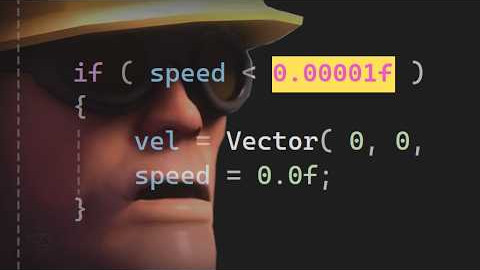
Ever encountered a minor annoying bug in a video game? How about one dating back to 2018? Usually, you have no hope of fixing it, but this time is different. [Joey Cheerio] shows the first-time programmer approach to (with great difficulty) fixing a bouncy ball prop turning invisible when shot in Team Fortress 2.
It starts with a band-aid solution that hides the problem: just turn off jiggle physics! While that works, it also affects many other models in the game, and doesn’t tackle the root cause. Time to investigate. Because this ball often goes overlooked, [Joey Cheerio] didn’t even realize that it was supposed to have jiggle physics, accidentally removing it. Turns out, after scouring the internet for old footage, it’s supposed to jiggle after all.
Back to square one, [Joey Cheerio] infers that the jiggle bone accidentally removed was related to the problem, eventually figuring out that the specific type of jiggle bone used (is_boing) caused the issue. Time to dig in the code. Tracking down the problem is no small feat for someone who’s never programmed before, even with the help of LLMs, but eventually, at 4 in the morning, a breakthrough! The ball no longer turned invisible but retained the intended jiggle.
At the limits of his knowledge on the subject, [Joey Cheerio] posts his partial progress so far to GitHub, where [ficool2] tracks down the real problem and turns this second band-aid into a proper fix. [Joey Cheerio] finishes up by explaining the math of what exactly went wrong.












Quickest way to get a bug fixed is to post the wrong solution online.
LLMs: generating wrong solutions at-scale.
It generated right outcome tho, and refinement of that solution led to another person immediately spotting true source of problem after over 10 years of this bug sitting unfixed. Its a big W in my book.
Cunningham’s Law: “The best way to get the right answer on the internet is not to ask a question; it’s to post the wrong answer.”
Conveniently, LLMs are really great at generating wrong solutions at scale.
Like this article… it told zero about what the actual problem and solution was
It’s fairly clear the author is not a programmer, as the path to find and identify the bug is quite slow and there’s a lot of amazement over a very basic bug fix.
10 SNEER
20 GOTO 10
30 REM POINTED OUT IN ARTICLE
The miracle here is not that an already established coding expert fixed a bug, but that there is now one more debugging expert in the world.
Bugs = W
Put garbage in garbage can ahh logic.
April 18, 2026 by Julian Scheffers 1 Comment