

While Hackaday is not a publication that generally concerns itself with the latest and greatest in gaming, the release of Grand Theft Auto 6 this week is hard to ignore. The game is being lauded as the most detailed and realistic rendition of an urban environment ever produced, and in the first 24 hours racked up a staggering $3.79 billion in sales. Distributed exclusively through the digital storefronts on the Xbox and PlayStation consoles, the millions of gamers that simultaneously downloaded the game set new records for Internet traffic.
Despite its incredible popularity, we don’t expect that the latest GTA will grace these pages too often. While games like Minecraft have offered makers and hackers some fascinating opportunities to blur the line between the virtual and physical worlds, the same doesn’t really apply when the player is stealing cars and executing gang members (we hope).
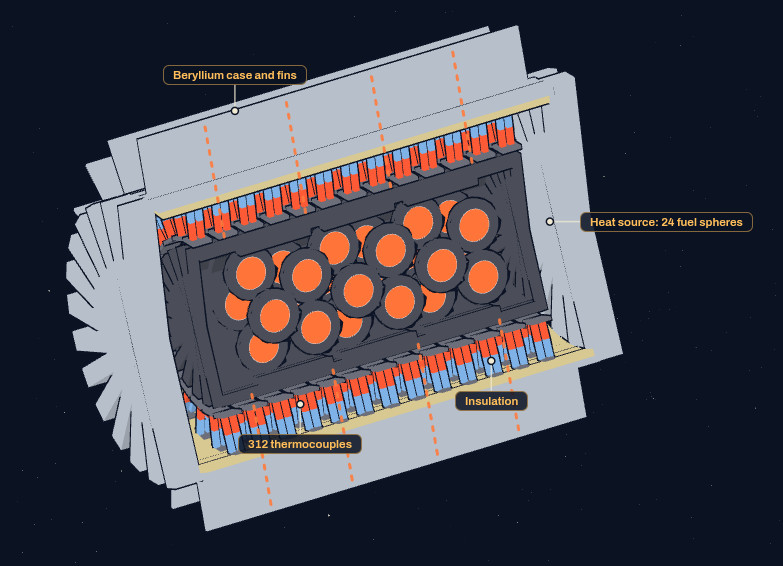 Speaking of highly detailed digital recreations, we’ve greatly enjoyed dismantling the twin Voyager spacecraft courtesy of this impressive website created by [Raj Shekhar]. At first glance it seems that the site is simply tracking the two craft as they make their way through interstellar space, but after clicking on either of the 70s-era probes you’ll have the option of showing it in an exploded view that lets you drill all the way down into the various avionics bays.
You can even see the individual plutonium spheres inside of the radioisotope thermoelectric generators (RTG) that have kept the Voyagers ticking out well past the point where solar panels would no longer have been useful.
On the subject of long-lived hardware, we recently came across a list of products that have been saved by open source. In some cases it was a new firmware that restored the functionality of a device that was abandoned by its manufacturer, while in others it takes the form of a replacement back-end for a service that was shuttered. We don’t imagine the products listed at the time of this writing constitutes an exhaustive list, but it does provide an interesting data point for anyone who doubted whether or not these sort of projects were worth the effort.
Finally, if you’re as interested in the visual style of that list as you are the content, you may want to check out Slopstrap by [Mike Lacher]. It provides a framework that human developers can use to make their website look more like it was thrown together with an AI tool. If that seems like it would mean you’d have to constantly defend your work against accusations that it was vibecoded, we imagine that’s the goal.
See something interesting that you think would be a good fit for our weekly Links column? Drop us a line, we’d love to hear about it.












Please be kind and respectful to help make the comments section excellent. (Comment Policy)