
Quick WIFI Adapter Through USB

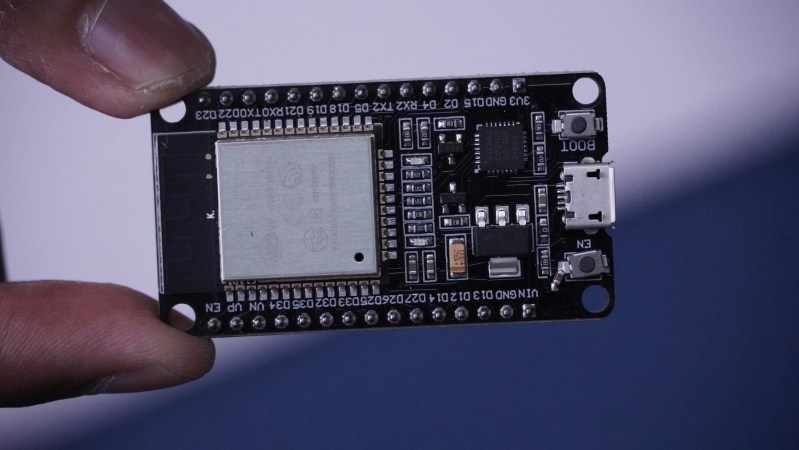
There’s breaking news! Quick, check your computer and look it up! What? Your computer doesn’t have internet right now because its WiFi chip fried itself? Well, it’s a good thing that [Phil Schatzmann] made a quick 4-line upload to make a makeshift internet adapter called TinyWifiDongle!

TinyWifiDongle is literally 4 lines of C++ (though the inclusions are doing some heavy lifting). The simple Arduino based project is not meant to browse through your streaming services at 4K, but can provide simple browsing capabilities by plugging into a USB port. The codebase has been tested on both the ESP32-S3 and Pi Pico 2 W with 600 KB/s and 250 KB/s, respectively. So certainly not blazing by any means, but enough to update your laptop’s own network drivers.

Though, the TinyWifiDongle does provide some particularly useful features in a pinch. Logging and transparency features are built into the codebase to allow the adaptor to work for any light IOT devices that need monitoring.

If the slow speeds shown here aren’t quick enough for you, that doesn’t mean we can’t find something for you. How does 10 gigabit sound? If that’s up your alley, be sure to check out this adaptor’s autopsy!
A Replacement PCB For The Echo Dot

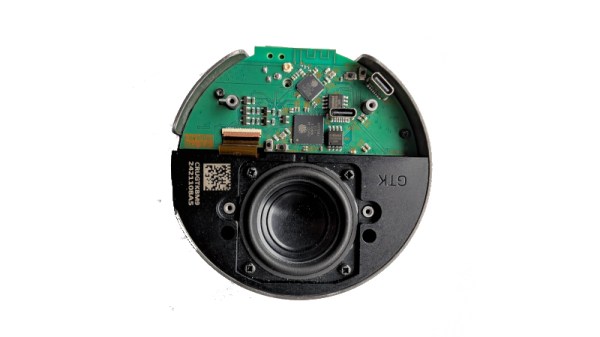
The Amazon Echo and other voice-controlled home assistants provide so much promise of a Jetsons style future of machines at your service. They would be a must-have accessory, were it not that they rely on the data centres of a large corporation that does not necessarily have your best interests at heart. But what if you like the Echo, but not the cloud? If you’re [ale1800], you take a 3rd generation Echo Dot, gut it, and put your own PCB inside to offer a local service.

The device keeps the Dot interface and microphone array, and connects to a Home Assistant server. As you’d imagine it needs a more powerful computer at its heart than a run-of-the-mill microcontroller, so it  uses an ESP32-P4 application processor, with the usual ESP32-S3 companion for connectivity. We’ve been following P4 projects as they gather steam, and it’s interesting to see one that’s not using a screen-based interface. There’s a YouTube video below the break, so you can see it in action.

We like this device, on many levels. In using the P4 it’s pushing forward with the next generation of microcontrollers, and in providing a local voice assistant it’s freeing its users from the cloud. What’s not to like!

Continue reading “A Replacement PCB For The Echo Dot” →







